How a 7-SKU Pet Accessories Store Scaled to $18K/Month by Replacing Viral Product Chasing With Supplier-Led Catalog Expansion
Pet accessories dropshipping stores that expand their catalog through existing supplier relationships reach $15K-$20K/month revenue faster and with fewer ad dollars burned than stores chasing viral products.

How a 7-SKU Pet Accessories Store Scaled to $18K/Month by Replacing Viral Product Chasing With Supplier-Led Catalog Expansion
Pet accessories dropshipping stores that expand their catalog through existing supplier relationships reach $15K-$20K/month revenue faster and with fewer ad dollars burned than stores chasing viral products. This dropshipping case study traces how one store went from 7 viral-dependent SKUs to 22 supplier-sourced products generating $18K in monthly revenue at a 12% net margin.
The Starting Catalog: 7 SKUs and a Viral Dependency
The store launched on Shopify with seven pet accessories: two dog bandanas, a collapsible travel bowl, a reflective leash, a silicone feeding mat, and two cat collar designs. Every SKU was sourced from separate AliExpress sellers based on what was trending on TikTok and Instagram Reels at the time. Average product cost sat around $3-$5, retail prices ranged from $14.99 to $24.99, and gross margins hovered near 65%.
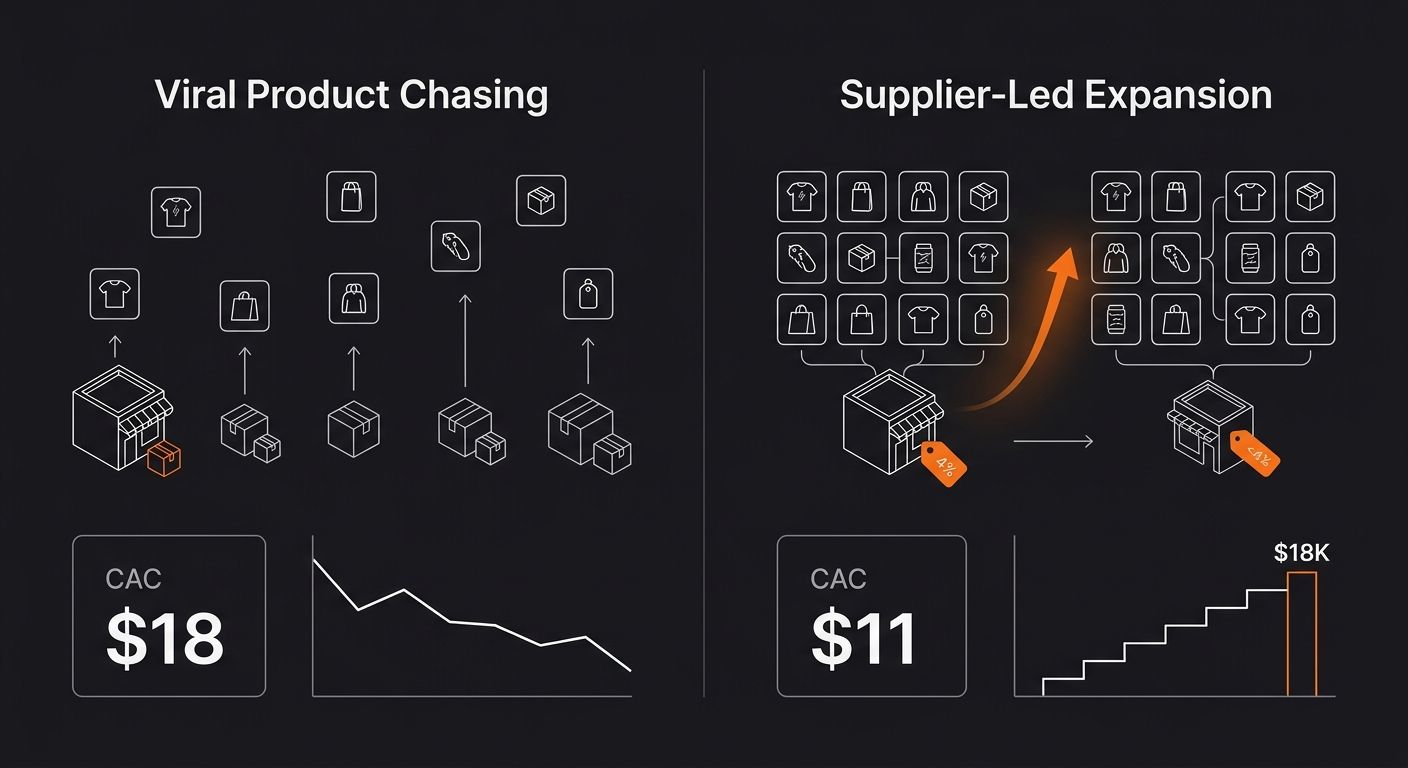
On paper, those margins looked excellent. The reality was different. Customer acquisition cost ran $14-$18 per order because every product needed fresh creative, fresh ad sets, and a cold audience. Average order value held steady at $22, with nearly every customer buying exactly one item. Monthly revenue plateaued between $4,200 and $5,800 after the first 90 days, and net margins compressed to 6-8% after ad spend, Shopify fees, and returns ate through that 65% gross number.
The fundamental problem was structural: each SKU had an independent demand curve. When a bandana trend cooled, that product's contribution dropped 40-60% within two weeks. The store was constantly scouting replacements. As ScaleOrder's analysis of viral versus brand-built stores observes, "Sellers who understand local consumer psychology and focus on long-term positioning are far more likely to build sustainable ecommerce businesses instead of temporary viral stores."
Understanding the demand curve mechanics of trending niches would have flagged this pattern before launch. Viral products follow a decay curve that makes month-over-month revenue projections unreliable, and building an entire store around seven of them compounds that unreliability across the whole business.
When the Ad Numbers Stopped Making Sense
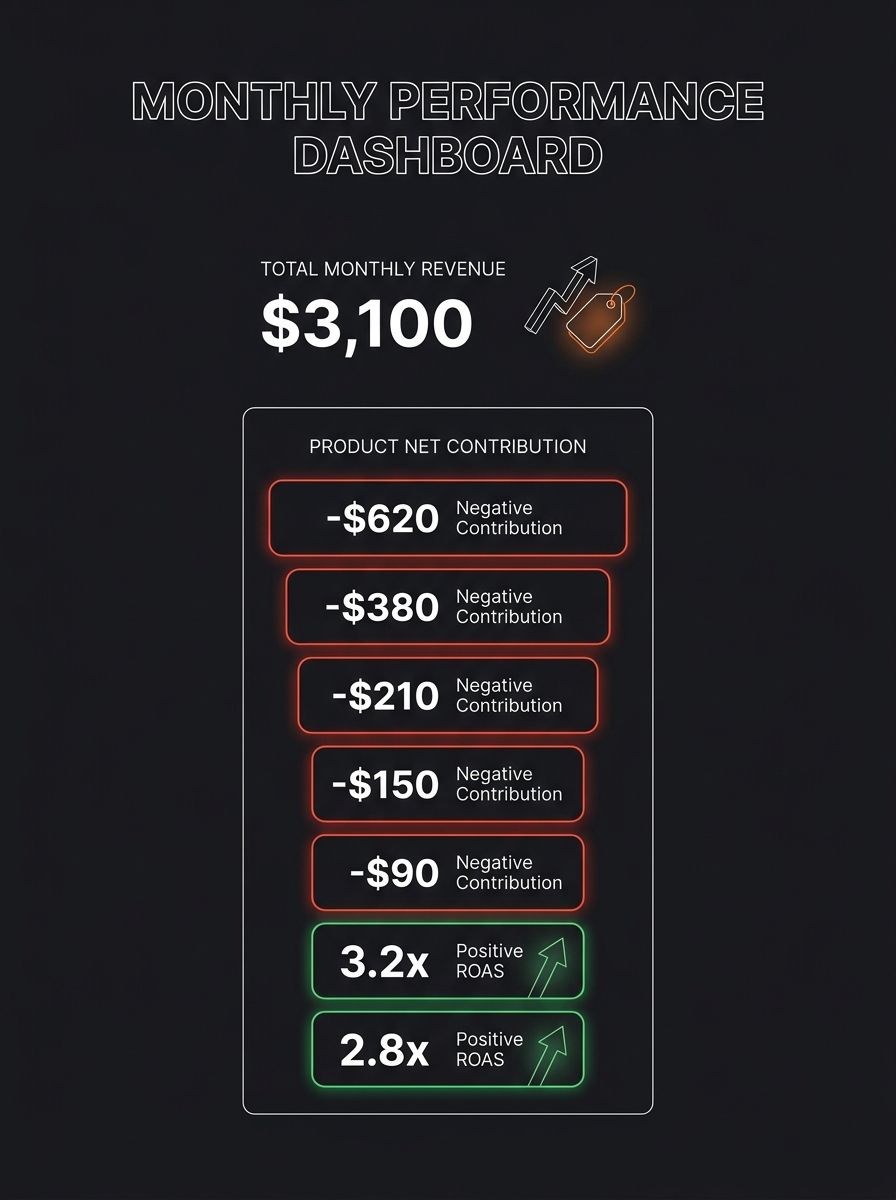
The breaking point came around month four. Two of the seven SKUs accounted for 71% of total revenue. The reflective leash alone drove $2,900 of the store's $4,800 in monthly sales. The other five products combined were generating roughly $1,400/month while consuming $900 in ad spend. Return on ad spend for the bottom-performing SKUs sat at 1.3x, meaning every dollar spent on ads returned $1.30 in revenue. After COGS, payment processing, and shipping, those products were losing money on every order.
The store owner paused ads on the five underperformers and focused budget on the two winners. Revenue immediately contracted to $3,100/month. But the remaining products were profitable: ROAS climbed to 3.2x on the leash and 2.8x on the bandana, and net margin on those two SKUs alone reached 18%.
This created a clear dilemma. Two profitable products couldn't scale beyond $3K-$4K/month without audience saturation. And scouting new viral products to replace the losers meant repeating the same cycle of spending money testing, hoping something hits, and watching it decay. The typical response here involves opening a product research tool and hunting for the next winner, but this store tried something different: asking its existing supplier what else it could sell.
The Supplier Conversation That Opened the Catalog
Instead of browsing AliExpress trending pages, the owner contacted the supplier behind the reflective leash and asked for their full wholesale catalog.
The supplier, a mid-size manufacturer based in Guangzhou with US fulfillment, offered 84 products across pet accessories, grooming tools, and travel gear. The store had been buying one SKU from a supplier sitting on 83 others. This pattern repeats constantly in pet accessories dropshipping. Platforms like TopDawg list thousands of pet supply SKUs with Shopify integration and automated order routing, and PetStoresUSA operates on wholesale-only terms with no minimum order requirements and fast domestic shipping. Yet most dropshippers never look beyond the single product they initially sourced, because their entire workflow is oriented around finding products rather than expanding supplier relationships.
IChiba's 2026 pet dropshipping guide reinforces this shift in approach: "When combined with strong supplier partnerships and proper testing, [these tools] significantly increase your chances of selecting the best dropshipping pet products for long-term growth."
The owner requested samples of 12 products that were logical extensions of the existing catalog: a retractable leash in the same reflective material, a matching harness, a car seat cover for dogs, poop bag dispensers that clipped onto the leash, and several grooming items. Sample cost: $47 total. Shipping from the supplier's US fulfillment warehouse arrived in 3-5 days, versus the 12-18 days the AliExpress products had been taking.
This is the core of a supplier-led catalog approach: the supplier already manufactures complementary products, you already have negotiated pricing and proven shipping timelines, and adding adjacent SKUs removes the biggest risk in scaling a dropshipping store — untested supplier reliability.
From 7 to 22 SKUs in Six Weeks
Of the 12 sampled products, 9 passed quality review. The owner added them to the Shopify store over three weeks, photographing each against the same backdrop as existing listings for visual consistency. The SKU expansion strategy followed a specific logic rooted in how the bestselling products were already being used by customers.
SKU Category | Products Added | Price Range | Relation to Bestseller |
|---|---|---|---|
Leash accessories | 3 (retractable leash, poop bag dispenser, leash light) | $16.99-$29.99 | Direct complement to reflective leash |
Harnesses | 2 (adjustable harness, no-pull harness) | $24.99-$34.99 | Same reflective material line |
Travel gear | 2 (car seat cover, collapsible crate) | $29.99-$44.99 | Same customer profile (dog owners who travel) |
Grooming | 2 (deshedding brush, nail grinder) | $14.99-$19.99 | Adjacent need, same pet owner |
Three existing underperformers — a cat collar and two low-margin accessories sourced from different AliExpress sellers — were cut. Total active SKU count went from 7 to 13 initially, then climbed to 22 over the next three weeks as the owner added a second supplier's products. This time the source was a US-based wholesaler specializing in pet grooming, which eliminated the 12-18 day shipping window entirely.
Research from Sedulo Group on SKU rationalization documents that data-driven catalog decisions typically produce "3-5% margin expansion" and "25-50% reduction in supply chain costs." The store experienced both effects: margins expanded because the new SKUs came from established suppliers at pre-negotiated rates, and supply chain complexity dropped because two reliable suppliers replaced five inconsistent ones.
AOV Climbed Before Revenue Did
The first measurable result of the expanded catalog wasn't a revenue spike. Average order value rose from $22 to $38 within three weeks of adding the complementary SKUs. Customers who came in for the reflective leash were adding the matching harness or poop bag dispenser to their cart. The car seat cover, priced at $44.99 with COGS of $14, became the store's highest-margin individual product.
This tracks with Midsummer Agency's case study on high-value SKU segmentation, where repositioning products from standalone items to experience-based purchases lifted conversion value. The agency used value-based bidding to help Google prioritize high-value purchases, even at lower frequency.
The store replicated this approach. Instead of running separate ad campaigns for each new SKU, the owner created collection-based campaigns: "Reflective Dog Walking Kit" bundled the leash, harness, and bag dispenser into a single landing page. Individual products were still purchasable, but the bundle presentation pushed AOV toward $120+ cart values on a meaningful percentage of orders.
Industry data supports this pattern in pet accessories: cross-selling accessories and treats can constitute 30% of a store's sales mix, diversifying revenue beyond core products. For this store, the add-on SKUs (bag dispensers, leash lights, grooming tools) accounted for 34% of revenue by month two of the expanded catalog, despite carrying the lowest individual price points.
A Facebook campaign driving traffic to the "Reflective Dog Walking Kit" collection generated $4.20 in revenue per dollar spent, compared to $1.90 per dollar on the old single-product campaigns. The math shifted: instead of needing 270 orders at $22 AOV to hit $6,000/month, the store needed 158 orders at $38 AOV to exceed that same number.
The Second Supplier and the Push Past $12K
Scaling from $8K to $18K/month required a second move: adding a US-based supplier to cover grooming and health products. The owner chose a supplier that, like PetStoresUSA, sells wholesale only to retailers and ships domestically within 2-4 business days.
Shipping speed had an immediate effect on returns. The AliExpress-sourced products carried a 14% return-request rate, driven largely by long delivery times and occasional quality inconsistencies. The US-supplier products had a 4% return rate. That 10-percentage-point drop translated directly to margin, and if you haven't looked at how return rate economics compound against dropshipping margins, the numbers get worse faster than expected.
Repeat purchase rates also climbed once the catalog included consumable grooming supplies. Pet consumables — deshedding tool replacement pads, dental chews, poop bag refills — brought customers back without additional ad spend. The store's repeat purchase rate climbed from 8% to 19% over four months. Each repeat customer cost $0 in acquisition because they returned through email flows and organic search.
The post-purchase email sequence was rebuilt around the expanded catalog. Instead of a generic follow-up flow, the store sent product-specific recommendations: leash buyers received harness suggestions at day 7, grooming tool buyers got refill reminders at day 30.
Where the Numbers Sit Today
By month eight, the store's performance looked nothing like the plateau it started from:
Metric | Month 1 (7 SKUs) | Month 8 (22 SKUs) |
|---|---|---|
Monthly revenue | $4,800 | $18,200 |
Active SKUs | 7 | 22 |
Suppliers | 5 | 2 |
AOV | $22 | $41 |
CAC | $18 | $11 |
Gross margin | 65% | 52% |
Net margin | 7% | 12% |
Return rate | 14% | 5% |
Repeat purchase rate | 8% | 19% |
Gross margin dropped from 65% to 52% because US-supplier products carry higher COGS than AliExpress goods. But net margin nearly doubled because ad efficiency improved, returns fell, and repeat purchases eliminated acquisition cost on 19% of orders. That tradeoff — accepting lower gross margin for significantly higher net margin — is the math that a disciplined 30% margin approach makes clear.
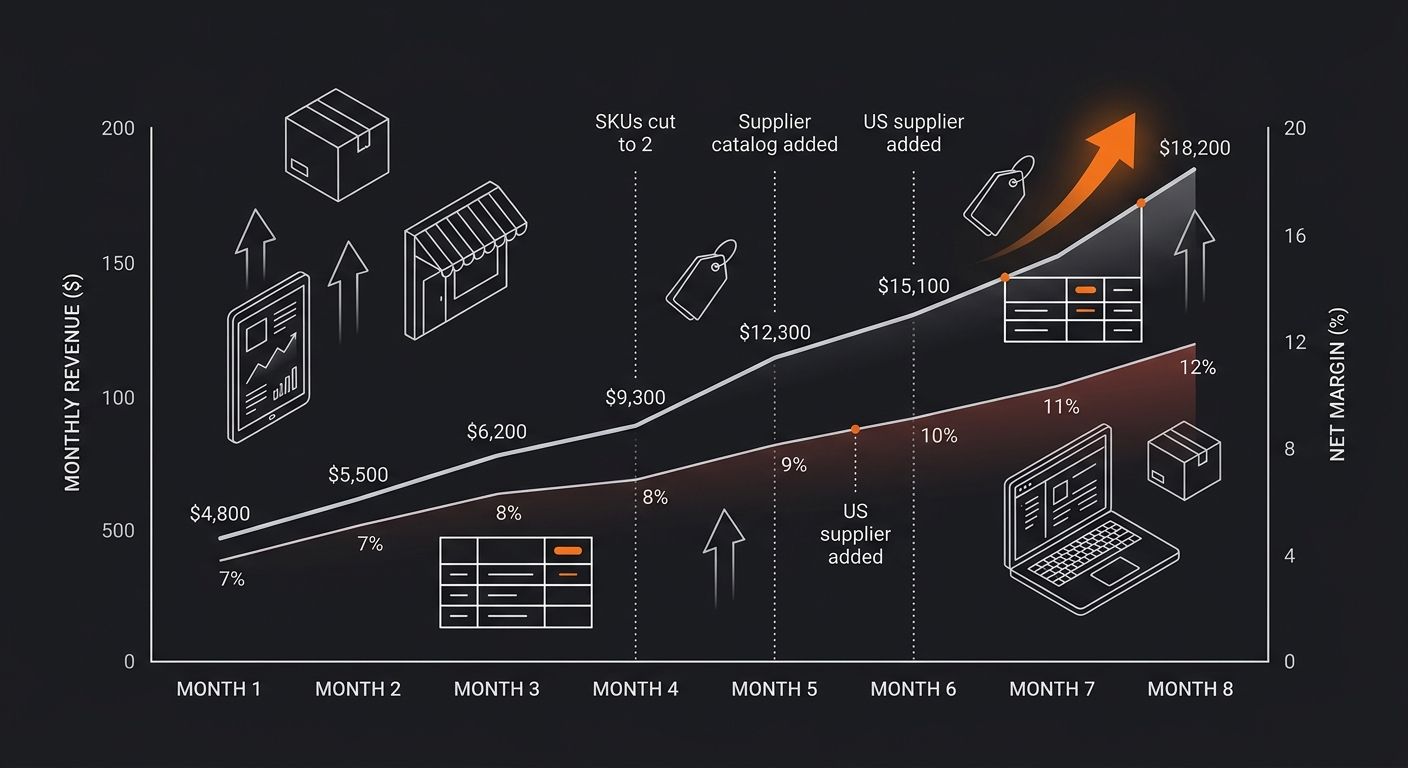
Monthly revenue has stabilized between $17K and $19K, with seasonal peaks around holidays pushing occasional months past $22K. The owner hasn't added a viral or trend-sourced product in over five months. The weekly time commitment dropped from roughly 25 hours to 12, and most of those hours go to ad creative and email marketing rather than supplier management and product scouting.
The operational simplicity of two reliable suppliers versus five inconsistent ones changed how the store runs day-to-day. Sedulo Group frames this outcome well: "The goal is to simplify without sacrificing growth, loyalty, or strategic differentiation." Scaled pet stores can reach 10-15% operating margins once the growth phase stabilizes, and this store's 12% net sits squarely in that range — built on supplier relationships rather than trend cycles, and on catalog depth rather than product luck.
365 Dropship Editorial
Editorial team writing about E-commerce, dropshipping, and product discovery — reviews of dropshipping suppliers and platforms, trending niche guides (jewelry, beauty, pets, home, fashion), supplier due diligence, ecom operations, shipping & fulfillment strategy, product research, AOV optimization, and profitable dropshipping case studies.
Related Articles

From Pandemic Pivot to Profitable Store: The Untold Operations Lessons Behind 2020-2026 Dropshipping Success Stories
COVID-era ecommerce operators who survived past 2022 share a pattern that has nothing to do with finding the right product or running the right ad. The pattern is operational: supplier onboarding speed, cash flow reinvestment discipline, and fulfillment consolidation.
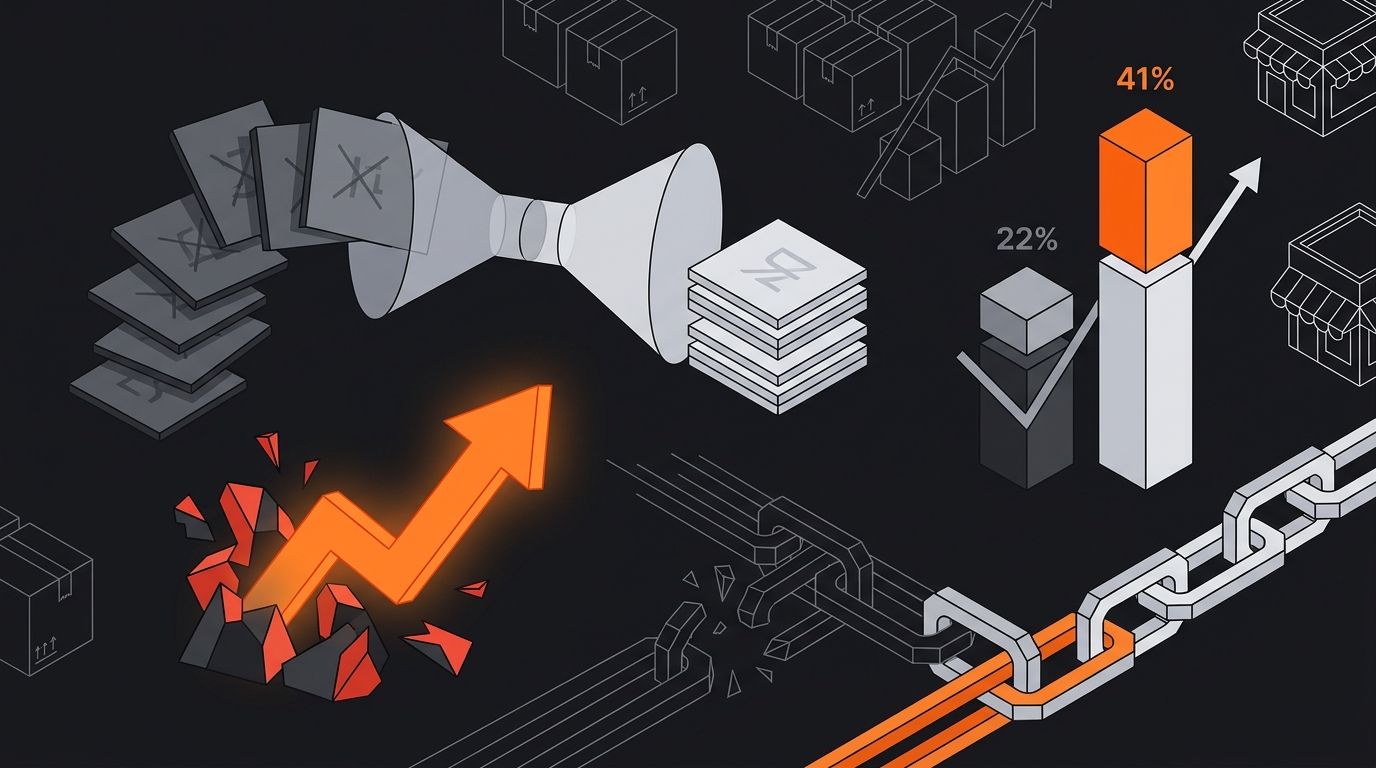
From 22% to 41% Gross Margin: How One Operator Rebuilt Their Supplier Stack After a Tariff Shock Broke Their Unit Economics
A tariff shock that eliminates the de minimis exemption and adds 10% to landed costs can collapse a dropshipping store's gross margin from a workable 30-35% to the low 20s overnight.

Niche-First Dropshipping vs. Product-First: Why 2026's Winners Are Building Around Community, Not Viral Items
Three stores selling the same viral silicone ice tray, sourced from CJ Dropshipping at $4.20 per unit, can run identical Meta ads to the same broad audience and all three will lose money.
Explore more topics