From Pandemic Pivot to Profitable Store: The Untold Operations Lessons Behind 2020-2026 Dropshipping Success Stories
COVID-era ecommerce operators who survived past 2022 share a pattern that has nothing to do with finding the right product or running the right ad. The pattern is operational: supplier onboarding speed, cash flow reinvestment discipline, and fulfillment consolidation.
From Pandemic Pivot to Profitable Store: The Untold Operations Lessons Behind 2020-2026 Dropshipping Success Stories
COVID-era ecommerce operators who survived past 2022 share a pattern that has nothing to do with finding the right product or running the right ad. The pattern is operational: supplier onboarding speed, cash flow reinvestment discipline, and fulfillment consolidation. Every dropshipping case study from 2020-2026 that shows durable profitability traces back to one or more of these three systems running well. The stores that died weren't usually beaten by competitors with better products. They were beaten by competitors who shipped faster, onboarded backup suppliers before peak season, and reinvested profits at rates that compounded instead of rates that starved growth.
This article breaks down how that operational machinery works, component by component, so you can see where the actual margin gets made and where it leaks.
The Supplier Onboarding Bottleneck
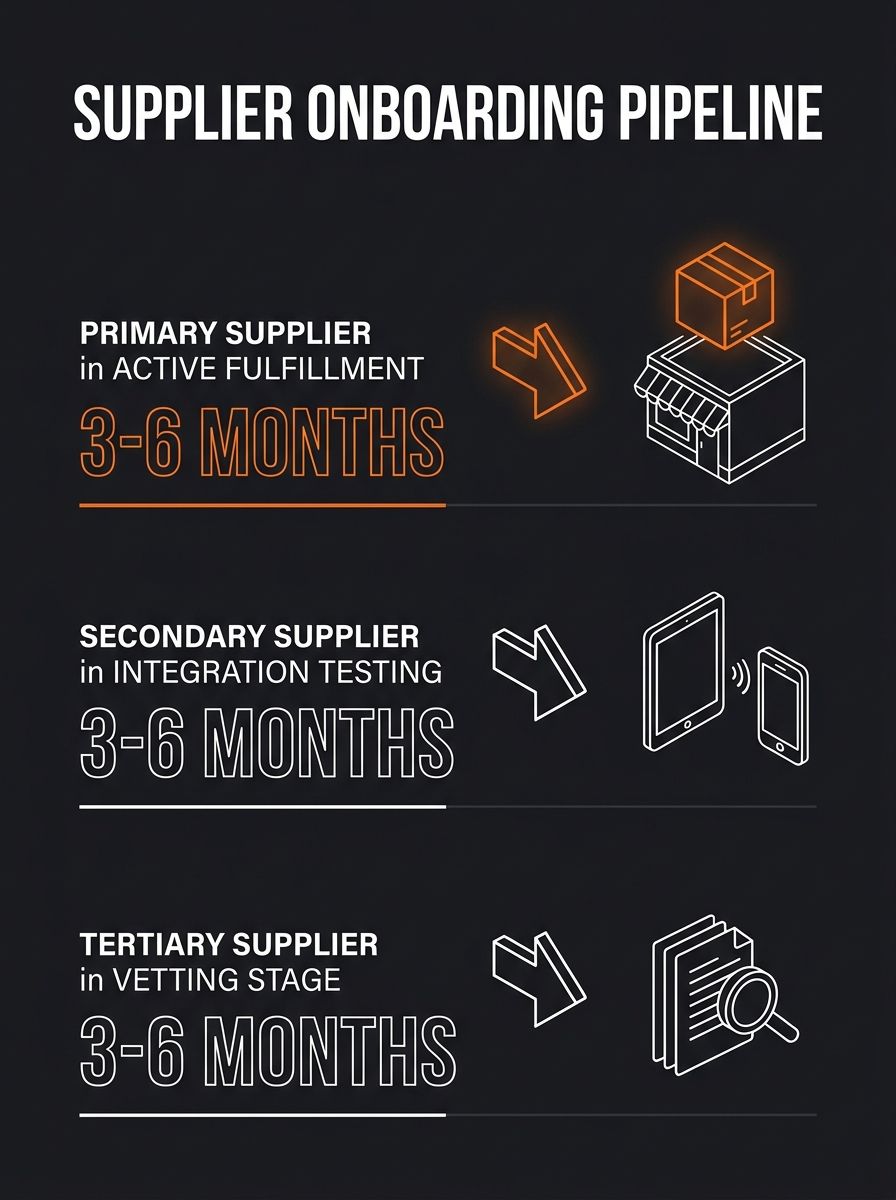
The first operational layer that separates surviving pandemic-era stores from dead ones is how they brought new suppliers online. According to Rithum's analysis of drop-ship programs, onboarding a single supplier can take three to six months when you account for integration, testing, and catalog mapping. Three to six months. That timeline is a killer for a store trying to react to demand spikes or supplier failures.
The operators who built lasting businesses in 2020 and 2021 treated supplier onboarding as a pipeline, not an event. They weren't waiting for their current supplier to fail before starting conversations with a second one. They were running parallel onboarding tracks: primary supplier for fulfillment, secondary supplier being integrated and tested with sample orders, tertiary supplier being vetted on paper.
Your supplier onboarding playbook needs to account for this lag. If you're running a single supplier with no backup in the pipeline, you're one stockout away from a dead ad campaign. The stores that generated real revenue during pandemic surges had already done the boring work of qualifying alternates before they needed them.
If you haven't built a formal vetting process, our supplier due diligence checklist covers the specific criteria worth screening for before you even place a test order.
What the Onboarding Process Actually Involves
Supplier onboarding isn't signing up for a Spocket or CJ account and clicking "import." That's product import. Onboarding means:
Confirming the supplier can accept your order format (API, CSV, email, EDI)
Testing that their inventory feed updates frequently enough to prevent overselling
Running 5-10 test orders to measure actual ship time versus promised ship time
Documenting their return/refund process and testing it with a deliberate return
Establishing communication SLAs: who do you contact when an order goes wrong, and how fast do they respond?
The operators behind the best-documented dropshipping case study results from 2020-2026 almost always mention some version of this list when asked what they did differently. Tze Hing Chan, who generated $19,000 in profit within two months selling bubble tea plush toys during the pandemic, didn't succeed on his first attempt. He failed with phone cases and kitchen tools first. Each failure taught him something about supplier reliability and product-market fit that informed his next launch.
Cash Flow Reinvestment Ratios and Why They Determine Scale
Cash flow management in dropshipping is the operational layer that nobody writes viral threads about, but it's the one that determines whether a $5,000/month store becomes a $50,000/month store or stays stuck.
The common reinvestment range during scaling sits between 25% and 35% of net profits, according to operators surveyed by TopDawg. That range sounds simple, but applying it correctly requires understanding where the cash goes and when it comes back.
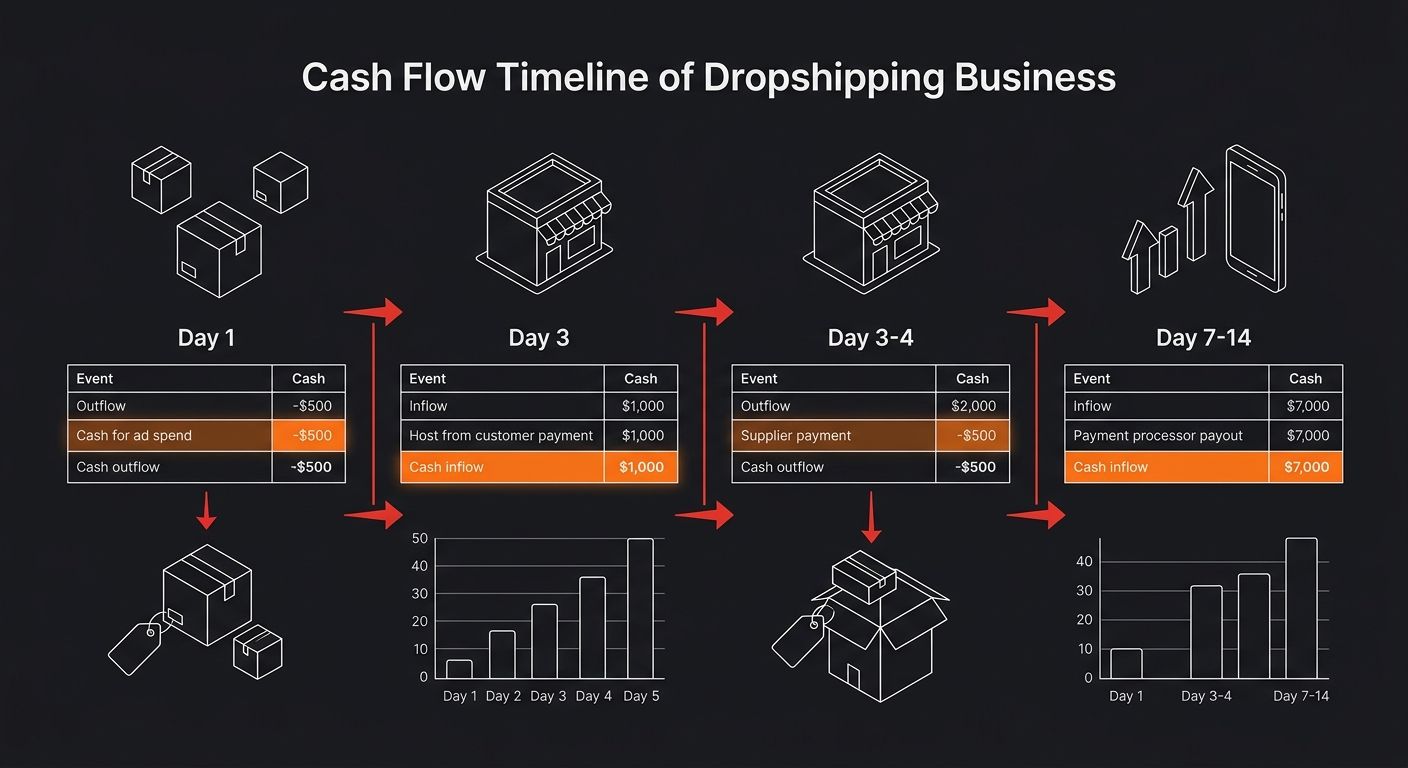
Here's the timing problem that kills stores: you pay for Facebook or TikTok ads on Day 1. The customer pays you on Day 3. Your supplier charges you on Day 3 or 4. The payment processor holds your funds for 7-14 days if you're a new store with limited transaction history. So your cash is out for ads and COGS before your revenue is available to spend. If you're scaling ad spend by 20% per week, you can run into a negative cash position within three weeks even while your store is technically profitable on paper.
The COVID-era ecommerce operators who scaled successfully built a buffer into their cash flow model. They either:
Started with enough working capital to cover 3-4 weeks of ad spend plus COGS before any revenue recycled
Used payment processors with faster payout schedules (Shopify Payments offers next-business-day payouts for established stores)
Scaled ad spend in stepped increments tied to actual cash received, not projected revenue
This is where a scaling profitability checklist earns its keep. Before increasing ad spend, you need to verify: current cash balance covers at least 14 days of projected spend, your contribution margin per order is positive after shipping and transaction fees, and your refund rate hasn't crept above the level where chargebacks start eating margin. If you're unsure how to diagnose which post-sale costs are actually eroding your margins, fix that gap before you try to grow.
Fulfillment Fragmentation as the Silent Tax on Every Order
The third operational layer is one that only becomes visible at scale. When you're doing 10-20 orders a day, fulfillment fragmentation doesn't hurt much. When you're doing 200-2,000 orders a day, it becomes what FFOrder's scaling guide calls "the single biggest reason scaling dropshipping businesses stall before they reach durable profitability."
Fragmentation means your sourcing is handled by one vendor, your warehousing by another, your customer service by a third, and your returns by a fourth. Each vendor has its own dashboard, its own SLAs, its own error rate. The errors compound as volume grows because there's no shared system of record. A supplier ships the wrong variant, the warehouse doesn't catch it, customer service doesn't know about it until the customer complains, and the return gets processed through a different system that doesn't automatically credit your supplier account.
The fix that working operators discovered between 2020 and 2024 was consolidation: moving to a single fulfillment partner (or at most two) who handles sourcing through delivery, with shared tracking and a unified dashboard. Stores that made this transition typically saw measurable margin improvements by week 8, according to FFOrder's data from their client base.
And this is why building automated supplier sync systems matters so much at scale. Manual order routing works fine at low volume. At 500+ orders per day, every manual touchpoint becomes a potential error, and errors at that volume translate directly into refund costs and negative reviews.
The Domestic Fulfillment Shift
By 2026, the fulfillment landscape looks very different from 2020. Stores that relied on AliExpress with 15-30 day shipping to customers have been steadily dying off, with 64% of struggling operators citing shipping delays as their primary pain point. The surviving stores moved to US or EU warehouse networks through CJ Dropshipping, Zendrop, or Spocket, bringing delivery windows down to 3-7 days.
That shift came with a cost increase per unit. Domestic fulfillment costs more than shipping direct from Shenzhen. But the operators who made the switch found that the reduction in refund rates and increase in repeat purchase rates more than covered the cost difference. If your refund rate drops from 12% to 4% and your repeat purchase rate climbs from 8% to 18%, the net margin improvement is substantial even with higher per-unit fulfillment costs. Understanding these unit economics requires calculating your true landed cost including tariffs, duties, and domestic handling fees.
Automation Eliminates Errors, and Errors Are Where Margin Dies
The fourth operational layer is automation, and the misunderstanding here is about what automation does. People think automation saves labor. It does, a little. But in dropshipping, automation's real function is error reduction. When 79% of successful operators use automated order processing and report a 94% reduction in manual errors, the value proposition isn't "I saved 3 hours per day." The value proposition is "I stopped losing $200 per day to wrong-address shipments, duplicate orders, and inventory oversells."
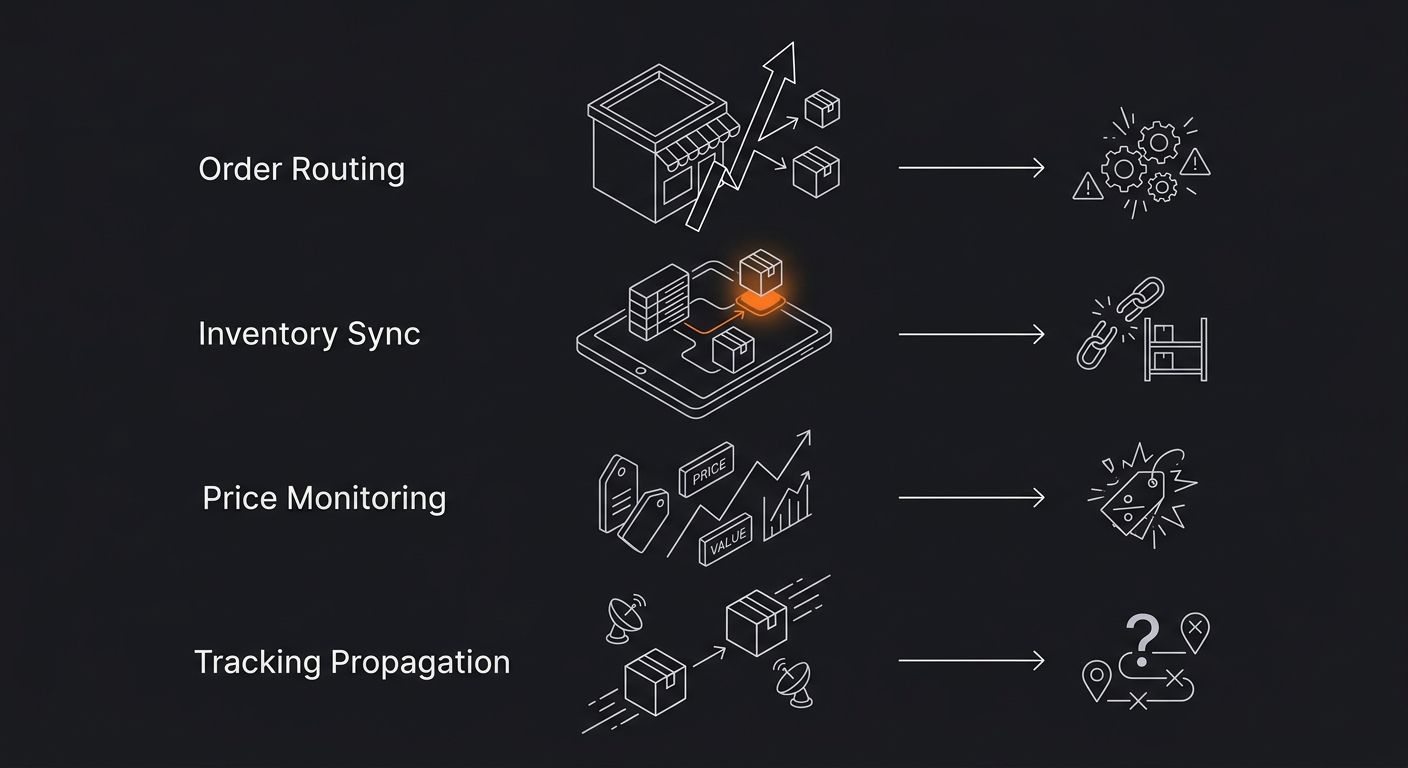
The types of automation that matter for a dropshipping operation:
Order routing: Automatically sending purchase orders to the correct supplier based on product SKU, customer location, or inventory availability
Inventory sync: Pulling supplier stock levels into your storefront every 15-60 minutes to prevent selling out-of-stock items
Price monitoring: Adjusting your retail price when supplier costs change, maintaining your target margin without manual recalculation
Tracking propagation: Automatically pushing supplier tracking numbers to your storefront and triggering customer notification emails
Each of these removes a manual step where human error can leak margin. At 50 orders per day, one wrong address per week is annoying. At 500 orders per day, the same error rate means 7+ wrong shipments per week, each costing $15-30 in reshipping or refund costs. That's $100-210 per week in pure margin loss from a single error type.
The stores that survived from 2020 to 2026 built these automations incrementally. They didn't buy an expensive all-in-one platform on day one. They started with order routing automation, added inventory sync when they hit 100+ daily orders, and layered on price monitoring as they expanded to multiple suppliers. If you've dealt with automation failures and sync issues, you already know these systems need monitoring too, but monitored automation still beats unmonitored manual work by a wide margin.
Where The Model Breaks
Every mechanism has limits, and the operations-first approach to dropshipping has three clear ones.
The 12-month profitability wall is real. Only 10-20% of dropshipping stores achieve profitability in their first year. The operational improvements described above increase your odds of being in that group, but they don't guarantee it. Product-market fit still matters. Ad creative still matters. And if your contribution margin per order is below $8-10 after all costs, no amount of operational efficiency will generate enough absolute profit to cover your time.
Net margins cap out around 15-20% for most operators. That ceiling means a $100,000/year revenue store generates $15,000-20,000 in net profit. You need to hit meaningful revenue volume before the operational investments in automation, domestic fulfillment, and supplier pipeline management start to pay for themselves. A store doing $3,000/month in revenue doesn't need a three-track supplier onboarding pipeline. It needs more customers.
Consolidation creates single-point-of-failure risk. Moving from three fulfillment vendors to one reduces fragmentation cost, but it also means that one partner going down takes your entire operation offline. The operators who handle this well maintain a secondary supplier relationship that's warm enough to activate within 48 hours, even if they don't route daily orders through it. That's the tradeoff: you pay a small ongoing cost to keep a backup relationship alive, or you accept the risk of a total shutdown if your primary partner has a bad week.
The pandemic proved that ecommerce demand can spike unpredictably and that supply chains can break without warning. The dropshipping operators who turned those lessons into durable businesses didn't do it by finding a magic product or a secret ad hack. They did it by building operations that could absorb shocks, maintain margin through turbulence, and scale without the error rates that eat profit at volume. The mechanism is boring. Boring is what compounds.
365 Dropship Editorial
Editorial team writing about E-commerce, dropshipping, and product discovery — reviews of dropshipping suppliers and platforms, trending niche guides (jewelry, beauty, pets, home, fashion), supplier due diligence, ecom operations, shipping & fulfillment strategy, product research, AOV optimization, and profitable dropshipping case studies.
Related Articles
Why Your Supplier Is Handling More Than You Think: The Hidden Data Flow Between Order and Fulfillment
Between your customer's checkout click and the tracking email that arrives hours later, six to twelve discrete data transfers fire across your store, middleware, supplier systems, and shipping carriers.
The Hidden Cost of Speed: Why Faster Shipping Is Tanking Your 2026 Margins (And How to Rebalance)
Carrier rate hikes from UPS and FedEx averaged 5.9% for 2026, but surcharges push the real increase to 8–12%. Last-mile delivery absorbs 53% of total shipping costs. Three fulfillment models handle this pressure differently, and choosing wrong erodes margin faster than rising ad costs.
The Domestic Supplier Advantage: Why US-Based Fulfillment Is Reshaping 2026 Dropshipping Unit Economics
Domesticated fulfillment with bulk DDP imports cuts per-parcel costs by 8–15% for brands shipping 4,000+ US orders monthly, according to Evolution Fulfillment's cost model.
Explore more topics