Stop Chasing 60% Margins: Why a Disciplined 30% Gross Margin Business Outperforms Most 'High-Margin' Dropshipping Stores
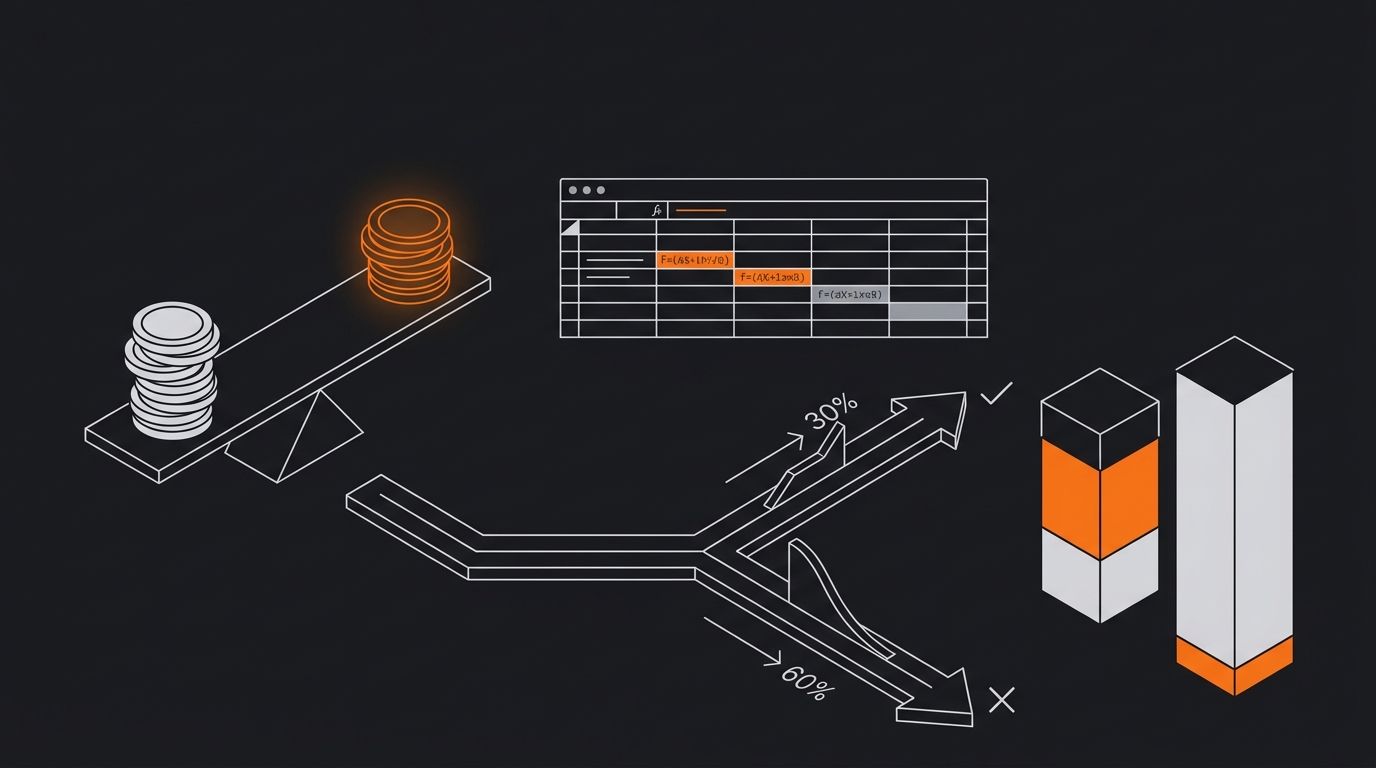
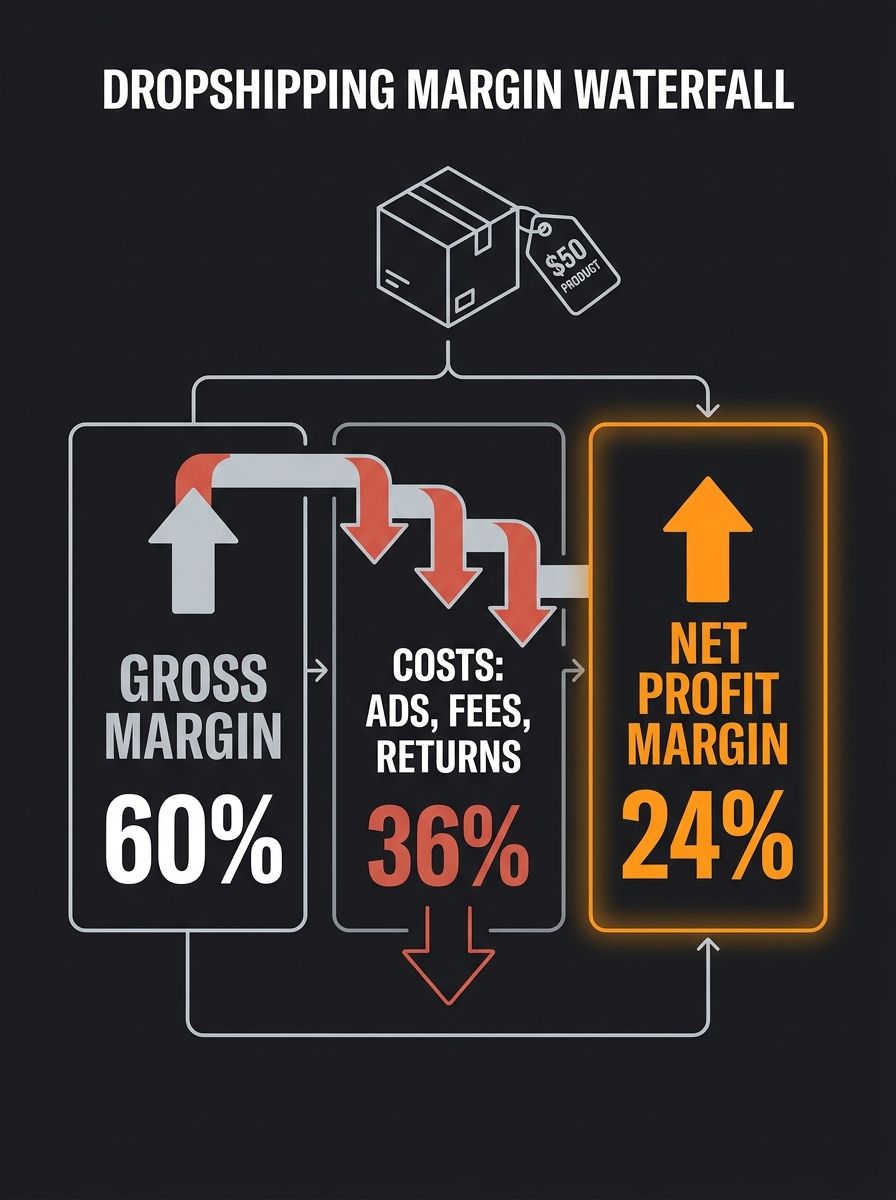
A 60% gross margin on a $50 dropshipped product leaves $30 before costs. After $12 in ad spend, $2 in payment processing, $1 in platform fees, and $3 in return-related losses, that $30 becomes $12 — a 24% net margin.
Stop Chasing 60% Margins: Why a Disciplined 30% Gross Margin Business Outperforms Most 'High-Margin' Dropshipping Stores
A 60% gross margin on a $50 dropshipped product leaves $30 before costs. After $12 in ad spend, $2 in payment processing, $1 in platform fees, and $3 in return-related losses, that $30 becomes $12 — a 24% net margin. Stores running 30% gross on products that sell at three times the volume often bank more total profit per month.
The Gross-to-Net Collapse
The gap between gross margin and net margin in dropshipping is where most operators lose the plot. They fixate on that initial product-cost-to-selling-price ratio — the 60%, 65%, even 70% number — and ignore everything that eats into it between the sale and the bank deposit. According to Branvas' 2026 analysis of dropshipping profitability, most dropshippers operate with net profit margins between 15% and 20% after accounting for product costs, shipping, advertising, and platform fees. That's the real range for a functioning business, regardless of what the gross margin spreadsheet says.
The collapse happens in layers. Payment processing takes 2.9% plus $0.30 per transaction on Shopify Payments. Platform subscription fees, when spread across order volume, add another 1-3% depending on your plan and throughput. Then there's the advertising layer, which for most paid-traffic-dependent dropshipping stores runs between 20% and 35% of revenue. And returns — a line item that operators routinely underestimate — can absorb another 5-10% of revenue in fashion and accessories niches, where return rates silently destroy margins at exactly the wrong moment in the scaling curve.
What this means in practice: a product with 60% gross margin and a $15 CAC on a $50 selling price yields $12 net. A product with 30% gross margin, a $5 CAC on a $35 selling price, and a 4% return rate yields around $5.50 net per order. The per-unit math favors the 60% product. But per-unit math is the wrong frame entirely, because the 30% margin product moves at dramatically higher velocity. According to Opensend's ecommerce margin research, smaller online stores average around 30% gross margins while larger ecommerce enterprises maintain about 37% gross. The larger stores aren't achieving higher gross margins — they're achieving higher total gross profit through volume that smaller stores can't match because those smaller stores are pricing themselves into low-demand territory.
Why Volume at Lower Margins Compounds Faster
The margin vs volume tradeoff tilts toward volume for a structural reason that most dropshipping margin targets miss: advertising platforms reward conversion velocity. Facebook's ad algorithm, Google's Performance Max, and TikTok's ad system all allocate cheaper impressions to products and stores that convert at higher rates. When you price a product competitively — which a 30% gross margin target allows you to do — your conversion rate climbs, your cost per click drops, and your CAC compresses. The store chasing 60% margins on the same product type is pricing 30-40% higher than competitors, which tanks conversion rate, which raises CAC, which eats the very margin advantage the operator was chasing.
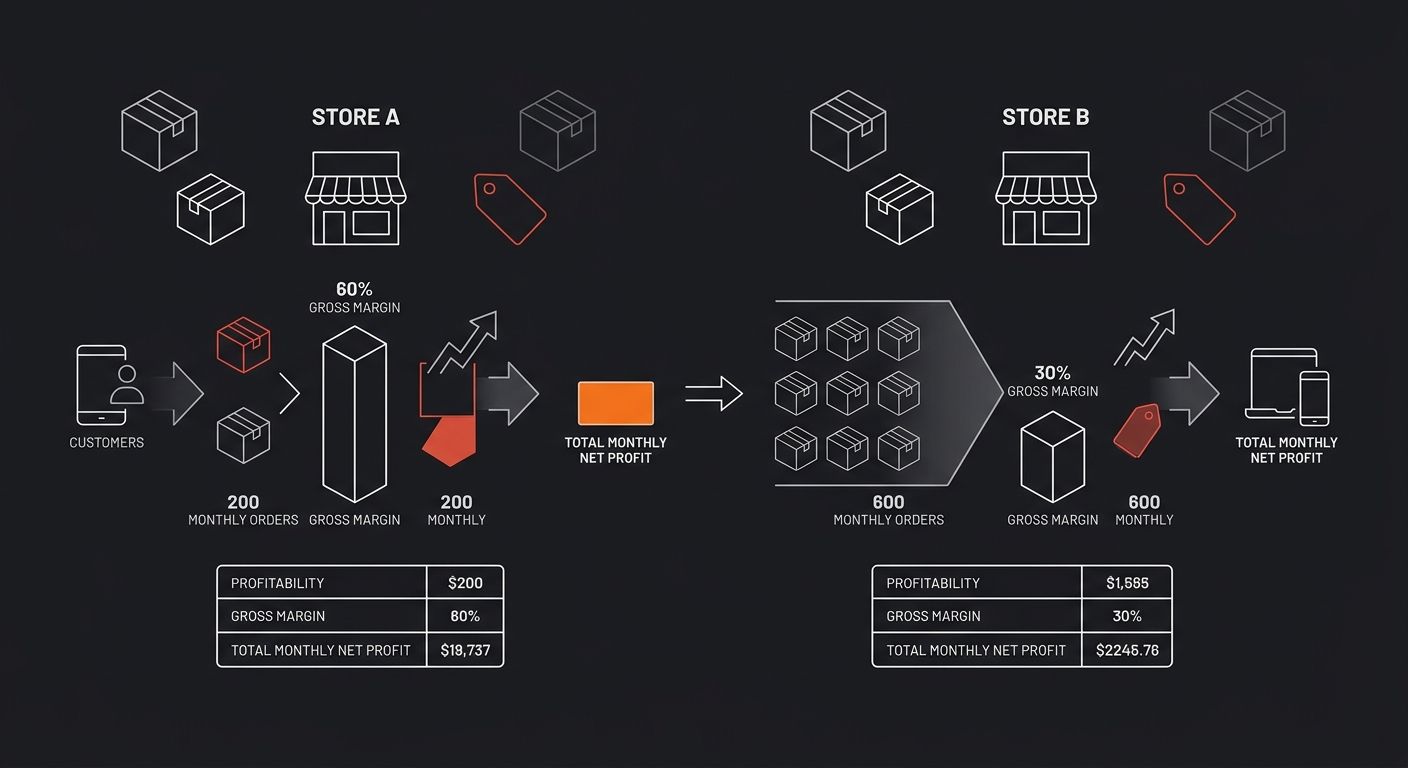
Run the monthly math. Store A sells a kitchen gadget at $49.99 with 60% gross margin (COGS $20), processes 200 orders per month, spends $3,000 on ads ($15 CAC), and nets roughly $2,400 after all costs. Store B sells a similar gadget at $34.99 with 30% gross margin (COGS $24.50), processes 600 orders per month because the lower price converts 2.5x better, spends $4,200 on ads ($7 CAC thanks to algorithm rewards for conversion volume), and nets roughly $3,300. Store B profits 37% more per month while appearing "less profitable" on a per-unit basis. And Store B has something Store A doesn't: 600 customer email addresses per month instead of 200, which means the post-purchase email sequence generates more repeat revenue on a dramatically larger base.
This compounding effect accelerates over time. D2C brands that use data-driven marketing outperform peers by 20-30% in revenue and retention, according to Saras Analytics. Data-driven marketing requires data, and data requires volume. The 200-order-per-month store simply can't test creative variations, audience segments, or product positioning with statistical significance. It takes 3-4 months to gather what the 600-order store learns in 30 days.
The Hidden Costs That Punish High-Markup Products
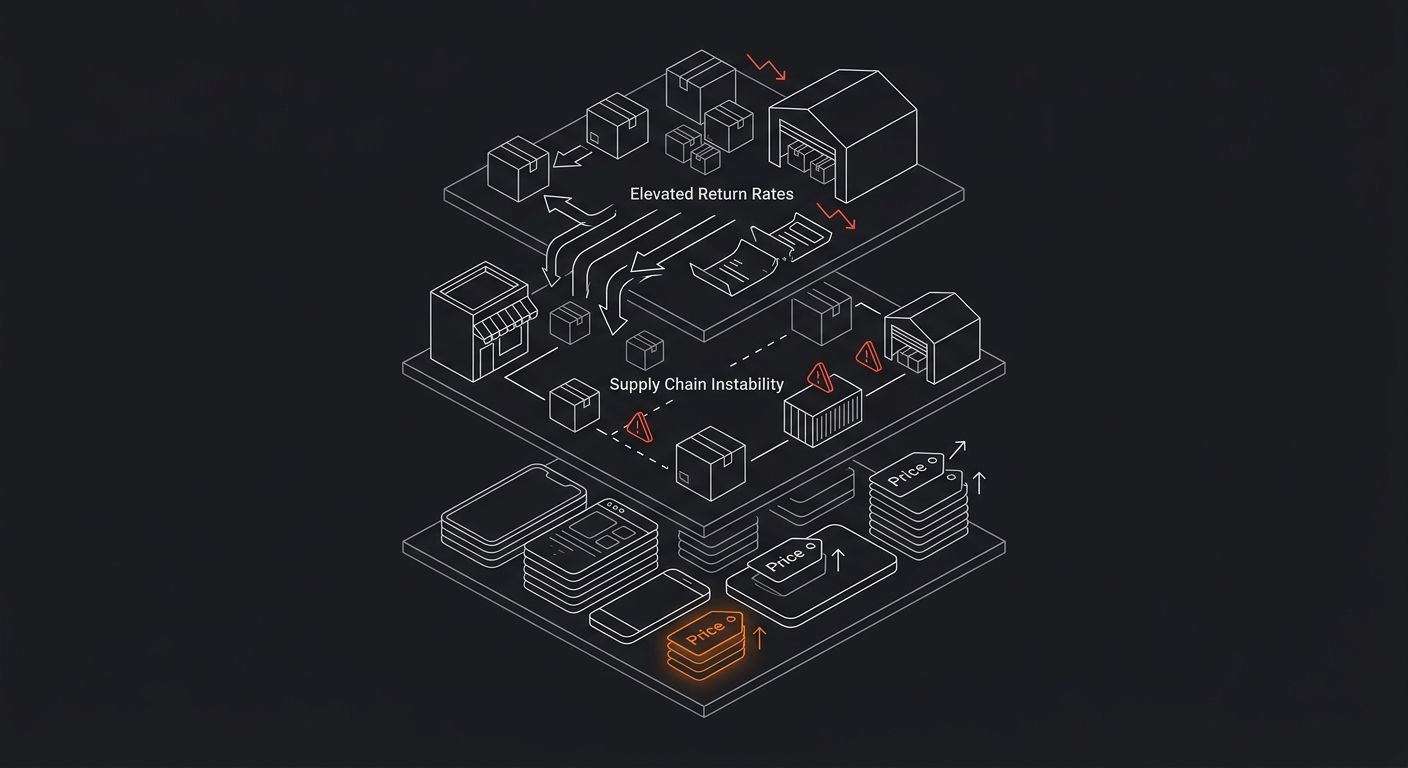
There's a secondary dynamic that makes high gross margin benchmarks particularly dangerous in dropshipping: the products that support 60%+ gross margins tend to cluster in categories with specific, expensive problems. Products with high perceived-value-to-cost ratios — the $8 product sold for $39.99 — typically fall into impulse-buy, trend-driven, or gadget categories. These categories carry three compounding cost penalties.
First, return rates in impulse and gadget categories run significantly higher than in considered-purchase categories. When someone buys a product because an ad made it look magical, the gap between expectation and reality generates returns, chargebacks, and negative reviews. A 15% return rate on a 60% gross margin product doesn't reduce your margin by 15% — it reduces it by closer to 25% after you account for the original shipping cost, the return processing, and the customer support time. If you're calculating your true CAC payback period without factoring in category-level return rates, you're operating on fictional numbers.
Second, high-markup products in dropshipping correlate with supply chain instability. DSers' research found that 60% of dropshipping stores fail at scale largely due to supply chain instability — inventory gaps and fluctuating costs that quietly destroy margin and customer trust. The $8 product from AliExpress that you sell for $39.99 is exactly the type of product where your supplier disappears, changes pricing by 40% overnight, or ships a different version than what's pictured. Products with more moderate markups tend to come from more established supply chains because the margins are tight enough that only reliable suppliers can sustain them.
Third, every additional Shopify app you install to support the high-margin operation — the upsell app, the scarcity timer, the review importer, the retargeting pixel manager — adds $30-$200 per month in subscription costs that further erode the margin advantage. Stores selling products with inherent demand at competitive prices need fewer conversion gimmicks, which means a leaner tech stack, which means lower fixed costs per month. According to Onramp Funds' ecommerce benchmarks, high-margin businesses aiming for 20%+ net profit need to keep fulfillment costs under 12% of revenue. That 12% ceiling gets harder to hit when your per-order app costs, support costs, and return processing costs scale with every high-expectation customer you acquire.
The sustainable ecom margins that actually build wealth look boring on paper. A Scaleorder analysis of dropshipping profitability found that a "good" gross margin sits 10-20 percentage points above break-even, creating room for scaling without margin collapse. For most operators, that's 30-45% gross, yielding 10-20% net. The stores hitting those numbers consistently aren't posting flashy Shopify dashboard screenshots, but they're the ones still operating 18 months from now.
Where This Argument Gets Uncomfortable
The uncomfortable part of advocating for disciplined 30% gross margins is that it requires admitting something most dropshipping education doesn't want to say: building a genuinely profitable store at 30% gross margin is harder than building a temporarily profitable store at 60% gross margin. At 30% gross, you have almost no room for error on CAC. Your product research has to be sharper — you need products with validated demand and defensible positioning, not viral-looking gadgets you found scrolling TikTok. Your conversion rate optimization has to be genuine, not gimmick-driven. Your supplier relationships have to be stable enough to hold COGS steady quarter over quarter.
And there are real scenarios where this framework fails. High-ticket dropshipping ($200+ products) with genuine brand positioning can sustain 50-60% gross margins without the volume penalty because the buyer psychology at that price point is fundamentally different. Niche health and beauty products, where TrueProfit reports gross margins of 50-70%, can support high markups because repeat purchase rates are strong enough that LTV math, rather than first-order margin, drives the business. A 30% net margin in ecommerce is considered high and is often a sign of a highly profitable business, according to TrueProfit's 2026 benchmarks — but reaching that 30% net from a 30% gross is essentially impossible. The stores that achieve 30% net are doing it from 55-65% gross with exceptional operational discipline and low return rates.
So the real argument here isn't that 30% gross margin is universally superior. The argument is that 30% gross margin forces you to build a business with structural advantages — volume, repeat customers, low CAC, efficient operations — that survive market shifts. The 60% gross margin store can coast on fat per-unit economics until ad costs spike, a competitor undercuts pricing, or the product trend fades. The 30% gross margin store already operates in a world where those things happened, and it's still standing. The question every operator should sit with isn't "what gross margin can I achieve?" but "what gross margin can I sustain when everything gets 20% more expensive next quarter?" That answer, for most product categories in most niches, is closer to 30% than 60%.
365 Dropship Editorial
Editorial team writing about E-commerce, dropshipping, and product discovery — reviews of dropshipping suppliers and platforms, trending niche guides (jewelry, beauty, pets, home, fashion), supplier due diligence, ecom operations, shipping & fulfillment strategy, product research, AOV optimization, and profitable dropshipping case studies.
Related Articles

Profit Margin Calculator Guide
Multiplying your product cost by 1.30 does not give you a 30% profit margin. It gives you a 23% margin, and that seven-point gap is where thousands of ecommerce operators silently lose money every month.

How to Calculate Profit Margin: Step-by-Step
Profit margin measures how many cents of every revenue dollar you actually keep after costs. This guide walks you through calculating gross, operating, and net margin in under 15 minutes using real product numbers and formulas you can drop straight into a spreadsheet.

Inside the Supplier Markup Stack: How Aggregator Platforms Layer Fees Between Factory Price and Your Cost of Goods
Three to seven distinct fee layers sit between a product's factory price and the number aggregator platforms display as your "supplier cost." Fulfillment surcharges, payment processing cuts, per-order fees, and shipping markups each compound silently.
Explore more topics