The Niche Community Flywheel Is Overrated: Why Most Dropshippers Can't Execute the Brand-Building Playbook They Keep Reading About
Solo Brands filed its S-1 with four outdoor DTC brands and margins that, per Drivepoint's financial analysis, "blow away all other DTC brands." Content marketers cite Solo's trajectory as proof that the niche community flywheel works.
The Niche Community Flywheel Is Overrated: Why Most Dropshippers Can't Execute the Brand-Building Playbook They Keep Reading About
Solo Brands filed its S-1 with four outdoor DTC brands and margins that, per Drivepoint's financial analysis, "blow away all other DTC brands." Content marketers cite Solo's trajectory as proof that the niche community flywheel works. What those citations consistently leave out: the capital structure, team depth, and product ownership required to make any flywheel spin at all.
Solo Brands and the Infrastructure Behind the Spin
The DTC brand flywheel concept traces back to Amazon's original growth model, where lower prices attracted more customers, which attracted more sellers, which lowered prices further. McKinsey adapted the concept for DTC brands in a 2022 paper, identifying five self-reinforcing strategies: community focus, hero products, storytelling, content fuel, and effortless transactions. Brands excelling across all five hit benchmarks that include >75% user-generated content, >2% influencer engagement rates, >4% online traffic conversion, and viral content at least twice per year.
Solo Brands executed this playbook with Solo Stove, Chubbies, ISLE paddle boards, and Oru Kayak. Each brand had its own community, its own product development pipeline, and its own content team. Drivepoint's S-1 breakdown noted that the Solo team was positioned to "quickly work their efficiencies to crank up that EBITDA margin" after acquiring Chubbies. The e-commerce industry overall is expected to grow from $6.3 trillion in 2024 to $7.9 trillion by 2027, per Forbes, so the market tailwinds are real.
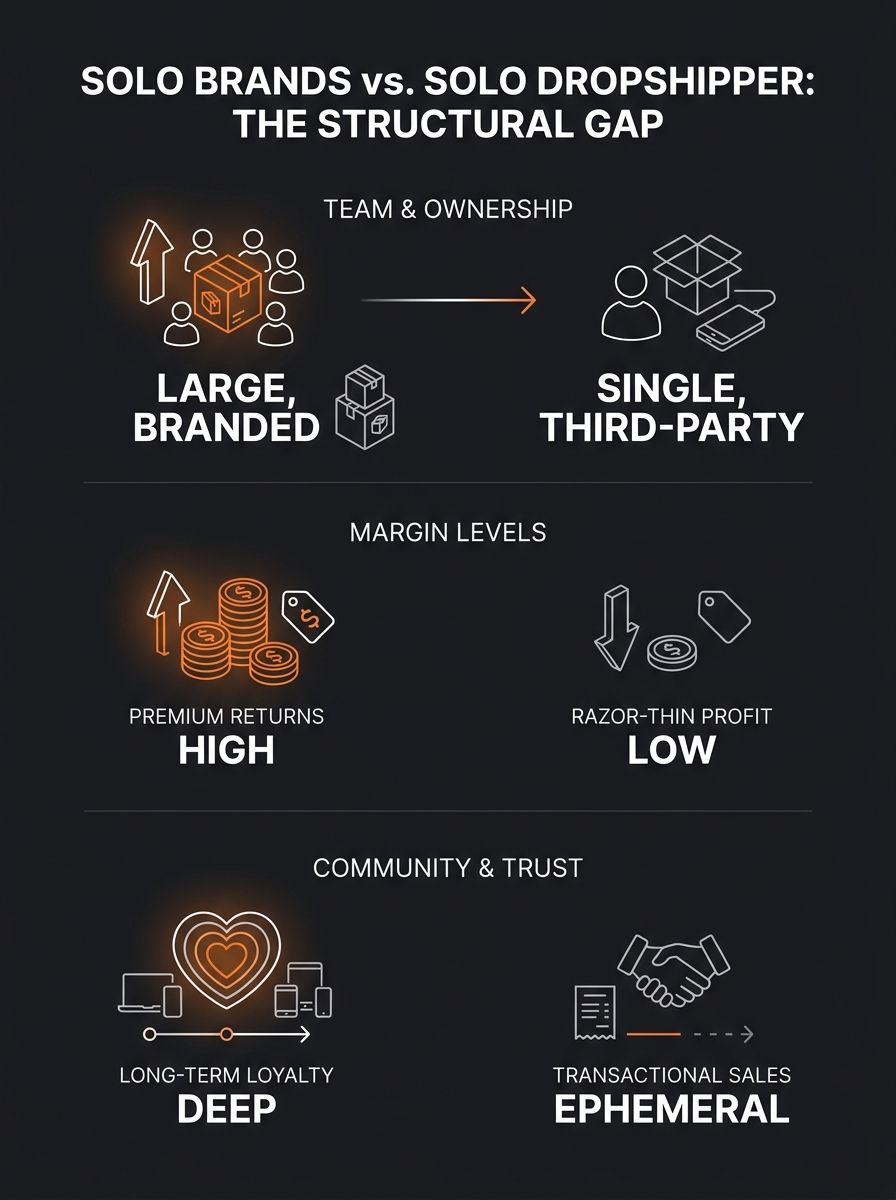
But Solo Brands had something the average dropshipping brand building effort doesn't: owned products with 50-70% gross margins, full-time marketing teams, and years of community cultivation before anyone drew a flywheel diagram on a whiteboard. The flywheel didn't create their growth. Their growth created the conditions for the flywheel.
McKinsey's Five Benchmarks, Translated Into Hours and Dollars
The niche community strategy looks elegant in a slide deck. Translated into operational requirements for a solo operator ecom business, each benchmark demands resources that don't exist.
>75% user-generated content. This means three out of every four pieces of brand content come from customers, not you. To generate UGC at that ratio, you need an existing customer base large enough and enthusiastic enough to produce content voluntarily. A store doing 5-10 orders per day doesn't generate enough customers to fill an Instagram feed, let alone sustain 75% of all content output. The math requires hundreds of repeat buyers who care enough about your brand to photograph themselves with your products.
>2% influencer engagement rate. Average Instagram engagement rates hover around 1.2-1.5% for accounts with 10K+ followers. Hitting >2% means either working with micro-influencers (which requires outreach, vetting, and relationship management that eats 10-15 hours per week) or having a product so visually compelling that influencers seek you out. A dropshipped product available from three other stores on the same platform doesn't generate that pull. As one commenter in an r/ecommerce thread put it, "Most people fail because they send traffic to something that doesn't deserve attention yet."
>4% online traffic conversion. Average Shopify store conversion sits around 1.3-1.8%. Reaching 4% requires exceptional product-market fit, a trusted brand, strong reviews, and a checkout flow with zero friction. If your store is leaking margin through an unaudited checkout, you're fighting the benchmark before you even start on community.
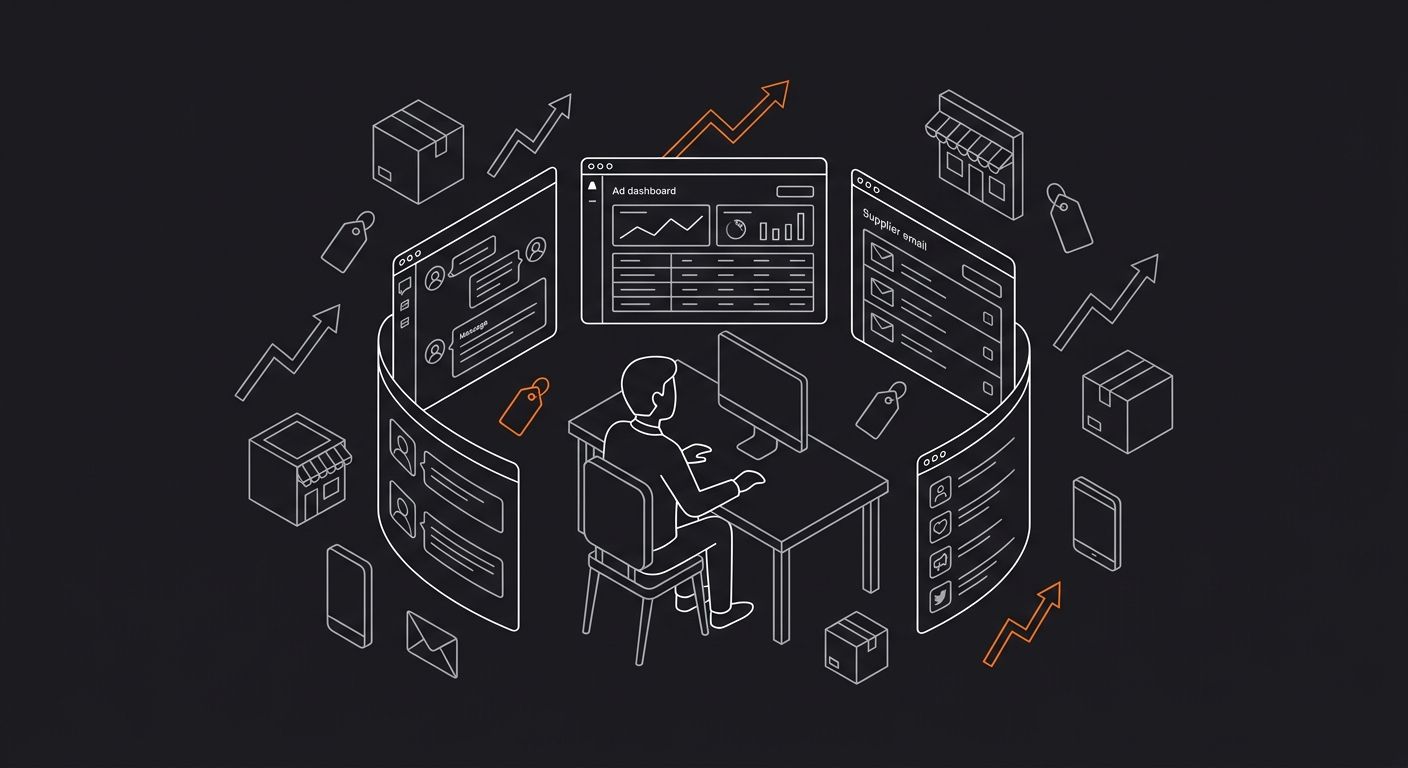
Viral content 2x/year. You can't schedule virality. You can create conditions for it with a content volume strategy, a responsive social media team, and trending audio/format awareness. One person running ads, handling customer service, managing suppliers, and updating product listings has roughly zero bandwidth for planned viral content campaigns.
McKinsey Benchmark | What It Requires | Solo Operator Reality |
|---|---|---|
>75% UGC | Hundreds of active, loyal customers | 5-15 daily orders, minimal repeat buyers |
>2% influencer engagement | Managed influencer relationships, 10-15 hrs/week | No time, no budget for gifting/outreach |
>4% conversion rate | Trusted brand, optimized UX, strong reviews | 1.3-1.8% average, generic store template |
Viral content 2x/year | Dedicated content team, trend monitoring | Owner handles everything, no content pipeline |
Effortless transactions | Custom checkout, multi-channel presence | Single Shopify store, default checkout |
The Margin Arithmetic That Kills the Wheel Before It Turns
The DTC brand flywheel requires reinvestment. Community building, content production, influencer gifting, branded packaging, and customer engagement programs all cost money that comes out of operating margin. This is where the playbook falls apart for dropshippers specifically.
A well-run dropshipping store operating on disciplined 30% gross margins is netting roughly 10-15% after ad spend, payment processing, platform fees, and returns. On a $40 average order, that's $4-$6 of actual profit per order. At 10 orders per day, you're generating $40-$60 in daily profit, or roughly $1,200-$1,800 per month.
Compare that with the resources Solo Brands brought to their flywheel: DTC brands with 50-70% gross margins and $25K-$100K in launch capital as a baseline. Solo Stove's margins gave them the cash flow to invest $100K+ annually into community programs, ambassador networks, and content studios. The difference between a 15% net margin on a dropshipped product and a 35% net margin on an owned product compounds ferociously over 12 months.
Printful's own brand-building guide acknowledges this tension implicitly when it advises store owners to "turn your audience into a community by inviting customers to share progress photos using a branded hashtag." The advice assumes you already have an audience. For a store doing $1,500/month in net profit, the audience-building phase alone requires 6-18 months of paid acquisition before any community dynamics kick in.
And the dropshipping realism here gets worse. Global Work Digital's 2026 analysis of e-commerce failure rates is blunt: "Without niche focus, innovation, or brand authority, new ecommerce businesses are quickly pushed out by better-funded or more established competitors." The flywheel playbook tells you to build brand authority. But brand authority requires capital that low-margin operations don't produce fast enough to survive the competitive window.
What Solo Operators Should Protect Instead of a Flywheel
The brand-building content ecosystem creates a dangerous aspiration gap. Dropshippers read about niche community strategy, attempt to execute all five McKinsey inputs simultaneously, and end up doing everything poorly instead of a few things well. If you're operating as a solo operator ecom business, the resources you'd spend trying to generate 75% UGC have dramatically higher ROI when directed elsewhere.
Your CAC payback period matters more than your community engagement rate. Getting that number under 30 days means you can reinvest revenue into acquisition faster, which builds the customer base that might one day produce organic UGC. But you don't start with the UGC. You start with the math.
Your post-purchase email sequence matters more than a branded hashtag campaign. A 4-email post-purchase flow that generates even a 15% repeat purchase rate adds more lifetime value per customer than an Instagram hashtag that gets used by 2% of buyers.
Your supplier relationships determine product quality, shipping speed, and return rates. Each of those directly affects whether a customer would ever consider becoming a brand advocate. A supplier with communication failures mid-campaign destroys community goodwill faster than any hashtag campaign can build it.
The Flywheel Is the Reward, Not the Strategy
Solo Brands didn't build a community flywheel because McKinsey told them to. They built products people loved, sold them at margins that funded reinvestment, hired teams to manage community touchpoints, and over years of compounding effort, the flywheel effect emerged. The framework describes what happened after success, not what caused it.
For a dropshipper reading this playbook and wondering why it isn't working: the answer is structural, not motivational. You're not failing because of lazy execution. You're attempting to run a system designed for a $10M+ revenue operation on $1,500/month in net profit, with one person filling every role. The playbook assumes you control your product, your packaging, your shipping timeline, and your customer experience end-to-end. Dropshipping, by definition, means you control very little of that stack.
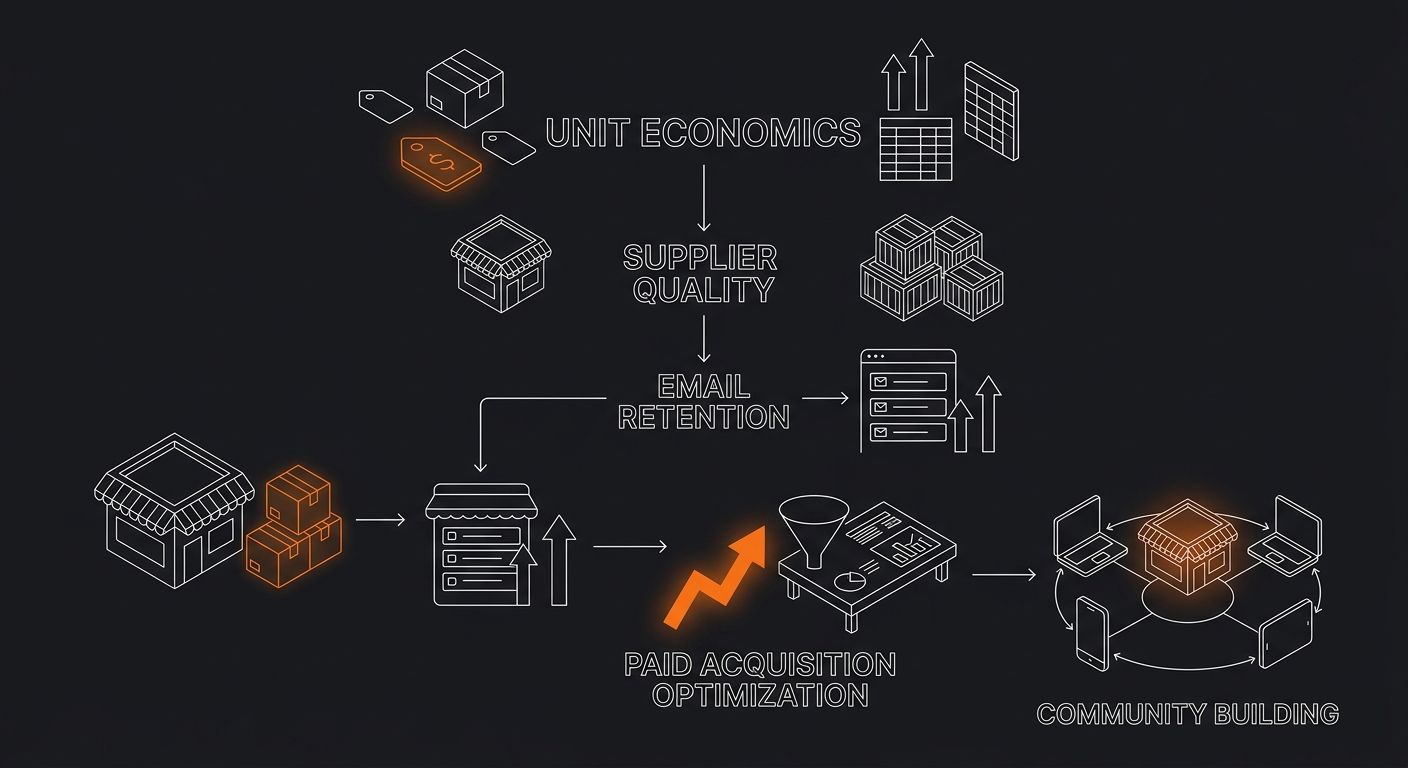
The better path forward is sequential, not simultaneous. Get unit economics right. Get supplier quality locked. Get email retention generating repeat revenue. Get acquisition costs predictable. Then, and only then, with a customer base in the hundreds and monthly profit in the five figures, does "build a community" become an operational reality rather than an aspirational slide in someone else's strategy deck.
365 Dropship Editorial
Editorial team writing about E-commerce, dropshipping, and product discovery — reviews of dropshipping suppliers and platforms, trending niche guides (jewelry, beauty, pets, home, fashion), supplier due diligence, ecom operations, shipping & fulfillment strategy, product research, AOV optimization, and profitable dropshipping case studies.
Related Articles

Niche-First Dropshipping vs. Product-First: Why 2026's Winners Are Building Around Community, Not Viral Items
Three stores selling the same viral silicone ice tray, sourced from CJ Dropshipping at $4.20 per unit, can run identical Meta ads to the same broad audience and all three will lose money.
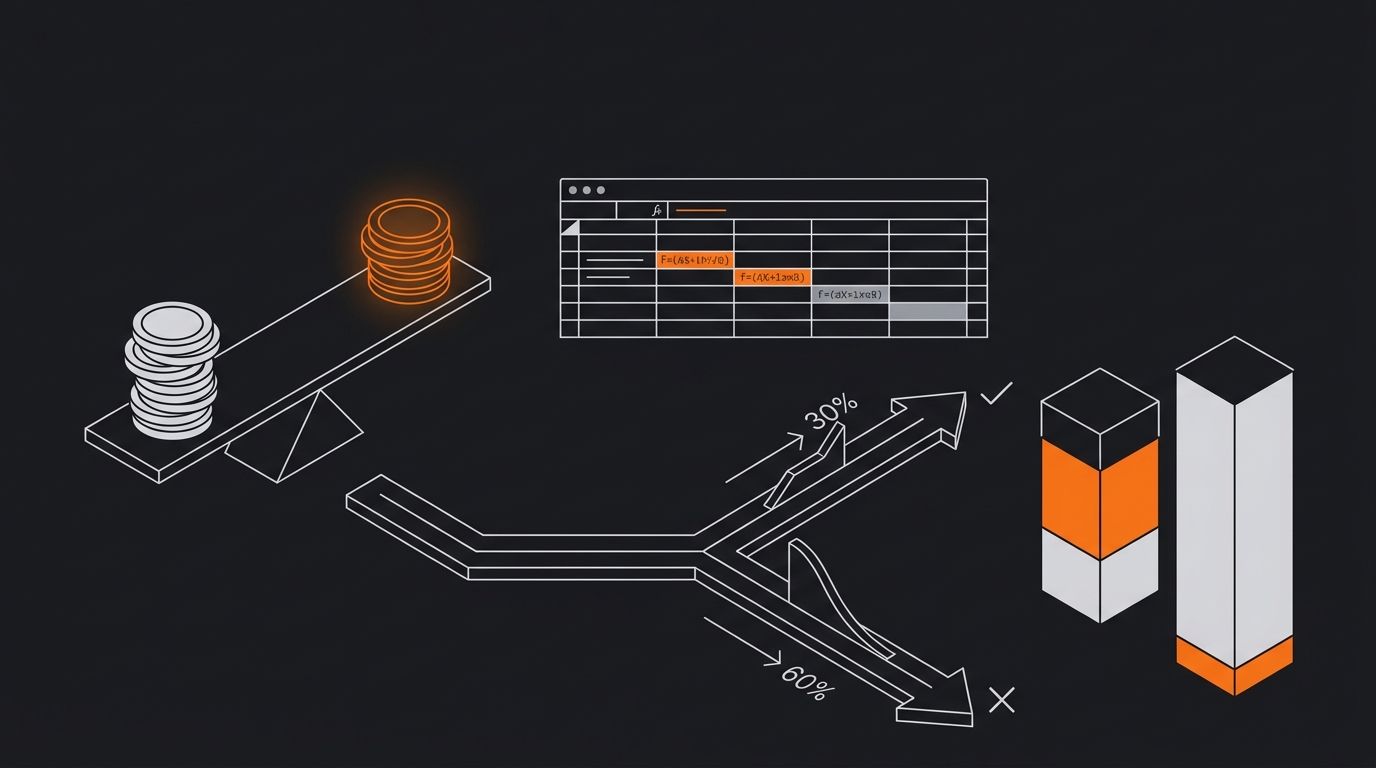
Stop Chasing 60% Margins: Why a Disciplined 30% Gross Margin Business Outperforms Most 'High-Margin' Dropshipping Stores
A 60% gross margin on a $50 dropshipped product leaves $30 before costs. After $12 in ad spend, $2 in payment processing, $1 in platform fees, and $3 in return-related losses, that $30 becomes $12 — a 24% net margin.
From Pandemic Pivot to Profitable Store: The Untold Operations Lessons Behind 2020-2026 Dropshipping Success Stories
COVID-era ecommerce operators who survived past 2022 share a pattern that has nothing to do with finding the right product or running the right ad. The pattern is operational: supplier onboarding speed, cash flow reinvestment discipline, and fulfillment consolidation.
Explore more topics