Small Business Scaling Guide Identifies Five Decision Points for Growing Ecommerce Operators Without Margin Burnout
A small business scaling guide published June 14 on mcwen.org identifies five operational decision points—hiring thresholds, automation triggers, and pricing adjustments—that determine whether growing ecommerce stores preserve margins or burn out their operators, positioning financial groundwork as

Small Business Scaling Guide Identifies Five Decision Points for Growing Ecommerce Operators Without Margin Burnout
A small business scaling guide published June 14 on mcwen.org identifies five operational decision points—hiring thresholds, automation triggers, and pricing adjustments—that determine whether growing ecommerce stores preserve margins or burn out their operators, positioning financial groundwork as the first gate before capacity expansion.
The mcwen.org operational framework targets merchants who have exhausted personal working hours but lack a structured approach to scaling without sacrificing profitability or personal bandwidth. The guide positions financial data review as the mandatory first step, requiring operators to download quarterly cash flow reports and calculate customer retention rates before making hiring or automation decisions.
Financial Review as First Gate
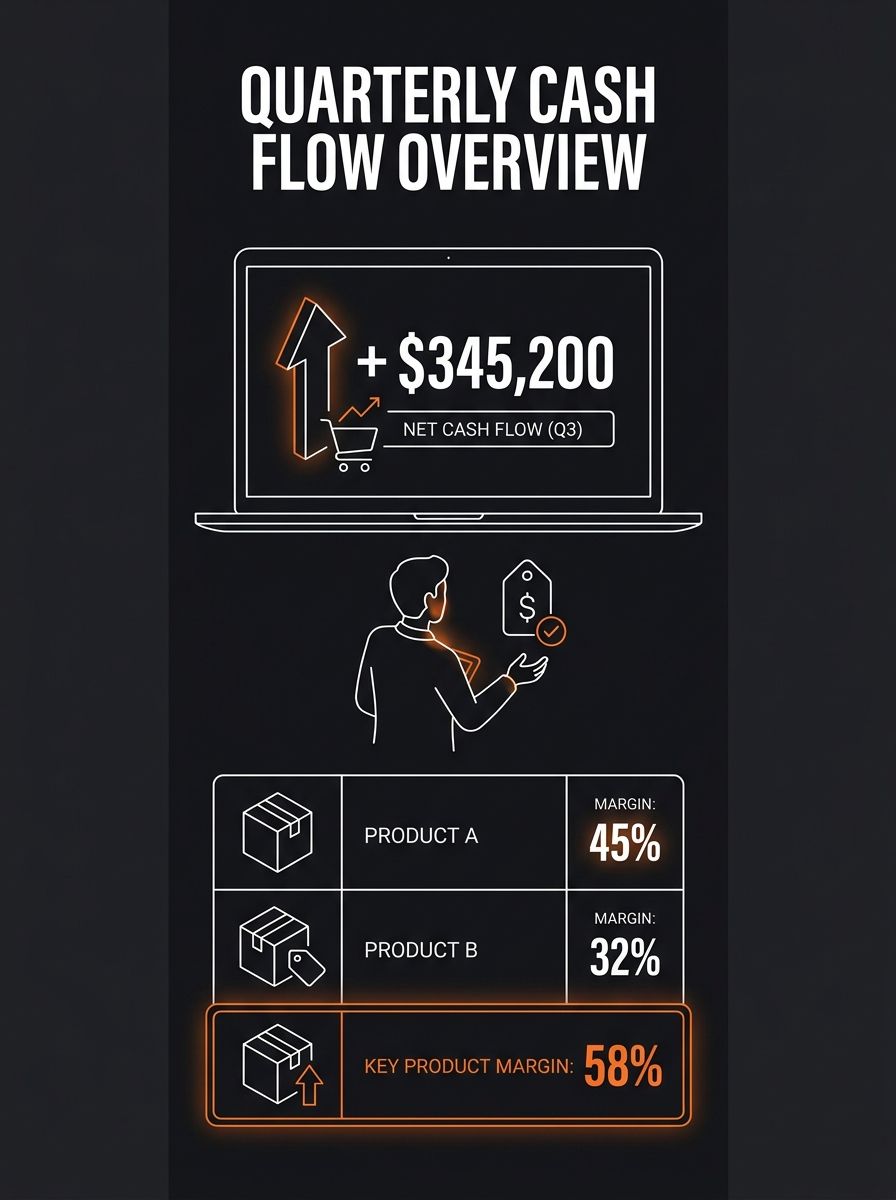
The framework mandates quarterly performance reviews to identify operational peaks and valleys before allocating expansion capital, according to the guide. Operators must understand which products or services generate the highest margins and position the business model for upcoming quarters before adding staff or software costs.
The guide recommends setting a calendar reminder on the last Friday of every quarter to download cash flow reports, allowing operators to spot financial trends before they impact daily operations. This quarterly cadence provides the data layer needed to justify hiring decisions and automation investments without guessing at capacity needs.
Hiring Decision Framework
The guide presents five diagnostic questions to determine hiring readiness: whether the operator regularly turns away orders due to capacity limits, spends hours weekly on repetitive administrative tasks, has hit flat revenue because of time constraints, faces dragging response times or shipping dates, and loses money by handling manual work instead of focusing on strategy.
Answering yes to most of these questions signals readiness to hire support staff or form capacity-building partnerships, according to the framework. The guide positions hiring as a transition from operator-constrained revenue to team-enabled growth, allowing the owner to shift from fulfillment execution to long-term strategy.
The framework also recommends hiring specialized consultants for discrete projects rather than immediately adding full-time staff, providing a middle ground between solo operation and committed payroll expense.
Automation and Software Integration
The guide identifies calendar automation, instant confirmation alerts, digital invoicing, automated email follow-ups, and app integration as high-impact automation targets that save hours weekly. It recommends self-service online scheduling tools to eliminate back-and-forth messaging and automated text reminders to reduce missed appointments or order delays.
"A thrift store-specific point of sale system includes essential donation management features that traditional retail systems lack," according to ThriftCart, cited in the guide as an example of niche-specific software that fits operations without customization overhead. The framework warns against general solutions that require extensive configuration, instead recommending platforms built for the operator's specific vertical.
This automation layer creates bandwidth for client focus and long-term planning, the guide states, while reducing the margin tax from installing unnecessary tools that don't address core workflow bottlenecks.
Marketing and Web Design Standards
The guide frames marketing as building an online presence that attracts ideal clients rather than chasing every lead. It prioritizes web design aligned with brand identity, clear communication of unique expertise, regular email newsletters, and scheduled social media content as the four core areas for steady client acquisition.
"Users heavily judge a company's credibility by its website design," according to MassageBook, cited in the guide to support the recommendation that operators perfect their site layout to ensure strong first impressions. The framework positions website quality as the trust foundation that converts incoming traffic into revenue.
The guide recommends scheduling social media content in advance to maintain consistent online presence automatically, reducing the daily time burden while preserving visibility. This structured approach allows operators to allocate limited marketing budgets effectively across channels that drive measurable client interest.
Pricing Model Adjustments
The framework addresses pricing anxiety directly, stating that as operator skills develop and business costs rise, rates must adjust to support growth. It recommends researching industry-specific pricing benchmarks, transparently communicating price increases by emphasizing deeper expertise and elevated value, and bundling offerings to provide extra value without discounting base rates.
The guide specifies giving existing loyal clients 30 days' notice before new prices take effect through dedicated marketing updates. This courtesy period builds goodwill while keeping the calendar and pipeline full at the old rate, creating revenue continuity during the pricing transition.
The framework positions pricing adjustments as a confidence exercise rather than a technical challenge, requiring operators to align their rates with the value they deliver as their experience and operational efficiency increase.
Context and Outlook
The mcwen.org framework addresses a critical transition point for dropshipping and DTC operators: the moment when adding more working hours no longer translates to proportional revenue growth. The five-point sequence—financial review, hiring assessment, automation selection, marketing foundation, pricing confidence—maps to the operational reality of stores moving from $5,000 to $50,000 monthly revenue, where solopreneur execution becomes the bottleneck.
For Shopify merchants evaluating capacity investments, the framework's emphasis on quarterly financial review before adding costs aligns with the margin-thin reality of ecommerce operations, where premature hiring or automation spending can collapse unit economics faster than it expands output. The diagnostic questions for hiring readiness and the niche-specific software recommendation both reflect the practical constraints of operators who cannot afford to make expensive scaling mistakes.
The guide's publication timing—mid-2026, as more sellers face post-pandemic ecommerce maturation and compressed margins—positions these five decision points as a checklist for merchants who need structured growth frameworks rather than aspirational scaling narratives. The emphasis on 30-day notice periods for pricing changes and quarterly cash flow reviews provides concrete timelines that operators can implement without restructuring their entire operation at once.

Ryan Torres
Ryan Torres is a former Amazon FBA seller turned dropshipping consultant who has generated over $2.8M in ecommerce revenue across 14 product launches. He specializes in supplier vetting, margin optimization, and scaling DTC operations for sub-$1M brands. Ryan focuses on actionable frameworks that drive measurable results for independent operators.
Related Articles

Dropshipping Platform Guide Breaks Down Storefront vs. Sourcing Trade-offs Across Nine Provider Categories
Dropshipping operators choosing between marketplace listings and standalone storefronts face fundamentally different cost structures, shipping timelines, and quality control requirements, according to a platform comparison guide 4Topic published June 22. The analysis separates nine provider categori

From Pandemic Pivot to Profitable Store: The Untold Operations Lessons Behind 2020-2026 Dropshipping Success Stories
COVID-era ecommerce operators who survived past 2022 share a pattern that has nothing to do with finding the right product or running the right ad. The pattern is operational: supplier onboarding speed, cash flow reinvestment discipline, and fulfillment consolidation.

BuckyDrop Publishes Platform Cost Comparison Positioning Shopify Against WooCommerce and BigCommerce for 2026 Dropshipping Operations
BuckyDrop released a three-platform comparison guide on July 15 mapping Shopify, WooCommerce, and BigCommerce against dropshipping workflow requirements and total software costs, according to the company blog.
Explore more topics