Red Light Therapy DTC Brands Require $25K-$100K Launch Capital for 50-70% Margins, New Operational Guide Shows
A red light therapy DTC brand requires $25,000 to $100,000 in upfront capital and delivers 50-70% gross margins when launched as a private-label operation, according to an operational guide published June 2 by Rainbow, a wellness device manufacturer.
Red Light Therapy DTC Brands Require $25K-$100K Launch Capital for 50-70% Margins, New Operational Guide Shows
A red light therapy DTC brand requires $25,000 to $100,000 in upfront capital and delivers 50-70% gross margins when launched as a private-label operation, according to an operational guide published June 2 by Rainbow, a wellness device manufacturer.
The framework details specific investment thresholds, margin structures, and timeline benchmarks for operators evaluating the high-margin wellness device niche, breaking down capital requirements across inventory, platform setup, and initial marketing spend.
Three Business Models With Distinct Capital and Margin Profiles
Private-label brands—where operators source devices from manufacturers, apply their own branding, and control the customer experience—require $25,000 to $100,000 in startup capital but deliver 50-70% gross margins, the guide states. Launch timelines span 3-6 months from supplier selection to first sale.
Authorized retailer models drop the entry threshold to $10,000-$50,000 and compress launch timelines to 1-3 months, but margins fall to 25-40% because operators sell established brand products with manufacturer-set pricing. "Established brand recognition" and "manufacturer support" offset the margin compression, according to the framework, but operators face "price competition" and "brand dependency" risks.
The hybrid model blends both approaches at $20,000-$75,000 investment, targeting 35-60% blended margins by pairing private-label products with authorized brand distribution. The dual-track strategy lets operators generate revenue from recognized brands while building proprietary brand equity simultaneously, the guide notes.
Product Line Architecture Spans $30 Entry Devices to $2,000+ Premium Panels
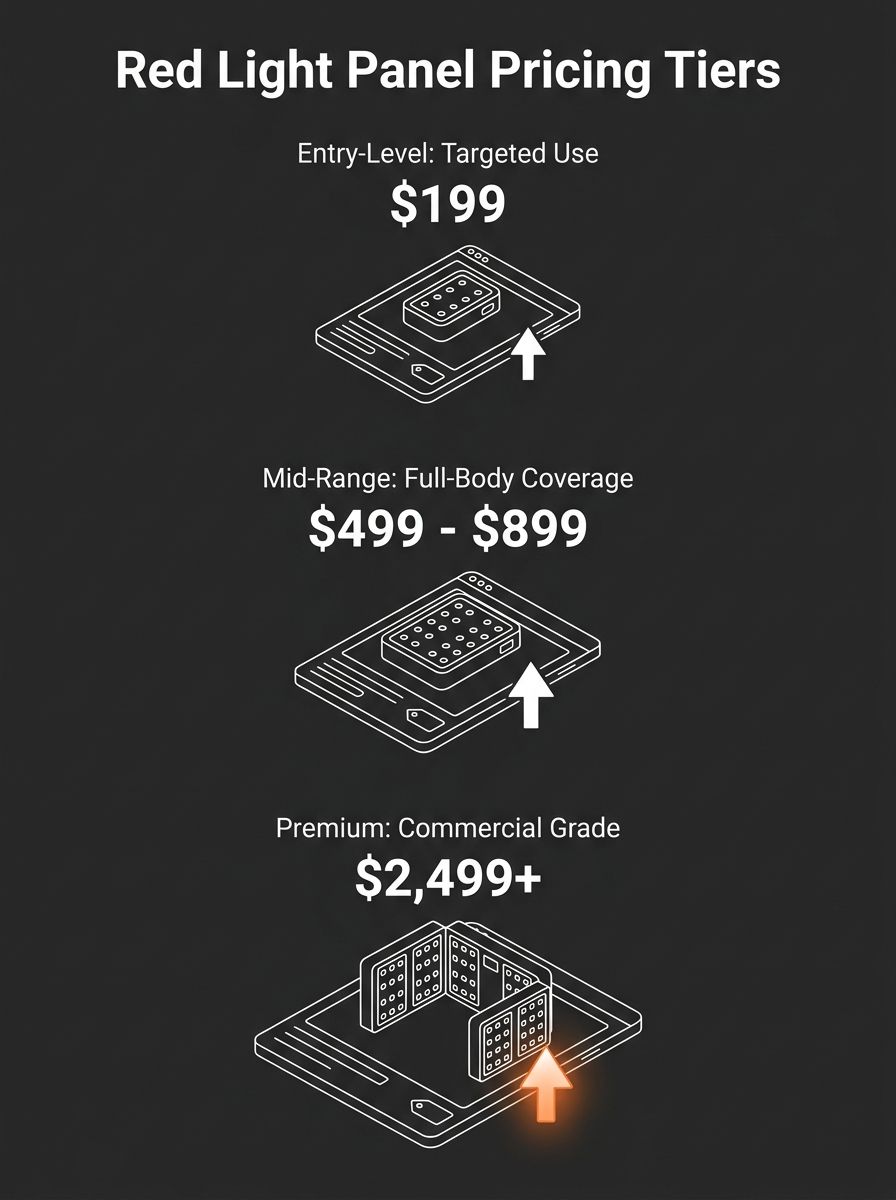
The guide maps a four-tier product architecture: entry-level LED masks and spot-treatment devices priced $30-$100 for customer acquisition, mid-range professional masks and medium panels at $100-$500 as the core revenue driver, premium full-body panels and multi-device systems at $500-$2,000+ for brand positioning, and an accessory line including eye protection and treatment stands for add-on revenue.
"Customer acquisition and trial" happens at the low end, while premium products serve "brand positioning and high-value sales" functions, the framework states. Operators should layer accessory SKUs to increase average order value beyond the core device sale.
The $200 billion global wellness e-commerce market provides the macro backdrop, with health and personal care cited as the fastest-growing e-commerce category. DTC wellness brands are growing at three times the rate of traditional retail channels, the guide notes, citing unnamed industry data.
Platform Selection Centers on Shopify for Scalability and App Ecosystem
Shopify receives the "recommended for most brands" designation based on setup ease, app ecosystem depth, and scalability from startup to enterprise, according to the framework. WooCommerce suits operators prioritizing "maximum customization" and content-rich sites but demands more technical expertise, while BigCommerce targets scaling brands needing enterprise features and multi-channel support.
The essential technology stack includes email marketing platforms like Klaviyo or Mailchimp, SEO tools such as Ahrefs or SEMrush, and customer service systems like Gorgias or Zendesk. Conversion optimization requires product review apps (Yotpo, Loox), live chat, and abandoned-cart recovery tools, the guide states.
Operators entering the niche should build inventory management and order fulfillment systems before launch, as the 3-6 month private-label timeline includes supplier vetting, sample testing, and brand development alongside platform configuration. Evaluating supplier scorecard metrics becomes critical when sourcing wellness devices where quality variance directly impacts return rates and customer lifetime value.
Marketing Strategy Prioritizes Educational SEO Over Paid Acquisition
The framework positions content marketing and SEO as primary customer acquisition channels, targeting educational keywords like "does red light therapy work" (22,000 monthly searches) alongside product terms like "red light therapy panel" (12,000 monthly searches). Educational content—how the therapy works, wavelength science, treatment protocols—builds brand authority before purchase consideration, the guide notes.
"Scientific credibility" comes from advisory boards, research partnerships, and conference presentations that position the brand as expert-backed rather than commodity vendor. Customer transformation stories and founder mission narratives support the brand story layer.
The guide does not specify customer acquisition cost benchmarks or payback period targets, leaving operators to model unit economics based on their chosen business model's margins and average order values. At 50-70% gross margins on mid-range products priced $100-$500, private-label operators working backward from $50-$100 CAC targets would need to drive conversions at 2-4% on paid traffic or rely on organic SEO channels to hit profitability thresholds.
Context and Outlook
The red light therapy niche sits in the high-margin wellness category where educational content converts browsers into buyers and where product quality variance creates supplier vetting requirements stricter than commodity dropshipping. Operators considering the space face a capital-vs-margin tradeoff: private-label models demand six-figure startup budgets but deliver gross margins comparable to software, while authorized retailer paths lower the entry barrier but compress margins below most viable CAC payback windows for paid acquisition.
The framework's published benchmarks—50-70% private-label margins, $25K-$100K investment floors, 3-6 month launch timelines—map to niche-first community building strategies rather than viral product arbitrage. Wellness device buyers research wavelength specifications, read clinical summaries, and evaluate brand credibility before purchase, making the category a poor fit for impulse-driven paid social funnels.
The June 2 publication date positions the guide as a 2026 baseline for operators evaluating whether to enter wellness devices or stick to lower-capital, faster-launch dropshipping niches. For solopreneurs with under $25,000 in working capital, the authorized retailer model's 25-40% margins create a customer acquisition math problem: at $200 average order value and 30% margin, each sale yields $60 gross profit against CACs that typically run $40-$80 in wellness verticals, leaving minimal room for fulfillment costs, returns, and contribution margin.

Ryan Torres
Ryan Torres is a former Amazon FBA seller turned dropshipping consultant who has generated over $2.8M in ecommerce revenue across 14 product launches. He specializes in supplier vetting, margin optimization, and scaling DTC operations for sub-$1M brands. Ryan focuses on actionable frameworks that drive measurable results for independent operators.
Related Articles

Seven of 15 DTC Unicorns Maintained Valuations Through 2025 as ConversionStudio Publishes 12-Brand Case Study Series
Seven of 15 direct-to-consumer brands valued as unicorns between 2015 and 2022 maintained or grew their valuations through 2025, according to a brand case-study analysis published by ConversionStudio on September 16, 2026, citing CB Insights data that tracks category-disruption patterns among scaled

Small Business Scaling Guide Identifies Five Decision Points for Growing Ecommerce Operators Without Margin Burnout
A small business scaling guide published June 14 on mcwen.org identifies five operational decision points—hiring thresholds, automation triggers, and pricing adjustments—that determine whether growing ecommerce stores preserve margins or burn out their operators, positioning financial groundwork as

Complete Guide to Starting a Dropshipping Business
Every dropshipping business built on Shopify, Amazon, Etsy, eBay, or Walmart faces the same registration requirement: formal business filing, a dedicated bank account, and a sales tax permit.
Explore more topics