Dropshipping How to: Complete Beginner's Guide
Every step of launching a dropshipping store fits into a single weekend: niche selection, LLC registration, Shopify storefront, supplier vetting, product import, and a live test order. Total startup cost sits under $150, and you'll have a functioning store accepting real orders by Sunday night.
Dropshipping How To: The Complete Beginner's Guide
Every step of launching a dropshipping store fits into a single weekend: niche selection, LLC registration, Shopify storefront, supplier vetting, product import, and a live test order. Total startup cost sits under $150, and you'll have a functioning store accepting real orders by Sunday night.
Before You Start
You need four things before step one. A valid credit or debit card for platform subscriptions. A government-issued ID for LLC registration. A desktop or laptop (don't try building your store on a phone). And roughly 6-8 uninterrupted hours across a weekend.
Budget breakdown for your first week:
Domain name: $12-15/year (Namecheap, Google Domains, or through Shopify)
Shopify Basic plan: $1 for the first month (standard trial pricing), then $39/month
Supplier app (CJDropshipping, Spocket, or DSers): $0-29/month depending on tier
LLC filing: $50-500 depending on your state (Kentucky is $40, California is $70 + $800 annual franchise tax)
Total realistic first-month spend: $65-$150 in most states.
You don't need prior ecommerce experience. You do need patience for the unglamorous parts: reading supplier reviews, calculating landed costs, and refreshing tracking numbers.
Step 1: Pick a Niche That Supports 40%+ Margins
The "general store" model is dead. The dropshipping market is projected to hit $476.1 billion by 2026, and that scale means brutal competition on commodity products. You win by going narrow.
Your niche needs to pass three filters:
Supplier cost allows 40%+ gross margin. If a product costs $12 from the supplier and ships for $5, your landed cost is $17. You need to sell it for at least $28.33 to hit 40%. Products under $10 retail rarely work because ad costs eat the margin.
The product solves a specific problem. "Phone accessories" is a category. "MagSafe-compatible car mounts for trucks with oversized dashboards" is a niche. The more specific the problem, the cheaper your ad targeting.
Competitors exist but aren't dominant. Zero competitors means zero demand. Ten competitors running Meta ads on the same product means validated demand. One hundred competitors with identical listings means you're too late.
Spend 2-3 hours on this step. Search your potential niche on Amazon, check Meta Ad Library for active ads, and look at Google Trends for demand trajectory. We've published a breakdown of high-margin niche categories if you want a head start on research.
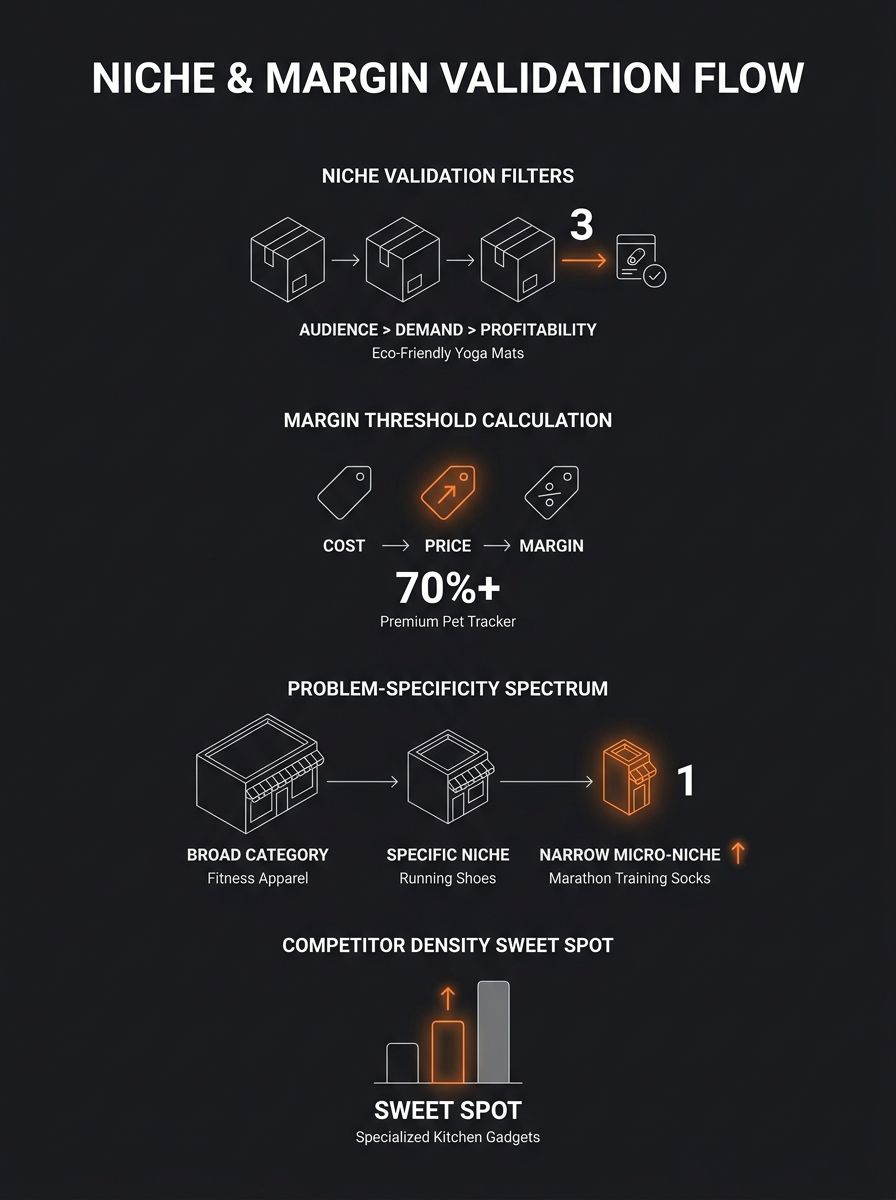
You'll know it worked when: You've identified 3-5 potential products in your niche with supplier costs that leave room for 40%+ gross margin after shipping.
Step 2: Register Your LLC and Get an EIN
Make the business official before you build anything. As Forbes Advisor documents, most dropshippers choose an LLC because it separates personal assets from business liabilities. A sole proprietorship works legally, but one chargeback dispute or product liability claim and your personal bank account is exposed.
The process takes about 45 minutes:
Go to your state's Secretary of State website
File Articles of Organization (the form is usually 1-2 pages)
Pay the filing fee ($40-$500 depending on state)
Apply for an EIN on the IRS website (free, takes 5 minutes online)
Your EIN is your business's Social Security number. You'll need it to open a business bank account, set up Shopify Payments, and file taxes. If you want a deeper look at compliance requirements across different countries, our legal requirements guide covers the specifics.
You'll know it worked when: You have an LLC confirmation document from your state and an EIN letter from the IRS.
Step 3: Build Your Shopify Store
Shopify handles hosting, SSL certificates, payment processing, and checkout in one package. According to a CJDropshipping analysis of beginner platforms, Shopify's drag-and-drop builder and 24/7 support make it the default choice for new dropshippers, with direct integrations for CJDropshipping, Spocket, Modalyst, and Printful built into the app store.
Here's the build sequence:
Sign up at shopify.com ($1 first month on the Basic plan)
Pick a free theme (Dawn is Shopify's default and performs well for product pages)
Add your logo and brand colors (use Canva if you don't have design software)
Create your core pages: About, Contact, Shipping Policy, Return Policy, Privacy Policy
Set up your domain (buy through Shopify for $14/year or connect an external one)
Don't spend more than 3 hours on design. Your store needs to look professional, not perfect. Obsessing over fonts and hero images before you have a single product listed is a classic beginner trap.
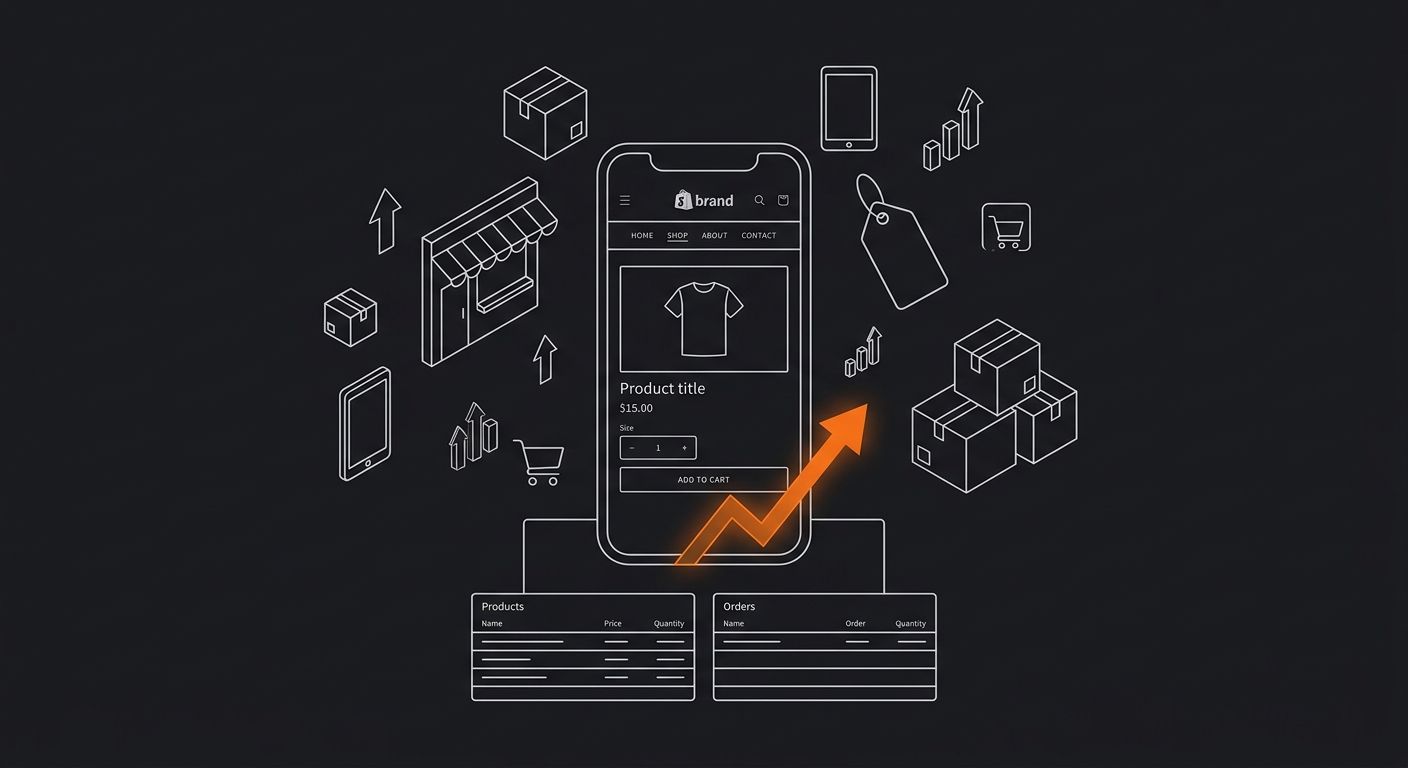
You'll know it worked when: Your store loads on a custom domain with SSL (the padlock icon), has all five core pages published, and displays your brand name and logo.
Step 4: Find and Vet Suppliers
84% of top-performing dropshippers cite supplier reliability as the single most important factor in their business, according to industry benchmarking data. This step is where most beginners cut corners, and it costs them in chargebacks and 1-star reviews within the first 90 days.
Your three main supplier platforms:
Platform | Product Access | US Shipping Speed | Monthly Cost | Best For |
|---|---|---|---|---|
CJDropshipping | 400K+ products | 7-15 days (US warehouse: 3-7) | Free tier available | Beginners wanting variety |
Spocket | 100K+ products | 2-5 days (US/EU suppliers) | $39.99/month | Fast domestic shipping |
AliExpress (via DSers) | Millions of products | 15-45 days (ePacket) | Free tier available | Lowest product costs |
For a complete walkthrough of sourcing through AliExpress, we've covered the platform's pricing structure and shipping tiers in detail.
Vet every supplier before importing a single product:
Order a sample. Pay retail price, ship it to yourself. Check packaging quality, actual shipping time, and whether the product matches the listing photos.
Check reviews and response time. Message the supplier with a question. If they take more than 24 hours to respond, they'll take longer when a customer has a problem.
Verify shipping origin. "US warehouse" sometimes means "ships from China to a US address that forwards domestically." Ask for the specific warehouse location.
96% of customers require 2-5 day shipping windows to leave positive reviews. If your supplier can't consistently deliver within that window, your store's reputation will erode before you reach 100 orders.
You'll know it worked when: You've received physical samples from at least two suppliers, verified their shipping times, and confirmed product quality matches listing descriptions.
Step 5: Import Products and Set Prices
Install your chosen supplier app (CJDropshipping, DSers, or Spocket) from the Shopify App Store. Connect it to your store with one click. Then import 15-25 products from your vetted suppliers into your catalog.
Pricing formula for every product:
Retail Price = (Supplier Cost + Shipping Cost) ÷ (1 - Target Margin)
Example: Supplier charges $8 for a product. Shipping to the US costs $4. Your landed cost is $12. To hit 40% gross margin:
$12 ÷ 0.60 = $20.00 retail price
To hit 50% gross margin: $12 ÷ 0.50 = $24.00
Don't price at exactly what the formula spits out. Check what competitors charge for similar products and price within 10-15% of that range. If the math doesn't work at competitive prices, the product doesn't belong in your store.
For each imported product, rewrite the title and description. Supplier-provided copy is generic and often poorly translated. Write 50-100 words of original product description focused on benefits, not features. If you need help with margin calculations across your entire catalog, our profit margin formula breakdown walks through the math in detail.
You'll know it worked when: You have 15-25 products live on your store with original descriptions, and every product has a minimum 40% gross margin at the listed price.
Step 6: Configure Payments and Shipping
Activate Shopify Payments in your store settings using your EIN and business bank account. This gives you access to credit card processing at 2.9% + $0.30 per transaction on the Basic plan. Also enable PayPal and Shop Pay for checkout flexibility.
For shipping, set up zones based on where your suppliers can actually deliver:
Domestic (US): Set flat-rate shipping at $4.99-$7.99, or offer free shipping and bake the cost into your product prices (most successful stores go this route)
International: Either disable it entirely for now, or set rates at $12.99+ to cover the longer, more expensive supply chain
Write a shipping policy page that states realistic delivery windows. If your supplier ships from a US warehouse in 3-7 business days, say "5-10 business days" on your policy page. Under-promise, over-deliver.
You'll know it worked when: You can add a product to your cart, enter a test address, and see correct shipping rates and payment options at checkout.
Step 7: Place a Test Order
This is the step 90% of tutorial guides skip, and it's the one that saves you from embarrassment. Place a real order on your own store using a real payment method.
Add a product to cart and complete checkout with your personal address
Confirm the order appears in your Shopify admin
Check that your supplier app forwarded the order to the supplier automatically
Verify the supplier confirms and ships the order
Track the package through to delivery
Time the entire process: order to doorstep
You're testing the full chain: payment processing, order forwarding, supplier fulfillment, shipping speed, and package quality. If anything breaks, you find out now instead of after your first 50 customers have already placed orders.
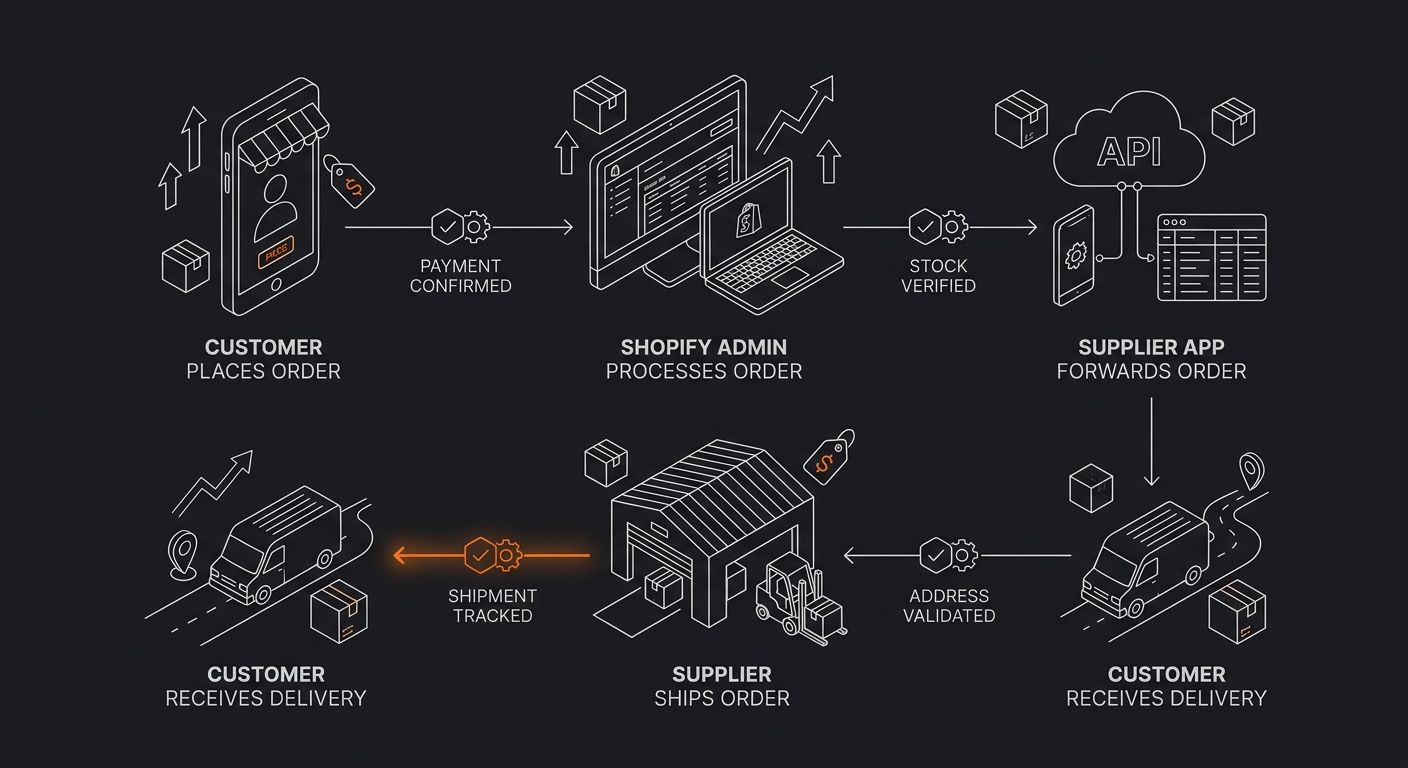
You'll know it worked when: A package arrives at your door within the expected delivery window, with correct contents and acceptable packaging quality.
When Things Break
Three things go wrong most often with new dropshipping stores:
Orders don't forward to the supplier. Usually a sync issue between your Shopify store and the supplier app. Check the app's connection settings, make sure the product is properly linked to a supplier SKU, and verify the app has order-access permissions in Shopify's settings.
Shipping takes twice as long as listed. This happens when suppliers quote warehouse-to-carrier time, not total delivery time. The fix is preventive: order samples before importing products, and add 3-5 days of buffer to every delivery estimate you give customers.
Product quality doesn't match the listing. This is why step 4 (sample ordering) exists. If you skipped it and a customer complains, issue the refund immediately, remove the product, and find a replacement supplier. One bad review on a new store damages conversion rates for months.
Where to Go From Here
Your store is live, your supply chain is tested, and your margins are calculated. The next phase is traffic.
Meta ads drive roughly 68% of successful dropshipping store traffic, making Facebook and Instagram your primary acquisition channels. Start with $10-$20/day in ad spend, target the specific audience your niche product serves, and measure cost-per-purchase, not clicks or impressions. A profitable store typically needs a customer acquisition cost below 30% of the average order value to maintain healthy margins after all expenses.
Traditional ecommerce businesses built on owned inventory sell for 2.5x to 4x annual profit. Dropshipping stores rarely command those multiples because the business depends on supplier relationships and ad accounts you don't fully control. If you want to build long-term equity, consider transitioning your best-selling products to private label or bulk inventory once you've validated demand through the dropshipping model.
The learning curve on how to dropshipping profitably is steeper than most YouTube gurus suggest. But the barrier to entry sits at $150 and a weekend of focused work, which makes it one of the lowest-risk ways to learn ecommerce operations, paid advertising, and supply chain management with real money on the line.

Ryan Torres
Ryan Torres is a former Amazon FBA seller turned dropshipping consultant who has generated over $2.8M in ecommerce revenue across 14 product launches. He specializes in supplier vetting, margin optimization, and scaling DTC operations for sub-$1M brands. Ryan focuses on actionable frameworks that drive measurable results for independent operators.
Frequently Asked Questions
- How much does it cost to start a dropshipping business?
- Total first-month startup costs range from $65-$150 in most states, including a domain name ($12-15/year), Shopify Basic plan ($1 first month, then $39/month), supplier app ($0-29/month), and LLC filing ($50-500 depending on state).
- What gross margin do I need for a profitable dropshipping niche?
- You need a niche that supports at least 40% gross margins to be profitable after accounting for supplier costs, shipping, and advertising expenses. Products under $10 retail rarely work because ad costs consume the margin.
- How long does it take to launch a dropshipping store?
- You can launch a complete dropshipping store in a single weekend, typically 6-8 uninterrupted hours, including niche selection, LLC registration, building a Shopify store, finding suppliers, importing products, and placing a test order.
- What are the best dropshipping supplier platforms?
- The top supplier platforms are CJDropshipping (400K+ products, 7-15 day shipping), Spocket (100K+ products, 2-5 day shipping), and AliExpress via DSers (millions of products, 15-45 day shipping). CJDropshipping and Spocket integrate directly with Shopify.
- What shipping speed do customers expect for positive reviews?
- 96% of customers require 2-5 day shipping windows to leave positive reviews. If your supplier can't consistently deliver within that window, your store's reputation will decline before reaching 100 orders.
- How do I calculate the right retail price for dropshipping products?
- Use the formula: Retail Price = (Supplier Cost + Shipping Cost) ÷ (1 - Target Margin). For example, if a product costs $12 landed and you want 40% margin, the retail price should be $20. Always check competitor pricing and stay within 10-15% of that range.
- Why is placing a test order important before launching a dropshipping store?
- A test order validates your entire supply chain including payment processing, order forwarding to suppliers, fulfillment, shipping speed, and package quality. This prevents problems from occurring after your first 50 customers have already placed orders.
- Should I start with an LLC or sole proprietorship for dropshipping?
- An LLC is recommended because it separates personal assets from business liabilities. A sole proprietorship exposes your personal bank account to risk from chargebacks or product liability claims.
Related Articles
How to Do Dropshipping: Complete Beginner's Guide
This guide walks you through how to do dropshipping from zero to first sale in under a week. Seven steps cover niche selection, business registration, store setup, supplier vetting, product pricing, test orders, and ad launch, with specific costs and timelines at each stage.
Shopify and Dropshipping: Complete Setup Guide
Configuring a Shopify dropshipping store from account creation through first live product takes roughly 90 minutes across six steps.
What is Dropshipping: Complete Beginner's Guide
The global dropshipping market is projected to hit $537.8 billion in 2026, expanding at a 23.6% compound annual growth rate through 2032. Dropshipping is an ecommerce fulfillment model where you sell products online without purchasing or storing inventory.
Explore more topics