Is Dropshipping Legal? Complete Guide 2024
Dropshipping is legal in the United States, EU, UK, Canada, and Australia. No legislation in any of these markets bans the fulfillment model. This guide walks you through seven steps to register your business, configure sales tax collection, and verify IP compliance. Total setup time: 4 to 8 hours.
Is Dropshipping Legal? The Complete Compliance Setup Guide
Dropshipping is legal in the United States, EU, UK, Canada, and Australia. No legislation in any of these markets bans the fulfillment model. This guide walks you through seven steps to register your business, configure sales tax collection, and verify IP compliance. Total setup time: 4 to 8 hours.
Before You Start
You need four things in place before touching any of the steps below. Missing one will stall you mid-process.
Knowledge level: You should already understand what dropshipping is and how order fulfillment works. If you're brand new, read through our beginner's guide to AliExpress dropshipping first.
Time required: Plan for 4 to 8 hours spread across 5 to 7 business days. Some filings (business licenses especially) take 2 to 6 weeks to process, according to Dropship Spy's legal requirements breakdown. You can keep building your store in the meantime, but don't start running paid ads until Steps 1 through 4 are done.
Budget: Between $150 and $800 for initial registration, depending on your state. This covers LLC filing ($50 to $500), a general business license ($50 to $400 annually), and an EIN (free from the IRS).
Tools you'll need:
A laptop or desktop with access to your state's Secretary of State website
Your Social Security Number or ITIN for EIN application
Access to fincen.gov for BOI reporting
A Shopify, WooCommerce, or BigCommerce store (even if it's not live yet)
Step 1: Choose and Register Your Business Entity
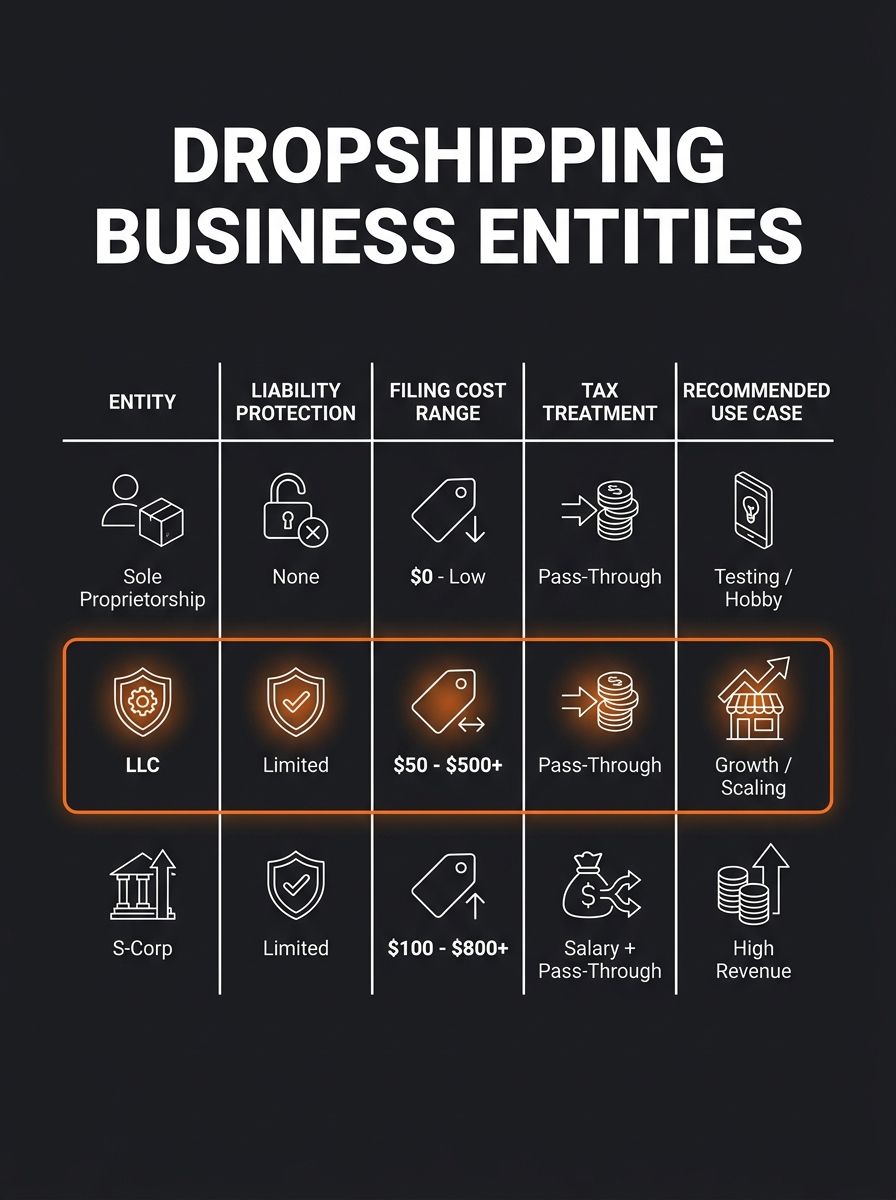
The goal here is to create a legal separation between your personal assets and your dropshipping business. If a supplier ships a defective product and a customer sues, your personal bank account and home are exposed without this step.
The action: Go to your state's Secretary of State website. File for an LLC (Limited Liability Company). Single-member LLCs work fine for solo operators. Filing fees range from $50 in states like Kentucky to $500 in Massachusetts. Processing takes 3 to 15 business days in most states.
Why an LLC and not a sole proprietorship? Sole proprietorships offer zero personal asset protection. When you're working with overseas suppliers you've never met in person, product liability risk is real. An LLC creates a legal wall between you and those claims.
You'll know it worked when: You receive a Certificate of Organization (or Certificate of Formation, depending on the state) with your LLC name and a file number.
Step 2: Get Your Business License and EIN
Every dropshipping business needs at least one business license, typically a general business license from your city or county. Apply through your local government's business licensing portal.
The action (license): Search "[your city] business license application" and fill out the form. Costs range from $50 to $400 annually. Processing takes 2 to 6 weeks. Some cities let you operate on a "pending" status while the application is in review.
The action (EIN): Go to irs.gov and apply for a free Employer Identification Number. This takes about 10 minutes online, and you'll receive your EIN immediately upon completion. You need this for opening a business bank account, filing taxes, and registering with most payment processors.
You'll know it worked when: You have a physical or digital business license certificate and a 9-digit EIN from the IRS.
Step 3: File Your Beneficial Ownership Information Report
The Corporate Transparency Act requires most LLCs to file a Beneficial Ownership Information (BOI) report with FinCEN. As StartPermit's 2026 guide notes, filing takes about 10 minutes at fincen.gov/boi.
The action: Visit fincen.gov/boi. Enter your LLC details, your personal information as the beneficial owner (anyone owning 25%+ or exercising substantial control), and upload a photo ID. Submit.
You'll know it worked when: You receive a confirmation receipt with a FinCEN ID. Save this, you'll need it if your ownership structure ever changes.
Step 4: Set Up Sales Tax Collection
The 2018 Supreme Court ruling in South Dakota v. Wayfair changed everything for online sellers. States can now require you to collect sales tax based on economic nexus, meaning your sales volume or transaction count in that state, regardless of whether you have a physical warehouse there. This is the single biggest ongoing compliance burden for dropshippers.
Thresholds vary dramatically. Florida triggers at $100,000 in sales. California and Texas set their thresholds at $500,000. You need to track sales by state and register for a sales tax permit in each state where you cross the threshold.
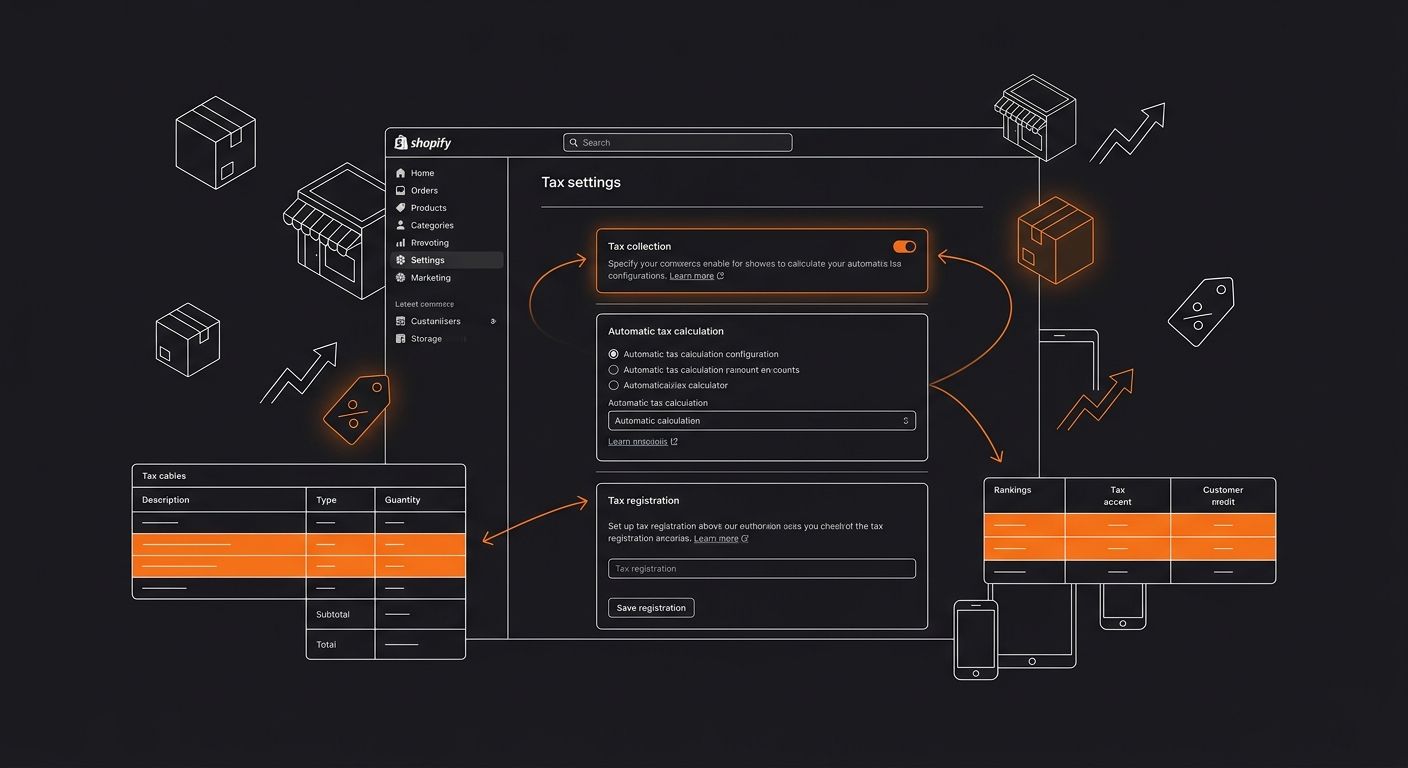
The action: If you're on Shopify, enable automatic tax calculation in Settings > Taxes and duties. Shopify's built-in tax engine handles rate calculation for US states. For stores doing over $10,000/month across multiple states, connect a dedicated tax app like TaxJar or Avalara, both integrate directly with Shopify and automate permit tracking, filing, and remittance. If you're running your store on a different platform, check our Shopify dropshipping setup guide for comparison points on built-in tax features.
You'll know it worked when: Your store automatically charges the correct sales tax rate at checkout for customers in states where you've registered. Test this by running a dummy checkout with addresses in 3 different states.
Step 5: Verify Intellectual Property Compliance
IP violations are where dropshippers get into the most expensive trouble. Copyright damages can hit $1,000 each time an unauthorized image is displayed, according to enforcement cases discussed on r/dropship. Trademark infringement, selling counterfeit branded goods, can result in store shutdowns, frozen payment accounts, and lawsuits.
The action: Audit every product in your store against three criteria:
Brand name check: Search the USPTO's Trademark Electronic Search System (TESS) for any brand name appearing on or associated with the product. If the brand is trademarked and you don't have written authorization to resell, remove the listing.
Image originality check: Don't copy product photos from manufacturer websites or competitors. Either request image usage rights from your supplier in writing, or shoot your own product photos from samples. As Doba's compliance guide puts it, the safest approach is to avoid branded products entirely when choosing items for your store.
Product description check: Write original descriptions. Copying manufacturer copy word-for-word creates duplicate content issues and can constitute copyright infringement.
If you're sourcing from AliExpress, our complete AliExpress dropshipping guide covers supplier vetting in detail, including how to identify authorized distributors versus counterfeit sellers.
You'll know it worked when: Every active listing in your store uses original or licensed images, contains no trademarked brand names you aren't authorized to sell, and has unique product descriptions.
Step 6: Align Shipping Claims with FTC Rules
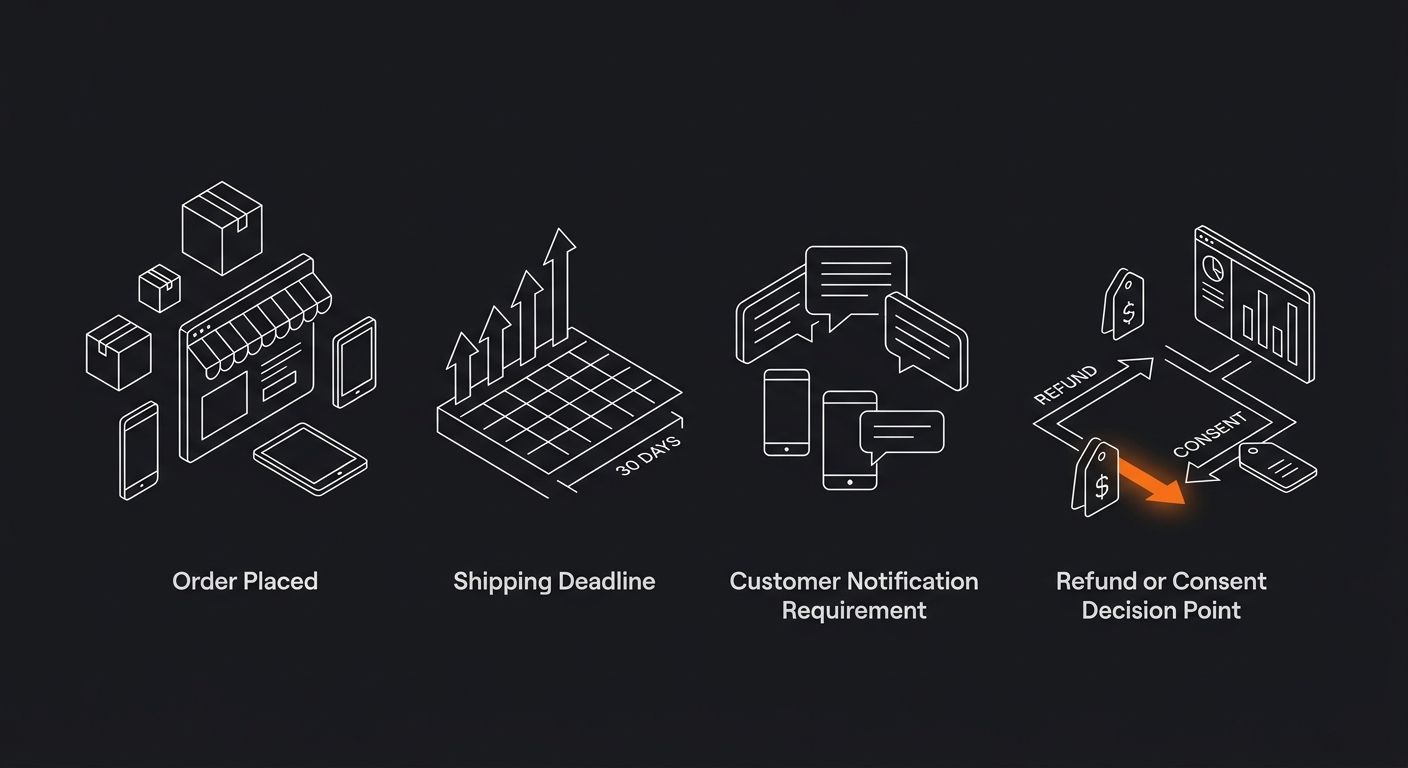
The FTC's Mail, Internet, or Telephone Order Merchandise Rule requires you to have a "reasonable basis" for any shipping timeframe you advertise. If you promise "fast shipping" but your supplier in Shenzhen needs 2 to 4 weeks to fulfill, you're creating both an FTC compliance problem and a chargeback generator.
The action: Update every shipping policy page and product listing to reflect realistic delivery windows. If your supplier ships from China with economy methods, state "15 to 25 business days" (or whatever your actual range is). Refer to carrier-specific delivery window data to set accurate expectations for each shipping method you offer.
Under this same FTC rule, if you can't ship within the timeframe you've stated, you must notify the customer and offer either a revised delivery date with their consent or a full refund. Build this into your customer service workflow now, not after the first complaint.
You'll know it worked when: Your shipping policy page, product pages, and checkout flow all display consistent, realistic delivery windows. Run a test order through your supplier and compare actual delivery time against what you've advertised.
Step 7: Configure Platform-Specific Policies
Each sales channel has its own rules layered on top of federal and state law. Amazon requires you to be identified as the seller of record on all packing slips and invoices. Reselling products purchased from another retailer (buying from Walmart to ship to an Amazon customer) violates Amazon's dropshipping policy and triggers account suspension.
The action: Read the dropshipping-specific policy page for every platform where you sell. For Shopify stores, review Shopify's legal guidelines for dropshippers. For eBay, our product research guide for eBay covers seller policy requirements alongside sourcing strategy. Document each platform's specific requirements in a spreadsheet, packing slip rules, return policy mandates, prohibited product categories, and check your store configuration against each one.
You'll know it worked when: You can open your spreadsheet and check every row as compliant. Your packing slips show your business name (not your supplier's), your return policy meets or exceeds the platform's minimum requirements, and your product categories don't overlap with any prohibited lists.
Common Problems and How to Fix Them
Problem 1: Sales tax audit notice arrives. This happens when you've been selling above a state's nexus threshold without collecting tax. Fix: Register for a sales tax permit in that state immediately. Contact the state's Department of Revenue to negotiate a voluntary disclosure agreement, many states reduce penalties for sellers who come forward before formal enforcement action.
Problem 2: Copyright takedown notice on a product listing. The rights holder has flagged your listing. Fix: Remove the listing within 24 hours. Don't argue with the takedown. Replace the product images with original photos or remove the product entirely. Respond to the takedown notice confirming removal. Two or three unresolved takedowns on platforms like Amazon or eBay will get your account permanently banned.
Problem 3: Chargebacks spike above 1% of transactions. This usually stems from shipping times exceeding what customers expected. Fix: Audit your shipping claims against actual fulfillment times. Tighten your advertised windows. Add tracking numbers to every order, most payment processors weigh tracking data heavily when adjudicating chargeback disputes. Consider switching to suppliers with US or EU warehouses to cut delivery times from weeks to days.
Where to Go From Here
The legal foundation covered in these seven steps protects your business from the problems that shut down unprepared sellers. But compliance isn't a one-time event. Sales tax thresholds change, platform policies update quarterly, and new product categories get restricted without much notice.
Set a calendar reminder to re-audit Steps 4 through 7 every 90 days. Pull your sales-by-state report, check it against current nexus thresholds, and re-read the dropshipping policy pages for each platform you sell on. Track these audits in the same spreadsheet you built in Step 7 so you have a paper trail if questions ever come up. The operators who treat legal compliance as ongoing maintenance, the same way they'd monitor profit margins or ad spend, are the ones still selling three years from now.

Ryan Torres
Ryan Torres is a former Amazon FBA seller turned dropshipping consultant who has generated over $2.8M in ecommerce revenue across 14 product launches. He specializes in supplier vetting, margin optimization, and scaling DTC operations for sub-$1M brands. Ryan focuses on actionable frameworks that drive measurable results for independent operators.
Frequently Asked Questions
- Is dropshipping legal in the US and other countries?
- Dropshipping is legal in the United States, EU, UK, Canada, and Australia. No legislation in any of these markets bans the fulfillment model, though legal risks arise from skipping business registration, ignoring sales tax requirements, selling trademarked products without authorization, or violating FTC shipping timelines.
- What do I need to do to legally start a dropshipping business?
- You need to register an LLC, obtain a business license and EIN, file a Beneficial Ownership Information report with FinCEN, set up sales tax collection, verify IP compliance, align shipping claims with FTC rules, and configure platform-specific policies. The total setup time is 4 to 8 hours, though business license processing can take 2 to 6 weeks.
- How much does it cost to legally register a dropshipping business?
- Initial registration costs between $150 and $800 depending on your state, covering LLC filing ($50 to $500), a general business license ($50 to $400 annually), and an EIN (free from the IRS).
- What is sales tax nexus and when do I need to collect sales tax?
- Following the 2018 South Dakota v. Wayfair ruling, states can require you to collect sales tax based on economic nexus—your sales volume in that state, regardless of physical presence. Thresholds vary dramatically, with Florida triggering at $100,000 in sales and California and Texas at $500,000, so you must track sales by state and register for permits when you cross each threshold.
- What intellectual property violations should I avoid in dropshipping?
- Avoid selling trademarked products without authorization, using copyrighted images from manufacturer websites without permission, and copying product descriptions word-for-word. Copyright damages can reach $1,000 per unauthorized image display, and trademark infringement can result in store shutdowns and frozen payment accounts.
- What shipping timeframes should I advertise for dropshipping?
- Under FTC rules, you must have a reasonable basis for any shipping timeframe you advertise. If your supplier in China needs 2 to 4 weeks to fulfill, advertise realistic windows like '15 to 25 business days' rather than claiming fast shipping you can't deliver on.
- What happens if I get a sales tax audit notice?
- Register for a sales tax permit in that state immediately and contact the state's Department of Revenue to negotiate a voluntary disclosure agreement, as many states reduce penalties for sellers who come forward before formal enforcement action.
- How often should I audit my dropshipping business for legal compliance?
- Set a calendar reminder to re-audit every 90 days, pulling your sales-by-state report, checking it against current nexus thresholds, and re-reading dropshipping policy pages for each platform, as sales tax thresholds change and platform policies update quarterly.
Related Articles
How to Do Dropshipping: Complete Beginner's Guide
This guide walks you through how to do dropshipping from zero to first sale in under a week. Seven steps cover niche selection, business registration, store setup, supplier vetting, product pricing, test orders, and ad launch, with specific costs and timelines at each stage.
AliExpress Dropshipping: Complete Beginner's Guide
AliExpress connects your store to over 100 million products from 300,000+ suppliers, and you never touch inventory.
Dropshipping How to: Complete Beginner's Guide
Every step of launching a dropshipping store fits into a single weekend: niche selection, LLC registration, Shopify storefront, supplier vetting, product import, and a live test order. Total startup cost sits under $150, and you'll have a functioning store accepting real orders by Sunday night.
Explore more topics