whatnot app reviews: Best Live Shopping Platform
Whatnot holds a 4.3/5 rating on Trustpilot and ranks as the #1 Shopping app in the U.S., but it fits only one of three seller profiles. CommentSold and TikTok Shop win for the other two, and choosing wrong costs you months of wasted effort.

Whatnot App Reviews: Picking the Best Live Shopping Platform for Sellers
Whatnot holds a 4.3/5 rating on Trustpilot and ranks as the #1 Shopping app in the U.S., but it fits only one of three seller profiles. CommentSold and TikTok Shop win for the other two, and choosing wrong costs you months of wasted effort.
The lens for this comparison: I'm evaluating these three platforms on fee structure, audience ownership, fulfillment requirements, and category fit. I'm excluding enterprise-only options like Bambuser and Firework, they require custom integrations and five-figure contracts that don't apply to sub-$1M operators.
Whatnot Brings the Audience (and Takes 12%)
Whatnot gives sellers access to a massive built-in buyer pool. Users spend an average of 95 minutes per day on the platform, and month-over-month customer retention exceeds 80%. The tradeoff is a 12% total fee on every sale and zero ownership of your customer list.
The platform operates like a live eBay. You go live, run auctions or fixed-price drops, and buyers bid in real time. The energy is real: one Trustpilot reviewer described the live auction bidding as "exciting" and noted that asking hosts for specific items during streams leads to immediate engagement. Whatnot handles payments, and buyers get a Buyer Protection program, though its reliability is debated.
Category momentum matters here. Whatnot's fastest-growing segments show where the money is moving: Beauty grew 791% year-over-year, Electronics 444%, and Jewelry 259%, with fashion buyers alone placing over 12 million orders monthly. If you sell in collectibles, trading cards, sneakers, or any of these trending verticals, the audience already exists.
But the whatnot app reviews from actual sellers tell a more complicated story. On Reddit's r/whatnotapp community, one seller summarized the situation bluntly: "I have a lot of good reasons to suggest the app, but honestly a lot more negative reasons to not." The specific complaints center on buyer protection disputes. Many users report problems getting refunds, citing difficulty with the resolution process and occasional unresponsiveness from customer support.
Shipping costs create friction for buyers too. As one Trustpilot reviewer put it: "The only complaint I have is shipping cost. I feel it really hurts whether or not somebody bids on something considering on average it's $4 per seller." When a buyer purchases from three sellers in one session, that's $12 in shipping before they even factor in item cost. If your average order value sits below $20, that shipping-to-price ratio kills conversion. Understanding how these fees eat into your take-home on every SKU is essential before committing.
Whatnot has tightened operations recently. Drop-off scans now reduce "order hasn't shipped" claims by 71%, and Premier Shops must respond to 95% of buyer requests within 48 business hours. The platform also cracked down on gambling-style games and restructured rules for Surprise Sets, which can no longer include prizes or mixed item types.
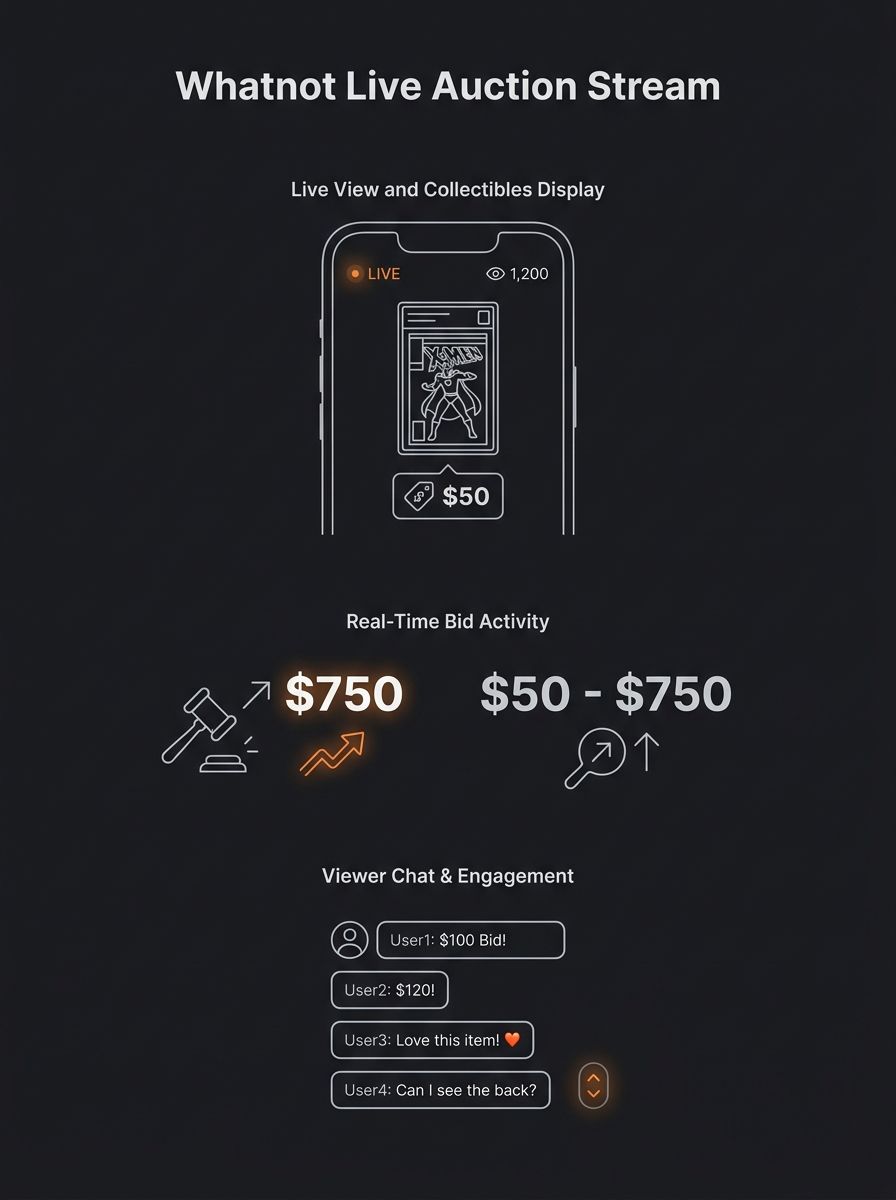
The core tradeoff with Whatnot: the platform provides the audience and the format, but you're renting shelf space in someone else's store. You can't retarget those buyers with email campaigns. And if Whatnot changes its algorithm or fee structure, you have zero use.
CommentSold Puts Live Selling on Your Own Storefront
CommentSold earns a 4.7/5 on G2 across 78 reviews and handles the majority of live sales transactions in the U.S. The platform gives you a branded mobile app, Shopify integration, inventory management, and multi-channel broadcasting, all under your own brand name.
Where Whatnot is a marketplace, CommentSold is infrastructure. You bring the audience, and CommentSold gives you the tools to sell to them live. The platform supports broadcasting simultaneously to Facebook, Instagram, and your own app, which means your existing social following converts into live-sale revenue without migrating to a third-party marketplace.
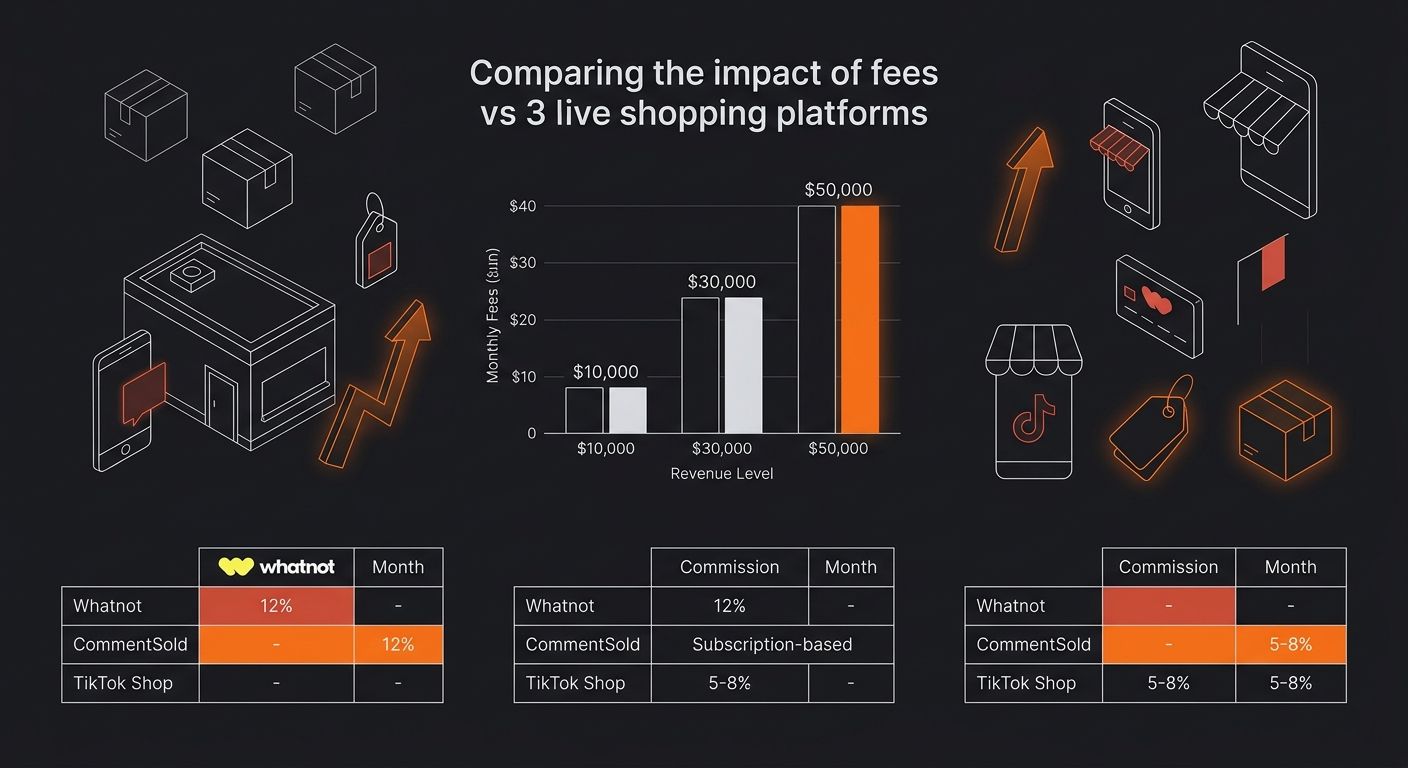
The pricing model is subscription-based rather than commission-based. You're paying monthly for the platform instead of giving up a percentage of every transaction. For sellers doing $50K+ per month in live sales, this math tilts heavily in CommentSold's favor. On $50K in monthly revenue, Whatnot takes $6,000 at its 12% rate; CommentSold's subscription fee is a fraction of that amount.
The tradeoff is audience acquisition. CommentSold doesn't bring buyers to your door. You need an existing following on social media or a customer email list to drive viewers into your streams. If you're starting from zero, you'll burn months building an audience before your first meaningful live sale. This works well for brands that have already built a Shopify store with traffic and want to add a live-selling channel without surrendering margin.
Fulfillment is entirely your responsibility. CommentSold manages inventory sync and order flow, but you're shipping packages, handling returns, and managing the post-purchase experience. For operators already running fulfillment, especially those who've already mapped their shipping cost structure, this is manageable. For someone who wants the platform to handle everything, it's a heavier lift than Whatnot's managed checkout.
TikTok Shop Trades Algorithmic Reach for Platform Risk
TikTok Shop charges sellers a lower commission than Whatnot, typically 5–8% depending on category, and provides the single most powerful algorithmic discovery engine available to live sellers right now. Products that hit the For You Page during a live stream can generate thousands in sales from viewers who've never heard of your brand.
The 2026 guide from The Retail Exec positions TikTok Shop among the top live shopping platforms for its ability to drive organic discovery. TikTok's live commerce GMV has grown aggressively as the platform pushes sellers into its Shop ecosystem with promotional credits and reduced commission periods for new accounts.
But the platform risk is severe. TikTok's regulatory status in the U.S. has swung wildly, and sellers who built entire businesses on the platform have watched their revenue stall during ban scares. Building a live-selling operation on TikTok Shop without a fallback channel is the ecommerce equivalent of leasing storefront space in a building facing demolition hearings.
TikTok Shop also attracts a younger demographic (primarily 18–34) that shops impulsively but returns aggressively. Return rates on TikTok Shop live purchases run higher than marketplace averages, which eats into your effective margin even after accounting for the lower commission rate. The format favors high-energy, personality-driven selling, if your brand voice is polished and corporate, TikTok's audience will scroll past without stopping.
Side-by-Side Comparison
Attribute | Whatnot | CommentSold | TikTok Shop |
|---|---|---|---|
Fee Structure | 12% total per sale | Monthly subscription | 5–8% commission |
Built-In Audience | Yes (95 min/day avg usage) | No, bring your own | Yes (algorithmic) |
Customer Ownership | No, Whatnot owns the relationship | Yes, your brand, your data | Partial, limited buyer data |
Best Categories | Collectibles, trading cards, sneakers, beauty, electronics | Fashion, boutique, branded products | Trending consumer goods, beauty, fashion |
Fulfillment | Seller ships; Whatnot manages payments | Seller ships; platform syncs inventory | Seller ships or TikTok fulfillment |
Review Ratings | 4.3/5 Trustpilot | 4.7/5 G2 (78 reviews) | Not separately rated |
Platform Risk | Moderate (fee/policy changes) | Low (you own the store) | High (regulatory uncertainty) |
Ideal Seller Stage | Starting from zero audience | $30K+/month with existing following | Any stage with content skills |
Who Should Pick Which
The decision comes down to one question: do you have an audience already, or do you need one?
If you're starting cold with no social following and no email list, Whatnot is the clearest path to first sales. The 12% fee is the price of access to buyers who are already on the platform spending 95 minutes a day. Build your reputation through consistent streaming, stack positive whatnot app reviews from buyers, and treat the platform as your audience-building engine. The category has to match, though, collectibles, trading cards, sneakers, beauty, electronics, and jewelry are where the gravity lives. Use a structured evaluation framework to validate whether your niche has enough active buyers on the platform before going all-in.
If you've built a brand with an engaged following and you're tired of paying marketplace commissions, CommentSold lets you keep your margin and own the customer relationship. The subscription model rewards volume. Anything under 10K engaged followers across platforms makes CommentSold's cold-start problem too expensive to solve quickly.
If you sell impulse-friendly products and you're comfortable with platform risk, TikTok Shop's algorithmic distribution can produce the kind of viral sales spikes that neither Whatnot nor CommentSold can match. But build an exit plan from day one. Capture email addresses, push buyers to your own site for reorders, and never let TikTok be your only channel.
The honest answer for most ecommerce operators in the sub-$1M range: start on Whatnot or TikTok Shop to build the audience, then migrate your best customers to a CommentSold-powered branded experience once your monthly revenue justifies the infrastructure. Running all three simultaneously is possible but burns time fast, pick one primary channel, get profitable there, and expand once the unit economics are proven.

Ryan Torres
Ryan Torres is a former Amazon FBA seller turned dropshipping consultant who has generated over $2.8M in ecommerce revenue across 14 product launches. He specializes in supplier vetting, margin optimization, and scaling DTC operations for sub-$1M brands. Ryan focuses on actionable frameworks that drive measurable results for independent operators.
Frequently Asked Questions
- How much does Whatnot charge sellers in fees?
- Whatnot charges a 12% total fee on every sale. This fee structure means sellers lose a significant portion of revenue but gain access to the platform's built-in audience of buyers who spend an average of 95 minutes per day on the app.
- What are the best product categories to sell on Whatnot?
- Whatnot's fastest-growing categories are Beauty (791% YoY growth), Electronics (444%), and Jewelry (259%). Collectibles, trading cards, sneakers, and fashion also perform well, with fashion buyers alone placing over 12 million orders monthly.
- What is CommentSold and how does it compare to Whatnot?
- CommentSold is a white-label platform that integrates with Shopify and lets sellers broadcast live sales on their own branded app and social channels, rather than on a third-party marketplace like Whatnot. It uses a monthly subscription model instead of per-sale commissions, making it cheaper for sellers doing $50K+ monthly in revenue.
- Is TikTok Shop safe for building a live selling business?
- TikTok Shop offers lower commissions (5–8%) and powerful algorithmic reach, but carries high platform risk due to regulatory uncertainty in the U.S. Sellers who built entire businesses on TikTok have experienced revenue stalls during ban scares, so experts recommend it only as a secondary channel with a fallback strategy.
- Do I own my customer list on Whatnot?
- No, Whatnot owns the customer relationship, not the seller. You cannot retarget buyers with email campaigns, and if the platform changes its algorithm or fee structure, you have no alternative use for those customer relationships.
- What are the main complaints about selling on Whatnot?
- Common complaints from Whatnot sellers include difficulty resolving buyer protection disputes, high shipping costs that deter purchases (averaging $4 per seller per order), and unresponsive customer support. The 12% fee also becomes prohibitive for items with low average order values below $20.
- Which live shopping platform should I choose if I have no audience?
- If you're starting with no social following or email list, Whatnot is the clearest path because it provides a built-in audience already spending significant time on the platform. The 12% fee is the price of access to these existing buyers.
- What are the fulfillment requirements for each live shopping platform?
- Whatnot handles payments but sellers must ship items themselves; Whatnot manages the checkout process. CommentSold requires sellers to handle shipping and returns entirely. TikTok Shop allows sellers to ship themselves or use TikTok's fulfillment services.
Related Articles
TikTok Shop High-Ticket Sales Surge as Above-Ground Pools Climb 125% Year-Over-Year
Above-ground pools and spas sold through TikTok Shop posted 125% year-over-year growth in the past 12 months, five times the rate of other marketplaces, according to data shared by Spreetail, a multi-brand seller and fulfillment partner on the platform.

TikTok Shop, Amazon, and Shopify Deliver Different Profit Profiles for DTC Brands, Avenue Z Analysis Finds
Avenue Z's June 10 platform analysis concludes that no single eCommerce channel delivers universal profitability for DTC brands, positioning TikTok Shop for low-acquisition trendy products, Amazon for high-intent search volume, and Shopify for margin control and customer data ownership, according to
TikTok Shop vs. Shopify DTC: Where Independent Dropshippers Actually Keep More Margin in 2026
TikTok Shop's total cost of selling runs 35–55% of revenue when you stack referral fees, affiliate commissions, transaction fees, and returns. Shopify DTC's all-in platform cost sits closer to 5–8% of revenue at equivalent volume, but every visitor arrives on your dime.
Explore more topics