The Domestic Supplier Advantage: Why US-Based Fulfillment Is Reshaping 2026 Dropshipping Unit Economics
Domesticated fulfillment with bulk DDP imports cuts per-parcel costs by 8–15% for brands shipping 4,000+ US orders monthly, according to Evolution Fulfillment's cost model.
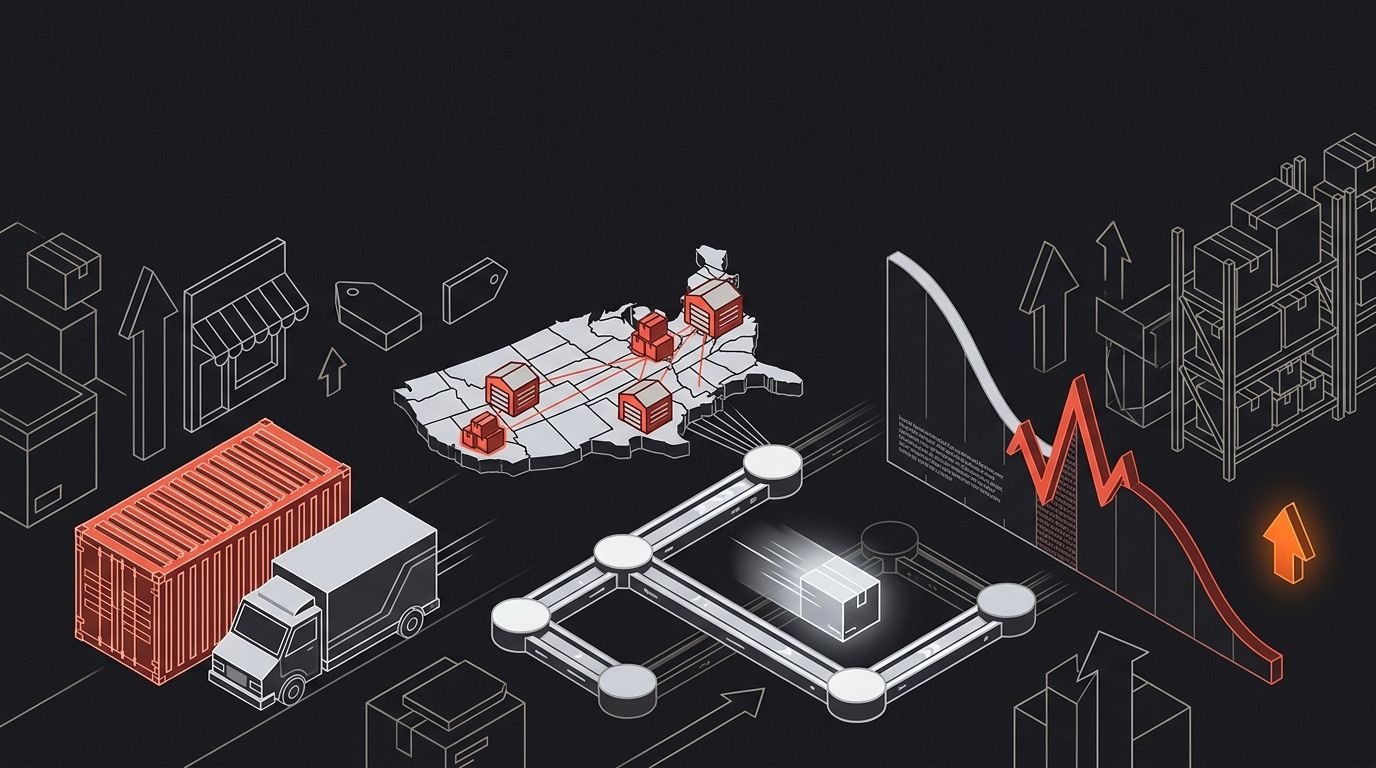
The Domestic Supplier Advantage: Why US-Based Fulfillment Is Reshaping 2026 Dropshipping Unit Economics
Domesticated fulfillment with bulk DDP imports cuts per-parcel costs by 8–15% for brands shipping 4,000+ US orders monthly, according to Evolution Fulfillment's cost model. The de minimis exemption's elimination turned that savings gap into a survival requirement for dropshippers still routing orders through China.
How Tariff Changes Broke the China-Direct Cost Model
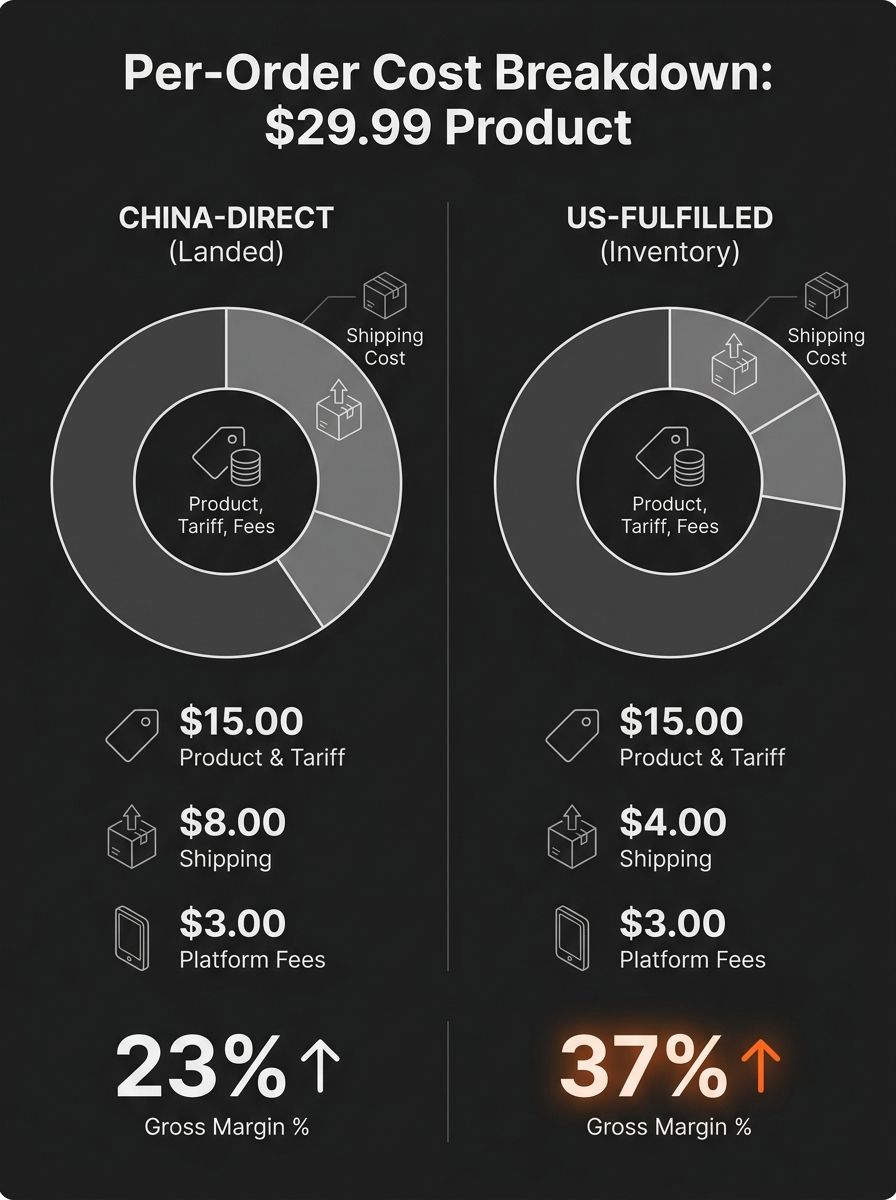
The US de minimis exemption used to let parcels valued under $800 enter duty-free. When that exemption was eliminated in 2025, every China-direct shipment started carrying tariff costs that hadn't existed before. For dropshippers using AliExpress or CJ Dropshipping's China warehouses, landed costs jumped overnight.
TrueProfit's 2026 analysis frames the dilemma directly: operators must either absorb the cost or increase prices and risk losing customers. DoDropshipping's tariff exposure report adds that stores relying on China-based suppliers now face "higher costs, customs friction, and margin pressure." And Sticky.io's profitability assessment confirmed that tariff-driven price hikes through 2025 and 2026 amplified margin compression for fulfillment-dependent stores.
Run the numbers on a typical product. A $15 item sourced from Guangzhou that previously landed at $4.50 (product plus shipping, no duty) now carries $1.50–$3.00 in additional tariff costs. On a $29.99 retail price, that's the difference between a 25% gross margin and a 15% one. If you've been tracking how tariff shocks can crater your supplier stack economics, this pattern should look familiar.
Domestic Fulfillment Platforms Compared: Pricing, Speed, and Integration
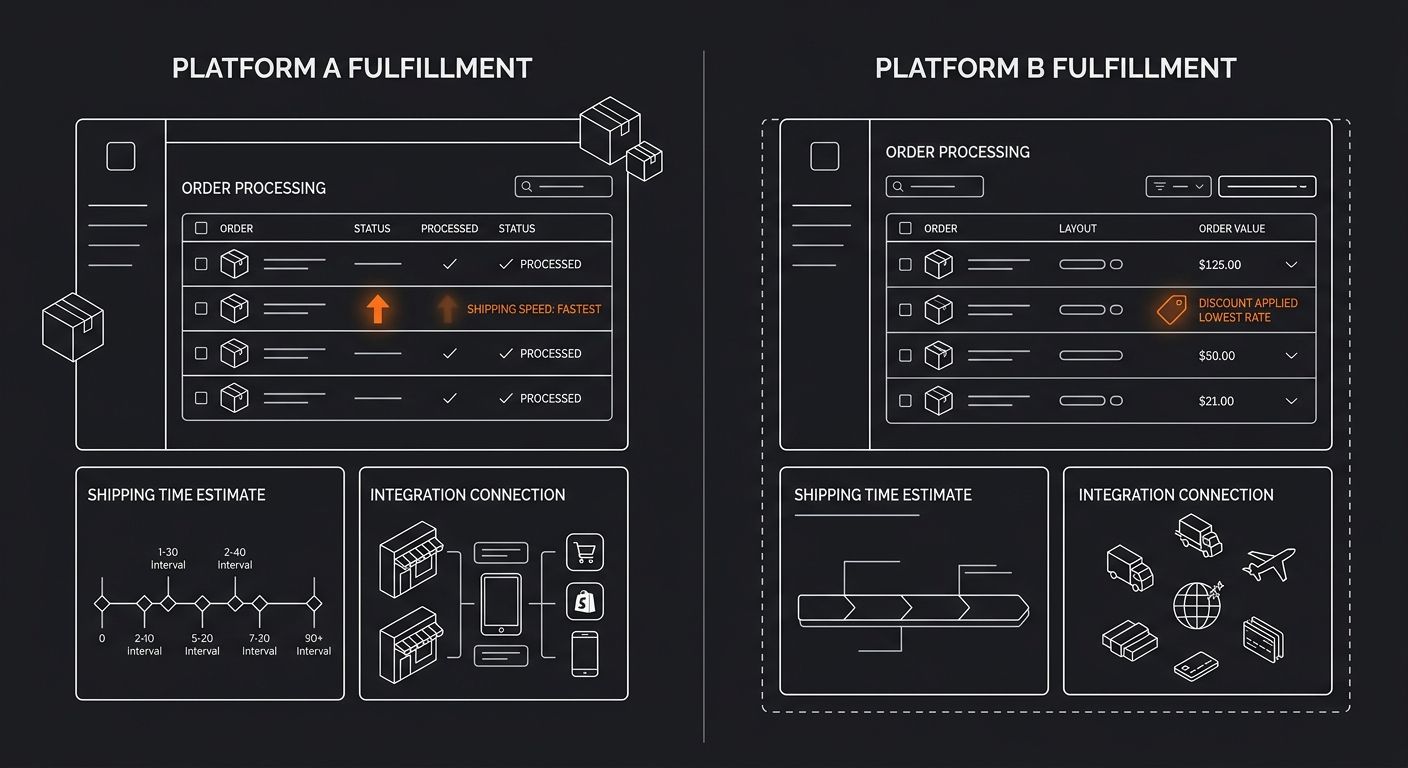
The best US fulfillment centers in 2026 combine 2–5 day domestic shipping, real-time inventory syncing, and automated order routing across multiple sales channels, according to TopDawg's supplier guide. But the cost structures and feature sets differ enough that picking the wrong one erodes the margin advantage you're chasing.
Here's how the major platforms stack up based on publicly available data and documented benchmarks:
Platform | US Shipping Speed | Key Integrations | Pricing Model | Standout Feature |
|---|---|---|---|---|
Spocket | 2–5 days | Shopify, WooCommerce, Wix, BigCommerce | Monthly plans from $39.99; per-order costs vary by supplier | 60%+ catalog from US/EU suppliers |
Zendrop | 3–5 days (US warehouse SKUs) | Shopify, WooCommerce | Free tier available; Pro from $49/month | Bundles and custom packaging options |
ShipNetwork | 1–3 days (1-day available) | Multi-channel API | Custom volume-based pricing | Up to 15% total shipping cost savings via zone optimization |
CJ Dropshipping (US warehouse) | 3–7 days | Shopify, eBay, Amazon, TikTok Shop | No monthly fee; per-order processing fees | Large catalog with selective US warehousing |
TopDawg | 2–5 days | Shopify, BigCommerce, WooCommerce | Free to join; supplier-set wholesale pricing | US-only supplier network with 20–50% typical margins |
ShipNetwork stands out for operators at scale. According to their pricing documentation, distributing inventory across multiple US locations reduces shipping zones and lowers transportation costs, with clients saving up to 15% on total shipping costs while improving delivery windows. That kind of shipping cost optimization compounds fast when you're processing hundreds of daily orders.
For operators just getting started with choosing between sourcing platforms, Spocket and TopDawg offer lower barriers to entry. Both platforms pre-vet US-based suppliers and handle inventory sync natively within Shopify.
The Return Rate Advantage Nobody Prices In
Why do domestic dropshipping suppliers change unit economics beyond the obvious shipping speed improvement? Because return rates and customer satisfaction metrics shift dramatically when delivery windows shrink from 7–30 days to 2–5 days.
Cross-border shipping correlates with return rates of 15–25%. Domestic fulfillment drops that range to 5–8%. On a product with a $30 average order value, each avoided return saves you $8–$12 in reverse logistics, restocking labor, and refund processing. At 500 orders per month, cutting your return rate from 20% to 7% means roughly 65 fewer returns, saving $520–$780 monthly in direct costs alone.
Fast domestic shipping also correlates with 85–92% customer satisfaction scores, compared to the frustration-driven abandonment that plagues long-window cross-border orders. Cart abandonment rates exceed 75–82% when customers see 7–30 day delivery estimates at checkout. The revenue you never capture from abandoned carts doesn't show up in any fulfillment platform's dashboard, but it's the largest hidden cost in cross-border dropshipping.
Repeat purchase rates tell the same story. Stores using domestic fulfillment with fast, reliable delivery see 15–25% repeat purchase rates. Generic cross-border stores hover at 5–10%. Since acquiring a repeat buyer costs roughly $0 in ad spend versus $15–$40 for a new customer, the LTV gap compounds every quarter. If you're running post-purchase email sequences, domestic fulfillment gives those emails a much stronger foundation to work from.
Supply Chain Resilience as a Margin Multiplier
Reducing reliance on distant suppliers enhances control, adaptability, and response times when disruptions hit, according to Armstrong's analysis of nearshoring benefits. For dropshippers, supply chain resilience translates directly to revenue protection. A single stockout during a paid traffic campaign can waste $500–$2,000 in ad spend with zero return.
Melton Logistics' cross-border analysis frames nearshoring as creating "a regional supply option that improves resilience when global networks are under stress." US fulfillment centers in 2026 function as exactly this type of regional buffer. When a port delay in Long Beach adds 14 days to your China-direct shipments, your domestic-fulfilled SKUs keep generating revenue.
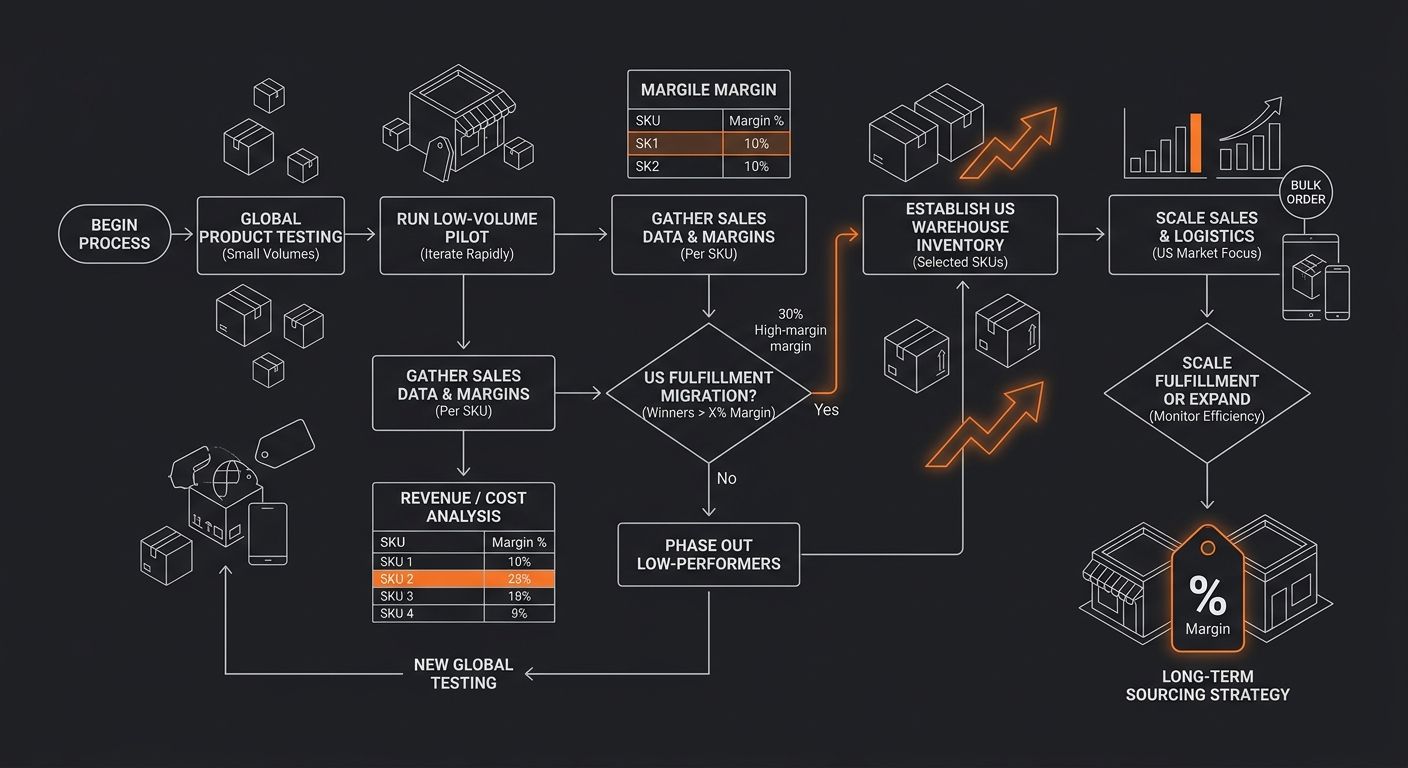
The hybrid model gaining traction among experienced operators works like this: test products through global sourcing (lower unit cost, acceptable for small validation batches), then migrate proven winners to US warehouses. Private-label setups using this approach report 25–45% gross margins on domestically fulfilled SKUs, compared to the compressed 15–20% margins that tariff-exposed cross-border products now deliver.
One documented case from Evolution Fulfillment shows a client saving $2.10 per order after switching to domesticated fulfillment with DDP bulk shipments. At 4,000 monthly orders, that's $8,400 per month flowing back into the business. Run those numbers through a margin calculator and the impact on annual profitability becomes substantial.
What To Watch in the ZIK and AutoDS Data
ZIK Analytics reports that typical product margins for US suppliers fall in the 20–50% range. That's a wide band, and the spread matters. Commodity products (phone cases, generic home goods) cluster near the 20% floor. Niche or branded products with limited competition push toward 40–50%.
AutoDS's 2026 supplier directory confirms that American dropshipping suppliers deliver faster shipping, more reliable tracking, and fewer operational complications compared to overseas options. But "fewer operational headaches" is a qualitative claim, and the data supporting it leans heavily on delivery speed and tracking reliability rather than controlled cost comparisons.
Supply & Demand Chain Executive's analysis of nearshoring adds a caveat worth noting: while bringing supply chains closer to home reduces dependencies on distant markets and mitigates geopolitical risks, it also introduces greater competition for suppliers and higher operational costs. As more dropshippers flood toward the same domestic supplier base, expect wholesale pricing to tighten and MOQs to rise for popular product categories.
Questions The Numbers Still Can't Answer
The tariff impact on margins is documented. The shipping speed advantage is measurable. The return rate differential is real. But several gaps remain in the available data.
No public dataset tracks how domestic supplier pricing changes as demand concentrates. If 30% more Shopify stores shift to Spocket's US supplier base within the next 12 months, wholesale costs for overlapping catalogs could rise 5–10%, eroding the margin advantage that drove the switch. The competitive dynamics within domestic supplier networks remain mostly unmeasured.
Product category performance also lacks granular benchmarks. The 20–50% margin range reported by ZIK Analytics spans everything from apparel to electronics to pet accessories. Operators need category-specific landed cost comparisons, and the fulfillment platforms themselves have little incentive to publish data showing where their economics are weakest.
And the long-term sustainability of the hybrid model depends on a variable nobody controls: future tariff policy. The current math favors domestic fulfillment decisively. But trade policy shifts, and operators who build their entire supply chain around today's tariff structure without maintaining some overseas sourcing flexibility may find themselves restructuring again. The data tells you where the advantage sits right now. It doesn't promise it stays there.
365 Dropship Editorial
Editorial team writing about E-commerce, dropshipping, and product discovery — reviews of dropshipping suppliers and platforms, trending niche guides (jewelry, beauty, pets, home, fashion), supplier due diligence, ecom operations, shipping & fulfillment strategy, product research, AOV optimization, and profitable dropshipping case studies.
Related Articles
The Hidden Cost of Speed: Why Faster Shipping Is Tanking Your 2026 Margins (And How to Rebalance)
Carrier rate hikes from UPS and FedEx averaged 5.9% for 2026, but surcharges push the real increase to 8–12%. Last-mile delivery absorbs 53% of total shipping costs. Three fulfillment models handle this pressure differently, and choosing wrong erodes margin faster than rising ad costs.
US-Based Suppliers vs. Overseas Fulfillment Centers in 2026: The Real Landed Cost Comparison Dropshippers Need
FOB pricing on a $12 overseas product conceals $4.80 to $7.20 in additional charges across customs duties, international freight, insurance, and handling.
From Pandemic Pivot to Profitable Store: The Untold Operations Lessons Behind 2020-2026 Dropshipping Success Stories
COVID-era ecommerce operators who survived past 2022 share a pattern that has nothing to do with finding the right product or running the right ad. The pattern is operational: supplier onboarding speed, cash flow reinvestment discipline, and fulfillment consolidation.
Explore more topics