Dropshipping Platform Guide Breaks Down Storefront vs. Sourcing Trade-offs Across Nine Provider Categories
Dropshipping operators choosing between marketplace listings and standalone storefronts face fundamentally different cost structures, shipping timelines, and quality control requirements, according to a platform comparison guide 4Topic published June 22. The analysis separates nine provider categori
Dropshipping Platform Guide Breaks Down Storefront vs. Sourcing Trade-offs Across Nine Provider Categories
Dropshipping operators choosing between marketplace listings and standalone storefronts face fundamentally different cost structures, shipping timelines, and quality control requirements, according to a platform comparison guide 4Topic published June 22. The analysis separates nine provider categories across three operational layers—storefront infrastructure, product sourcing, and automation—highlighting that high-performing stores typically combine multiple platforms rather than relying on a single "best" provider.
The report separates platforms by function rather than ranking them sequentially. Shopify and WooCommerce serve as storefront infrastructure with app-based supplier integrations. Amazon, eBay, and Etsy provide marketplace access with built-in demand but strict policy constraints. AliExpress, CJdropshipping, Spocket, SaleHoo, and Worldwide Brands function as sourcing layers with varying shipping speed and quality control profiles, according to the guide.
Marketplace vs. Standalone Storefront Cost Profiles
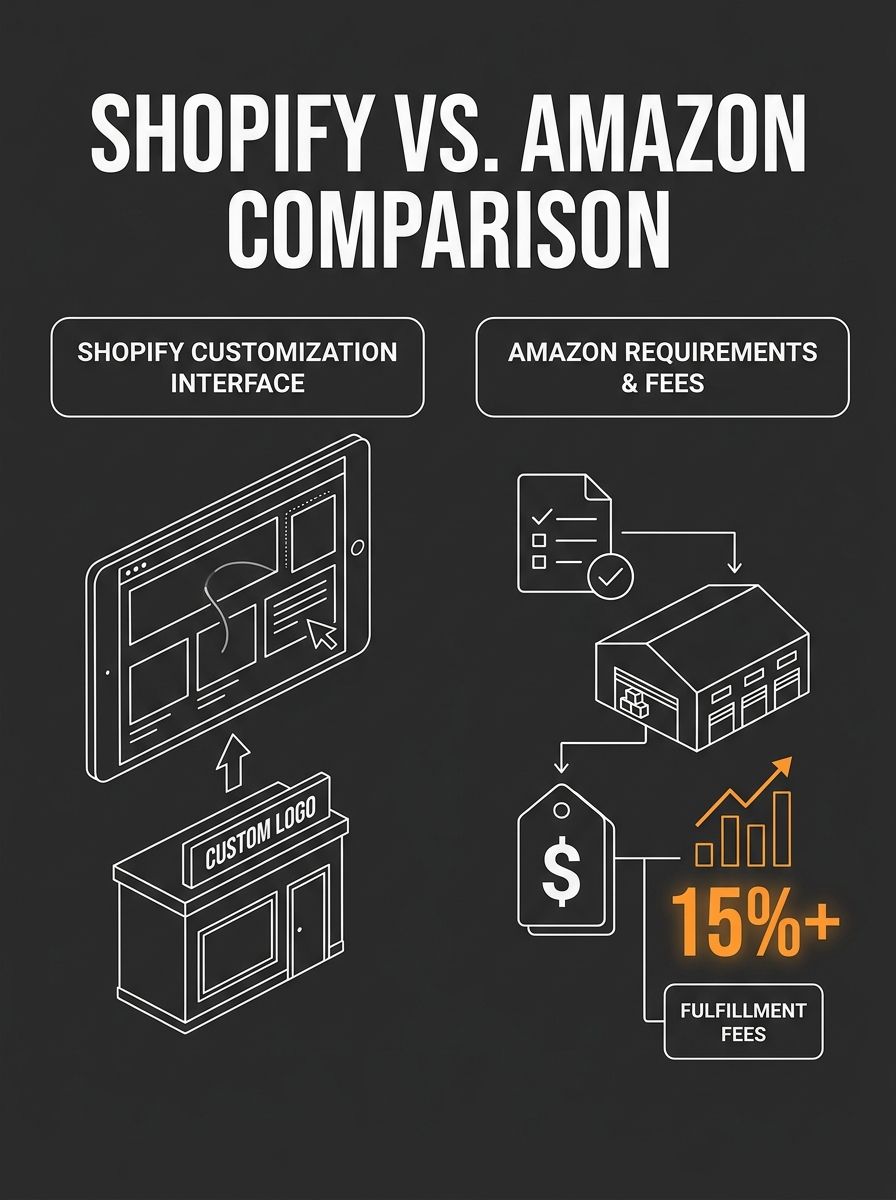
The guide identifies operational cost differences between marketplace and independent store models. Amazon dropshipping delivers immediate buyer traffic but requires adherence to fulfillment speed standards and return policies that compress margins. eBay offers faster listing deployment across broad product categories but maintains dropshipping policy restrictions that require seller disclosure and supplier vetting, 4Topic found.
Shopify-based stores carry higher upfront app subscription costs—the guide notes app expenses accumulate quickly without disciplined stack management—but provide branding control and customer data ownership that marketplace sellers sacrifice. WooCommerce reduces monthly platform fees for operators willing to manage hosting, theme configuration, and plugin integration directly.
Etsy appears in the guide with a policy caveat: the platform's handmade and vintage focus creates friction for standard dropshipping models, and sellers face account suspension risk if product sourcing doesn't align with category expectations.
Sourcing Layer Breaks Down by Shipping Speed and Quality Control
AliExpress offers the largest product catalog for testing and validation but carries 15–30 day shipping windows that generate customer service load and refund pressure, the report states. CJdropshipping provides automation infrastructure, custom packaging options, and faster warehouse routing for operators willing to manage supplier relationships beyond marketplace browsing, according to the guide.
Spocket positions itself around US and EU supplier networks to reduce delivery times to 3–7 days domestically. The guide characterizes this as a margin trade-off: domestic suppliers typically charge 20–40% higher unit costs than overseas alternatives, shifting the profitability calculation toward stores that can sustain higher average order values.
SaleHoo and Worldwide Brands function as supplier directories rather than direct fulfillment platforms. The guide describes these as vetting tools for operators building long-term supplier relationships instead of automated order routing, noting that directory models require manual negotiation and minimum order quantity management in many cases.
Print-on-Demand Identified as Separate Operational Category
The analysis separates print-on-demand networks—covering custom apparel, mugs, posters, and similar personalized products—into a distinct category. These platforms handle production and shipping but limit product range to items that accommodate on-demand printing or fabrication. The guide notes this model eliminates inventory risk but constrains niche selection to design-driven categories.
4Topic emphasizes that platform selection depends on alignment between channel characteristics and business model requirements. A store selling trending gadgets to impulse buyers requires different infrastructure than a niche brand emphasizing quality control and branded packaging, the report states.
Multi-Provider Stack Reduces Single-Point-of-Failure Risk
The guide's central operational recommendation frames platform choice as supply chain architecture rather than vendor selection. Combining a reliable storefront platform with multiple sourcing routes reduces stockout events, shipping delays, and supplier dependency, according to 4Topic's analysis.
The report identifies three decision variables for platform evaluation: target region and acceptable delivery windows, return policy constraints, and whether operations require branded invoices or neutral packaging. Operators clarifying these parameters before selecting platforms avoid misalignment between supplier capabilities and customer expectations, the guide states.
The analysis notes that shipping lanes, marketplace policies, and supplier availability shift frequently enough that reliance on a single provider creates vulnerability. Stores that treat platforms as modular components—storefront layer, primary sourcing, backup sourcing, specialty items—build operational resilience that single-platform models cannot match.
For operators already managing supplier communication workflows across multiple vendors, the guide's framework provides structure for evaluating where each platform fits within existing fulfillment infrastructure. The report does not recommend specific combinations but emphasizes that platform selection should follow business model clarity rather than reverse-engineering operations around a single provider's constraints.
What Happens Next
The platform landscape 4Topic mapped will continue shifting as marketplaces adjust dropshipping policies and new supplier networks enter with differentiated shipping or quality propositions. Operators building stores in 2026 face the same structural choice the guide identifies: accept the convenience and constraints of all-in-one platforms, or assemble multi-provider stacks that offer redundancy at the cost of coordination overhead.
For independent sellers researching how to start a dropshipping business, the immediate application is treating storefront, sourcing, and automation as separate decision points rather than bundled package deals. The stores that scale past initial validation typically run Shopify or WooCommerce storefronts connected to 2-3 supplier networks segmented by product category, shipping speed, or quality tier.
The guide's emphasis on operational glue—automation rules, customer service workflows, tax handling, returns processing—signals where undercapitalized stores break down even when they select technically capable platforms. Platform capability means little if order routing fails, inventory sync lags create oversells, or return authorization processes collapse during traffic spikes.

Ryan Torres
Ryan Torres is a former Amazon FBA seller turned dropshipping consultant who has generated over $2.8M in ecommerce revenue across 14 product launches. He specializes in supplier vetting, margin optimization, and scaling DTC operations for sub-$1M brands. Ryan focuses on actionable frameworks that drive measurable results for independent operators.
Related Articles
BuckyDrop Publishes Platform Cost Comparison Positioning Shopify Against WooCommerce and BigCommerce for 2026 Dropshipping Operations
BuckyDrop released a three-platform comparison guide on July 15 mapping Shopify, WooCommerce, and BigCommerce against dropshipping workflow requirements and total software costs, according to the company blog.

LooperBuy Publishes Sourcing Model Comparison Positioning Dropshipping as Validation Tool and China Sourcing as Scale Path
LooperBuy published a sourcing model comparison framework on August 12 positioning dropshipping suppliers as fulfillment partners for product testing and international sourcing companies as supply-chain management partners for margin optimization and brand control, according to the blog post.
LooperBuy Publishes B2B Wholesale App Comparison Positioning Its Platform Against Six Sourcing Marketplaces
LooperBuy published a B2B wholesale app comparison guide on August 3, 2026, evaluating six sourcing platforms including Alibaba and Global Sources while positioning its own service as a combined sourcing-and-fulfillment system designed to reduce inventory risk for global sellers managing China-based
Explore more topics