Why Your Supplier Is Handling More Than You Think: The Hidden Data Flow Between Order and Fulfillment
Between your customer's checkout click and the tracking email that arrives hours later, six to twelve discrete data transfers fire across your store, middleware, supplier systems, and shipping carriers.
Why Your Supplier Is Handling More Than You Think: The Hidden Data Flow Between Order and Fulfillment
Between your customer's checkout click and the tracking email that arrives hours later, six to twelve discrete data transfers fire across your store, middleware, supplier systems, and shipping carriers. The order fulfillment pipeline you actually see obscures the inventory checks, address validations, routing decisions, and label generations where most fulfillment errors originate.
The Invisible Handoffs Between Store and Warehouse
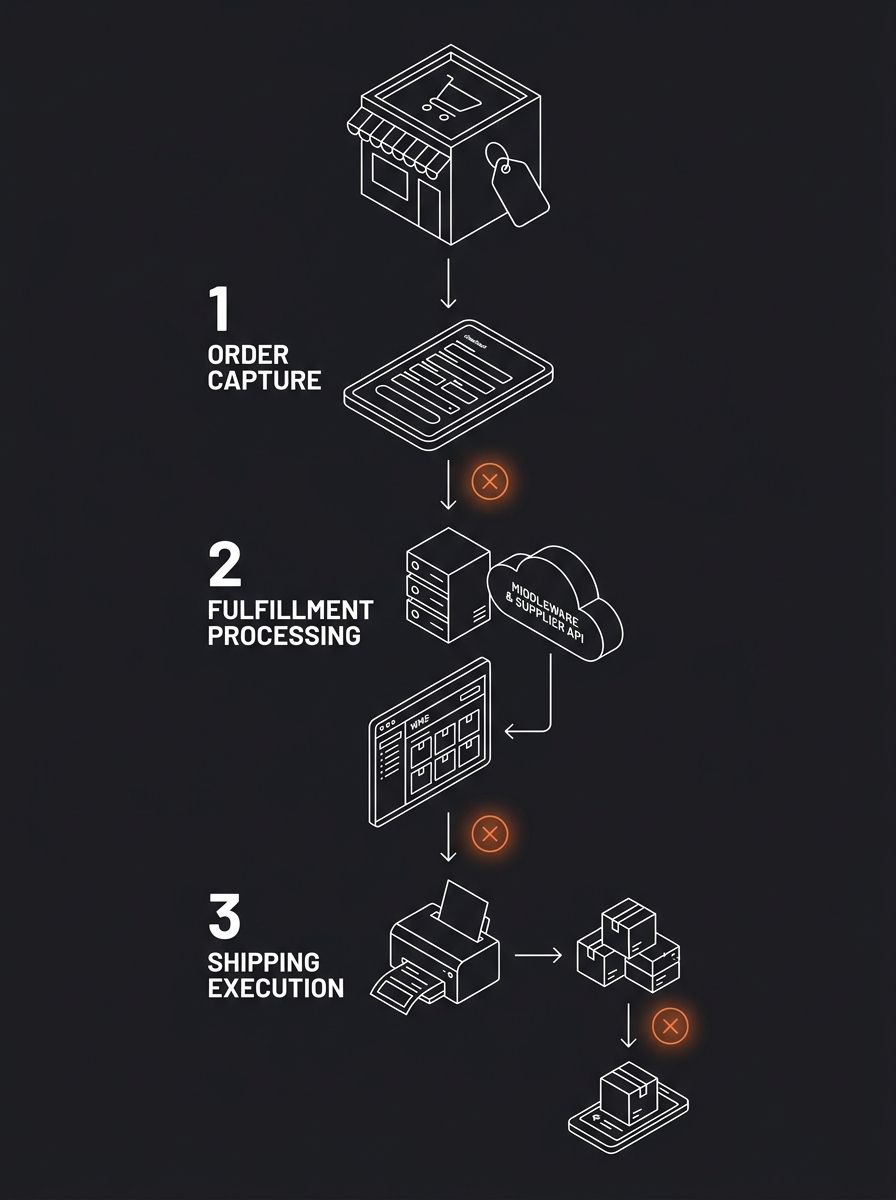
Every dropshipping order triggers a cascade of data events that most store operators never observe directly. When a customer places an order on your Shopify store, the platform doesn't simply notify your supplier. Your middleware layer authenticates against the supplier's API, pulls current inventory availability, validates the shipping address against the carrier's formatting rules, selects a fulfillment method based on predefined routing logic, and pushes the order with all required fields to the supplier's system. According to Flxpoint's documentation on API integrations, a standard dropshipping workflow requires six core API permission scopes: read_products, write_products, read_inventory, write_inventory, read_orders, and write_orders. Each supplier structures its API differently, which means your middleware has to translate between data formats every time an order fires.
The volume of data your supplier handles on your behalf extends well beyond receiving the order itself. Supplier systems manage product catalog synchronization, updating your store's pricing and availability as their own warehouse counts shift. Inventory Source's platform documentation describes this as solving "the manual data management burden of managing multiple dropship supplier relationships: maintaining accurate product feeds, tracking inventory changes, and routing orders to the correct supplier without error." That description makes it sound tidy. In practice, every one of those functions is a potential failure point that sits outside your direct control but lands squarely on your customer's doorstep when it breaks.
The consequence is that your supplier's data infrastructure determines your customer experience far more than your own theme, copy, or ad creative. If the supplier's inventory feed updates on a 4-hour batch cycle, you can sell a product that went out of stock 3 hours and 59 minutes ago. If their address parsing rejects a valid apartment number format, the order silently fails or ships to the wrong destination. When you're debugging why orders disappear between Shopify and fulfillment, the root cause almost always traces back to one of these data handoffs, not to a human packing error at the warehouse.
Batch Delays, Fragile Scripts, and the Real Causes of Sync Failure
Why do these system integration failures happen so frequently in dropshipping operations? The research points to three structural causes that repeat across nearly every ecommerce troubleshooting investigation: batch-based data updates instead of real-time synchronization, fragile custom integration scripts that break silently, and the absence of clear data ownership rules between connected systems.
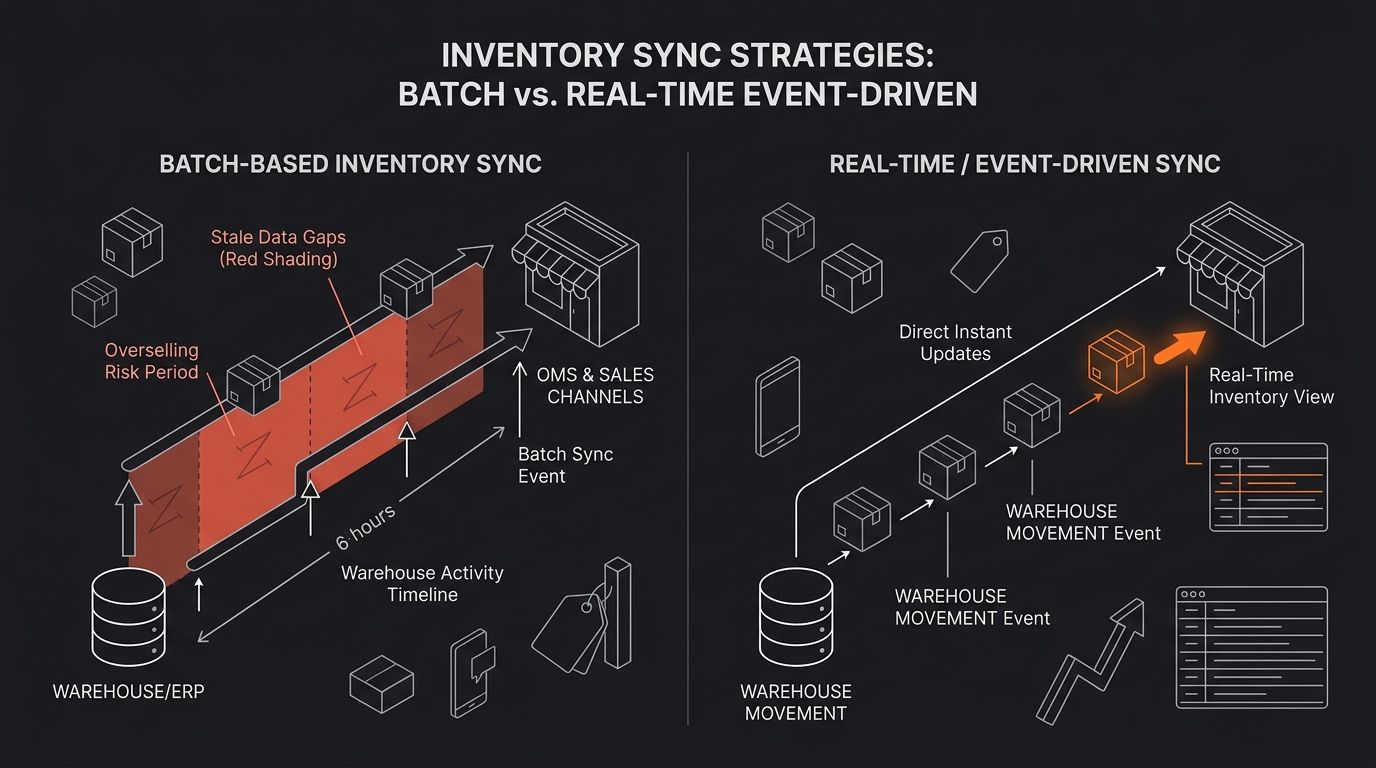
The batch problem is the most common and the most underestimated. A 2026 analysis by AppSeConnect found that ERP and eCommerce sync failures are primarily caused by batch-based data updates, fragile custom scripts, and the absence of real-time integration. When your supplier updates inventory counts every 2, 4, or 6 hours instead of on every warehouse movement, every order placed during that gap is flying blind on stock data. Red Eagle Tech's 2026 report on UK retailer integration mistakes confirmed that poor inventory synchronization leading to overselling remains the single most common integration failure across ecommerce stores, and the cause is almost always batch timing rather than bad data.
The fragile script problem compounds this. Many dropshipping suppliers built their initial API integrations as custom scripts years ago, duct-taped together with specific field mappings that break the moment either system updates its data schema. Bluepes documented the fix in their analysis of silent ERP integration root causes: "The fix does not require re-architecture — it requires a mapping document listing every shared field, its owning system, and the behavior the integration layer enforces when a non-owning system attempts a write. Most teams can produce this document in a working session and implement the enforcement in the middleware within a sprint." That single working session is the difference between recurring fulfillment chaos and a stable supplier data sync pipeline, yet most small and mid-size dropshippers never request it because they don't realize the mapping layer exists.
If you're running multiple suppliers, the complexity multiplies. Each supplier structures API responses differently, uses different field names for the same data points, and updates on different schedules. The practical result is that your middleware has to maintain separate translation layers for every supplier relationship, and a change on any supplier's end can break sync without triggering an error you'd notice. Building a genuine backup supplier network means testing each supplier's data flow independently before a single live order touches their system, because the handoff architecture matters as much as the product catalog.
What Full Visibility Actually Demands
Here's the number that should keep every dropshipping operator awake: according to a report published in Supply & Demand Chain Executive, only 6% of companies have full supply chain visibility end to end. The article's assessment was blunt: "If we were truly as connected as the marketing claims, we wouldn't still be stumbling when disruptions hit. The truth is we're still flying half blind." That finding covers enterprises with dedicated supply chain teams and seven-figure technology budgets. For a dropshipping store running on Shopify plus a middleware layer plus one or two suppliers' APIs, the visibility gap is dramatically wider.
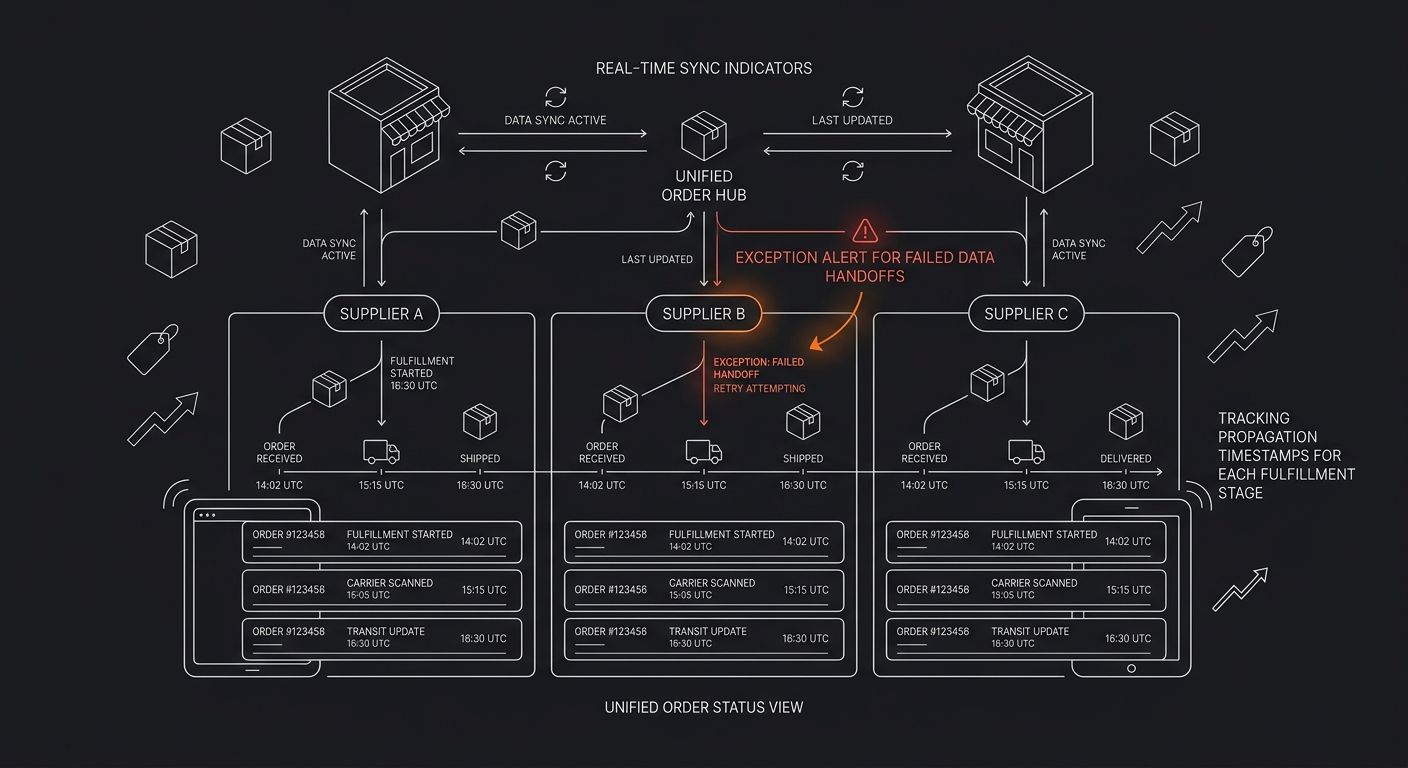
Real supplier data sync requires three things operating simultaneously: event-driven inventory updates that fire on every warehouse movement rather than on a batch schedule, automated tracking data propagation that pushes carrier information to your store and your customer without manual intervention, and exception handling logic that flags failures immediately rather than letting them sit in a dead queue. Flxpoint's 2026 overview of automation tools describes the operational standard as "real-time data monitoring — track changes in product prices, availability, and listings to react quickly to supplier updates" with "custom data workflows built as automated data pipelines tailored to dropshipping needs, such as daily price checks." The distinction between monitoring and acting on that monitoring is where most automated sync systems fail in practice.
Cavallo's research on order visibility reinforced the customer-facing stakes: real-time order visibility "allows teams to identify delays as they occur and proactively communicate changes to customers before issues escalate. When businesses miss this mark, they risk customer dissatisfaction and churn." The practical translation for dropshipping operations is that if your supplier's tracking data doesn't flow into your store within hours of shipment, your support inbox fills with "where is my order" tickets that cost you $3 to $8 each to handle. Multiply that across even 5% of your monthly order volume and you're looking at a meaningful drag on margin that never shows up in your product cost spreadsheet. Mining your customer reviews for these operational blind spots often reveals that fulfillment data gaps are the true source of negative feedback, even when the product itself arrives intact.
The visibility problem also interacts directly with multi-supplier concentration risk. When you split orders across two or three suppliers, the tracking data flows multiply, the inventory sync schedules diverge, and the potential for conflicting stock counts on the same SKU rises. Weak visibility across even one supplier contaminates the accuracy of your entire catalog, because the store-level inventory count is only as reliable as the least-synchronized feed.
Where Most Operators Stop Looking
The uncomfortable truth embedded in all of this research is that most dropshipping operators treat the order fulfillment pipeline as a black box that either works or doesn't, and troubleshoot only after a customer complaint surfaces. The data flow between order and fulfillment is treated as the supplier's problem, which it partially is, but the consequences of every failed handoff, stale inventory count, and delayed tracking update land entirely on your store's reputation, your ad account's feedback score, and your margin.
The 6% full-visibility figure from Supply & Demand Chain Executive suggests that even sophisticated companies haven't solved this. For dropshippers operating with leaner stacks and fewer integration resources, the honest answer is that you probably cannot achieve full real-time visibility across every handoff point described in this article. What you can do is identify which specific data transfers in your pipeline are running on batch schedules, which failure states produce silent errors instead of alerts, and which supplier relationships lack the field-mapping documentation that Bluepes recommends. Those three questions surface the highest-impact gaps without requiring an enterprise-grade overhaul. The tension that remains unresolved is that asking a supplier to improve their data infrastructure is a conversation most $10K to $50K per month stores don't have enough purchasing power to win. You're often at the mercy of whichever sync architecture your supplier built three years ago, and the gap between the automation marketing copy and the actual data plumbing is wider than anyone selling middleware tools wants to admit.
365 Dropship Editorial
Editorial team writing about E-commerce, dropshipping, and product discovery — reviews of dropshipping suppliers and platforms, trending niche guides (jewelry, beauty, pets, home, fashion), supplier due diligence, ecom operations, shipping & fulfillment strategy, product research, AOV optimization, and profitable dropshipping case studies.
Related Articles
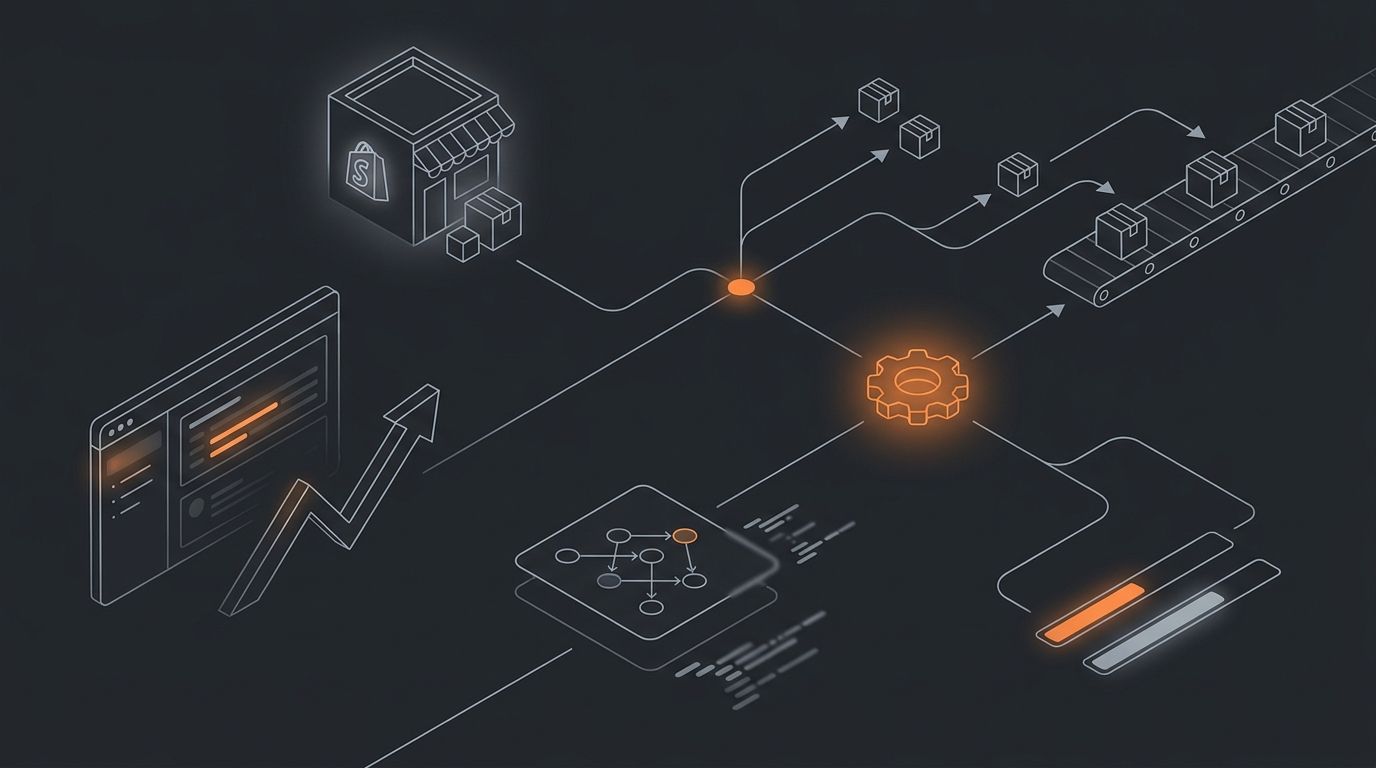
From Order to Tracking: Building Automated Supplier Sync Systems That Actually Work
Spark Shipping's documentation lists six distinct protocols for routing purchase orders to suppliers: email, EDI, FTP, CSV, XML, and direct API. Duoplane, built for mid-market and enterprise operations, supports a nearly identical set — EDI, email, API, and vendor portal.
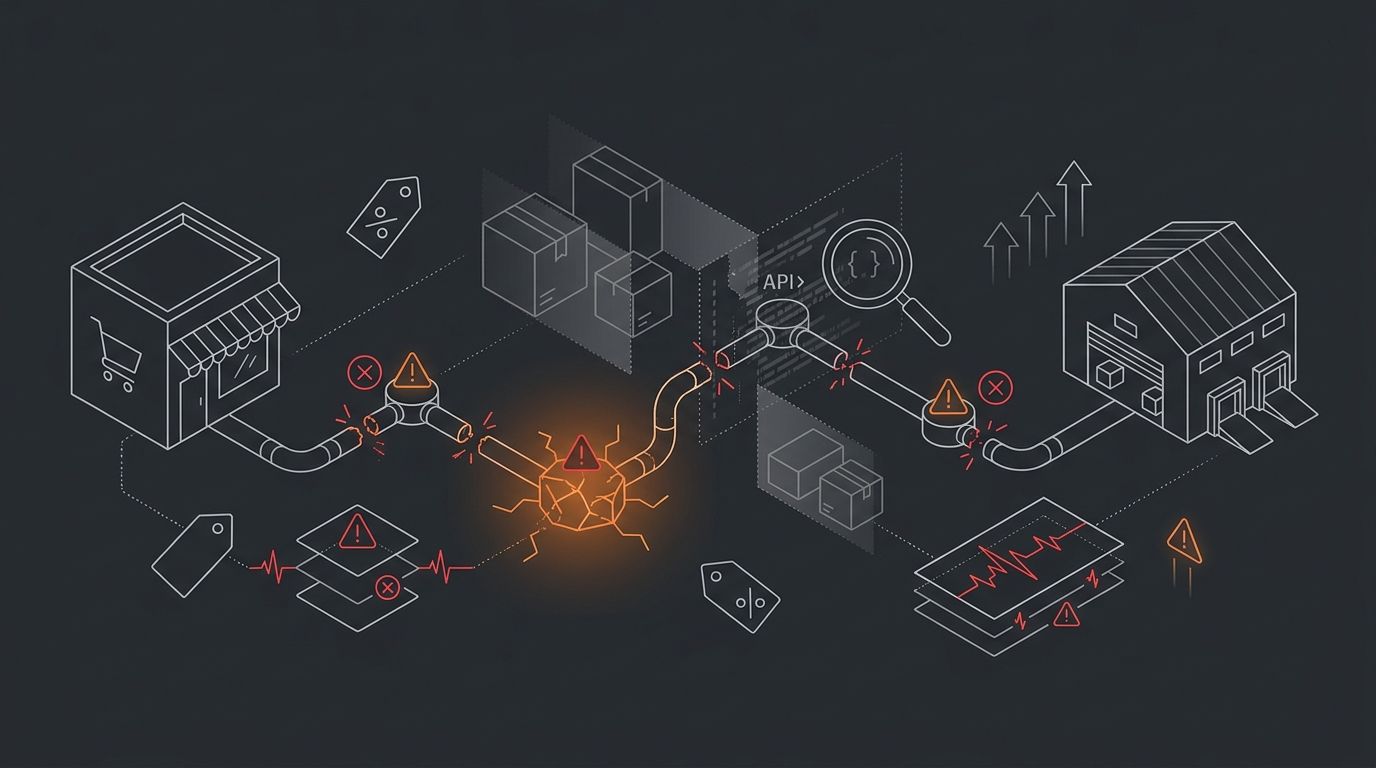
The Supplier Tracking Sync Failure Matrix: Debugging When Orders Disappear Between Shopify and Fulfillment
Shopify-supplier integration failures fall into three distinct zones: API callback misconfigurations, middleware polling gaps, and fulfillment-side acknowledgment drops.
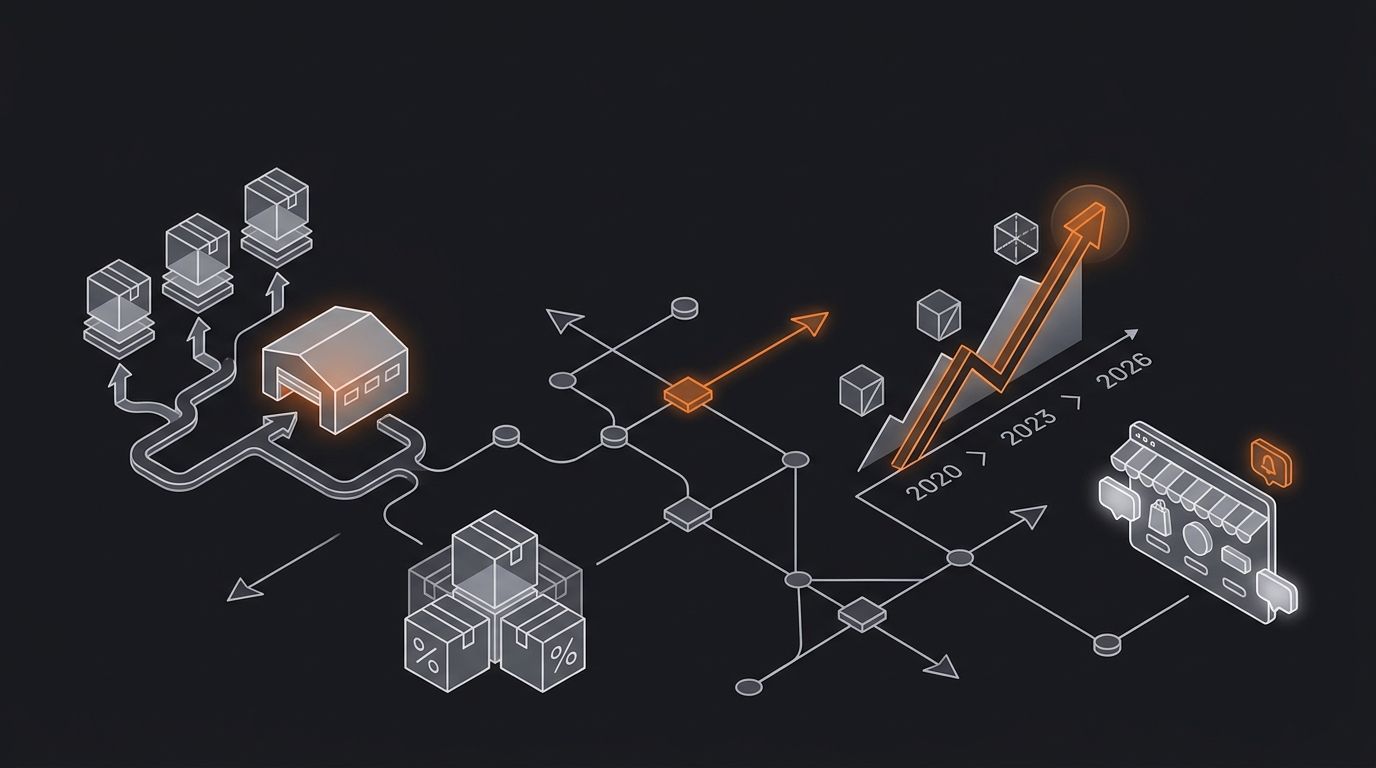
From Pandemic Pivot to Profitable Store: The Untold Operations Lessons Behind 2020-2026 Dropshipping Success Stories
COVID-era ecommerce operators who survived past 2022 share a pattern that has nothing to do with finding the right product or running the right ad. The pattern is operational: supplier onboarding speed, cash flow reinvestment discipline, and fulfillment consolidation.
Explore more topics