Container Freight Surges and Dropshipping Unit Economics: Why Port Efficiency Losses Are Reshaping Your 2026 Supplier Costs
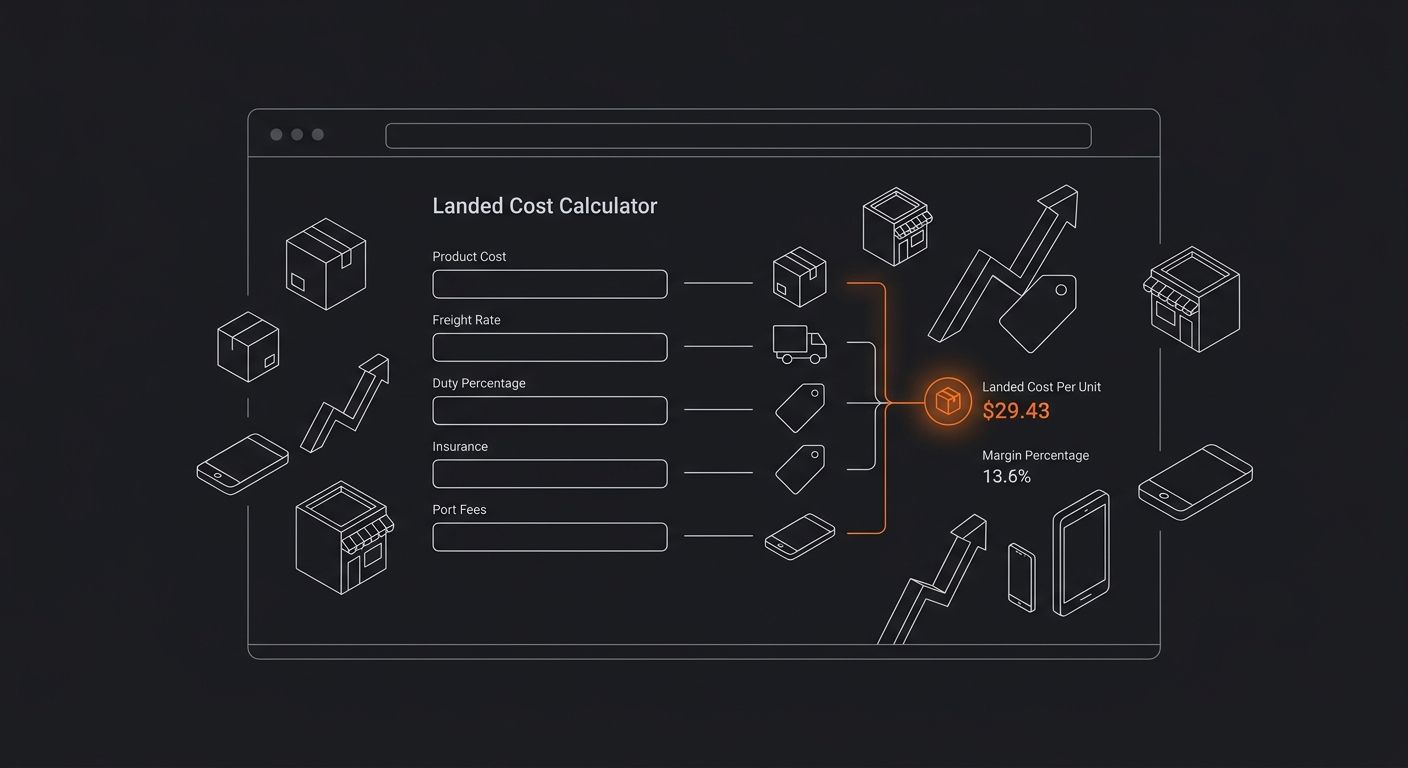
Landed cost calculators take your product cost, layer on freight, duties, insurance, and port fees, then output the true per-unit cost of getting inventory to a customer's door.

How Landed Cost Calculators Actually Work — And Why 2026's Freight Volatility Is Breaking Them
Landed cost calculators take your product cost, layer on freight, duties, insurance, and port fees, then output the true per-unit cost of getting inventory to a customer's door. The problem: most of these tools assume stable freight inputs, and container shipping costs in 2026 are anything but stable.
Freight Rate Inputs: The Foundation That Keeps Shifting
Every landed cost calculator starts with the same question: what does it cost to move this product from point A to point B? The answer changes constantly. Freightos's 2026 ocean freight outlook describes "a cyclical pattern of sharp rate dips followed by periods of recovery through capacity management" — a seesaw that makes any fixed shipping cost assumption stale within days.
Four Sons Logistics' analysis is blunt: freight rates in 2026 are "expected to remain volatile, driven by supply-demand imbalances, fuel costs, and carrier pricing strategies," with spot rates creating "periodic surges" that blow through forecasted margins. For dropshippers pulling products from Shenzhen or Guangzhou, the freight rate impact on dropshipping margins is direct. A $2.80 per-unit shipping cost on Tuesday can become $3.40 by Friday if spot rates spike on your lane.
The Calcix 2026 shipping profitability guide frames it this way: "The price you pay on Monday might be different by Friday. This volatility requires a dynamic pricing strategy on your storefront." That's the core tension. Your calculator gives you one number. The market gives you a moving target.
The Calculation Engine: Five Layers, One Number
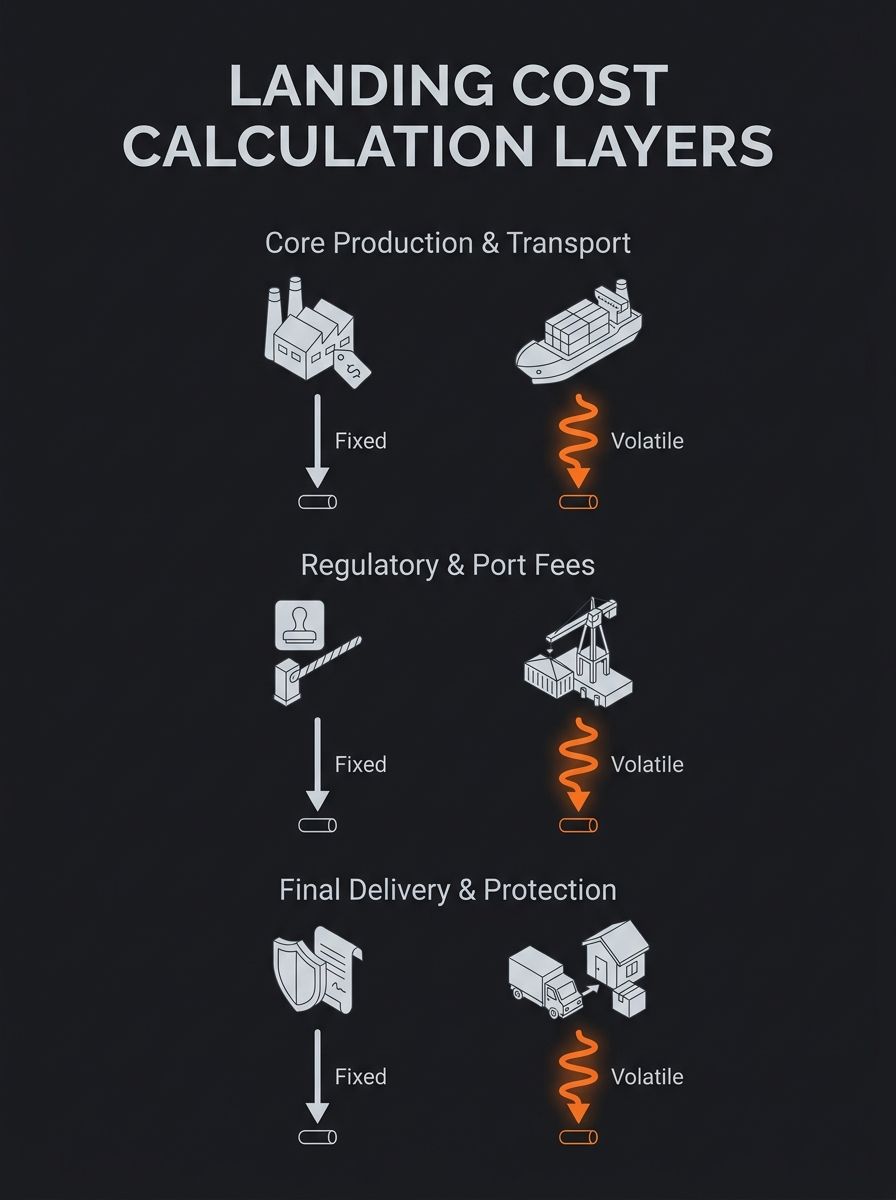
Landed cost calculators — whether you're using DHL's MyGTS tool, FedEx's duty calculator, or a standalone app like Acctivate — all run the same basic formula. They add up distinct cost layers to produce a multiplier or a flat per-unit figure. DHL defines landed cost as everything beyond raw product cost: freight, duties, insurance, handling, and last-mile delivery combined.
Here's how each layer works in practice:
Product cost is your supplier's quoted price per unit. Straightforward, but it shifts with MOQ tiers and currency fluctuation.
Freight (ocean or air) is the big variable. Ocean rates on the China-US West Coast lane have been cycling through dips and surges all year. Air freight is even less predictable.
Customs duties and import tariffs add 2-4% per unit on electronics and up to 12% on textiles, depending on HS code. The Uniqbe 2026 margin guide warns dropshippers to "never ignore the tariff impact on electronics profit, because that 2-4% per unit adds up fast."
Insurance typically runs 0.5-1.5% of declared goods value. Most calculators pull this from a flat percentage input.
Port handling and demurrage fees are the sneaky ones. Datapel's landed cost breakdown flags demurrage fees — charged when containers sit in port past the free period — as a cost most calculators either undercount or ignore entirely. These fees can run $150-$300 per container per day at congested ports.
The Acctivate system uses a "landed cost factor" — a multiplier applied to each product that scales the base cost by a configurable ratio. Set it to 1.3, and every $10 product becomes $13 in your cost model. The problem is that a multiplier set in January doesn't reflect May's freight reality.
If your current supplier data flow between order and fulfillment doesn't feed real shipping costs back into your pricing model, you're running blind. The calculator gave you a number at setup. Nobody updated it.
Port Congestion: The Multiplier Nobody Budgets For
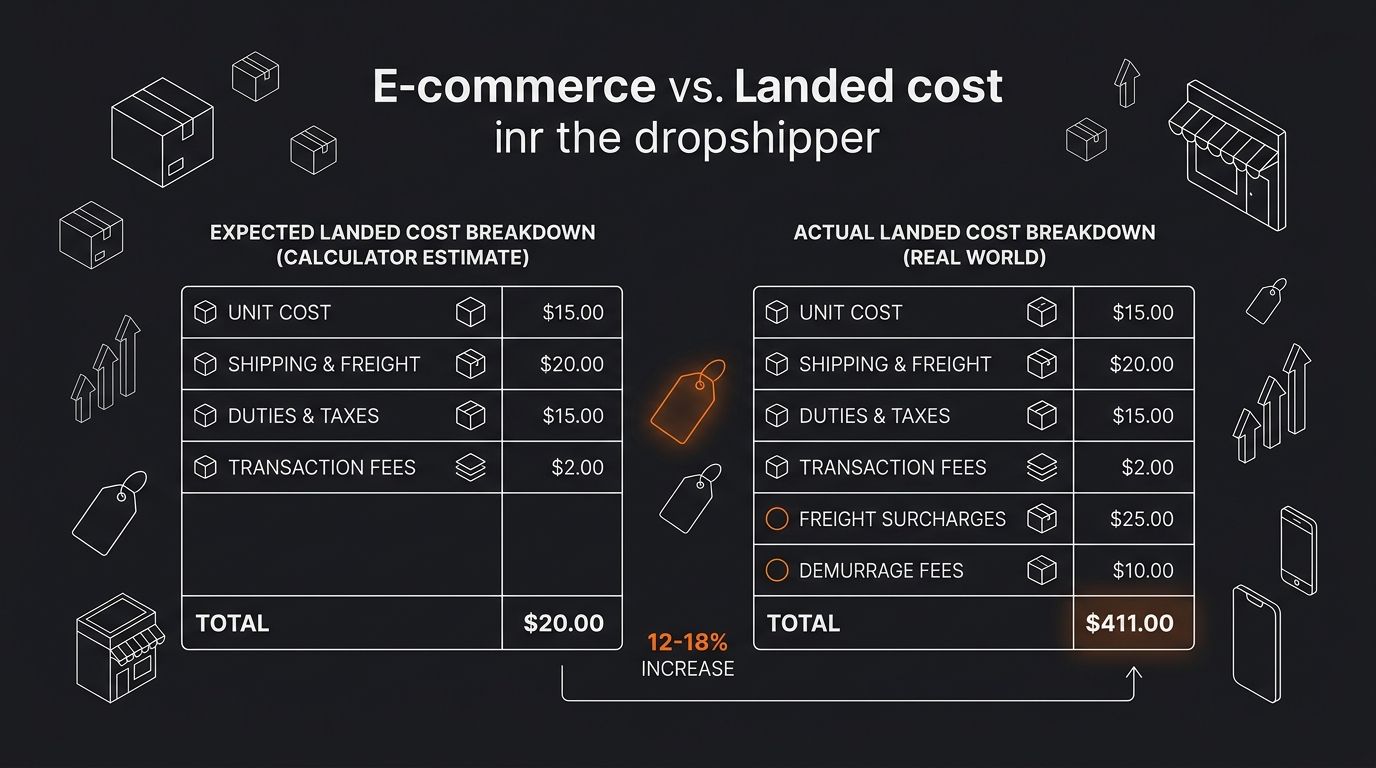
Port efficiency directly determines whether your landed cost calculation holds up or falls apart. When ports run smoothly, your freight estimate stays close to reality. When congestion hits, costs cascade.
IndexBox's port congestion analysis explains the mechanism: congestion "reduces effective vessel supply", increases bunker fuel costs for schedule recovery, and creates equipment imbalances that force expensive container repositioning. Kpler's research confirms that these bottlenecks "cascade through global supply chains, affecting everything from vessel schedule reliability to inventory positioning to freight rates."
For dropshippers, port efficiency margins erode in two ways. First, your per-unit freight cost rises because carriers pass congestion surcharges through. Second, your delivery timeline stretches, which increases return rates and customer complaints. The Uniqbe guide quantifies the secondary damage: "The dropshipping return rate cost impact gets heavy when buyers return items over bad grading or fake parts," and slow delivery amplifies that problem.
Global Trade Magazine's congestion guide recommends "increasing safety stock levels or advance order timing for markets served through chronically congested ports" and negotiating freight contracts that cap congestion surcharge exposure. Solid advice for brands holding inventory. For dropshippers who never touch the product, the only real defense is building the surcharge risk into your price from day one.
This is where building a backup supplier network pays off. If your primary supplier routes through a congested port, a secondary supplier shipping from a different hub can keep your actual landed costs closer to what your calculator predicted.
How the Major Calculator Tools Compare
Dropshippers have access to several landed cost tools, but they differ sharply in what they track and how often they update. Whether you're selling electronics, home goods, or running a gift finder store, the tool you choose determines how accurate your margin math actually is.
Tool | Freight Rate Updates | Duty/Tariff Database | Demurrage Tracking | Price Tier |
|---|---|---|---|---|
DHL MyGTS | Semi-dynamic (carrier rates) | 170+ countries | No | Free with DHL account |
FedEx Duty Calculator | Static per query | HS-code lookup | No | Free |
Acctivate Landed Cost Factor | Manual multiplier | Manual input | No | Paid (ERP add-on) |
Harvest Profit Margin Calculator | None (user input) | None | No | Free |
Trade.gov Tariff Lookup | N/A | US-focused | No | Free |
The Harvest calculator is the simplest option — you enter cost and selling price, and it returns markup percentage, profit margin, and gross profit. Dropshipping margins typically land between 10% and 30%, and Harvest helps you see where you fall. But it doesn't pull freight data. You're responsible for every input.
DHL's MyGTS is the most complete free option. It cross-references duty rates across 170+ countries and factors in carrier-level freight estimates. The limitation: those freight estimates reflect contracted DHL rates, which may not match what you're actually paying through ePacket, Yanwen, or CJ Logistics.
None of these tools track demurrage. None auto-update freight rates in real time. And none connect directly to your Shopify or WooCommerce store to adjust product prices when underlying costs shift. If you're already running automated supplier sync systems, you know how hard it is to keep even order data flowing correctly. Landed cost data is an additional layer most automation doesn't touch.
The Landed Cost Inflation Problem
Landed cost inflation in 2026 stems from a specific mechanism: every input to the formula is drifting upward or becoming less predictable, while the tools themselves assume relative stability. Container shipping costs in 2026 are lower on average than the 2021-2022 spike, but the volatility is higher. You get weeks of cheap rates followed by sudden surges that eat three months of margin improvement in one shipment.
The Calcix guide captures the operational reality: "Instead of fixed shipping prices, many successful brands are now moving toward 'calculated shipping at checkout' or building a significant 'logistics premium' into the product price." That premium — typically 8-15% above what a stable-market calculation would suggest — is insurance against the rate swings your calculator can't predict.
If you're running pre-launch supplier test orders, add landed cost variance to your audit checklist. Order the same product three weeks apart and compare the actual freight charged each time. The delta tells you how much pricing cushion you need.
And if your tariff and import duty model was built before the latest rate cycles, it's time to rebuild. The duty percentage might be fixed, but the freight base it's applied against has shifted.
Where the Model Breaks
Landed cost calculators break in three predictable places.
Stale inputs. The most common failure. You set your freight cost estimate during a rate dip, priced your products accordingly, and never revisited the number. Three months later, rates surged 18% on your lane, and every order shipped at a loss you didn't notice until reconciliation.
Missing cost layers. Demurrage fees, congestion surcharges, currency conversion costs, and international wire fees rarely appear in basic calculators. The Uniqbe guide lists "banking and compliance fees" and "international wire fees and currency conversion" as costs most dropshippers discover only after they've already compressed their margins.
Lag between calculation and sale. Even a tool that captures all cost layers accurately produces a snapshot, not a live feed. A product priced on May 1 using May 1 freight data sells on May 28 and ships on June 3 at June rates. The freight rate impact on dropshipping profitability lives in that gap between when you priced the item and when the shipment actually moves.
The honest assessment: no calculator on the market solves all three problems simultaneously. The best approach is treating your landed cost number as a floor, not a target — price 10-15% above the calculated figure, and treat the margin cushion as the cost of operating in a volatile freight environment. The tools give you a starting point. Your pricing discipline determines whether you stay profitable when the inputs inevitably shift.
365 Dropship Editorial
Editorial team writing about E-commerce, dropshipping, and product discovery — reviews of dropshipping suppliers and platforms, trending niche guides (jewelry, beauty, pets, home, fashion), supplier due diligence, ecom operations, shipping & fulfillment strategy, product research, AOV optimization, and profitable dropshipping case studies.
Related Articles
Building a Tariff-Aware Unit Cost Model: The Step-by-Step Framework for Cross-Border Dropshipping Math
A silicone kitchen spatula sourced from Guangdong at $4.50 per unit, with $4.80 in shipping, doesn't land in a U.S. customer's hands at $9.30. After a 28.4% combined duty rate, insurance, and processing fees, the true landed cost hits $12.94, slashing a perceived 60% gross margin to roughly 48%.
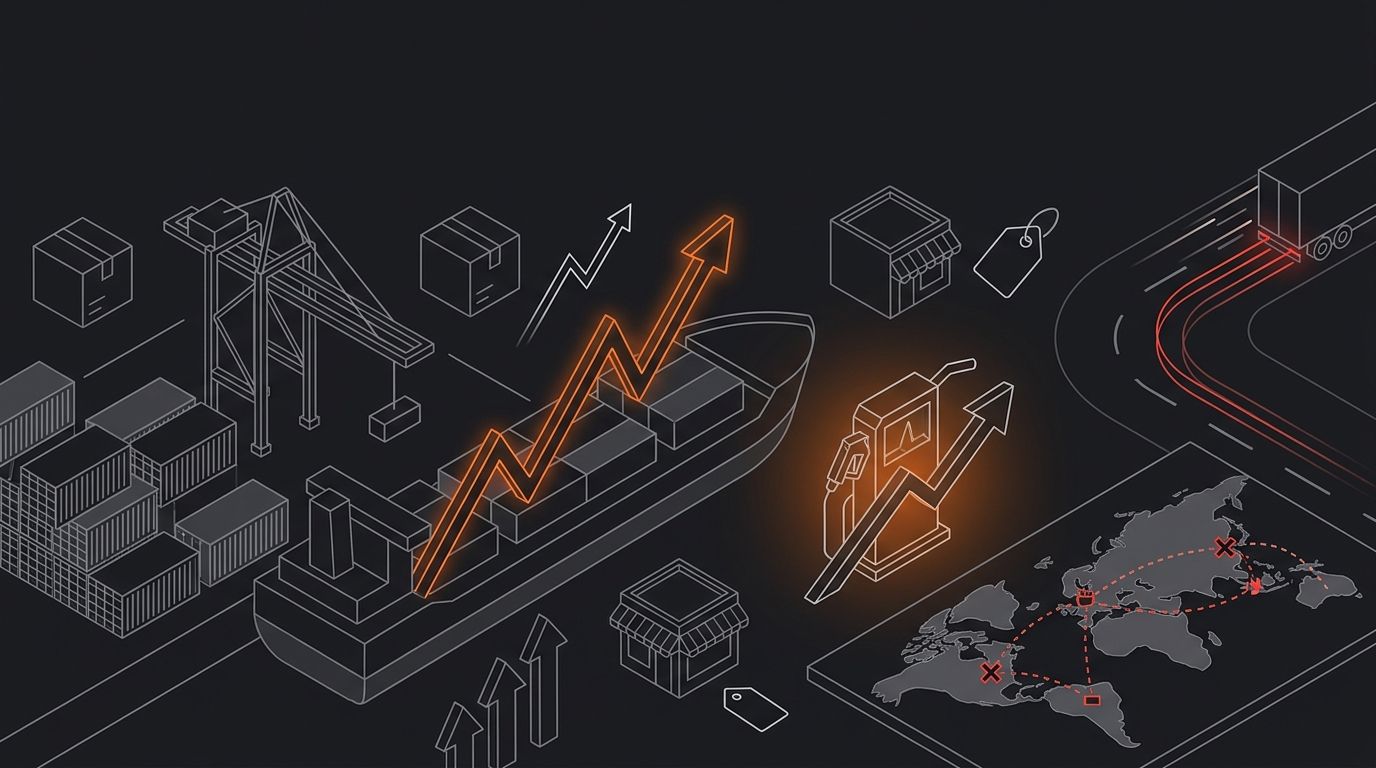
Bunker Fuel Shocks & Last-Mile Economics: Why Global Port Disruptions Are Reshaping Dropshipping Unit Economics in 2026
On February 28, 2026, the Strait of Hormuz closed to commercial shipping traffic as the Iran conflict escalated into a direct naval blockade. Over 90% of crude and refined product exports from the Persian Gulf were cut off within 72 hours.
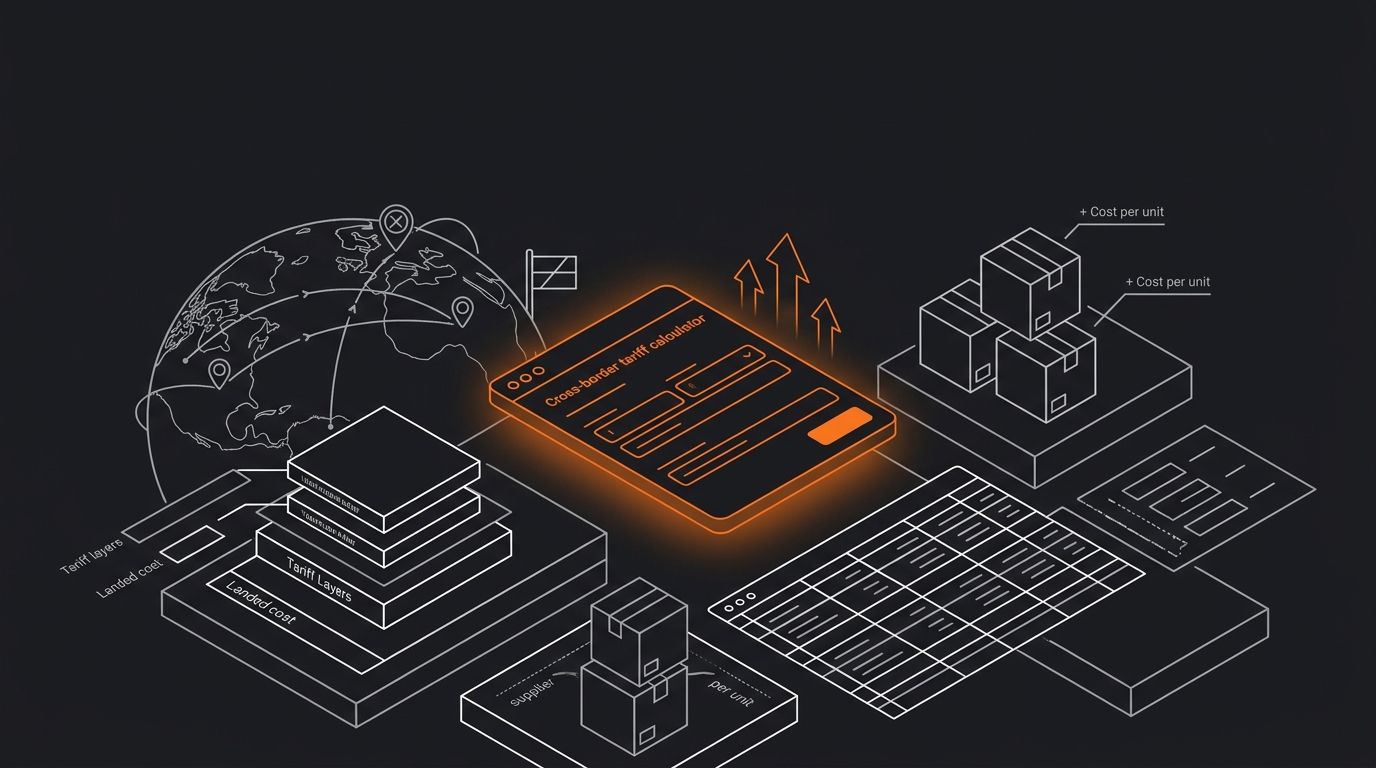
The Cross-Border Tariff Calculator: Building Your True Unit Cost Model Before Supplier Selection
A silicone kitchen spatula classified under HTS 3924.10 costs $4.50 from a Guangdong supplier on AliExpress, with $4.80 shipping via ePacket. That $9.30 declared value now triggers a 3.4% base duty plus a 25% Section 301 tariff — roughly $2.64 in combined duties — plus a $0.
Explore more topics