The Seasonal Demand Blindspot: Why Calendar-Based Product Planning Beats Year-Round Niche Selection for Dropshippers
Dropshipping product research almost always starts with a category — pet supplies, home fitness, phone accessories — and then hunts for suppliers, tests ads, and builds a store around that vertical. Calendar-based niche selection flips this sequence.

The Seasonal Demand Blindspot: Why Calendar-Based Product Planning Beats Year-Round Niche Selection
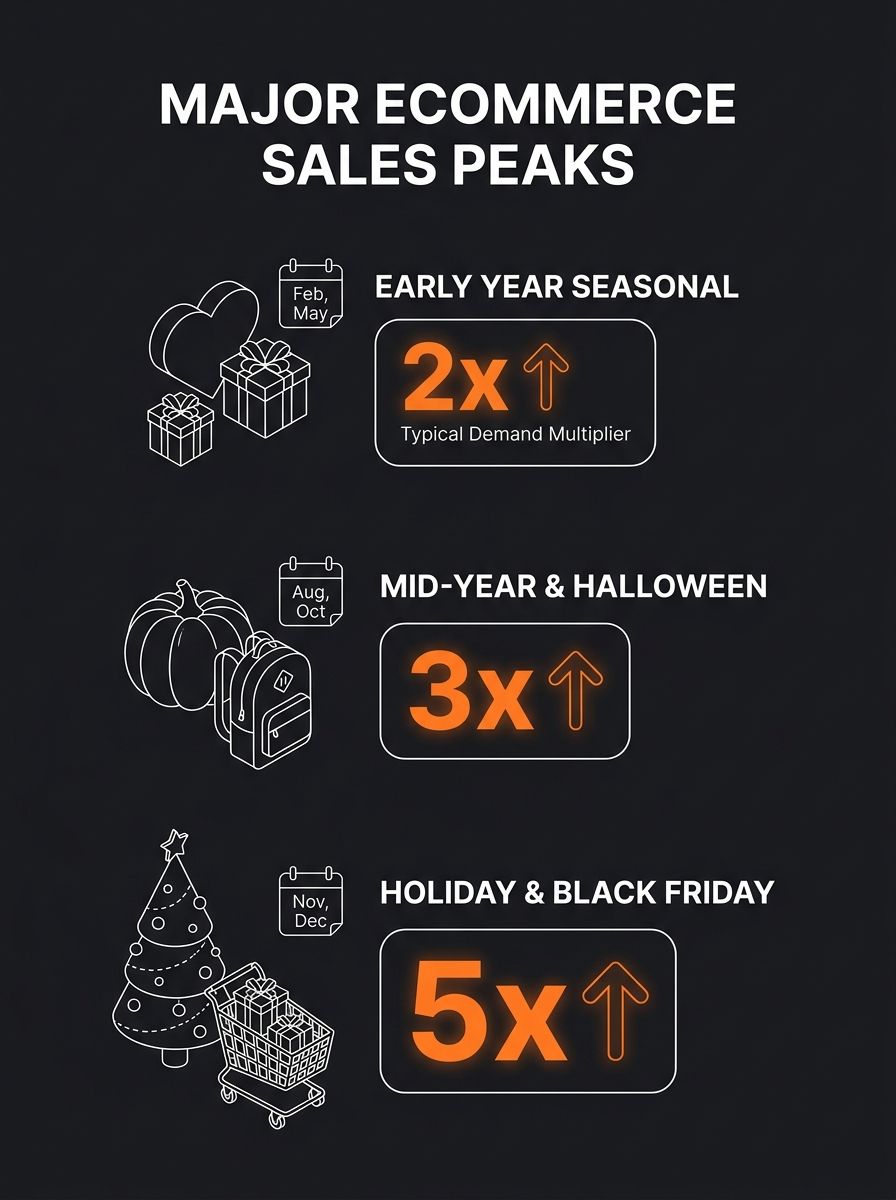
Dropshipping product research almost always starts with a category — pet supplies, home fitness, phone accessories — and then hunts for suppliers, tests ads, and builds a store around that vertical. Calendar-based niche selection flips this sequence. You start with when people buy, map the predictable demand spikes across 12 months, and pick products that ride those windows. Seasonal products see demand multiply by 3-5x during peak periods then drop sharply once the window closes. The stores that plan around this rhythm outperform static-catalog stores because they're buying ads when intent peaks and pulling back when it doesn't.
The six rules below are a framework for seasonal demand mapping applied to real dropshipping operations. They cover sourcing timelines, ad budgets, supplier negotiations, and the data analysis you need to tell a genuine seasonal pattern apart from a one-time viral blip. If you're building (or rebuilding) your store around community and niche identity, layering calendar-driven product rotation on top of that foundation is where the margin improvement actually compounds.
Map your product calendar before you commit to a niche
The standard advice is to pick a niche, find winning products, then worry about timing later. That's backward. Printful's 2026 ecommerce holiday calendar lists 42 sales-relevant dates, from Valentine's Day through Black Friday, plus smaller windows like National Pet Day, back-to-school, and early-season gardening prep. Each of these creates a concentrated burst of buyer intent that a well-positioned store can capture.
Before you lock into a niche, pull up a 12-month calendar and mark every event that creates buying urgency in your candidate categories. A pet supplies store has National Pet Day (April 11), summer travel season (pet carriers, portable bowls), Halloween costumes, and holiday gifting — four distinct peaks with natural product rotation opportunities. A phone accessories store has maybe two: back-to-school and the iPhone launch cycle. The store with more calendar anchors has more chances to spike revenue without relying on always-on ad spend to grind out sales.
Holiday product planning done at the niche-selection stage, before you've committed to suppliers or ad accounts, gives you structural flexibility that's almost impossible to bolt on later.
Start sourcing 8 weeks before every demand spike
Supplier lead times kill seasonal plays that start too late. If you're working with CJ Dropshipping or Zendrop, expect 7-15 business days for fulfillment under normal conditions. During peak windows — especially October through December — those timelines stretch. Suppliers on Spocket with US-based warehouses shorten delivery but still need 5-7 business days, and their inventory allocation fills up fast around major holidays.
The 8-week rule means that for a Thanksgiving-adjacent product push (November 26 in 2026), you should be finalizing your product selection, running test orders, and confirming supplier stock levels by late September. For Valentine's Day, that's early December. Back-to-school? Mid-June.
This is where supplier capacity forecasting becomes essential. Ask your suppliers directly: what's your capacity in the two weeks before Black Friday? Can you guarantee current per-unit pricing for orders placed by October 1? Every supplier you work with should be able to answer these questions, and if they can't, that's a vetting red flag worth exploring through a structured test order process.
Use 2-3 cycles of data to separate seasonality from noise
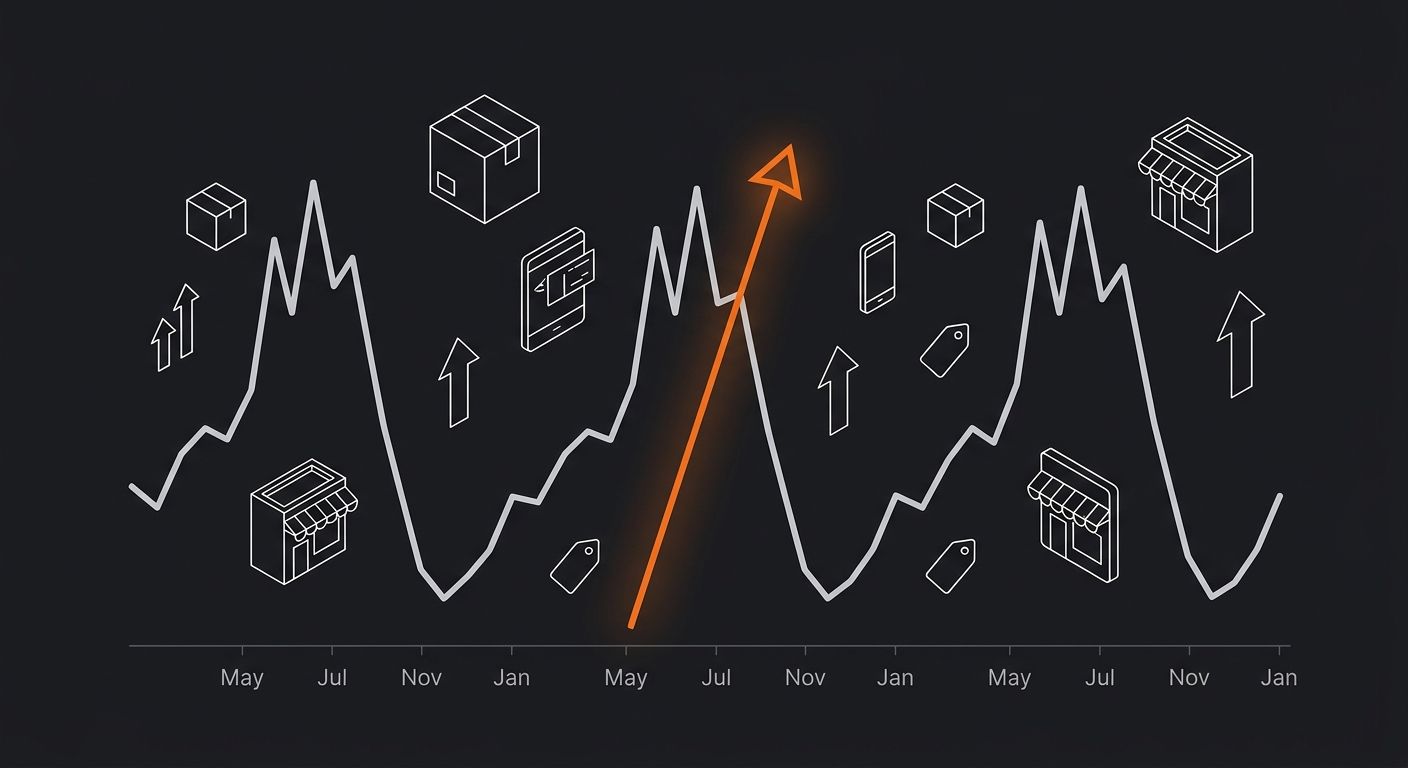
A product that spiked once on TikTok in July isn't seasonal. A product that spikes every July for three consecutive years is. The distinction matters because your entire procurement and ad calendar depends on it.
Inventory forecasting models built for ecommerce pull from historical demand, seasonality, lead times, and supplier performance to project what you'll need and when. You can approximate this without enterprise software by pulling Google Trends data for your target product keywords across 24-36 months and looking for recurring shapes. A genuine seasonal curve has a consistent start month, a predictable peak, and a clean decline. A viral spike looks like a mountain that appears once and never repeats.
The trap to avoid: treating a stockout period as low demand. If your supplier ran out of inventory last August and you recorded zero sales, that's a data gap, not a signal that August is dead for your niche. Clean your historical data before you plan around it.
For stores without years of their own sales data, Google Trends combined with Reddit and TikTok signals as reverse demand indicators gives you enough pattern recognition to build a credible first-year calendar. You won't have perfect data. You will have something far better than guessing.
Negotiate supplier capacity windows before you negotiate unit price
Everyone negotiates unit cost. Almost nobody negotiates capacity guarantees for peak periods, and that asymmetry creates the actual margin advantage.
Here's the scenario: you've identified that your top-selling product category does 3.5x its normal volume in the two weeks before Christmas. You're running a lean dropshipping model through Zendrop, so you don't hold inventory. What happens when your supplier gets overwhelmed with orders from the 200 other stores selling the same product? Fulfillment times blow out from 5 days to 12+ days, your customers get angry, refund rates climb, and your post-sale costs eat the margin you thought you had.
The fix is negotiating capacity allocation alongside pricing. Concrete questions to ask: Can you reserve X units per week for my store during November 15 - December 15? What's the per-unit premium for guaranteed 48-hour processing during peak? Is there a minimum commitment required to lock in that capacity?
Some suppliers will say no. That's useful information — it tells you their operation isn't built for peak reliability, and you should be looking at alternatives or shifting to suppliers with US-based fulfillment for your highest-volume seasonal windows.
Build your ad budget around the calendar
A flat monthly ad budget across 12 months is a terrible allocation strategy for a store with seasonal products. If 40% of your annual revenue comes from Q4, then 40% of your annual ad spend should be concentrated there too, with the remaining budget distributed proportionally across your other peak windows.
The math on this is straightforward. Say your annual ad budget is $18,000 — that's $1,500/month if you spread it evenly. But if October-December drives 40% of revenue, you should be spending roughly $7,200 across those three months ($2,400/month) and scaling back to $900/month during your quieter periods. The cost-per-acquisition during peak intent windows is often lower relative to revenue generated, because conversion rates climb when buyers are actively looking for gifts, seasonal items, and holiday deals.
Between peaks, shift your reduced budget toward audience building: email list growth, content marketing, retargeting pools. That way, when the next seasonal window opens, you have warm audiences ready to convert instead of starting cold.
This pairs well with understanding your true contribution margin per product, because some seasonal items that look profitable on gross margin actually underperform when you factor in the higher shipping costs and fuel surcharges that carriers impose during peak periods.
Rotate at least 30% of your catalog every quarter
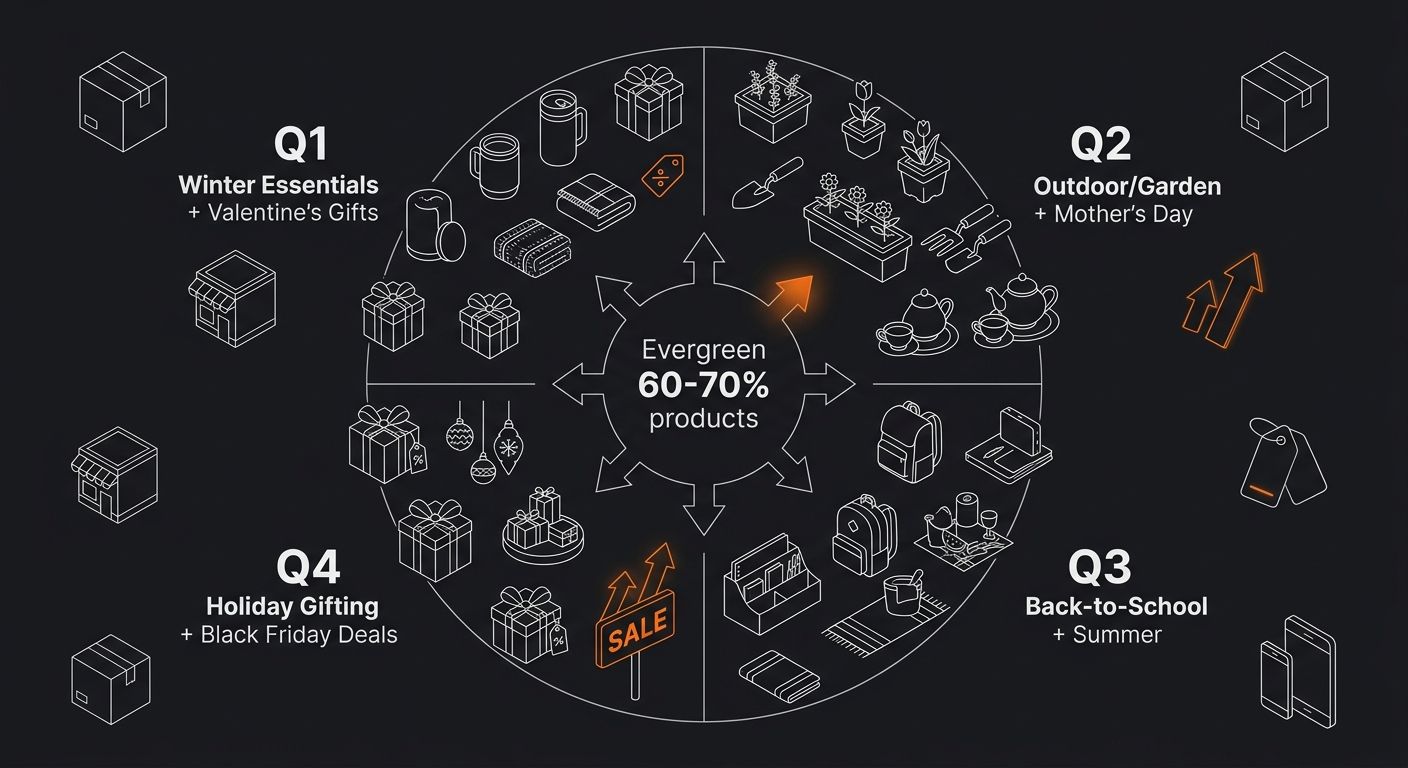
A static product catalog is the year-round niche trap in disguise. Even stores with strong seasonal awareness often keep the same 50 products listed January through December, only adjusting ad spend. The better approach is rotating 30-40% of your active catalog to match the upcoming quarter's demand profile.
Q1 2026 is a useful example. AutoDS identified dual demand for cold-weather essentials and early-season gardening tools, plus a mid-quarter Valentine's Day spike where personalized gifts and smart jewelry outperformed traditional flowers and candy. A store in the "home and lifestyle" niche that rotated in gardening prep items by January and Valentine's-specific gifting by late January would capture two distinct waves of intent that a static catalog misses entirely.
Quarterly rotation doesn't mean rebuilding your store from scratch. Your evergreen best-sellers stay. But you're adding seasonal items, creating seasonal product bundles, and writing seasonal product descriptions that connect your products to the buyer's current mindset instead of relying on generic manufacturer copy.
When the Calendar Lies
These rules break down in a few specific situations, and pretending they don't would be dishonest.
Cultural and regional variability. Flip-flops sell year-round in Florida and only May through August in Minnesota. If you're selling to a global audience or a geographically diverse US market, a single national calendar oversimplifies demand. You need regional segmentation in your ad targeting to match your seasonal product pushes to the audiences actually experiencing that season.
Platform-driven mega sales. Events like Amazon Prime Day or Shopee's 11.11 create artificial demand peaks that don't align with any traditional calendar holiday. These events shift dates year to year and require their own procurement timeline, separate from your holiday calendar.
Genuinely evergreen products. Some categories — phone chargers, basic kitchen tools, pet food accessories — have demand curves so flat that seasonal planning adds complexity without meaningful revenue gain. If your data shows less than a 1.5x difference between your best and worst months, calendar-based planning is overhead you don't need. Run your evergreen catalog, keep your ad spend steady, and focus your optimization energy elsewhere.
The calendar is a planning tool with real limits. Within those limits, it outperforms static niche selection by a wide enough margin that ignoring it costs you money every quarter you delay. Build the calendar first, pick your products second, and let the rhythm of buyer intent tell you when to push hard and when to pull back.
365 Dropship Editorial
Editorial team writing about E-commerce, dropshipping, and product discovery — reviews of dropshipping suppliers and platforms, trending niche guides (jewelry, beauty, pets, home, fashion), supplier due diligence, ecom operations, shipping & fulfillment strategy, product research, AOV optimization, and profitable dropshipping case studies.
Related Articles

From Pandemic Pivot to Profitable Store: The Untold Operations Lessons Behind 2020-2026 Dropshipping Success Stories
COVID-era ecommerce operators who survived past 2022 share a pattern that has nothing to do with finding the right product or running the right ad. The pattern is operational: supplier onboarding speed, cash flow reinvestment discipline, and fulfillment consolidation.

Complete Guide to Starting a Dropshipping Business
Every dropshipping business built on Shopify, Amazon, Etsy, eBay, or Walmart faces the same registration requirement: formal business filing, a dedicated bank account, and a sales tax permit.

What is Dropshipping: Complete Beginner's Guide
The global dropshipping market is projected to hit $537.8 billion in 2026, expanding at a 23.6% compound annual growth rate through 2032. Dropshipping is an ecommerce fulfillment model where you sell products online without purchasing or storing inventory.
Explore more topics