Why Niche Research Tools Miss Hidden Demand: Using Reddit, TikTok & SEO Data as Reverse Indicators for 2026
Google's Keyword Planner reports zero monthly searches for "geometric silicone baking mold." Ahrefs shows the same. SEMrush agrees. And yet a seller on r/smallbusiness describes planning exactly that product after finding 1–2 existing Amazon listings with visible sales traction. The demand exists.
Why Niche Research Tools Miss Hidden Demand: Using Reddit, TikTok & SEO Data as Reverse Indicators
Google's Keyword Planner reports zero monthly searches for "geometric silicone baking mold." Ahrefs shows the same. SEMrush agrees. And yet a seller on r/smallbusiness describes planning exactly that product after finding 1–2 existing Amazon listings with visible sales traction. The demand exists. The tools can't see it. That disconnect has been widening for years, and the gap accelerated hard through 2025 and into 2026. This guide walks through how we got here and how operators are building a niche research methodology that actually captures demand where it forms.
When Keyword Volume Was the Whole Playbook
From roughly 2015 through 2022, the standard process looked the same everywhere. Plug a seed keyword into Ahrefs or SEMrush. Filter by monthly search volume (MSV), keyword difficulty, and CPC. Pick niches with 1,000+ MSV and sub-30 difficulty. Build a store around those terms.
This worked because the path was linear: a person had a need, typed it into Google, clicked a result, and bought something. Keyword tools measured that input reliably. The entire market research tools comparison conversation revolved around which platform had the freshest crawl data or the most accurate difficulty scores.
But the pipeline assumed something fragile: that Google search was where demand first surfaced. By 2023, that assumption was cracking. By 2025, it was broken.
Reddit Threads Started Ranking Above Product Pages
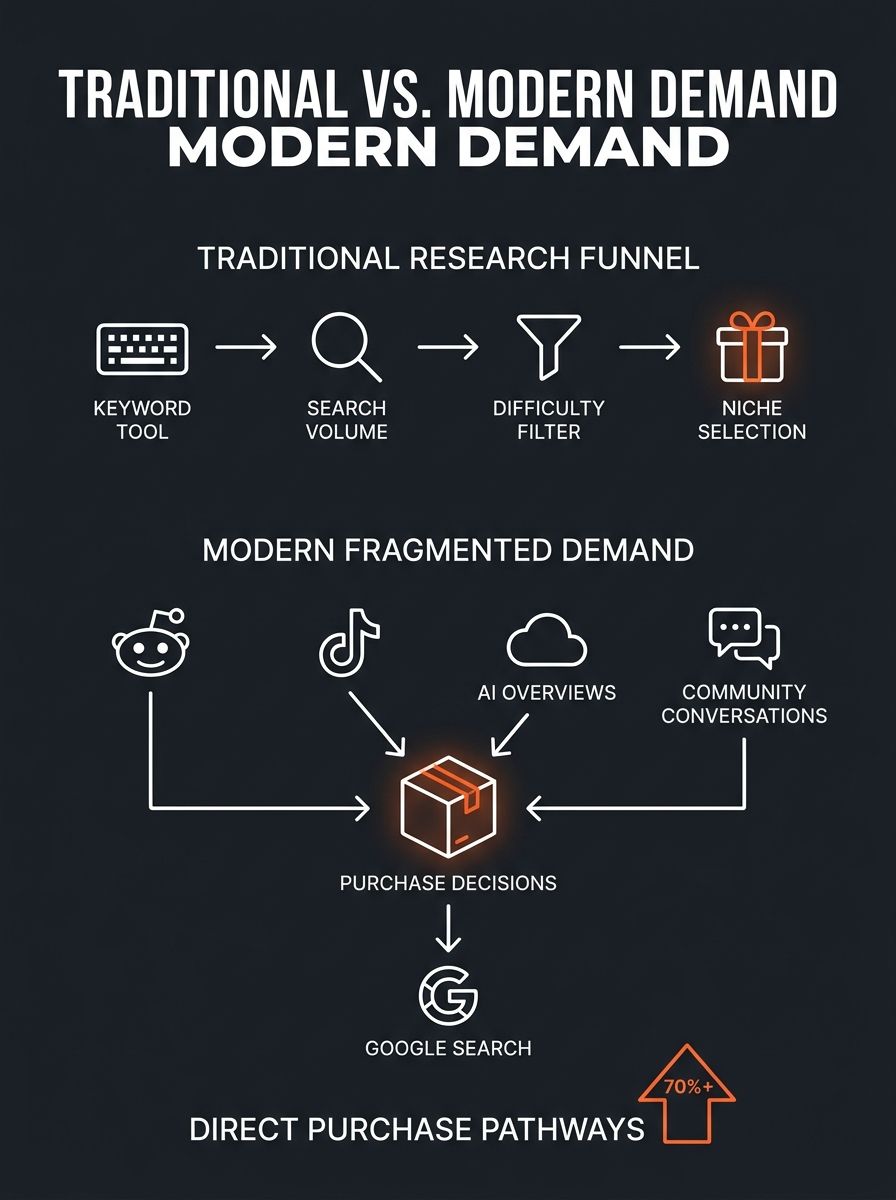
Google's data licensing deal with Reddit in 2024 changed the SERP landscape in ways keyword tools still haven't caught up with. Reddit threads began appearing directly in Google search results, often outranking brand pages and product listings for purchase-intent queries. By early 2025, Reddit had 80 million weekly search users according to Content Whale's analysis, and Google was actively surfacing subreddit discussions inside AI Overviews.
This created a strange new dynamic for trend validation dropshipping. The strongest demand signals moved from "people searching for a product" to "people debating a problem in a subreddit, then discovering a product category exists." That second behavior doesn't register in keyword databases at all.
A thread on r/ecommerce about validating niches before launching a print-on-demand store captured this shift well. One commenter noted they used Reddit to confirm their niche was differentiated and their point of difference would hold up. Pinterest, they argued, wouldn't show trends because "everything sits in there forever." The real validation came from watching people describe problems in their own words, in real time, on communities where nobody was trying to sell anything.
Reddit niche analysis at this stage was still mostly manual. Operators would search site:reddit.com [product category] in Google, read through active threads, and look for recurring pain points that mapped to products with viable margins. If you've already looked into why standard niche research tools miss profitable markets, the Reddit angle fills in the specific gap those tools leave open.
TikTok Became a Search Engine the Tools Couldn't Scrape
By mid-2025, TikTok's internal search function had matured to the point where users were typing queries like "best budget desk lamp for streaming" directly into the app. TikTok Creative Center data showed niche seasonal spikes that traditional tools missed entirely. Keywords like "graduation gifts" would spike sharply between April and June on TikTok while barely registering as a trend in SEMrush's keyword explorer.
The product categories gaining traction on TikTok Shop also diverged from what keyword tools suggested was viable. Doba's analysis of top TikTok Shop niches for 2026 highlighted products like RGB hexagon wall panels that sync with PC games and music. These target the streamer setup niche, which barely exists as a keyword cluster in traditional SEO tools but represents a massive cultural segment on TikTok and Twitch.
The recovery and "soft life" product trend told the same story. Stress relief products, weighted sleep masks, and sensory tools gained enormous momentum on TikTok through creator demonstrations and ASMR content. The demand formed inside video comment sections, spread through stitches and duets, and only hit Google search weeks or months later, if at all.
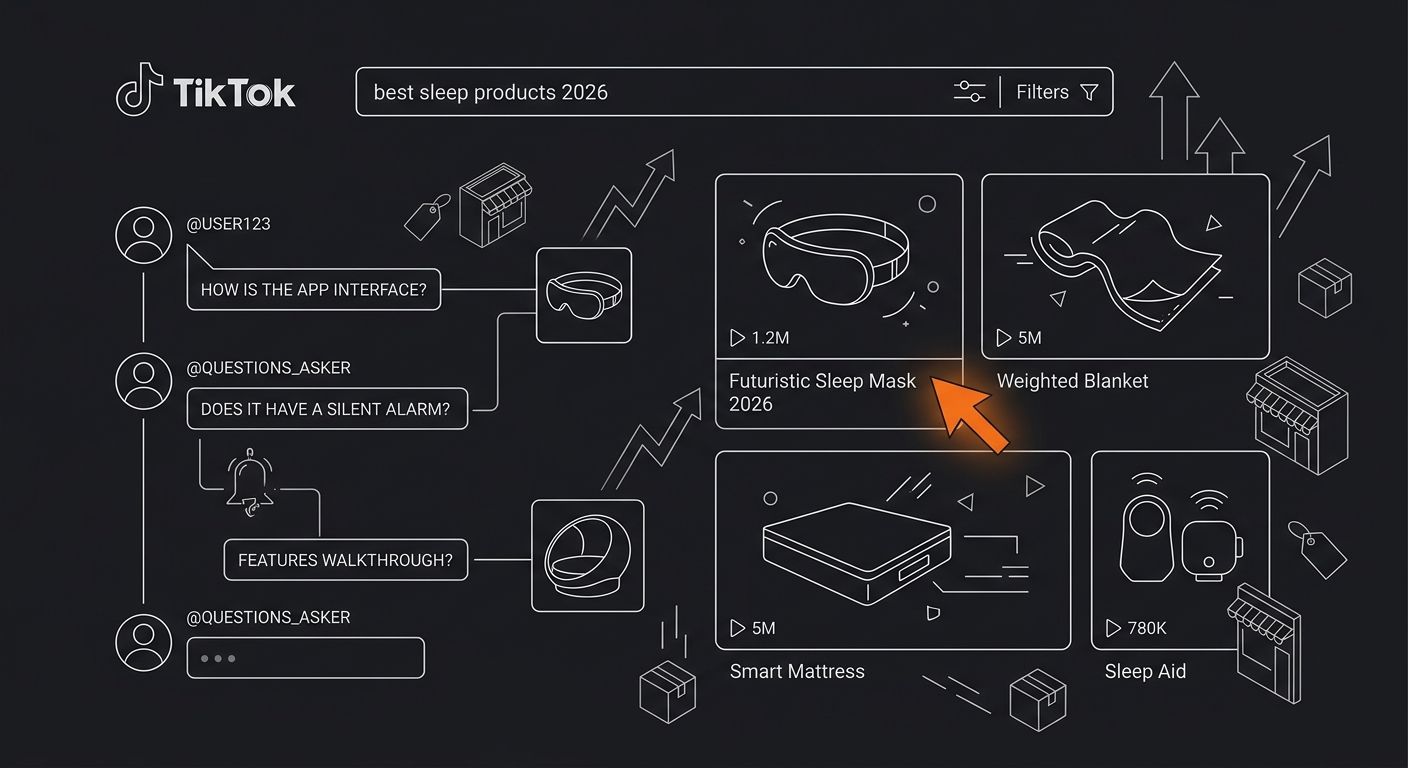
For operators trying to build a supplier testing pipeline, this matters because the products TikTok surfaces often require faster sourcing decisions than keyword-driven niches. By the time a TikTok product trend registers in Ahrefs, the first wave of margin is already captured.
AI Overviews Intercepted the Click Layer
Google's rollout of AI Overviews through 2025 created a new problem for SEO-based niche research. Internal analytics shared across SEO communities in early 2026 showed that up to 65% of informational queries were being answered directly in the SERP, generating zero clicks. A query might have 10,000 monthly searches, but if Google's AI answers it without sending traffic to any website, that search volume is phantom demand from an ecommerce perspective.
This forced a rethink of SEO demand signals. High-impression, low-CTR keywords in Google Search Console became a reverse indicator: they confirmed demand existed but also showed that demand was being fulfilled before it reached any product page. The operators who adapted fastest started treating those signals as validation inputs rather than traffic sources.
Social signals fed into this loop indirectly. As Sprout Social's analysis noted, social signals don't directly impact Google rankings, but they drive traffic and build brand authority that AI systems then cite. A discussion on r/seogrowth confirmed the same finding: social presence builds trust and authority that affects SEO indirectly, particularly when AI systems decide which sources to reference in generated answers.
For dropshippers specifically, this means the old process of picking niches based on keyword volume and competition scores has a structural blind spot. If you're comparing dropshipping platforms or evaluating supplier relationships, the demand validation step needs to happen before you consult keyword tools, not after.
Assembling the Reverse Indicator Stack
The operators getting this right in 2026 run a process that inverts the traditional funnel. Instead of starting with keyword volume and building backward to a product, they start with unstructured community data and use SEO metrics to confirm what they've already found.
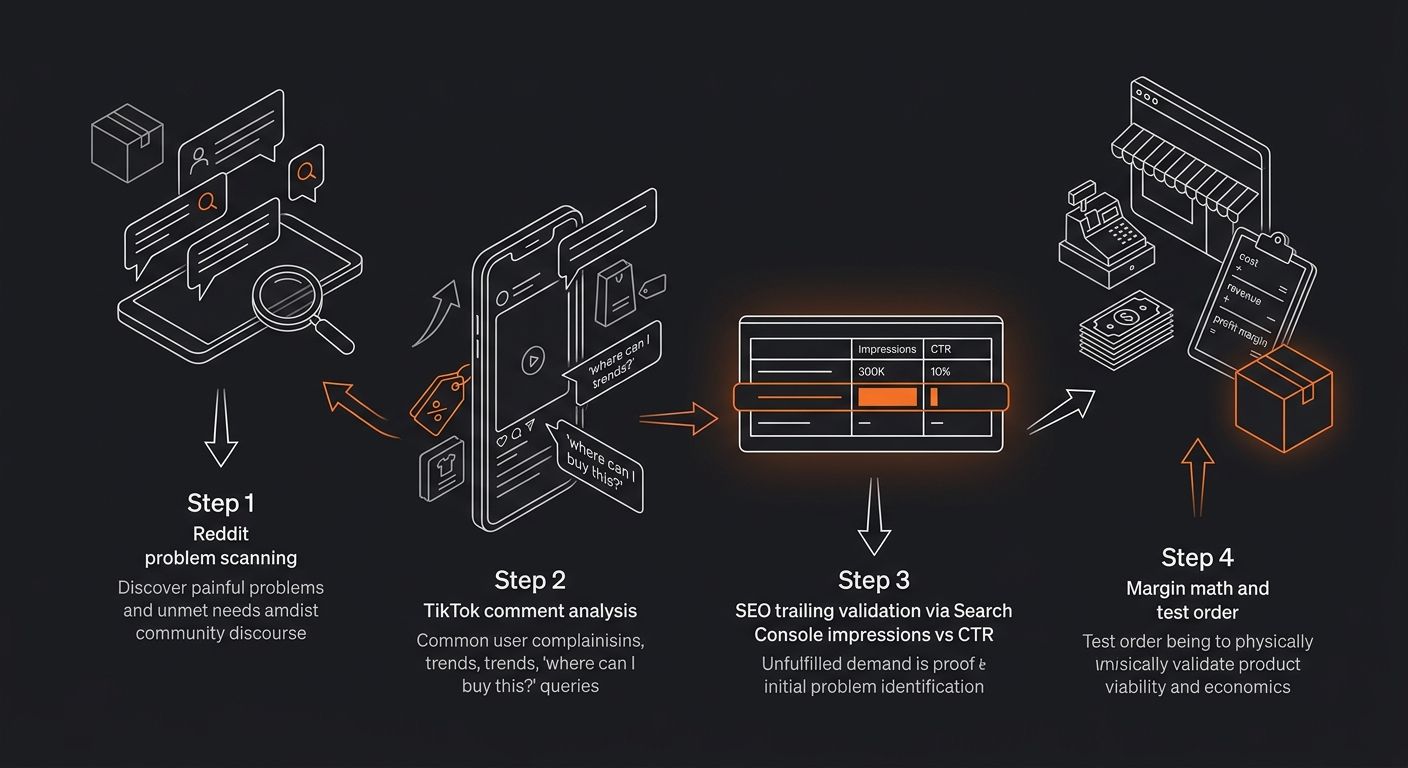
The practical sequence looks like this:
Scan Reddit for problem language. Search
site:reddit.com [broad category]in Google. Read threads on r/ecommerce, r/smallbusiness, and niche-specific subs. Look for posts where someone describes a problem, and multiple commenters confirm they share it. A r/Startup_Ideas thread on demand validation put it well: skip waitlist metrics. The real test is whether 3 people will pay $39/month, or whether your beta users are actually using the product weekly. Same logic applies to physical products.Cross-reference TikTok engagement. Search the product category or problem phrase in TikTok's search bar. Look at comment sections, not view counts. Comments asking "where do I buy this" or "does this actually work" signal purchase intent. CJ Dropshipping's 2026 product database maps many of these TikTok-trending products to supplier listings, which gives you a quick landed cost estimate.
Validate with SEO data as a trailing indicator. Now check Google Search Console or Ahrefs. If the query has impressions but terrible CTR, you've found a niche where demand exists but competition hasn't figured out how to capture it through content. If the query doesn't appear at all, you're potentially ahead of the curve, and you need to validate further through small-batch test orders and ad spend.
Run margin math before committing. None of this matters if the product economics don't work. Understanding the real cost differences between platform middlemen and direct suppliers determines whether a validated niche becomes a profitable one.
The State of Play
The market research tools comparison conversation has shifted. Tools like Ahrefs and SEMrush remain valuable for competitor analysis and content planning, but they've lost their monopoly on demand discovery. The fragmentation of user behavior across Reddit, TikTok, YouTube, and AI-generated search results means no single tool captures the full picture.
The operators producing the best results treat niche research as a multi-source triangulation exercise. Reddit surfaces raw demand language. TikTok reveals which product categories generate emotional responses strong enough to drive impulse purchases. SEO data confirms whether that demand has reached Google yet and, if so, whether it's being intercepted by AI Overviews before any merchant captures it.
If you're building a store from scratch, the beginner's guide covers the operational foundation. But the niche selection layer sitting on top of that foundation has fundamentally changed. The profitable niches of 2026 are the ones where demand is loudest in communities and quietest in keyword databases. Your job is to hear the difference and move before the tools catch up.
365 Dropship Editorial
Editorial team writing about E-commerce, dropshipping, and product discovery — reviews of dropshipping suppliers and platforms, trending niche guides (jewelry, beauty, pets, home, fashion), supplier due diligence, ecom operations, shipping & fulfillment strategy, product research, AOV optimization, and profitable dropshipping case studies.
Explore more topics