Bunker Fuel Shocks & Last-Mile Economics: Why Global Port Disruptions Are Reshaping Dropshipping Unit Economics in 2026
On February 28, 2026, the Strait of Hormuz closed to commercial shipping traffic as the Iran conflict escalated into a direct naval blockade. Over 90% of crude and refined product exports from the Persian Gulf were cut off within 72 hours.
Bunker Fuel Shocks & Last-Mile Economics: Why Global Port Disruptions Are Reshaping Dropshipping Unit Economics in 2026
On February 28, 2026, the Strait of Hormuz closed to commercial shipping traffic as the Iran conflict escalated into a direct naval blockade. Over 90% of crude and refined product exports from the Persian Gulf were cut off within 72 hours. For dropshippers sourcing from China, India, or Southeast Asia, the consequences didn't arrive as a single freight rate increase. They arrived as a cascading sequence of cost shocks that, three months later, are still compounding.
This is the timeline of how those shocks unfolded, what they've done to unit economics, and where shipping cost volatility 2026 leaves your margins right now.
The Blockade and the First Fuel Spike (Late February–Early March)
Bunker fuel — the heavy petroleum product that powers container ships — accounts for up to 60% of vessel operating costs. The Strait of Hormuz handled roughly 20% of the world's oil supply before it closed. Fujairah, one of the top three global bunkering hubs, immediately fell into crisis mode. High-sulfur fuel oil and marine gas oil went into "short supply" status, with the port reduced to ship-to-ship transfers only. Once existing barge stocks were gone, full disruptions followed.
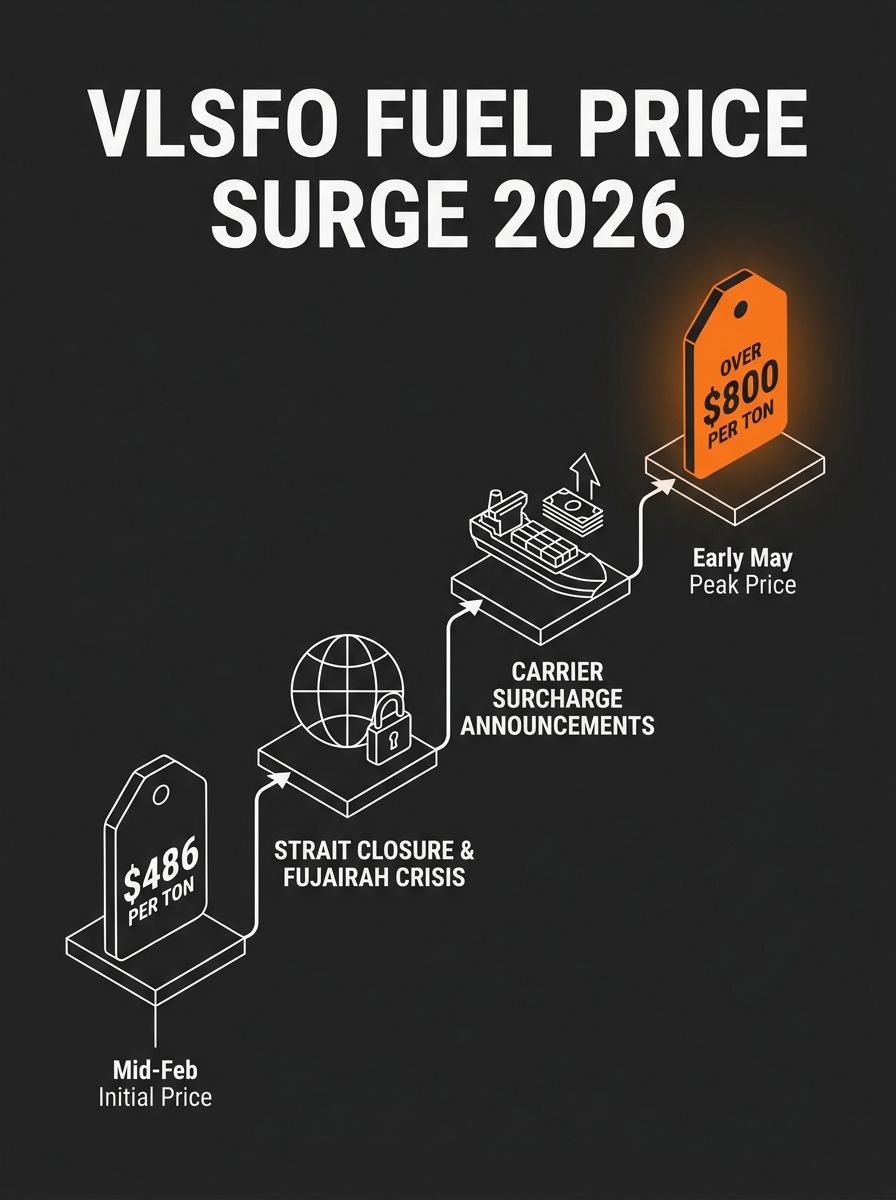
Singapore, the world's largest bunkering hub, absorbed the demand overflow. VLSFO (very low sulfur fuel oil) sat at roughly $486 per metric ton in mid-February. By the first week of March, prices were climbing past $600 and accelerating. The speed of the move caught carriers off guard because their standard Bunker Adjustment Factors (BAFs) update quarterly. The contracts were priced for a world that no longer existed.
March: Transpacific Rates Jump 12–14% in a Single Week
By late March, the fuel cost escalation was translating directly into freight rate increases. On the transpacific lane, the route that carries the majority of China-to-US dropshipping volume, rates increased by roughly 12–14% week-on-week, driven primarily by fuel costs rather than demand strength. Asia-to-North-Europe rates were up 41%. Asia-to-Mediterranean jumped 34%.
These aren't annual figures. Those are single-week moves.
Carriers started announcing emergency bunker surcharges on top of their existing rate cards. Hapag-Lloyd disclosed it was absorbing an additional $40–50 million per week in fuel costs. Maersk followed with its own surcharge structure. The European Federation for Transport and Environment estimated the industry had burned through over €4.6 billion in additional fuel costs since the conflict began.
For a dropshipper running a $22 AOV store with product costs around $6 from CJ Dropshipping or AliExpress, the standard ePacket or YunExpress shipping rate of $3–5 per unit started drifting upward. Suppliers who previously quoted $3.80 shipping to the US began quoting $4.60, then $5.20. The per-unit increases looked small. They weren't.
The Margin Math at $22 AOV
Consider a product that cost $6 from your supplier, shipped at $3.80, with a $3 ad spend per acquisition. Your contribution margin was $22 minus $6 minus $3.80 minus $3, leaving $9.20, or about 42%. When shipping ticks up to $5.20, that margin drops to $7.80, a 15% compression on a single line item. If you were running a contribution margin framework that flags products below a profitability threshold, that SKU just fell off your viable list.
And shipping wasn't the only cost moving.
April: Port Charges, Rerouting, and the Slow-Steaming Tax
Two additional cost layers stacked onto the freight rate increases in April.
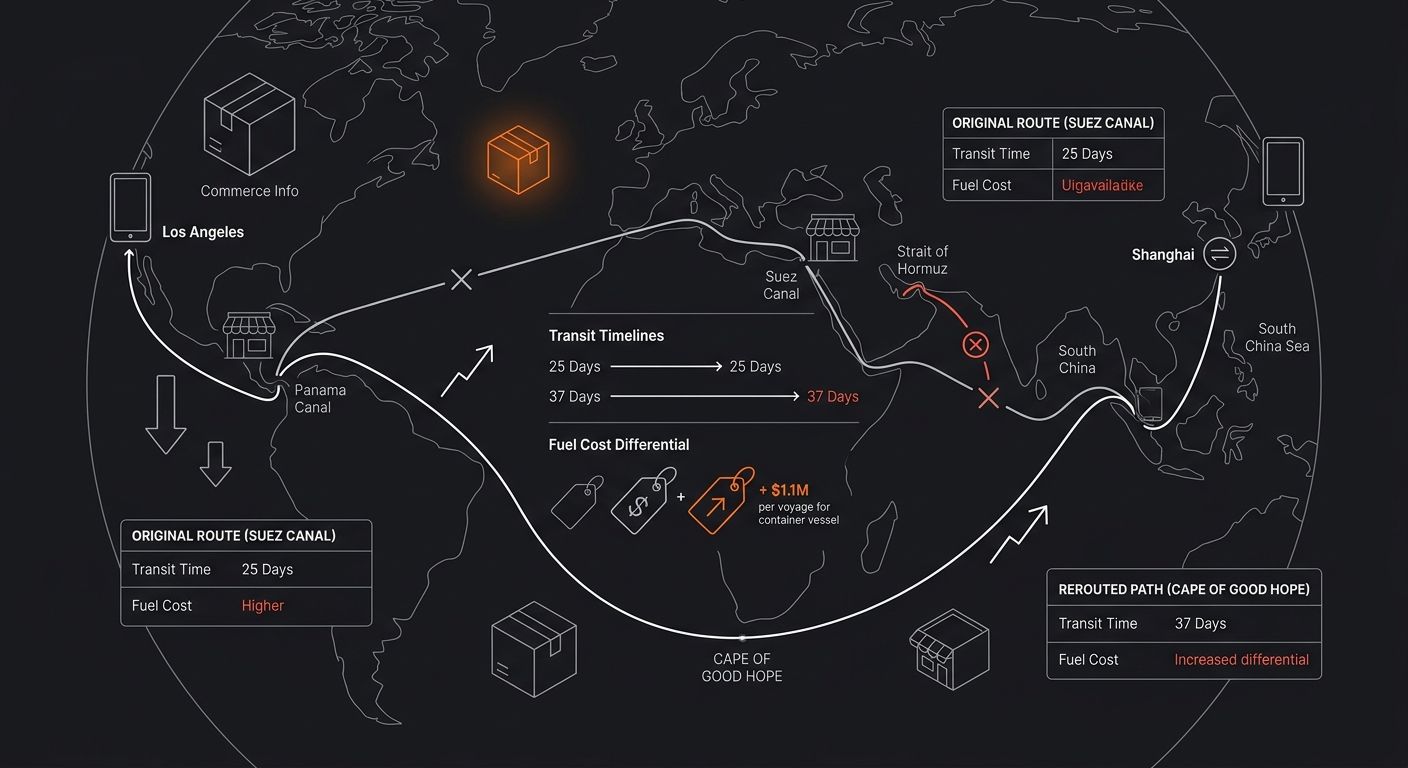
Rerouting costs. Vessels that previously transited the Strait of Hormuz or the Suez Canal were rerouted around the Cape of Good Hope, adding 7–12 days to transit times depending on the lane. Longer routes burn more fuel. More fuel at $800/mt instead of $486/mt means the per-container cost increase compounds. The Port of Los Angeles still processed 890,861 container units in April, 5.7% above the prior year, but those containers arrived later and cost more to move.
Slow steaming. Global vessel speeds dropped approximately 2% since February 28 as operators conserved fuel amid scarcity and high prices. A 2% speed reduction doesn't sound significant until you calculate what it means for a 30-day transit that becomes a 32-day transit, compounded across thousands of vessels. The effective capacity of the global fleet shrinks because each ship makes fewer round trips per year.
For dropshippers, the slow-steaming effect matters because it extends your supplier's quoted delivery window. If you promised 12–18 day delivery and your supplier's logistics partner is now running 20–25 days, you're eating refund requests and chargebacks. That's a cost that doesn't show up in your shipping invoice but absolutely shows up in your P&L. We've covered how to audit these post-sale margin leaks before, and the framework applies directly to what's happening now.
How Landed Cost Actually Shifted
Landed cost is the total price of getting a product from your supplier's warehouse to your customer's door. It includes product cost, ocean freight, insurance, customs duties, port fees, last-mile delivery, and transaction fees. Most dropshippers track product cost and shipping cost as two separate lines. They rarely calculate true dropshipping landed cost including all the smaller charges that ports, customs brokers, and last-mile carriers tack on.
Here's where the 2026 international logistics disruption gets ugly: port charges themselves are rising. Demurrage fees (charged when containers sit too long at port) are spiking because congestion from rerouted vessels creates bottleneck conditions. Terminal handling charges at LA, Long Beach, and Rotterdam have all increased. According to research on how shippers quantify disruption costs, the cheapest carrier option often increases total variability, and reliability reduces total landed cost more effectively than rate compression.
That's a critical insight for anyone comparing Zendrop vs. CJ Dropshipping vs. Spocket right now. The supplier quoting $0.40 less per unit on shipping but routing through a congested hub with 5-day average port delays is more expensive after you factor in refund rates, customer complaints, and reorder hesitation. If your supplier audit process doesn't account for routing and transit reliability, you're optimizing the wrong variable.
Pre-War vs. Post-Disruption: A Realistic Breakdown
For a typical lightweight dropshipping product (under 500g) shipping from Guangzhou to a US customer:
January 2026 (pre-war):
Product cost: $6.00
Supplier shipping fee: $3.80
Platform transaction fee (2.9% on $22): $0.64
Duties/customs (de minimis under $800): $0.00
Last-mile carrier fee: included in shipping
Total landed cost: ~$10.44
May 2026 (post-disruption):
Product cost: $6.00 (unchanged for now)
Supplier shipping fee: $5.20–$5.80
Platform transaction fee (2.9% on $22): $0.64
Emergency fuel surcharge passed through: $0.30–$0.60
Duties/customs: $0.00
Last-mile carrier surcharge: $0.15–$0.40
Total landed cost: ~$12.29–$12.84
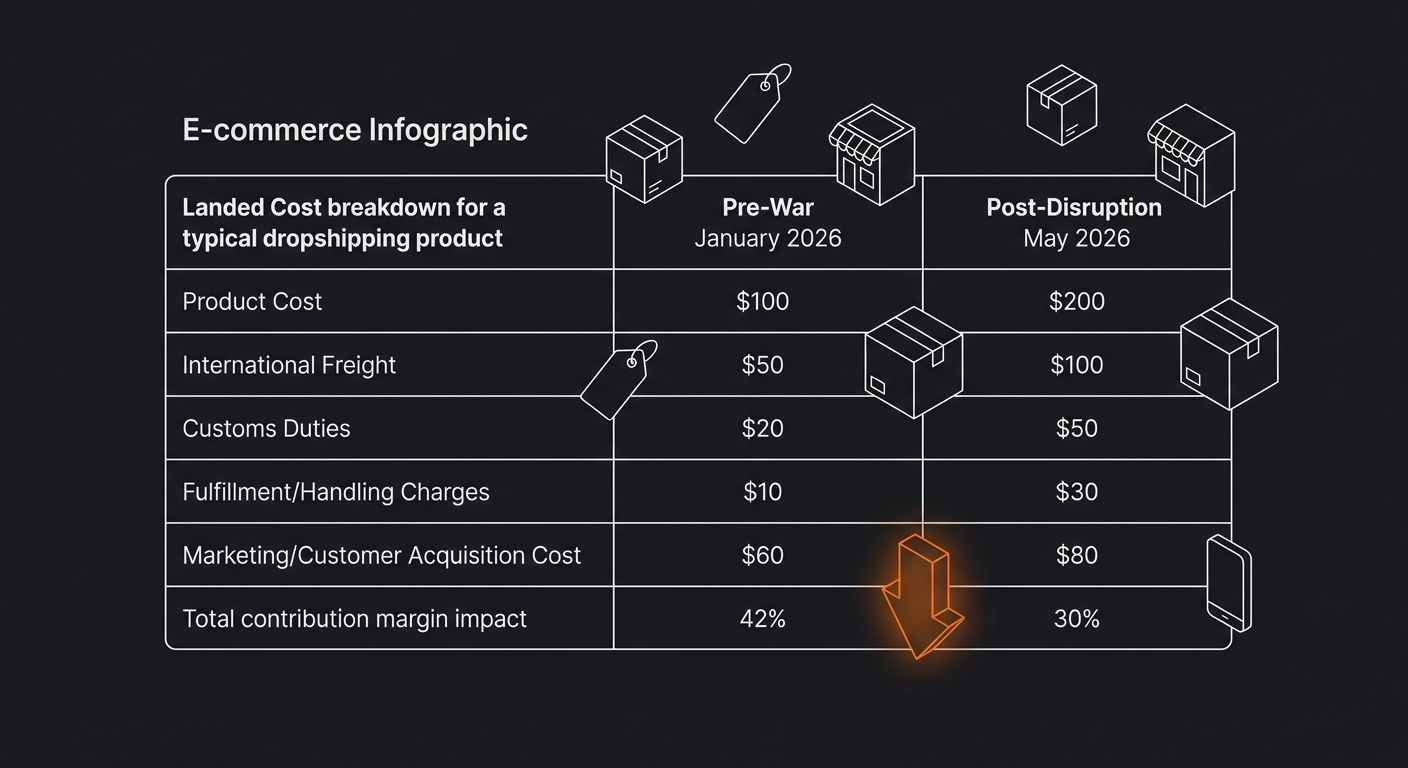
That's an 18–23% increase in landed cost on an item where your retail price hasn't changed. If you're running the same $22 price point and the same $3 CPA, your contribution margin went from $9.20 to roughly $6.50. Your margin percentage dropped from 42% to 30%. Run that across 1,000 orders per month and you've lost $2,700 in monthly profit on a single SKU.
The Last-Mile Squeeze Getting Overlooked
Ocean freight gets the headlines, but last-mile delivery costs are moving too. US-based carriers like USPS, UPS, and FedEx apply fuel surcharges that track domestic diesel prices. When global oil supply tightens (Reuters reported inventories will continue falling for weeks even if the conflict ends tomorrow, because physical fuel takes that long to reach refiners), domestic fuel costs follow with a 4–6 week lag.
USPS Priority Mail and First-Class Package surcharges have already ticked up for Q2 2026. If you're using a fulfillment partner with US-based warehouses, your per-package last-mile cost is rising $0.15–$0.40 depending on zone. If you're shipping direct from China, that last-mile cost is baked into the courier rate your supplier quotes, but it's still there.
The operators who moved inventory to US-based 3PL arrangements or domestic suppliers before February are partially insulated from the ocean freight increases, though they're still exposed to domestic fuel surcharges. The operators still running pure cross-border dropship with 100% China-origin fulfillment are absorbing the full stack of cost increases. If the port closure impact taught anything, it's that geographic concentration in your supply chain is a financial risk, not an operational detail.
The State Of Play, Mid-May 2026
Singapore VLSFO prices now sit above $800 per metric ton. The AP reported this week that the global maritime industry fears full-blown fuel shortages as the Iran war continues to choke the Strait of Hormuz. Oil analysts expect inventories to keep falling for weeks even if a ceasefire materializes tomorrow, because physical fuel shipments take that long to reach refineries and work through the system.
Spot container rates remain elevated across all major East-West lanes. And the demand shift to alternative bunkering ports in Jeddah, Indian ports, and Cape Town is creating secondary congestion that makes schedule reliability worse, not better.
For dropshippers, the practical implications come down to three adjustments.
Recalculate landed cost on every active SKU. Use the full definition: product cost, freight, insurance, duties, port fees, last-mile delivery, transaction fees, and fuel surcharges. If your current margin spreadsheet shows "product cost" and "shipping" as two lines, it's incomplete. You need at least six line items to get an accurate picture, and if you're still sorting out which supply chain costs are eroding your margins, that breakdown is the place to begin.
Stress-test your pricing. If bunker fuel stays above $800/mt through Q3 (which most analysts expect), your current shipping quotes will get re-quoted again. Build a 10–15% shipping buffer into your product pricing now rather than absorbing another margin hit in July. A $24.99 price on a product you were selling at $21.99 is a better outcome than a $21.99 price with a $4.50 contribution margin that makes your ad spend unprofitable. Before blaming your ads for underperformance, make sure the real problem isn't hiding in your cost structure.
Diversify your fulfillment geography. Pure China-to-customer dropshipping absorbs every layer of this disruption. Splitting volume between a China origin and a US-based fulfillment center (even through a hybrid model with Zendrop or ShipBob) reduces your exposure to transpacific rate shocks. The upfront cost of holding some inventory domestically is real, but the math looks very different when ocean freight has jumped 30%+ since January.
The shipping cost volatility 2026 introduced isn't a temporary spike that resolves when the news cycle moves on. The structural factors driving it (Strait of Hormuz closure, fleet rerouting, slow steaming, bunkering hub disruption) won't unwind in weeks. Even an optimistic de-escalation scenario still leaves fuel supply chains needing months to normalize. Your unit economics need to reflect that timeline. The dropshippers who update their numbers now will still be running profitable campaigns in Q3. The ones who wait for the old rates to come back are going to run out of margin first.
365 Dropship Editorial
Editorial team writing about E-commerce, dropshipping, and product discovery — reviews of dropshipping suppliers and platforms, trending niche guides (jewelry, beauty, pets, home, fashion), supplier due diligence, ecom operations, shipping & fulfillment strategy, product research, AOV optimization, and profitable dropshipping case studies.
Related Articles

Shipping Fuel Shock & Margin Math: How Rising Port Costs Are Reshaping Dropshipping Economics in 2026
Maersk disclosed $500 million per month in additional fuel costs on May 7, 2026, driven by the closure of the Strait of Hormuz and the resulting scramble for bunker fuel outside the Persian Gulf.
Container Freight Surges and Dropshipping Unit Economics: Why Port Efficiency Losses Are Reshaping Your 2026 Supplier Costs
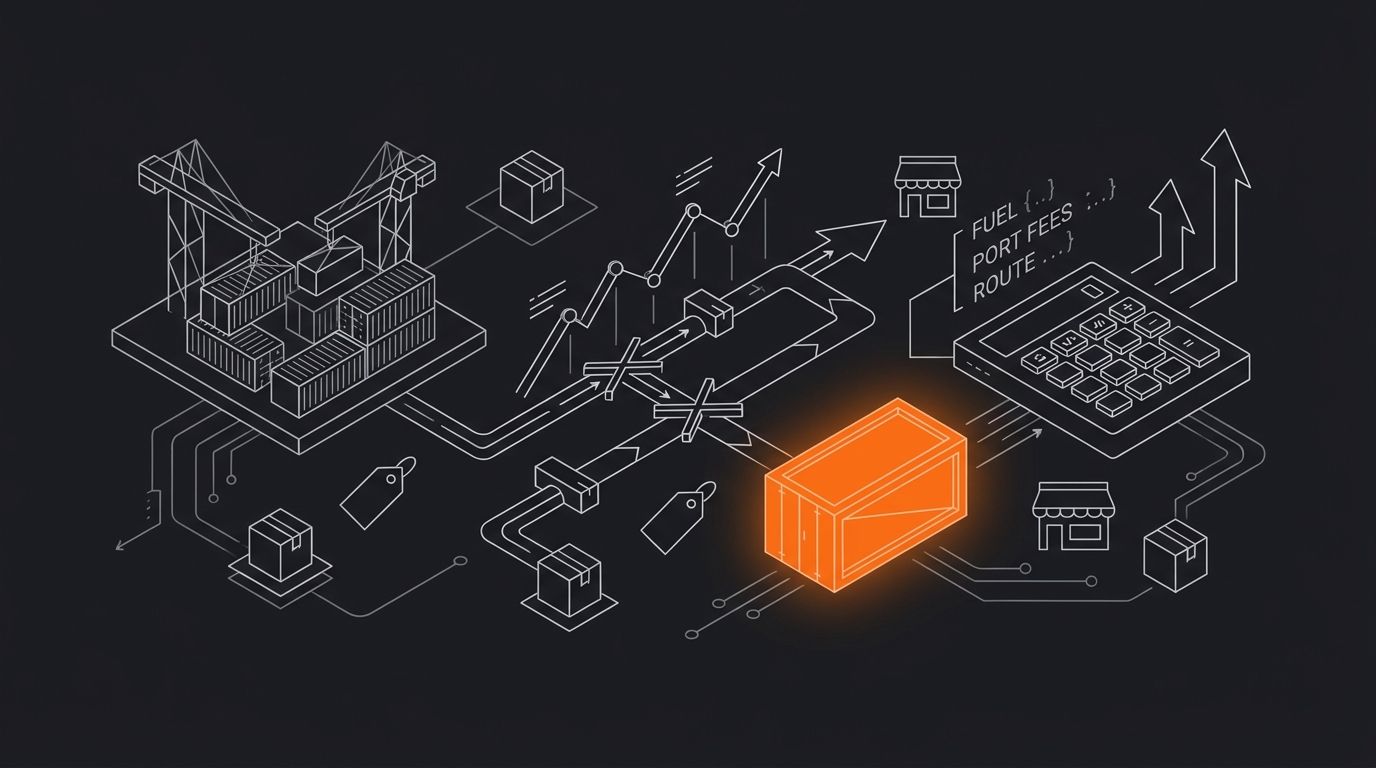
Landed cost calculators take your product cost, layer on freight, duties, insurance, and port fees, then output the true per-unit cost of getting inventory to a customer's door.
Freight Rate Inflation and AI Chip Demand: How Dropshippers Should Adjust Shipping Strategy in H2 2026
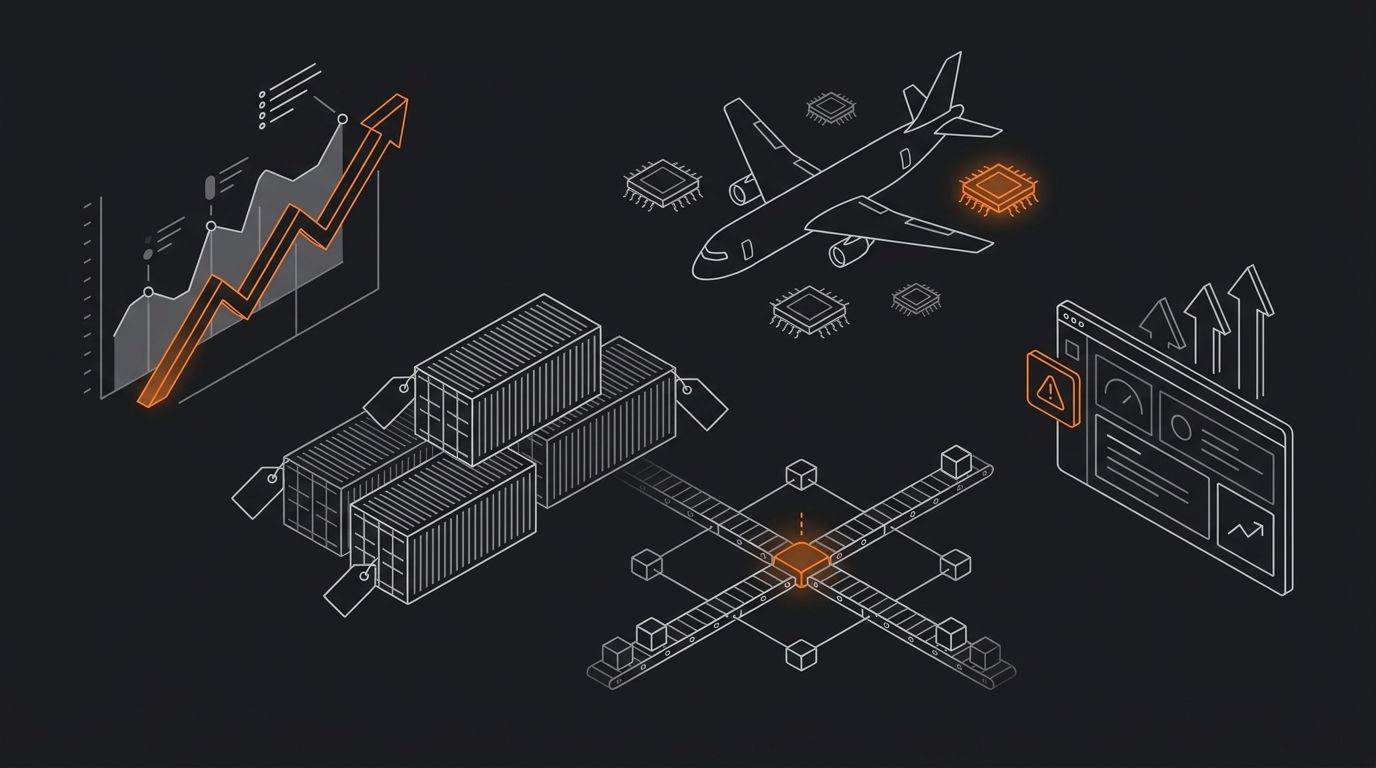
Global air freight capacity sits roughly 9% below pre-conflict levels according to DSV logistics data, while AI chip shipments growing at 30% annually absorb the remaining space. Dropshippers are competing for cargo slots against hyperscaler procurement teams with functionally unlimited budgets.
Explore more topics