Cross-Border Tariffs & Import Duties: The Hidden Margin Killer Dropshippers Overlook
Every package entering the U.S. from China now triggers a full customs entry.
Cross-Border Tariffs & Import Duties: The Hidden Margin Killer Dropshippers Overlook
Every package entering the U.S. from China now triggers a full customs entry. The $800 de minimis threshold that once allowed roughly four million daily shipments to cross the border duty-free was eliminated for Chinese and Hong Kong goods on May 2, 2025, replaced by either 30% of declared value or a flat $25 per item (which climbed to $50 per item after June 1, 2025). Cumulative tariffs on Chinese goods have reached 145% for certain product categories when Section 301 duties, IEEPA fentanyl-related tariffs, and broad-based import levies stack on top of each other. If you're dropshipping from a Chinese supplier into the U.S. and your pricing model still assumes sub-$1 duty per unit, you're operating on phantom margin.
The Landed Cost Gap Nobody Prices In
The formula itself is straightforward. DHL's breakdown puts it plainly: Landed Cost = Product Price + Freight Cost + Customs Duties & Taxes + Regulatory Fees + Insurance Cost. What makes landed cost formula dropshipping calculations tricky is that most sellers stop at the first two terms. They know what AliExpress or CJ charges per unit, they know what ePacket or Yanwen costs, and they call that their COGS.
Here's what that looks like with real numbers. Say you're selling a silicone kitchen gadget with a CJ Dropshipping supplier price of $3.20 and standard-line shipping to the U.S. at $4.50. Your product cost, in your head, is $7.70, and you sell it for $24.99. After Shopify's payment processing cut and ad spend, you figure you're netting $5-6 per order. But that silicone gadget from China now carries an effective duty rate that could land anywhere from 30% to over 50% depending on its HTS classification, adding $0.96 to $1.60 in duty alone before you even consider per-item flat fees.
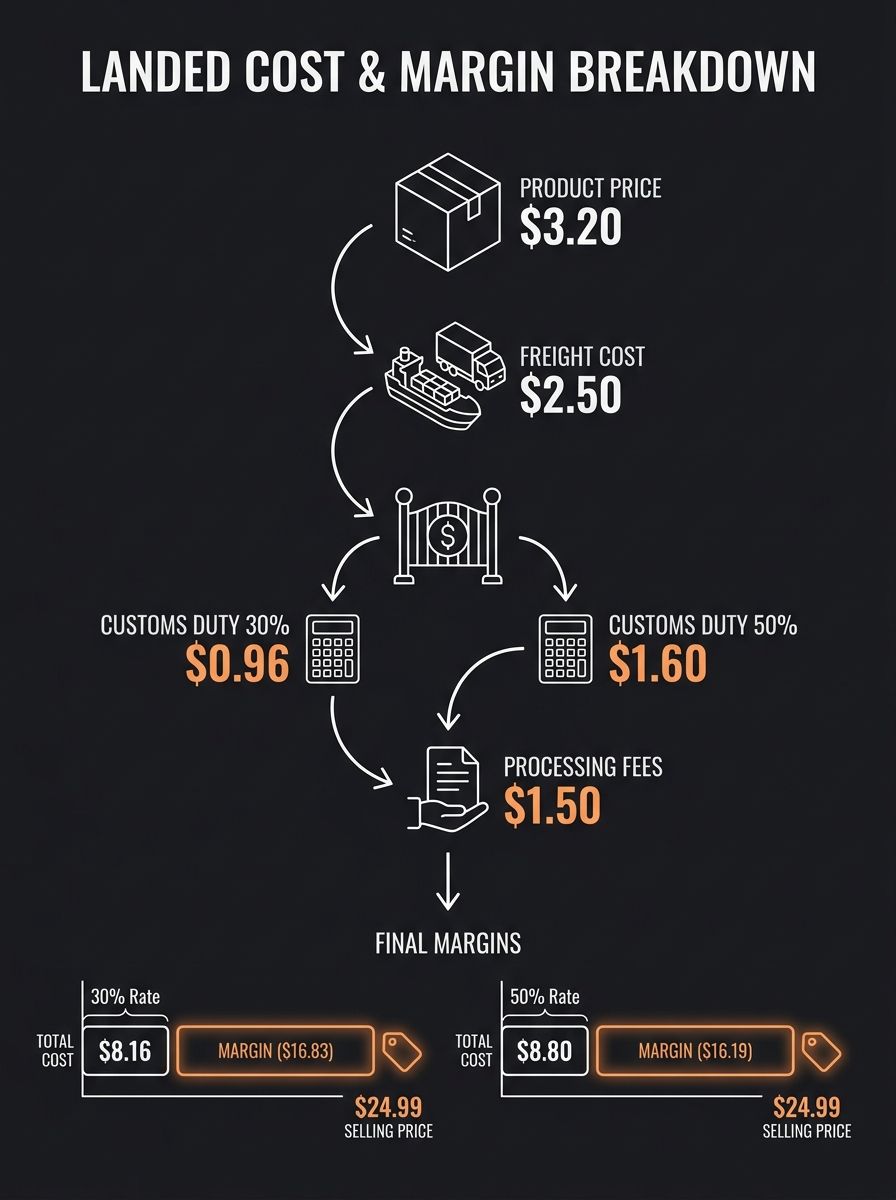
Cross-border dropshipping tariffs don't show up on the same invoice as your product cost. They arrive as separate charges from freight forwarders, customs brokers, or as surprise bills to the end customer in the form of DDU (Delivered Duty Unpaid) shipping. When the customer gets hit with an unexpected customs charge at delivery, you don't lose margin on that single order; you lose the customer entirely, eat the return shipping, and potentially absorb a chargeback. We covered why post-order costs destroy profits in detail, and duties are the most under-discussed contributor to that entire problem category.
Operators who survive this environment calculate landed cost before listing a product, which means pulling HTS codes (freely searchable on the USITC website), applying the current duty rate for that classification, and building the result into COGS from day one. If you're using a contribution margin framework to compare products, landed cost is the variable that explains why two items at the same supplier price can deliver wildly different profit per order. An import duties margin calculation that ignores this step is producing fiction.
What Stacks Against You in the U.S. Right Now
The de minimis elimination was the headline, but the structural problem goes deeper. Section 301 tariffs, originally introduced in 2018, added 25% to a wide range of Chinese product categories. IEEPA tariffs layered on another 20% under a fentanyl-related executive order, and then a broad 10% tariff hit Chinese imports on top of both. For products that fall under all three layers, effective rates exceed 100% of declared value, and certain categories push as high as 245% when retaliatory measures factor in.
This creates a specific and measurable problem for international supplier costs in the dropshipping model. When you hold inventory, you can negotiate bulk customs entries, use bonded warehouses, and amortize brokerage fees across thousands of units. When you're shipping individual parcels direct from a Chinese supplier to a U.S. customer, each parcel is its own customs event with per-order brokerage fees, per-item flat duties, and ad valorem rates all applied to a single $3-15 item in a poly mailer. At low AOVs, the math simply doesn't survive contact with reality.
Entrepreneur Kamil Sattar has reported publicly that his U.S. sales dropped from 60% to 20-30% of total volume following the tariff escalation. A survey of 228 Chinese cross-border e-commerce companies by the Shenzhen Cross-Border E-commerce Association found 60-70% in "wait-and-see" mode, with widespread pessimism about the U.S. market. The suppliers still shipping are passing costs forward, which means even if your product's HTS code carries a moderate duty rate, your supplier's quoted price has already absorbed a tariff-driven increase that inflates your baseline COGS before your own duty obligation even kicks in.
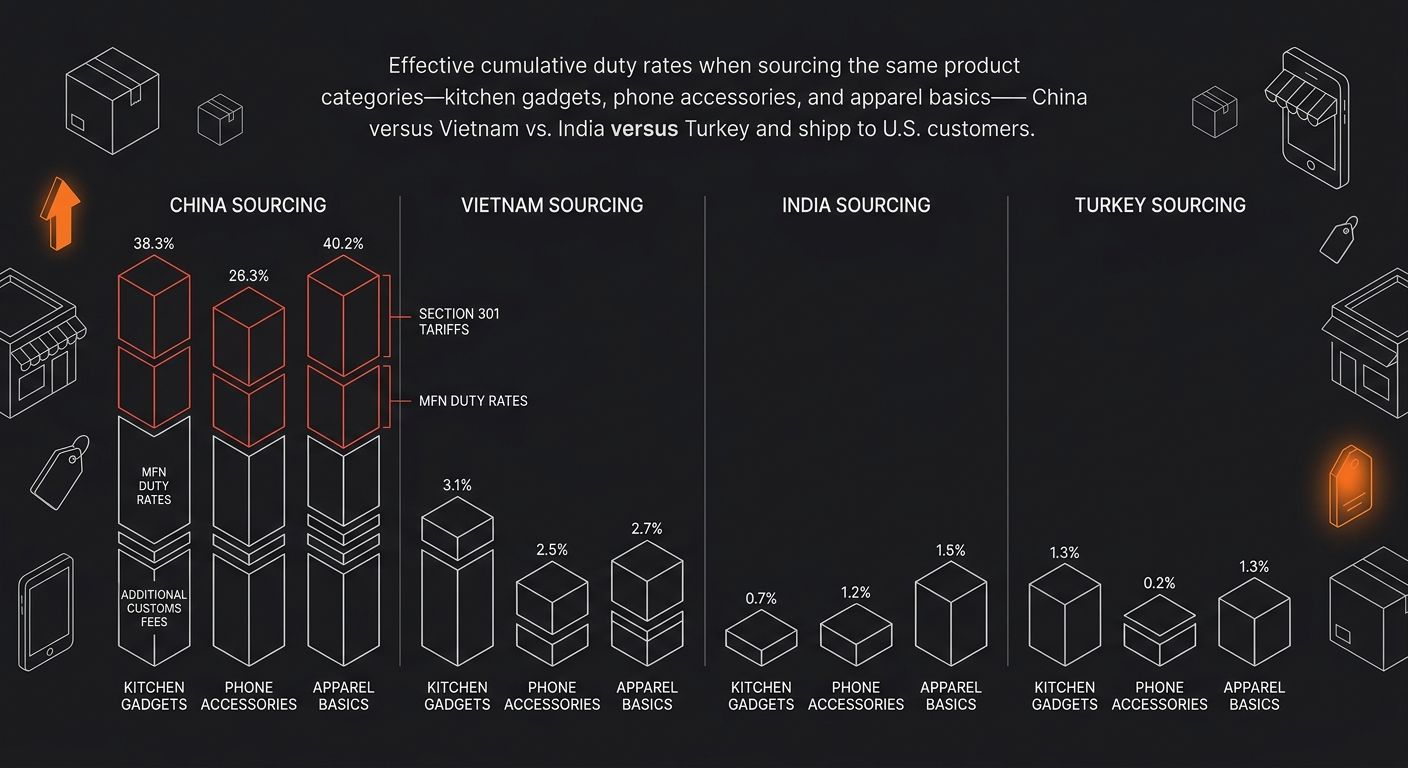
So sourcing decisions become margin decisions. If you're evaluating whether to source directly from suppliers or work through platform aggregators, the tariff environment has rewritten the calculus. A Vietnamese or Indian supplier with a 0-5% effective duty rate on the same product category can deliver a lower landed cost than a Chinese supplier even at a higher unit price. We've written about how niche tools systematically undercount India's growing supplier ecosystem, and tariff arithmetic is exactly the reason that blind spot now has a dollar figure attached.
The EU Is Closing Its Own Loophole
The U.S. story dominates conversation because the numbers are dramatic, but EU tariff compliance for ecommerce is going through its own structural shift. The €150 customs duty exemption for low-value imports is set to disappear in 2026, meaning goods that previously entered the EU duty-free will require full customs declarations and duty payments. For dropshippers selling sub-€150 products into EU countries, this wipes out a cost advantage that many pricing models were built on.
The EU had already eliminated its €22 VAT exemption for low-value imports in July 2021 through the Import One-Stop Shop (IOSS) reform. Research published in the Journal of Public Economics found that the reform measurably decreased order volumes for previously VAT-exempt shipments, confirming that these policy changes translate directly into lower conversion rates when end customers face higher final prices. The upcoming duty exemption removal will compound that effect for sellers who were still squeezing through the remaining loophole.
And compliance goes beyond duties and VAT. The General Product Safety Regulation, effective since December 2024, requires ecommerce brands selling into the EU to appoint an EU-based responsible person and maintain product safety documentation including incident tracking and recall management systems. If you're dropshipping consumer goods into Europe without this infrastructure, you're exposed to enforcement action regardless of your duty calculations. The compliance burden alone adds operational cost that needs to appear in any EU-focused margin model.
For operators targeting EU customers, the landed cost formula becomes: product price, plus freight, plus customs duty (check the TARIC database for rates by CN code), plus VAT at the destination country's rate (ranging from 17% in Luxembourg to 27% in Hungary), plus any IOSS registration and filing costs. Building all of this into your pricing upfront is the difference between a 30% margin on paper and a 12% margin in your bank account. If you've already done thorough supplier vetting, extend that process to include landed cost modeling per destination market, because a supplier who looks profitable shipping to the U.S. might be unprofitable shipping the same product to Germany.
Where the Math Still Breaks Down
There's an uncomfortable gap between knowing the landed cost formula and actually applying it at scale across products and markets. HTS classification is genuinely difficult for non-specialists: a silicone spatula and a silicone phone case carry dramatically different duty rates despite sharing a base material, and misclassification triggers fines, retroactive duty assessments, and potential shipment seizures. Tools like Zonos help with estimation, but estimation and certainty are different things, and the gap between them is exactly where margin evaporates on specific orders you thought were profitable.
Geographic diversification advice is sound in principle and messy in practice. Vietnam and India have lower tariff exposure to the U.S. and EU, but they also have thinner supplier networks for certain product categories, longer lead times on some routes, and their own compliance requirements that shift as trade relationships evolve. If every dropshipper pivots to Vietnamese suppliers simultaneously, expect the same capacity constraints and price inflation that eroded the China cost advantage over the past decade. And tariff policy is inherently political: the 145% cumulative rate on Chinese goods didn't exist 18 months ago, and there's no guarantee that current rates on alternative sourcing countries will remain stable through your next product cycle.
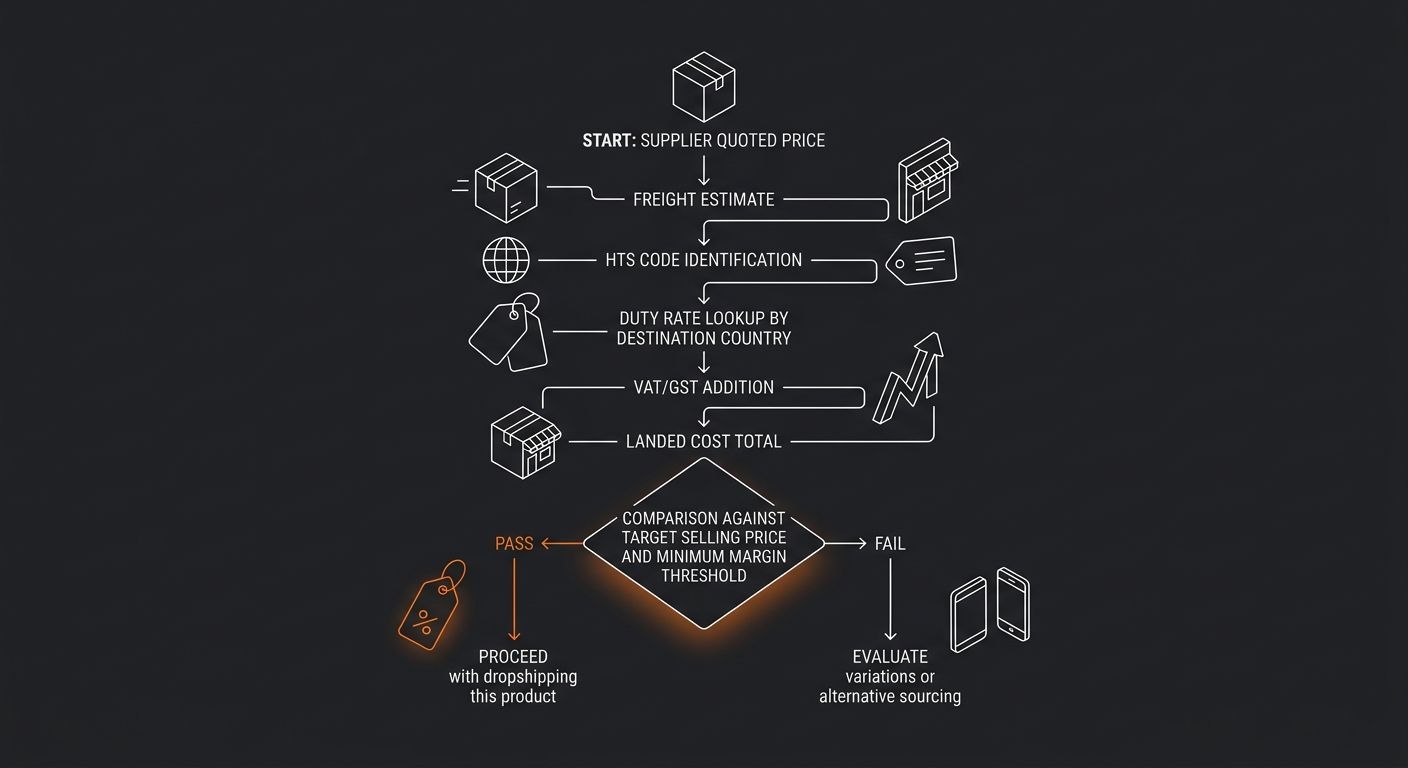
What does hold steady is the discipline of calculating landed cost before listing, building duty estimates into per-product COGS, and stress-testing margin at duty rates 10-20% higher than current levels. If a product only works at today's exact duty rate, it doesn't work. The suppliers who provide accurate HTS codes, ship DDP by default, and price transparently inclusive of duties are the suppliers worth keeping, even at a higher quoted unit price. The rest are handing you a number that looks like margin but collapses the moment customs processes the entry. Whether the tariff environment has made cross-border dropshipping unprofitable depends entirely on which number you're pricing against: landed cost, or the comfortable fiction that ignores it.
365 Dropship Editorial
Editorial team writing about E-commerce, dropshipping, and product discovery — reviews of dropshipping suppliers and platforms, trending niche guides (jewelry, beauty, pets, home, fashion), supplier due diligence, ecom operations, shipping & fulfillment strategy, product research, AOV optimization, and profitable dropshipping case studies.
Related Articles
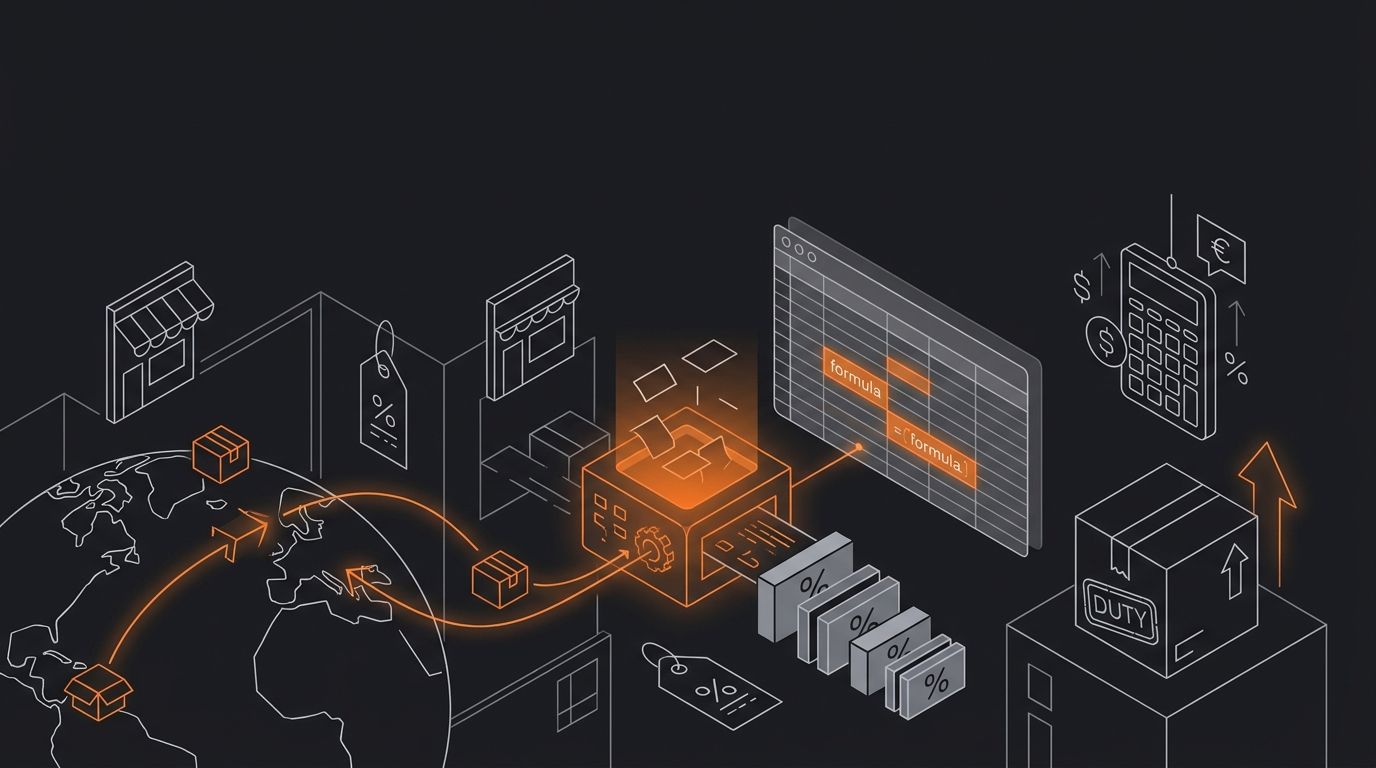
Building a Tariff-Aware Unit Cost Model: The Step-by-Step Framework for Cross-Border Dropshipping Math
A silicone kitchen spatula sourced from Guangdong at $4.50 per unit, with $4.80 in shipping, doesn't land in a U.S. customer's hands at $9.30. After a 28.4% combined duty rate, insurance, and processing fees, the true landed cost hits $12.94, slashing a perceived 60% gross margin to roughly 48%.
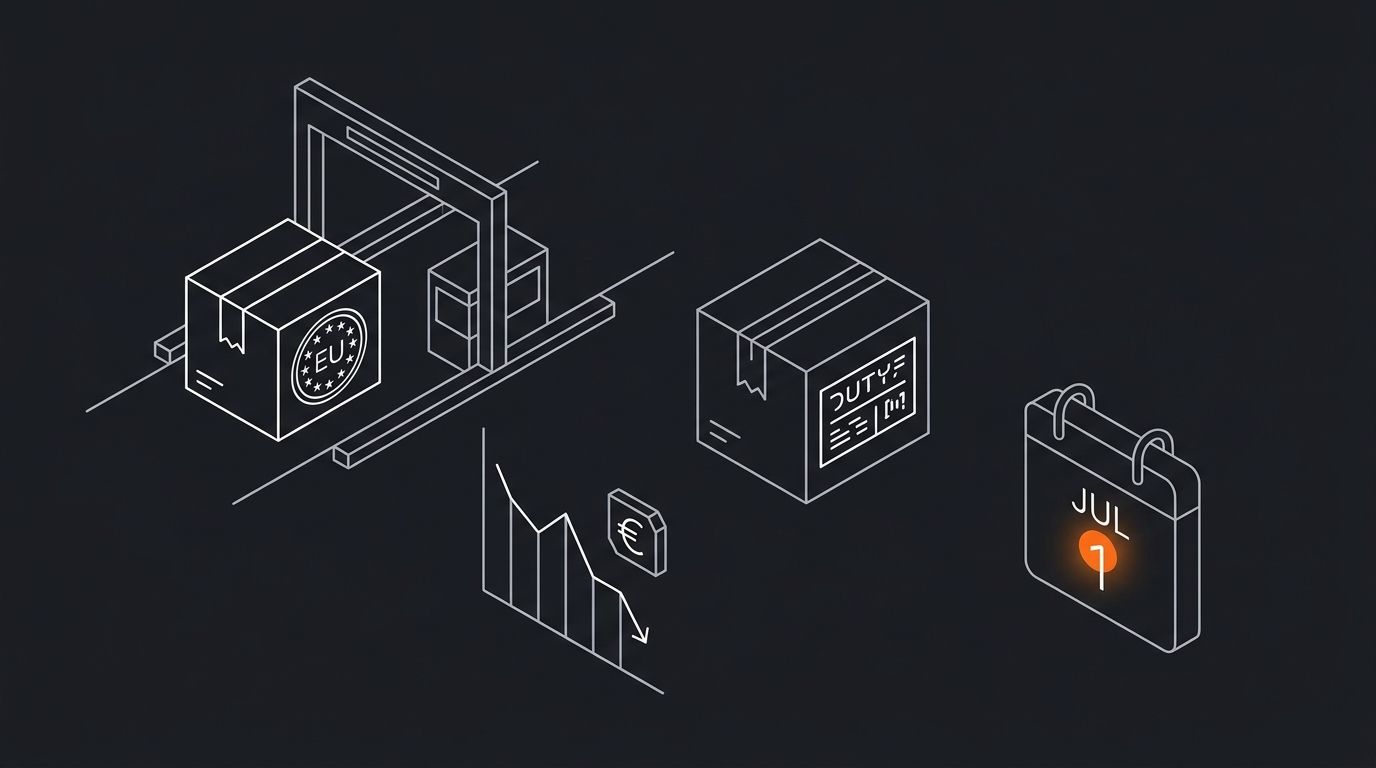
EU Eliminates €150 Duty Exemption for Small Packages; €3 Per-Item Fee Takes Effect July 1
European Union member states will begin collecting a flat €3 customs duty on each tariff line item in packages valued under €150 starting July 1, 2026, eliminating a longstanding duty-free threshold that allowed millions of small shipments from China-based suppliers to enter the bloc without border
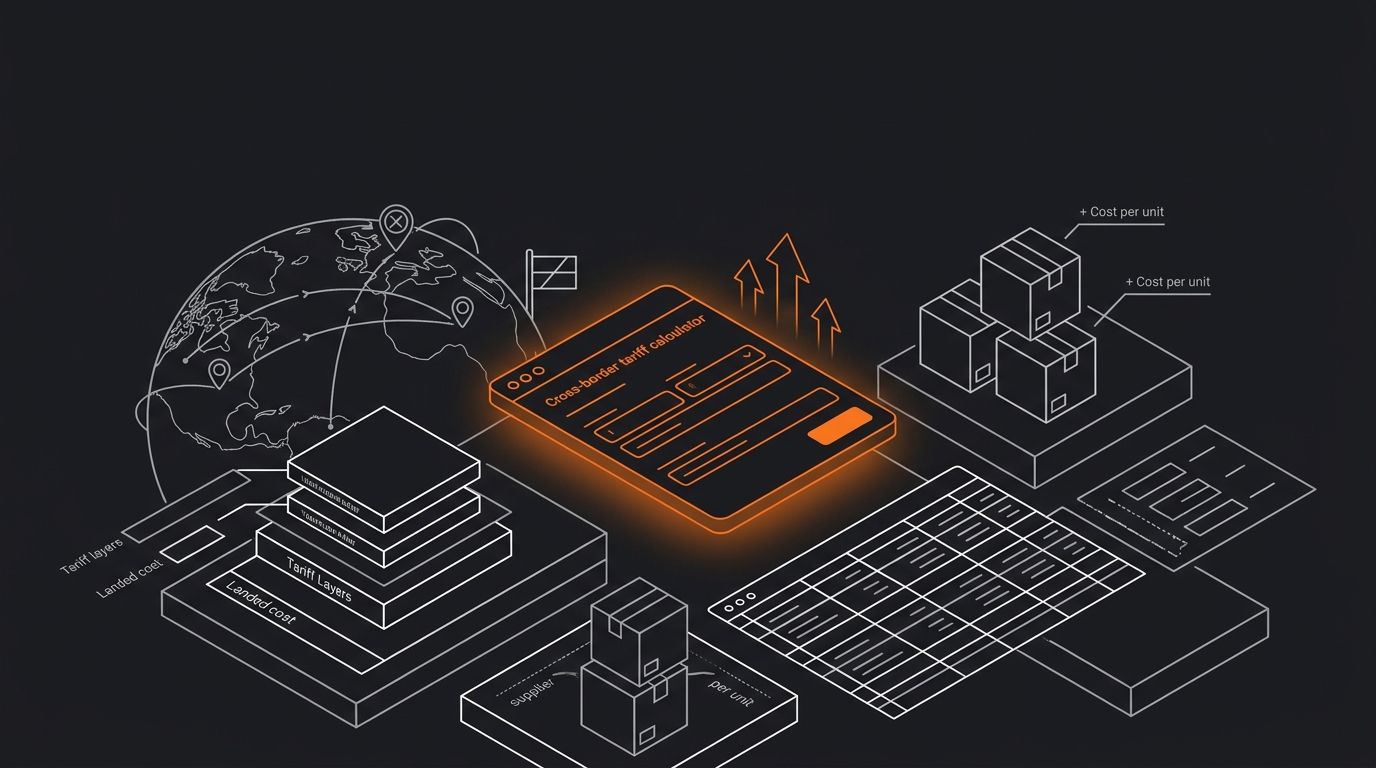
The Cross-Border Tariff Calculator: Building Your True Unit Cost Model Before Supplier Selection
A silicone kitchen spatula classified under HTS 3924.10 costs $4.50 from a Guangdong supplier on AliExpress, with $4.80 shipping via ePacket. That $9.30 declared value now triggers a 3.4% base duty plus a 25% Section 301 tariff — roughly $2.64 in combined duties — plus a $0.
Explore more topics