Redwood Logistics Publishes Seven-Strategy Framework for Supply Chain Disruption Management as Dropshippers Face Vendor Reliability Pressure
Redwood Logistics released a seven-strategy framework for managing supply chain disruptions on September 17, 2026, positioning supplier diversification, real-time visibility platforms, and contingency planning as essential controls for e-commerce operators navigating carrier capacity losses and vend

Redwood Logistics Publishes Seven-Strategy Framework for Supply Chain Disruption Management as Dropshippers Face Vendor Reliability Pressure
Redwood Logistics released a seven-strategy framework for managing supply chain disruptions on September 17, 2026, positioning supplier diversification, real-time visibility platforms, and contingency planning as essential controls for e-commerce operators navigating carrier capacity losses and vendor shutdowns, according to the freight logistics provider's operational guide.
The framework arrives as supplier reliability concerns intensify across the dropshipping sector. Eighteen percent of AliExpress dropshipping suppliers exited the platform in the first five months of 2026 as China's factory base consolidated, creating capacity pressure for merchants relying on single-vendor sourcing models.
Proactive Controls Target Single-Source Dependency
Redwood Logistics identified multi-source supplier qualification as the primary defense against concentrated geographic and vendor risk, according to the guide. The framework recommends qualifying backup suppliers for critical components before primary sources fail and maintaining relationships across multiple regions to protect against localized weather events, labor disputes, and regulatory shifts.
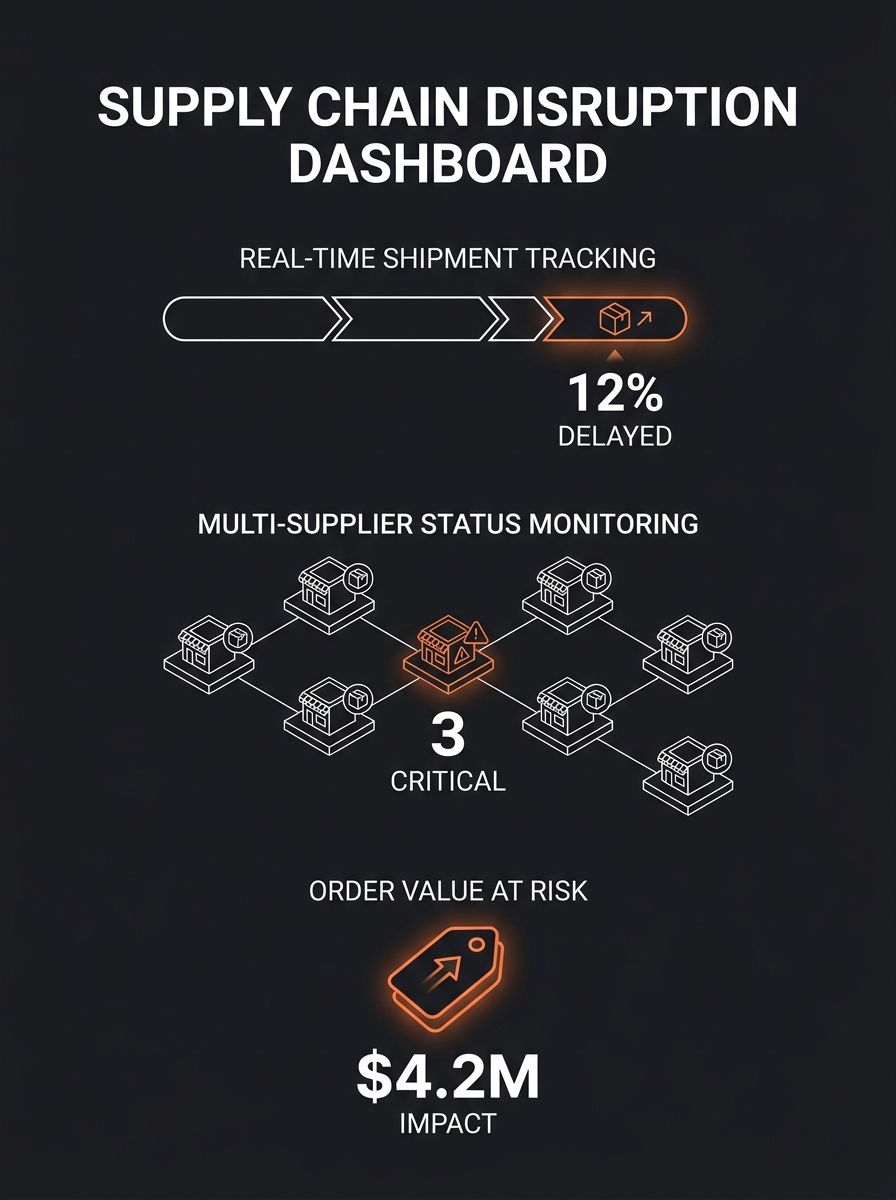
The logistics provider positioned end-to-end visibility platforms as the second foundational control. Real-time freight tracking systems that connect warehouse management, transportation tools, and order management platforms allow operators to identify shipment exceptions before they escalate into customer-facing delays, the guide noted. Predictive analytics built on historical shipment data enable merchants to forecast delay-prone lanes and allocate buffer inventory accordingly.
Contingency planning protocols ranked third in the proactive strategy set. Redwood Logistics recommended documented response plans covering scenario mapping for common disruption triggers, escalation protocols specifying decision authority during crises, and regular review cycles to keep response procedures current. The guide suggested tabletop exercises conducted twice annually to test team readiness.
Supplier relationship strength and communication cadence closed the proactive category. The framework positioned regular business reviews, supplier scorecards, and consistent communication as factors that determine priority access to carrier and vendor capacity during tight-market conditions, according to the guide.
Reactive Protocols Focus on Inventory Audits and Logistics Flexibility
Redwood Logistics documented three reactive strategies for operators managing active disruptions. Immediate inventory audits covering on-hand raw materials, work-in-progress goods, and in-transit shipments form the first response step, allowing teams to calculate available runway before customer commitments fail.
The guide positioned flexible logistics partnerships as the core reactive control. Modern fourth-party logistics providers (4PLs) offer access to multi-carrier networks and alternative routing options that allow merchants to switch transportation modes or lanes without renegotiating contracts, according to Redwood Logistics. The framework noted that operators relying on single-carrier agreements face longer recovery times when primary routes fail.
Real-time communication with customers during active disruptions completed the reactive strategy set. The guide recommended proactive delivery-delay notifications and order-status transparency as methods to preserve customer retention during service failures.
Financial Exposure Tied to Operational Complexity
Redwood Logistics quantified disruption costs across three categories: delayed shipments that trigger chargebacks, penalties, or lost sales; customer churn driven by repeated service failures; and operational drag from firefighting activities that prevent network optimization, according to the guide.
The framework positioned disruption management as a core operational discipline rather than a contingency function. Organizations that integrate visibility tools, multi-source qualification, and response protocols into standard operations outperform competitors relying on reactive improvisation during crises, the logistics provider noted.
The guide's emphasis on geographic and vendor diversification aligns with broader global sourcing shifts toward regional hub models as 66 World Trade Organization members adopted e-commerce frameworks earlier in 2026.
Reading Between the Lines
Redwood Logistics frames disruption management as an infrastructure investment, not a crisis response—a distinction that matters for dropshippers operating on thin margins with no physical inventory buffer. The seven-strategy model translates cleanly to solo operators: qualify two AliExpress vendors per product instead of one, connect Shopify to a third-party tracking app that surfaces delays automatically, and document which backup supplier gets the order when your primary source goes dark.
The Modern 4PL positioning is effectively a pitch for Redwood's own services, but the underlying principle holds—merchants locked into single-carrier Shopify shipping apps pay recovery time in hours or days when that carrier loses capacity. A diversified logistics setup costs more to configure upfront but compresses response windows when primary routes fail.
The guide's reactive inventory-audit protocol assumes you have inventory to audit, which most dropshippers don't. The practical translation: know exactly which products each of your suppliers stocks, what their restocking lead time is, and which alternative SKU you'll swap in when your main listing goes out of stock. That's the dropshipping equivalent of an inventory audit—mapping your supplier capacity before you need to use it.

Ryan Torres
Ryan Torres is a former Amazon FBA seller turned dropshipping consultant who has generated over $2.8M in ecommerce revenue across 14 product launches. He specializes in supplier vetting, margin optimization, and scaling DTC operations for sub-$1M brands. Ryan focuses on actionable frameworks that drive measurable results for independent operators.
Related Articles

Dropshipping Platform Guide Breaks Down Storefront vs. Sourcing Trade-offs Across Nine Provider Categories
Dropshipping operators choosing between marketplace listings and standalone storefronts face fundamentally different cost structures, shipping timelines, and quality control requirements, according to a platform comparison guide 4Topic published June 22. The analysis separates nine provider categori

Building a Backup Supplier Network: The Insurance Policy Every Dropshipper Overlooks
A backup supplier you've never routed a live order through is functionally identical to having no backup at all. The spreadsheet of "alternative vendors" sitting in your Google Drive doesn't constitute a backup supplier strategy; it's a wish list.

The Multi-Supplier Concentration Risk Matrix: Why Single-Source Dropshipping Kills Your Margins When Supply Lines Break
Dropshippers who concentrate 50% or more of total spend with one supplier face margin compression, zero fallback options, and full business exposure the moment that source raises prices or goes offline.
Explore more topics