SendFromChina Publishes Consolidated Shipping Guide Covering LCL Cost-Sharing Methods for E-Commerce Sellers
SendFromChina published a consolidated shipping guide on September 6, 2026, documenting cost-sharing logistics methods that allow e-commerce operators to combine multiple smaller shipments into single containers, reducing per-unit freight costs for sellers shipping less-than-container-load volumes f

SendFromChina Publishes Consolidated Shipping Guide Covering LCL Cost-Sharing Methods for E-Commerce Sellers
SendFromChina published a consolidated shipping guide on September 6, 2026, documenting cost-sharing logistics methods that allow e-commerce operators to combine multiple smaller shipments into single containers, reducing per-unit freight costs for sellers shipping less-than-container-load volumes from China, according to the freight forwarder's resource center.
The guide addresses a core fulfillment challenge for dropshipping operations and independent e-commerce sellers who ship inventory volumes too small to justify dedicated container bookings. By consolidating shipments from multiple shippers headed to similar destinations, operators share truck and ocean freight costs rather than paying premium rates for partial loads.
Definition and Logistics Process Documented
SendFromChina defines consolidated shipping—also termed freight consolidation or cargo consolidation—as combining shipments from different shippers into a single larger load, according to the published guide. The method applies primarily to less-than-container-load ocean freight and less-than-truckload domestic shipments.
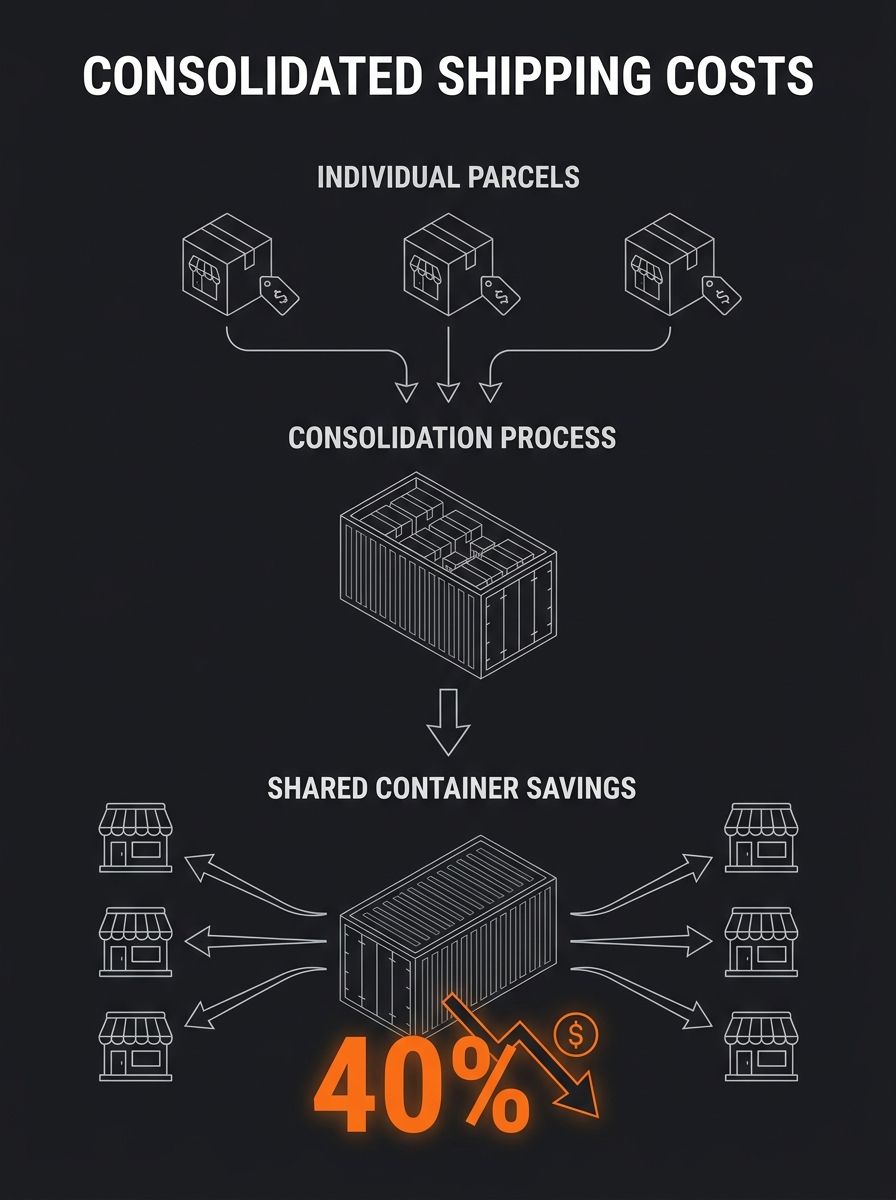
The process outlined in the guide involves collecting individual orders at a consolidation center, sorting shipments by destination, combining them into full containers, then transporting the consolidated load to a deconsolidation facility near final destinations where cargo is separated and delivered to respective recipients. The freight forwarder notes this approach optimizes container space utilization and reduces wasted capacity compared to shipping individual orders separately.
The guide specifies that consolidated shipping commonly applies to ocean and air freight modes, with the primary goal of fully using container or truck capacity to minimize empty space and maximize cost efficiency per cubic meter.
Cost Reduction and Operational Benefits Outlined
SendFromChina's guide lists cost efficiency as the primary advantage, explaining that businesses pay only for the container space their shipments occupy rather than booking entire containers. This shared-cost model particularly benefits small and medium-sized e-commerce operators who lack full-container volumes, according to the published framework.
The guide documents several operational benefits beyond direct freight savings. Optimized space utilization reduces the number of partially filled vehicles required, lowering per-unit shipping costs and fuel consumption. Consolidated shipments involve less frequent handling compared to individual parcels, which the guide notes reduces damage risk and improves cargo security through better packaging and palletization practices.
For international shipments, the guide states that consolidated loads with proper documentation can simplify customs clearance procedures, reducing clearance delays and associated storage fees. The freight forwarder also notes that regular consolidated shipping schedules enable more predictable inventory replenishment cycles, allowing sellers to reduce safety stock levels and associated warehousing costs.
Environmental benefits receive dedicated coverage in the guide, which explains that fewer vehicle trips translate to reduced carbon emissions—a factor the freight forwarder positions as relevant for sellers targeting eco-conscious consumer segments.
Target User Profiles and Use Cases
The published guide identifies small and medium-sized enterprises as primary consolidated shipping users, specifically citing e-commerce retailers and dropshipping operators who ship goods that do not fill entire containers or truckloads. Online sellers sourcing inventory from China for North American or European markets represent a core use case, according to the framework.
SendFromChina lists additional user categories including crowdfunding campaign fulfillment operations, Kickstarter project shipments, and board game publishers—all segments characterized by moderate inventory volumes that fall between parcel and full-container scales. The guide notes these operators benefit from accessing container-rate economics without committing to minimum container volumes.
International sellers expanding into new geographic markets also appear in the target profile section, with the guide explaining that reduced shipping costs through consolidation make new market entry more financially viable for independent operators. Similarly, businesses implementing just-in-time inventory models benefit from the more frequent, smaller shipments that consolidated services enable compared to full-container minimum order requirements.
What This Means for Dropshipping Entrepreneurs
Dropshippers managing China-based supplier relationships face a structural cost disadvantage on small-volume shipments—consolidated freight offers a documented path to container-rate economics without full-container commitments. Operators shipping 50 to 500 units per SKU rather than thousands can access shared ocean freight instead of paying express parcel premiums, directly improving landed cost and gross margins.
The operational model works best for sellers with predictable reorder cycles who can align shipment timing with weekly or bi-weekly consolidation schedules. Freight forwarders typically require 5 to 10 business days' advance notice for consolidation bookings, which adds lead time compared to on-demand express shipping but delivers 40 to 60 percent cost reductions on China-to-US ocean legs for shipments above 100 kilograms, based on typical LCL rate structures.
Independent sellers evaluating China sourcing models should compare consolidated LCL costs against AliExpress ePacket and standard shipping on a per-unit landed basis. For inventory purchases of $2,000 to $10,000, shared container space frequently undercuts supplier-quoted shipping while offering better tracking and delivery reliability than postal economy services documented in SendFromChina's prior carrier comparisons.

Ryan Torres
Ryan Torres is a former Amazon FBA seller turned dropshipping consultant who has generated over $2.8M in ecommerce revenue across 14 product launches. He specializes in supplier vetting, margin optimization, and scaling DTC operations for sub-$1M brands. Ryan focuses on actionable frameworks that drive measurable results for independent operators.
Related Articles

SendFromChina Publishes Six-Step Fulfillment Center Workflow Guide Targeting Ecommerce Operators Evaluating Third-Party Logistics
SendFromChina released a comprehensive fulfillment center guide on July 22, 2026, breaking down warehouse operations into six sequential stages—receiving, storage, order processing, picking and packing, shipping, and returns processing—according to documentation published on the logistics provider's

SendFromChina Publishes Seven-Factor Shipping Cost Framework Targeting Dropshippers Managing Delivery Margins
Package weight, dimensions, shipping zones, carrier selection, delivery speed, product type, and insurance requirements form the seven primary cost drivers for ecommerce shipping, according to a comprehensive guide released by SendFromChina on July 20 targeting dropshippers optimizing delivery margi

SendFromChina Publishes Category-Based AliExpress Alternative Guide Segmenting Suppliers by Product Type and Minimum Order Quantities
SendFromChina released a supplier sourcing guide on July 18 breaking down AliExpress alternatives across six product categories—clothing, electronics, home textiles, and smallware—with platform-specific data on minimum order quantities, shipping speeds, and pricing tiers, according to the company's
Explore more topics