Global Sourcing Strategy Shifts Toward Regional Hubs as 66 WTO Members Adopt E-Commerce Framework
Sixty-six World Trade Organization members representing close to 70 percent of global trade agreed in March 2026 to implement the Agreement on Electronic Commerce through interim arrangements, marking a regulatory shift toward regional sourcing hubs over distant low-cost suppliers, according to a Se

Global Sourcing Strategy Shifts Toward Regional Hubs as 66 WTO Members Adopt E-Commerce Framework
Sixty-six World Trade Organization members representing close to 70 percent of global trade agreed in March 2026 to implement the Agreement on Electronic Commerce through interim arrangements, marking a regulatory shift toward regional sourcing hubs over distant low-cost suppliers, according to a September 4 analysis by Scott Wang of the World Trade Centers Association published in Economic Times Government. Wang cited the failure to implement common digital trade rules as leaving an estimated US $159 billion of trade on the table annually, with digital transactions now accounting for over 60 percent of global GDP.
India Warehousing Absorption Climbs 18 Percent Year-Over-Year
India's warehousing stock crossed 610 million square feet in 2025 with a record 67 million square feet absorbed that year, according to Wang's analysis. Leasing across India's top industrial and logistics markets reached 36.2 million square feet in the first half of 2026, up 18 percent year-over-year, with industrial leasing growing faster than warehouse leasing as manufacturers compete for space alongside third-party logistics operators.
Secondary markets including Nagpur, Coimbatore, and Chandigarh-Rajpura pulled share away from India's traditional eight metropolitan centers for the first time, Wang noted. The geographic spread indicates manufacturers are establishing backup production sites rather than consolidating in major hubs.
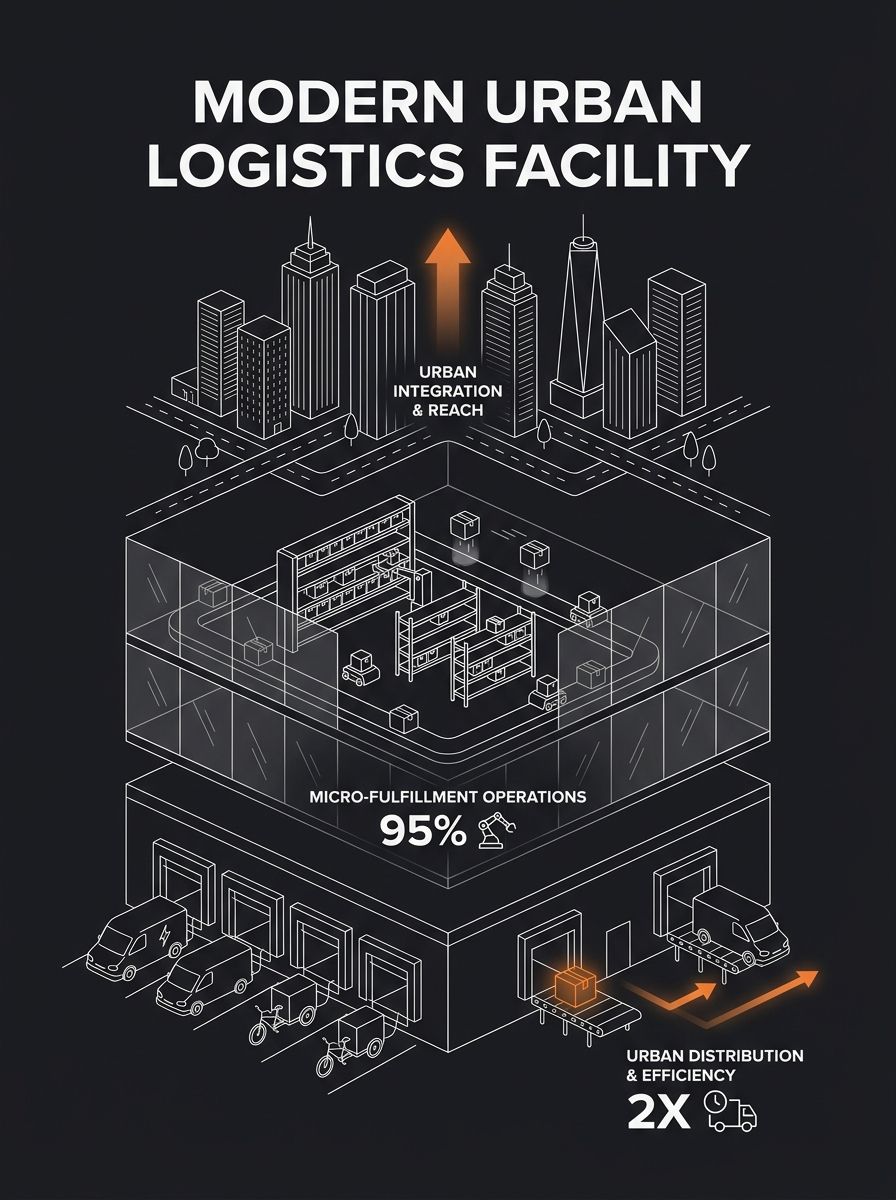
"What occupiers want now are facilities designed for thousands of small parcels moving directly to doorsteps: micro-fulfilment centres, urban distribution hubs sitting inside dense city catchments," Wang wrote, describing World Trade Center Thane's vertical urban distribution center as a preview of multi-function logistics buildings designed to serve e-commerce parcel volume rather than bulk retail shipments.
European Automotive Suppliers Qualify Second and Third Sources in Eastern Europe and India
European automotive suppliers are adding qualified suppliers in Eastern Europe and India instead of relying on single Asian foundries, according to Wang's observations across the WTCA network of over 300 World Trade Center businesses in nearly 100 countries. The pattern reflects a shift from pure cost optimization to multi-source resilience following pandemic supply disruptions and shipping corridor risks including the Strait of Hormuz, which carries close to one-fifth of global oil and gas traffic.
India concluded trade agreements with the United Kingdom, the European Union, and the European Free Trade Association within roughly a year, each lowering friction for goods moving through Indian ports, Wang stated. The agreements position India alongside Southeast Asia and the Middle East as destinations pairing cost competitiveness with proximity to both Western and Asian demand.
Of the US $105 billion deployed in Asia Pacific real estate investment in the first half of 2026, industrial and logistics assets captured a larger share than historical norms, with occupiers requesting mixed-use buildings combining office floors above logistics capacity rather than single-purpose warehouses, according to the analysis.
Why This Matters Now
Dropshipping operators who built stores around AliExpress sourcing face a structural challenge as brands and direct-to-consumer competitors shift toward nearshored suppliers offering faster, more reliable delivery windows. The 18 percent year-over-year increase in India's industrial leasing signals manufacturers are willing to accept higher per-unit costs in exchange for proximity to end markets and reduced exposure to single-supplier disruption—a calculation that changes margin math for dropshippers competing on 7-to-15-day China shipping against domestic 2-to-3-day fulfillment.
Wang's observation that secondary Indian markets are absorbing industrial capacity suggests suppliers serving Western e-commerce operators will increasingly offer India-origin alternatives to China-direct products, potentially at pricing that compresses the landed-cost advantage China suppliers held when fuel and freight were stable. For solopreneurs testing product niches, vetting at least one backup supplier outside China—particularly in India or Southeast Asia if selling to U.S. or European buyers—becomes risk mitigation rather than optional overhead.
The WTO e-commerce framework matters less for regulatory compliance—most small operators ship below customs thresholds where digital trade rules apply—and more as a signal of where institutional capital is building fulfillment infrastructure. When 70 percent of global trade flows through jurisdictions coordinating on digital commerce standards, the suppliers plugged into those hubs gain logistics advantages independent sellers cannot replicate through Shopify apps alone.

Ryan Torres
Ryan Torres is a former Amazon FBA seller turned dropshipping consultant who has generated over $2.8M in ecommerce revenue across 14 product launches. He specializes in supplier vetting, margin optimization, and scaling DTC operations for sub-$1M brands. Ryan focuses on actionable frameworks that drive measurable results for independent operators.
Related Articles
Eighteen Percent of AliExpress Dropshipping Suppliers Exited Platform in First Five Months of 2026 as China's Factory Base Consolidates
An estimated 18% of active AliExpress dropshipping suppliers exited the platform between January and May 2026, folding into larger factory collectives in Guangdong, Foshan, and Yiwu, according to sourcing intelligence firm Syncee's internal supplier index cited in a LooperBuy guide published August
U.S. Dropshipping Suppliers Are Taking Amazon & Walmart Back: What This Means for Your 2026 Strategy
TopDawg's catalog of 500,000+ products from over 3,000 verified U.S. dropshipping suppliers now integrates directly with Amazon and Walmart seller accounts, according to coverage in LA Weekly and IndyStar published May 6, 2026.
The Domestic Supplier Advantage: Why US-Based Fulfillment Is Reshaping 2026 Dropshipping Unit Economics
Domesticated fulfillment with bulk DDP imports cuts per-parcel costs by 8–15% for brands shipping 4,000+ US orders monthly, according to Evolution Fulfillment's cost model.
Explore more topics