Outdoor Furniture's 2026 Boom: Why Rising Competition Is Forcing Dropshippers to Choose Between Volume and Margin
A chair that costs $120 from the supplier, plus $20 in shipping, sells for $280 on a well-optimized Shopify store. That $140 spread, a 50% gross margin, is the number that pulled thousands of new sellers into outdoor furniture dropshipping between 2024 and early 2026.
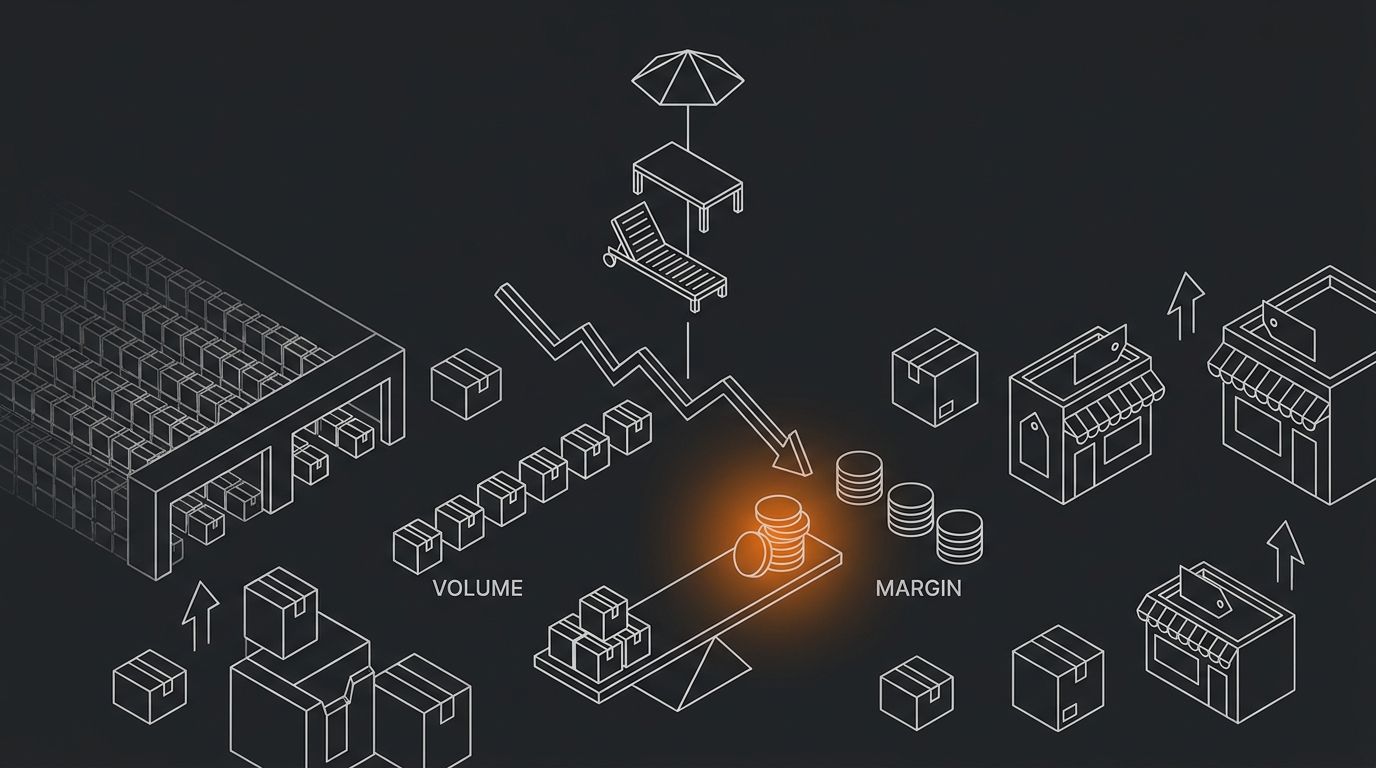
Outdoor Furniture's 2026 Boom: Why Rising Competition Is Forcing Dropshippers to Choose Between Volume and Margin
A chair that costs $120 from the supplier, plus $20 in shipping, sells for $280 on a well-optimized Shopify store. That $140 spread, a 50% gross margin, is the number that pulled thousands of new sellers into outdoor furniture dropshipping between 2024 and early 2026. And that same number is now the reason half of them are underwater.
The U.S. outdoor furniture market is projected to hit USD 10.52 billion by 2026. Globally, the category sits at USD 20.5 billion and is growing at a 4.04% CAGR through 2031. The "outdoor room" concept, where homeowners treat patios and decks as fully furnished extensions of their living space, has given the category durable tailwinds. Rooftop bars and restaurants have added commercial demand on top of residential. By every measure, this is a growing market.
But growth attracts sellers. And sellers attract price wars. Here's how the outdoor furniture dropshipping niche went from high-margin opportunity to a strategic crossroads in roughly eighteen months.
The $280 Chair That Started the Rush
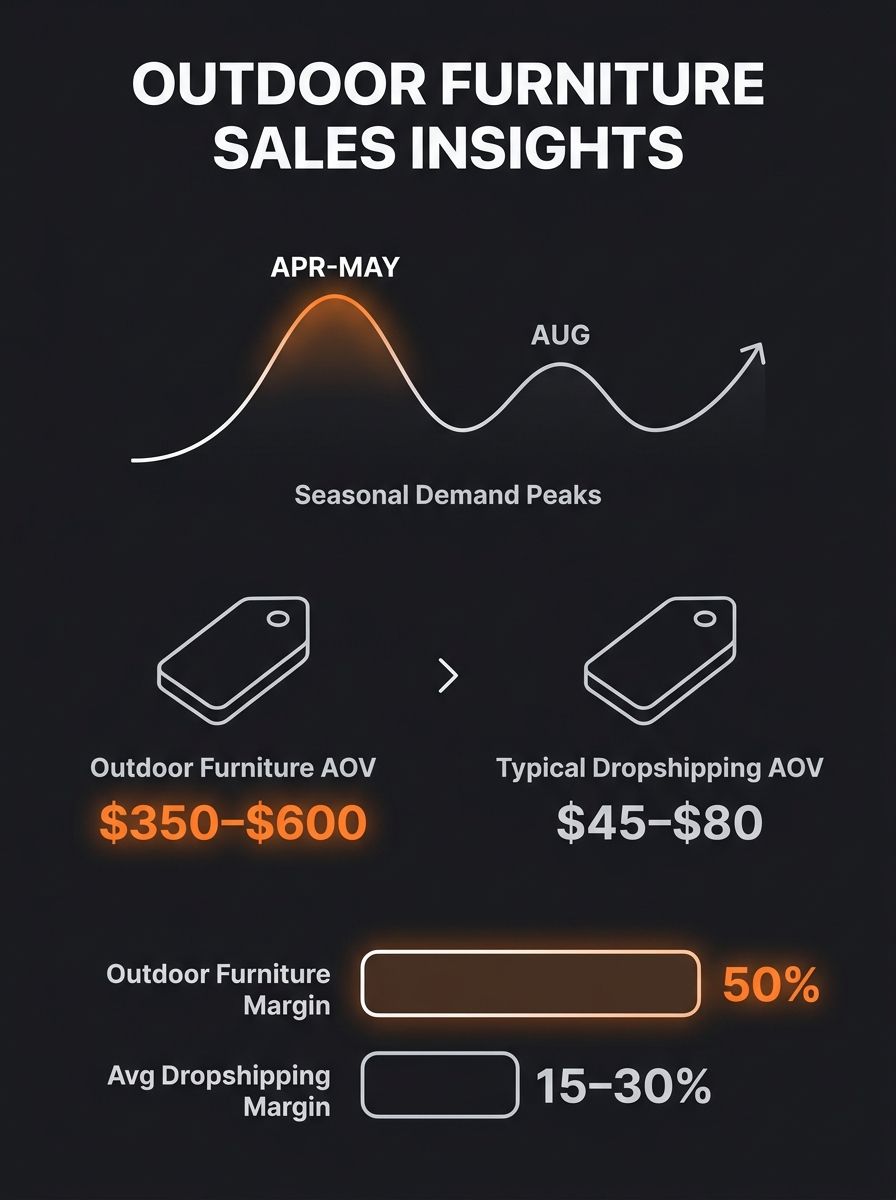
Through most of 2024, furniture dropshipping operated on economics that made other niches look anemic. A $120-cost chair with $20 shipping sold at $280 yields a clean 50% gross margin. Compare that to the typical dropshipping margin range of 15% to 30% across all categories, and you understand why outdoor furniture attracted so much attention.
The appeal went beyond raw margin. Outdoor furniture has natural AOV advantages. Nobody buys one patio chair. They buy a set, plus cushions, plus a side table. Average order values of $350–$600 were common for stores running curated collections, and those numbers meant you could absorb higher CPAs on Meta or Google Shopping without killing profitability.
Seasonal demand patterns helped, too. If you've read about why calendar-based product planning beats year-round selection, you already know that outdoor furniture follows a sharp curve: demand builds in March, peaks in April and May, and catches a secondary wave in August as buyers replace worn-out pieces. This predictability let sellers time ad spend efficiently and avoid the year-round bleed that kills margins in non-seasonal niches.
When Supplier Listings Exploded
By late 2024, the math was too visible to stay hidden. CJ Dropshipping, Spocket, and Zendrop all expanded their outdoor furniture catalogs significantly. AliExpress saw a flood of poly-rattan dining sets, aluminum-frame loungers, and acacia wood benches priced to move. Regional U.S. suppliers got into the game too, offering faster shipping on bulky items that previously took 15–25 days from China.
This created the classic supplier competition volume problem: when dozens of suppliers carry near-identical products, the wholesale price drops. That sounds good until you realize it drops for every competitor simultaneously. A poly-rattan 4-piece set that wholesaled for $180 in early 2024 was available at $135 by Q2 2025 across multiple platforms. The retail price followed it down.
The real damage came from the advertising side. Facebook and Google Shopping audiences for "outdoor patio furniture" and related terms got saturated with ads from stores running the same products, sometimes with the same supplier-provided photos. CPMs climbed. Conversion rates fell. The margin math that worked at $18 CPAs stopped working at $32 CPAs. If your ad spend audit showed rising costs during this period, the supplier wasn't the problem. The market was. We've covered how to diagnose whether your margins are collapsing from marketing or supplier issues, and this period was a textbook case of the former.
Mid-2025 and the Margin Squeeze
By the middle of 2025, outdoor furniture dropshipping hit what the niche saturation margin collapse pattern looks like in practice. Thousands of nearly identical stores were competing on price as the primary differentiator. When that happens, the dropshipping model breaks in that specific market.
Here's what the numbers actually looked like for a median outdoor furniture dropshipper by July 2025:
Product cost (4-piece rattan set): $135
Shipping (domestic, supplier-fulfilled): $35–$55 depending on weight and zone
Retail price after competitive pressure: $249–$279
Gross margin before ad spend: 28–32%
Meta CPA for outdoor furniture keywords: $28–$38
Net margin after ads, payment processing, returns: 4–9%
That 50% gross margin from 2024 was gone for anyone without a differentiated store. The sellers still running at 40%+ were either operating in a premium segment, or they'd built enough organic traffic and email lists to reduce their dependence on paid acquisition.
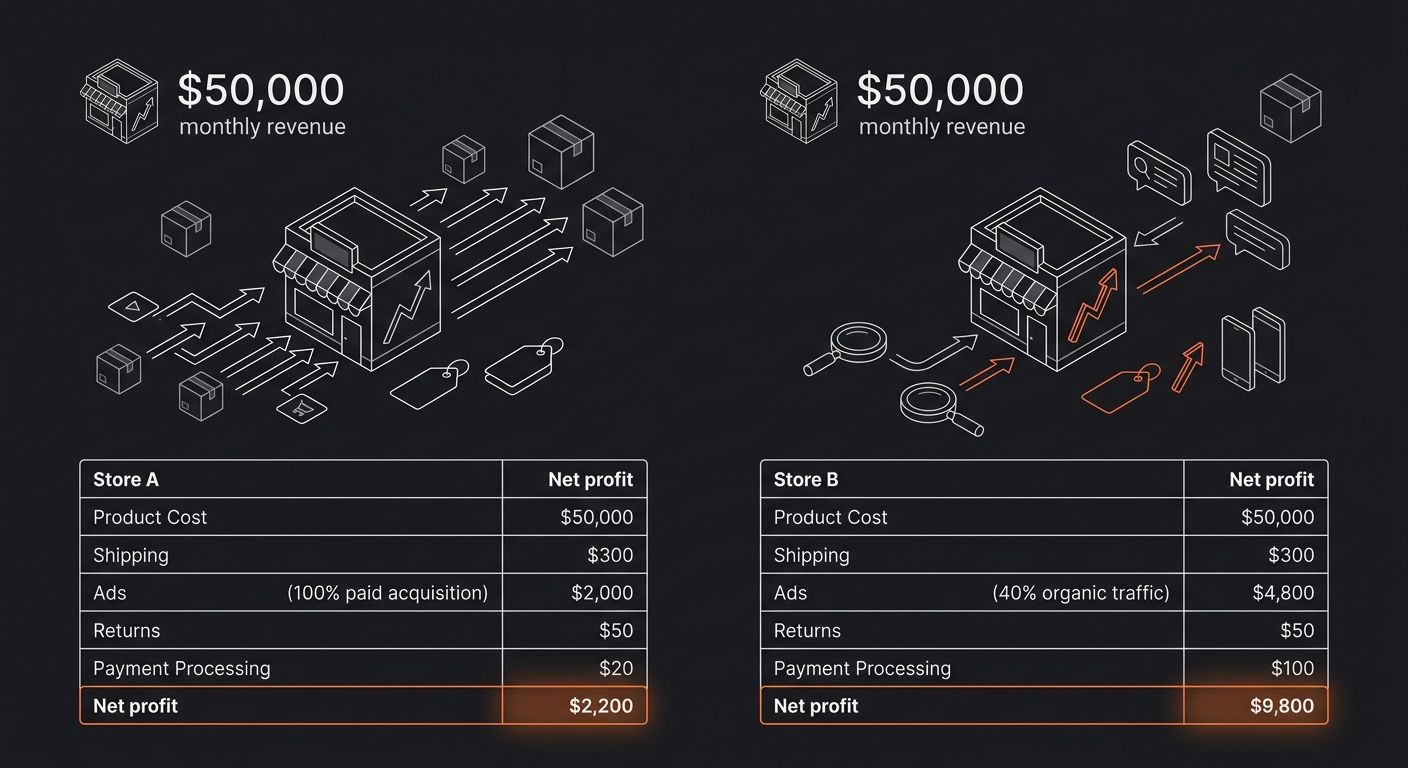
The contribution margin framework makes this visible with uncomfortable clarity: two stores generating the same revenue on the same product can have wildly different profit outcomes depending on their customer acquisition mix. A store paying $35 CPA on every sale is structurally different from one where 40% of revenue comes from repeat buyers and organic search.
Two Paths Diverge
By early 2026, the outdoor furniture dropshipping market had split into two distinct 2026 dropshipping strategy camps. Every operator who stayed in the niche made a choice, consciously or by default.
Path One: The Volume Play
The volume strategy means accepting 8–15% net margins and making it up on throughput. You're running a high-SKU catalog, typically 200+ outdoor products, competing on price, and optimizing for conversion rate rather than per-unit profit. You need strong automation for order routing and supplier sync because at these margins, a single misrouted order or duplicate shipment eats the profit from three sales.
Volume players tend to sell on marketplaces (Amazon, Walmart, eBay) alongside their Shopify stores. They're comfortable with the trade-off: lower control over branding in exchange for built-in traffic. Their biggest expense line item is returns. Furniture products are big and heavy, and damage during shipping creates a return rate of 8–12% on bulky items. At 10% net margin, a 10% return rate can zero out your profit if you're eating the return shipping cost.
The volume path works for operators who already have the infrastructure, the supplier relationships, and the capital to absorb the cash flow gap between paying suppliers and collecting revenue. For a new entrant in 2026, this is a hard road.
Path Two: The Margin Play
The margin strategy means going narrower and charging more. You pick a specific aesthetic (mid-century modern outdoor, Scandinavian minimalist, resort-grade commercial), curate 30–60 SKUs, and build a brand around the lifestyle rather than the product category. This approach aligns with the broader argument for building around community rather than viral items, and it's where the clearest wins are happening right now in outdoor furniture.
Niche stores targeting specific audiences have less competition and higher conversion rates, according to analysis from EarnifyHub. This holds especially true in outdoor furniture, where the $800+ segment has far fewer dropship competitors than the $200–$400 range.
The margin play requires more upfront work. You need product descriptions that go beyond generic manufacturer copy because your price premium has to feel justified. You need real photography, or at minimum, heavily curated lifestyle imagery. You need content that positions your store as an authority on outdoor living rather than a product aggregator.
But the economics are dramatically better. A store selling a curated $650 teak dining set at 40% gross margin makes $260 per order. Even with a $45 CPA and 5% return rate, net margin stays above 25%. One sale at this level equals the profit from five or six sales on the volume path.
Where the Numbers Land Today
The outdoor furniture market hasn't slowed down. That 5–6% CAGR is real, fueled by continued investment in home outdoor spaces and commercial rooftop dining. The demand side is healthy.
The supply side is where the story gets interesting. Supplier consolidation has started. Smaller wholesalers who entered the space in 2024 are thinning out as their own margins compress. The survivors are the ones who invested in logistics for oversized items, which is the single hardest operational problem in furniture dropshipping. Shipping costs for bulky items haven't gotten cheaper, and rising port costs and fuel surcharges continue to pressure the unit economics for anyone sourcing internationally.
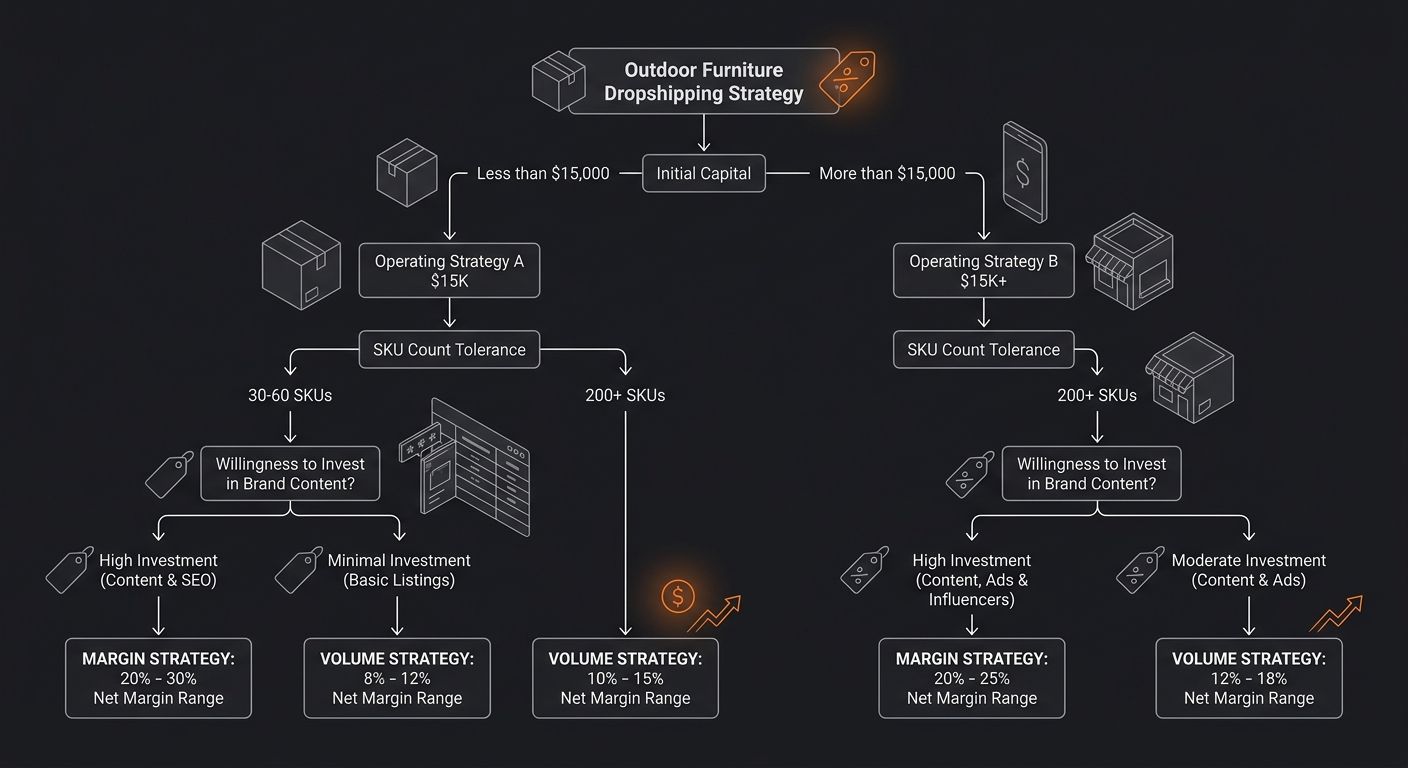
For anyone building a strategy around outdoor furniture, the math requires honesty about which path you're on. The volume path demands capital, automation, and marketplace presence. The margin path demands brand-building, content, and patience. Straddling both is the fastest way to lose money, because you end up with the ad costs of a brand play and the margins of a volume play.
The category still works. Furniture dropshipping can still produce 50% gross margins on individual products. The difference between 2024 and now is that those margins require deliberate positioning. As one industry analysis put it, treating "viral potential" as a distribution channel rather than a business model means your product economics have to hold up even when CPAs rise, refund rates climb, and three new competitors list the same SKU next week. Outdoor furniture in 2026 rewards operators who picked a lane early and built the infrastructure to stay in it through every seasonal cycle.
365 Dropship Editorial
Editorial team writing about E-commerce, dropshipping, and product discovery — reviews of dropshipping suppliers and platforms, trending niche guides (jewelry, beauty, pets, home, fashion), supplier due diligence, ecom operations, shipping & fulfillment strategy, product research, AOV optimization, and profitable dropshipping case studies.
Related Articles
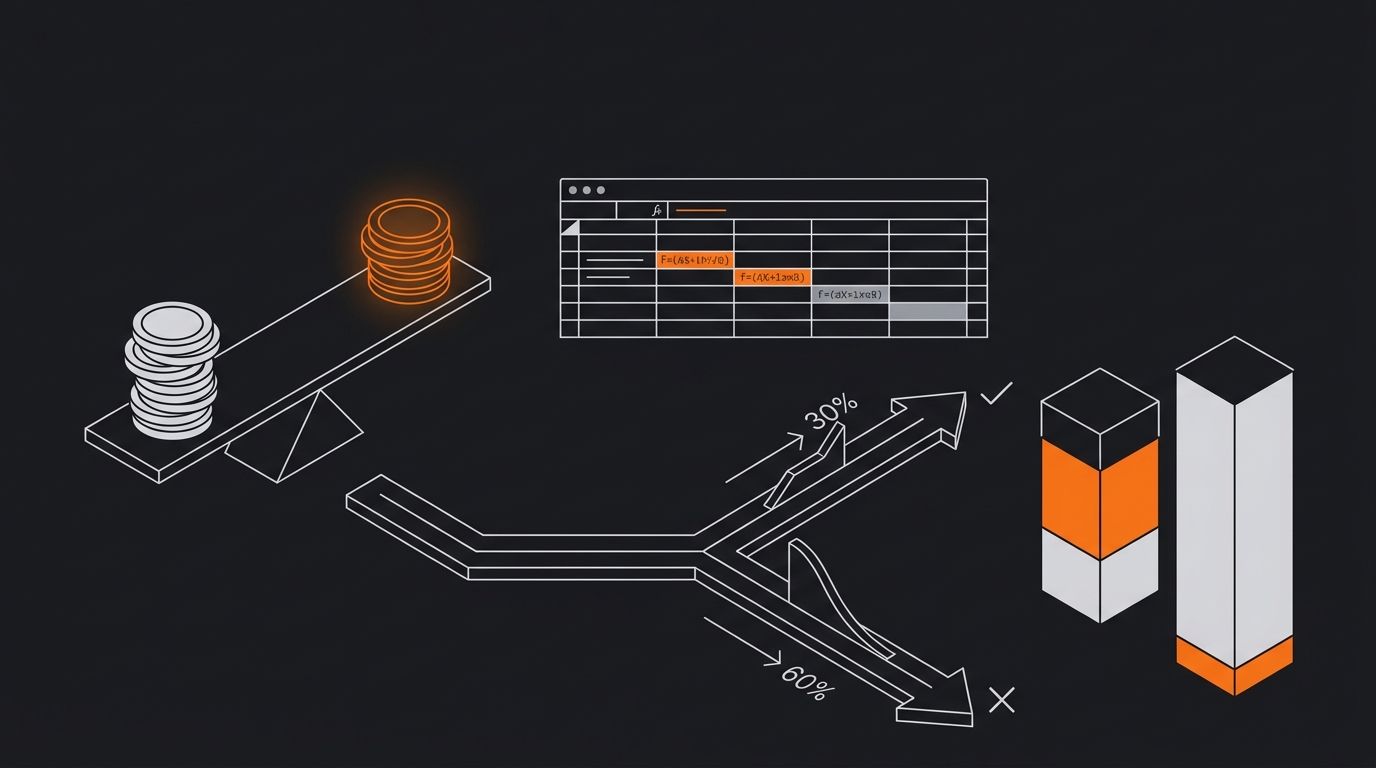
Stop Chasing 60% Margins: Why a Disciplined 30% Gross Margin Business Outperforms Most 'High-Margin' Dropshipping Stores
A 60% gross margin on a $50 dropshipped product leaves $30 before costs. After $12 in ad spend, $2 in payment processing, $1 in platform fees, and $3 in return-related losses, that $30 becomes $12 — a 24% net margin.

Why I'd Never Launch a Dropshipping Store in a Niche With More Than 3 Dominant Amazon Sellers
Three Amazon sellers with 1,000-plus reviews each, all ranking on page one for the same product keyword at comparable prices, create a pricing floor that no independent dropshipper's margin can survive.

The Exit Math: Why Your $60K/Month Store Might Only Sell for $130K (And How to Fix It Before Buyers Walk)
Dropshipping business valuation multiples cluster between 2.0x and 3.0x monthly seller's discretionary earnings (SDE), and two stores in the same niche can trade 1.0x+ apart based on risk profile and operational quality alone.
Explore more topics