EU Eliminates €150 Duty Exemption for Small Packages; €3 Per-Item Fee Takes Effect July 1
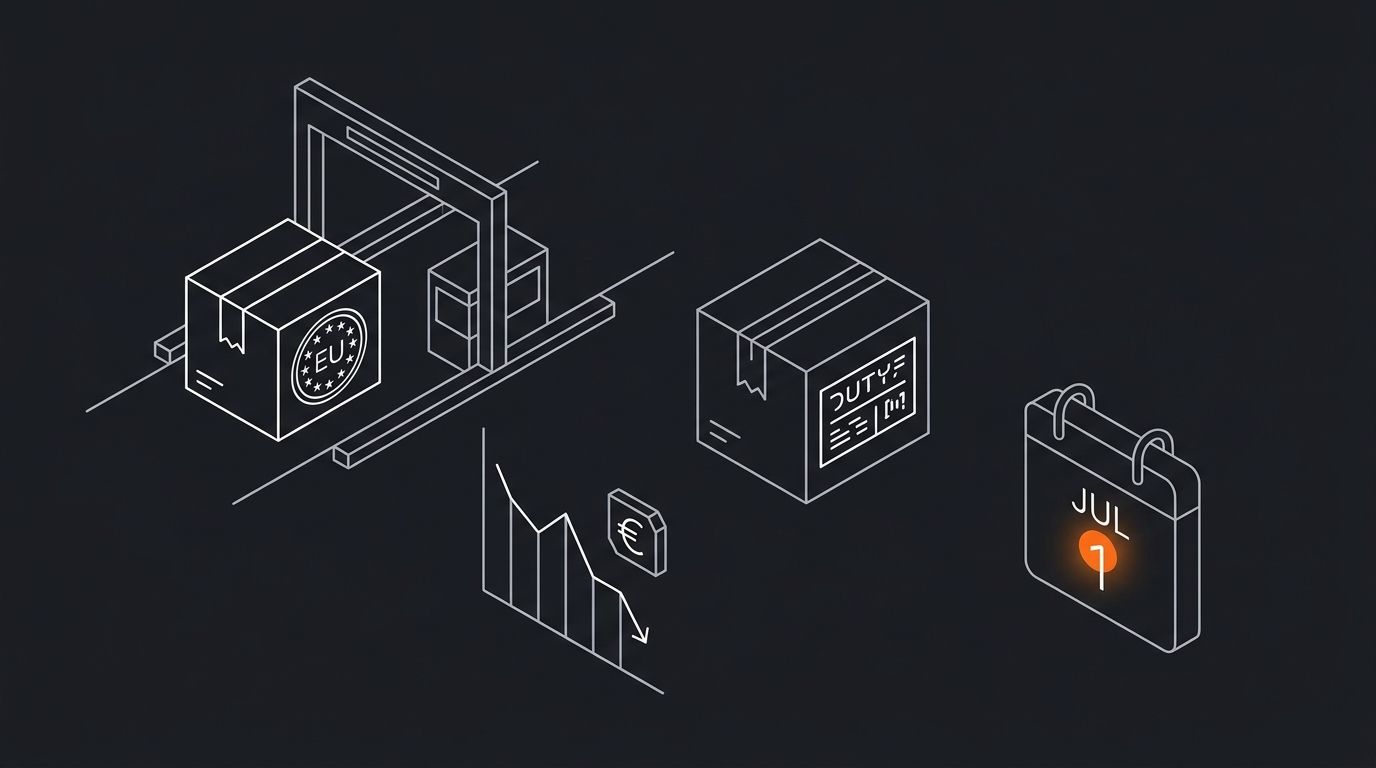
European Union member states will begin collecting a flat €3 customs duty on each tariff line item in packages valued under €150 starting July 1, 2026, eliminating a longstanding duty-free threshold that allowed millions of small shipments from China-based suppliers to enter the bloc without border
EU Eliminates €150 Duty Exemption for Small Packages; €3 Per-Item Fee Takes Effect July 1
European Union member states will begin collecting a flat €3 customs duty on each tariff line item in packages valued under €150 starting July 1, 2026, eliminating a longstanding duty-free threshold that allowed millions of small shipments from China-based suppliers to enter the bloc without border charges, according to bankier.pl. The change, enacted through Council Regulation (EU) 2026/382, runs through July 1, 2028 as a transitional measure before full standard tariff rates apply to all imports regardless of value.
Fee Applies Per Tariff Classification, Not Per Package
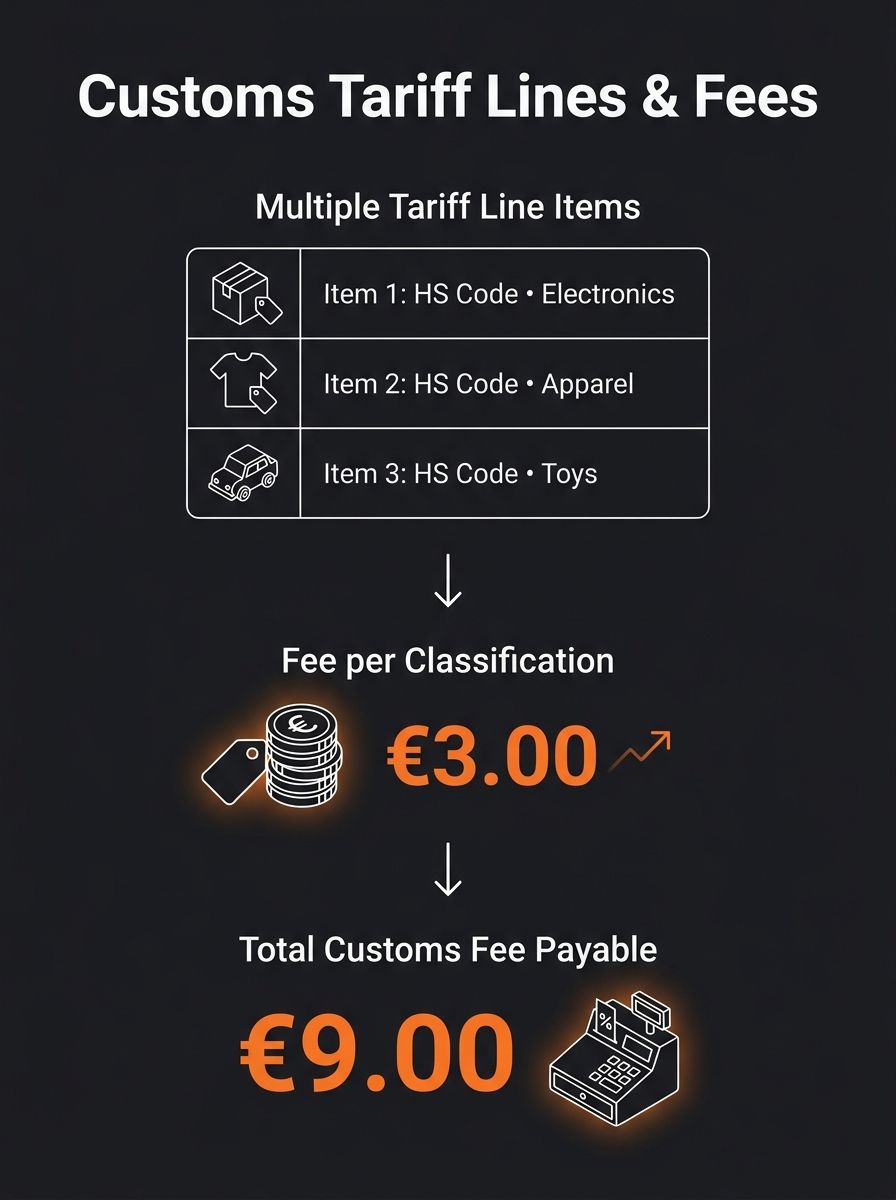
The €3 charge applies to each distinct tariff line item within a shipment, not to the package as a whole, according to Piotr Juszczyk, chief tax advisor at inFakt, who analyzed the regulation's implementation framework. Three identical cotton t-shirts count as one tariff line and trigger a single €3 fee, Juszczyk explained, but a package containing one cotton t-shirt, one wool sweater, and one phone case represents three separate tariff classifications and incurs €9 in total customs charges.
The fee structure creates a non-linear cost curve for mixed-product orders. A dropshipper fulfilling a single customer order that bundles items from different product categories—common in general-store models—now faces compounding per-item duties that can exceed 10% of order value on sub-€50 purchases. Operators sourcing from AliExpress or CJ Dropshipping who ship multi-category starter packs or accessory bundles will see the sharpest margin compression.
Packages shipped from warehouses already located within EU borders are exempt from the new fee, Juszczyk noted. That exemption creates a structural cost advantage for suppliers operating fulfillment centers in Poland, Germany, or other EU member states compared to direct-from-China shipping models that most AliExpress and Temu listings rely on.
4.6 Billion Small Packages Entered EU in 2024
Approximately 4.6 billion packages valued under €150 entered the European Union in 2024, nearly double the volume from the prior year, according to data cited by Juszczyk. Poland ranks as the third-largest market in Europe for Temu, with more than 13 million active users on the platform. The previous duty exemption for shipments under €150—known as the "de minimis" threshold—was designed to reduce administrative burden on customs agencies processing high volumes of low-value parcels.
Brussels eliminated the threshold because digital tracking systems now handle shipment data automatically, removing the administrative constraint that originally justified the exemption, Juszczyk said. EU regulators also concluded that the threshold was being systematically exploited through artificially declared low values and order splitting, giving non-EU platforms an unfair competitive edge over European importers who pay standard tariffs.
The regulation does not replace value-added tax (VAT), which continues to be assessed separately on all imports. An additional EU "manipulation fee" is scheduled to take effect in November 2026, further increasing the landed cost of small packages from outside the bloc.
Transitional Period Runs Two Years
The €3 flat-fee structure operates as a temporary simplification measure from July 1, 2026 through July 1, 2028. After the transitional period ends, all imports will be subject to standard tariff schedules calculated from the first euro of declared value, eliminating any threshold-based exemption. "The current change is not the end, but the first stage of a larger reform of the EU customs system," Juszczyk said in the analysis.
For dropshipping operators, the two-year window offers time to restructure supplier networks before full tariff schedules apply. Margin models built on $8–$15 AliExpress product costs with 15–21 day shipping times from China now carry an additional €3–€9 per order in customs fees—equivalent to a 20–40% increase in landed cost on typical general-store AOVs between €25 and €40.
Operators who have not yet evaluated EU-based suppliers or domestic fulfillment partnerships face immediate pressure to recalculate unit economics. The domestic supplier advantage that reshaped US dropshipping margins in 2025 now extends to European operators, where proximity to the customer base eliminates both the new per-item fee and the November manipulation charge.
What Happens Next
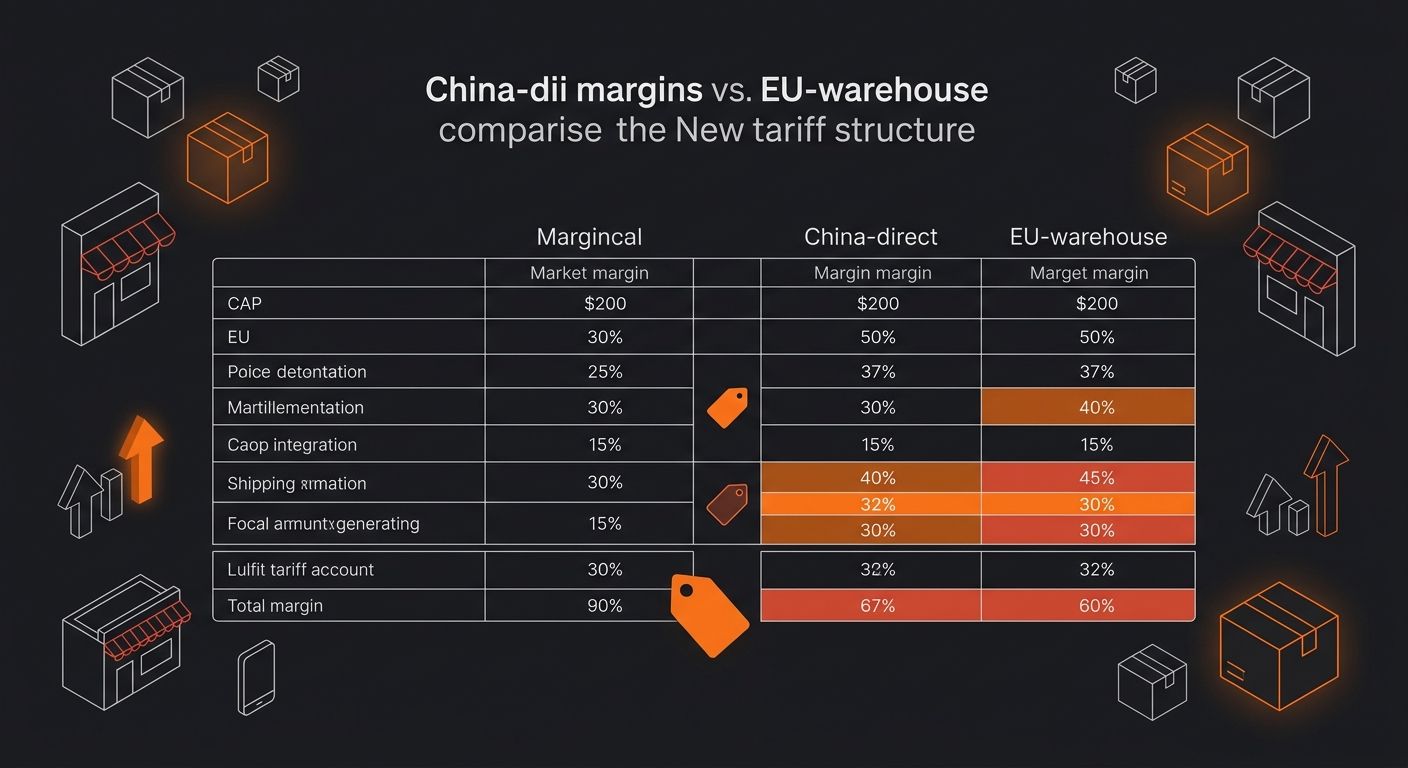
EU dropshippers sourcing from AliExpress, CJ, Temu, or Spocket's China-direct listings need to rebuild landed-cost models before July 1. The €3 per-item fee disproportionately hits mixed-SKU orders and low-AOV bundles, forcing operators to choose between single-category product focus (which limits tariff line multiplication) or migration to suppliers with EU-based inventory. Stores already operating on 25–30% gross margins have no buffer to absorb a €6–€9 customs surcharge on a €35 order without either raising prices or cutting ad spend.
The two-year transitional window before full tariff schedules take effect gives operators time to test EU suppliers, negotiate bulk DDP shipments, or shift catalog strategy toward higher-ticket single items that dilute the fixed €3 fee. Platforms like Temu and Shein may accelerate warehouse expansions in Poland and Germany to bypass the regulation entirely, which would restore their cost advantage but also reduce product selection to in-stock EU inventory.
Operators who previously survived tariff disruptions by rebuilding their supplier stack will recognize the playbook: recalculate every product's true landed cost, drop SKUs that no longer clear 30% gross margin under the new fee structure, and prioritize suppliers who offer consolidated multi-item shipments or EU fulfillment. The November manipulation fee compounds the urgency; by Q4 2026, China-direct models may be structurally uncompetitive for sub-€50 orders across the entire EU market.

Ryan Torres
Ryan Torres is a former Amazon FBA seller turned dropshipping consultant who has generated over $2.8M in ecommerce revenue across 14 product launches. He specializes in supplier vetting, margin optimization, and scaling DTC operations for sub-$1M brands. Ryan focuses on actionable frameworks that drive measurable results for independent operators.
Related Articles
EU Tax on Small Packages From China Cuts AliExpress, Temu, Shein Imports by 30-40% in First Two Months
Small-package imports from AliExpress, Temu, and Shein dropped 30 to 40 percent across the European Union in the first two months following a three-euro-per-item tax that took effect July 1, 2026, according to French customs estimates released by the country's Economy Ministry on August 27.
Cross-Border Tariffs & Import Duties: The Hidden Margin Killer Dropshippers Overlook
Every package entering the U.S. from China now triggers a full customs entry.

France Implements €12 Per-Garment Tax on AliExpress, Temu, and Shein Ultra-Fast Fashion Imports
France enacted a €12-per-garment tax on ultra-fast fashion imports from AliExpress, Temu, and Shein on September 1, 2026, according to La Tribune, directly increasing landed costs for dropshippers sourcing clothing from China-based platforms.
Explore more topics