Aliexpress Dropshipping Websites
Three apps dominate AliExpress dropshipping websites: DSers for bulk ordering, AliDrop for US/EU supplier access, and Dropshipman for pre-shipment quality checks. This guide walks you through selecting one, connecting it to your storefront, and placing a verified test order in about four hours.
How to Build AliExpress Dropshipping Websites Using DSers, AliDrop, and Dropshipman
Three apps dominate AliExpress dropshipping websites: DSers for bulk ordering, AliDrop for US/EU supplier access, and Dropshipman for pre-shipment quality checks. This guide walks you through selecting one, connecting it to your storefront, and placing a verified test order in about four hours.
Before You Start
Four things need to be in place before step one:
A storefront account. Shopify ($39/month Basic plan) or a self-hosted WooCommerce site with hosting ($10-30/month). Both integrate with every major AliExpress automation app. If you're weighing the two, our breakdown of Shopify's dropshipping setup process covers the operational differences in detail.
An AliExpress buyer account. Free to create at aliexpress.com. You'll use it for test orders and direct supplier communication.
$150-300 in working capital. Enough for 3-5 test orders, your first month of platform fees, and a basic theme.
A niche shortlist of 2-3 product categories. Micro-niches like at-home wellness, smart home automation, and sustainable goods are outperforming generic product categories right now. If you don't have a shortlist, complete the niche validation in Step 1 before doing anything else.
Time commitment: roughly 4 hours for initial setup, plus 3-7 days waiting on test order delivery.
Step 1: Validate Your Niche With Actual Margin Math
The AliExpress Dropship Center (accessible from your buyer account under "Dropshipping" in the top nav) shows product-level order volume and trend data. You're looking for items where your landed cost (product + shipping + any tariff) stays below 30% of your target retail price.
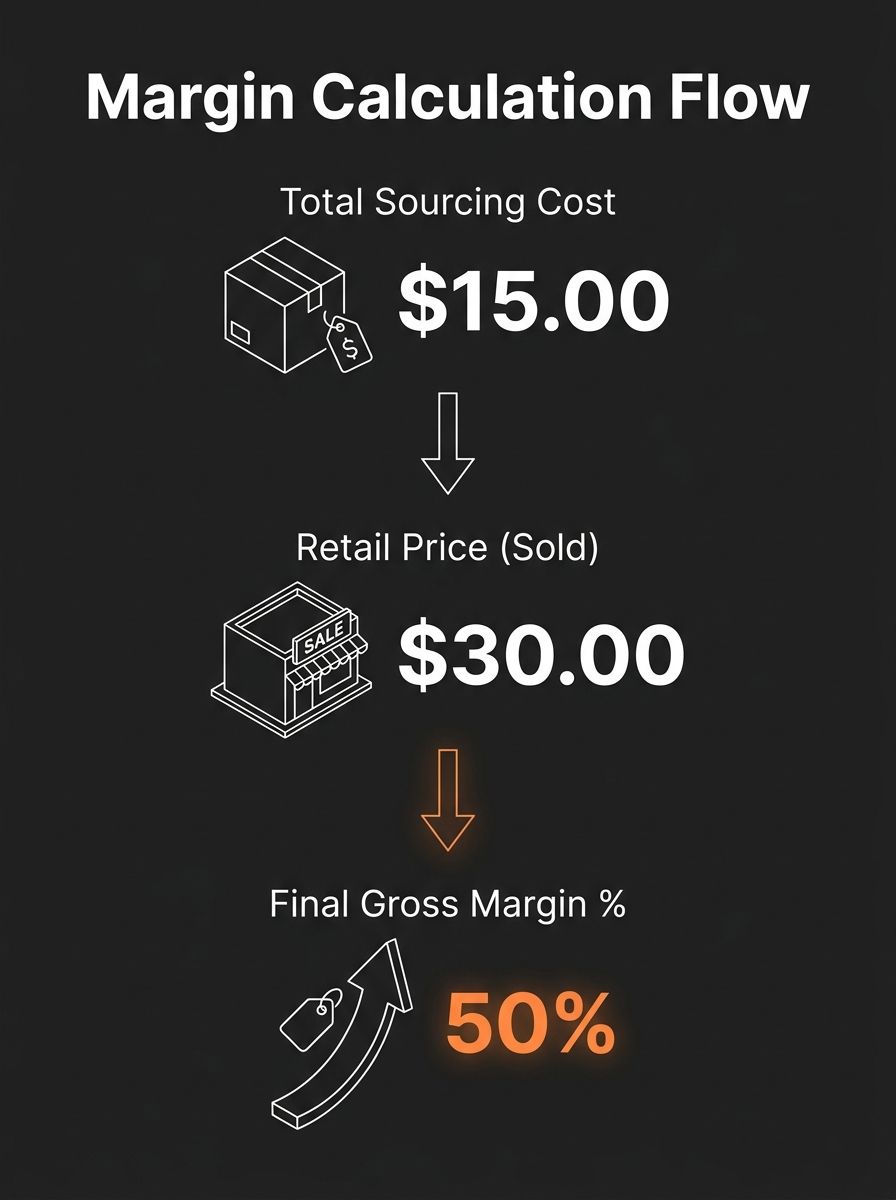
Here's the math on a practical example. Say you find a silicone kitchen utensil set listed at $4.80 with ePacket shipping at $2.10. Your landed cost is $6.90. To hit a 65% gross margin, you'd price it at $19.71. Round to $19.99. That's a $13.09 spread before ad spend.
Run this calculation for every product you're considering. If you want a faster way to stress-test margins across your catalog, our profit margin formula guide has a spreadsheet template you can duplicate.
You'll know this step is done when: you have 5-10 products with a minimum 60% gross margin at realistic retail prices, each sourced from suppliers with 4.5+ star ratings and 95%+ positive feedback scores.
Step 2: Choose Your Storefront Platform
Shopify and WooCommerce account for the vast majority of AliExpress dropshipping websites. The choice depends on your technical comfort and budget.
Shopify's own 2026 dropshipping guide outlines a four-step framework: pick a niche, vet suppliers using seller ratings and a test order, build your store, and connect an automation app like DSers to sync orders and inventory. Shopify's App Store has direct integrations with all three apps reviewed in this guide.
WooCommerce requires more technical setup (you're self-hosting), but the monthly cost is lower and you have full control over your checkout and data. DSers and Dropshipman both offer WooCommerce plugins. AliDrop currently supports Shopify only.
You'll know this step is done when: your store is live with a basic theme installed, your domain is connected, and you've configured payment processing (Shopify Payments or Stripe/PayPal for WooCommerce).
Step 3: Connect an Automation App
This is where your AliExpress dropshipping website goes from a storefront with no products to an operational business. Each of these three apps solves a different problem, and your choice should match your biggest operational concern.
Feature | DSers | AliDrop | Dropshipman |
|---|---|---|---|
Best for | Bulk order processing | US/EU supplier access | Quality inspection |
Free plan | Yes (unlimited products) | Limited (25 products) | Yes (basic tier) |
Shopify integration | Yes | Yes | Yes |
WooCommerce support | Yes | No | Yes |
Multi-supplier mapping | Yes, multiple per SKU | Curated supplier list | Sourced on request |
Pre-ship quality checks | No | No | Dual inspection |
Bulk order payment | Yes | No | Yes |
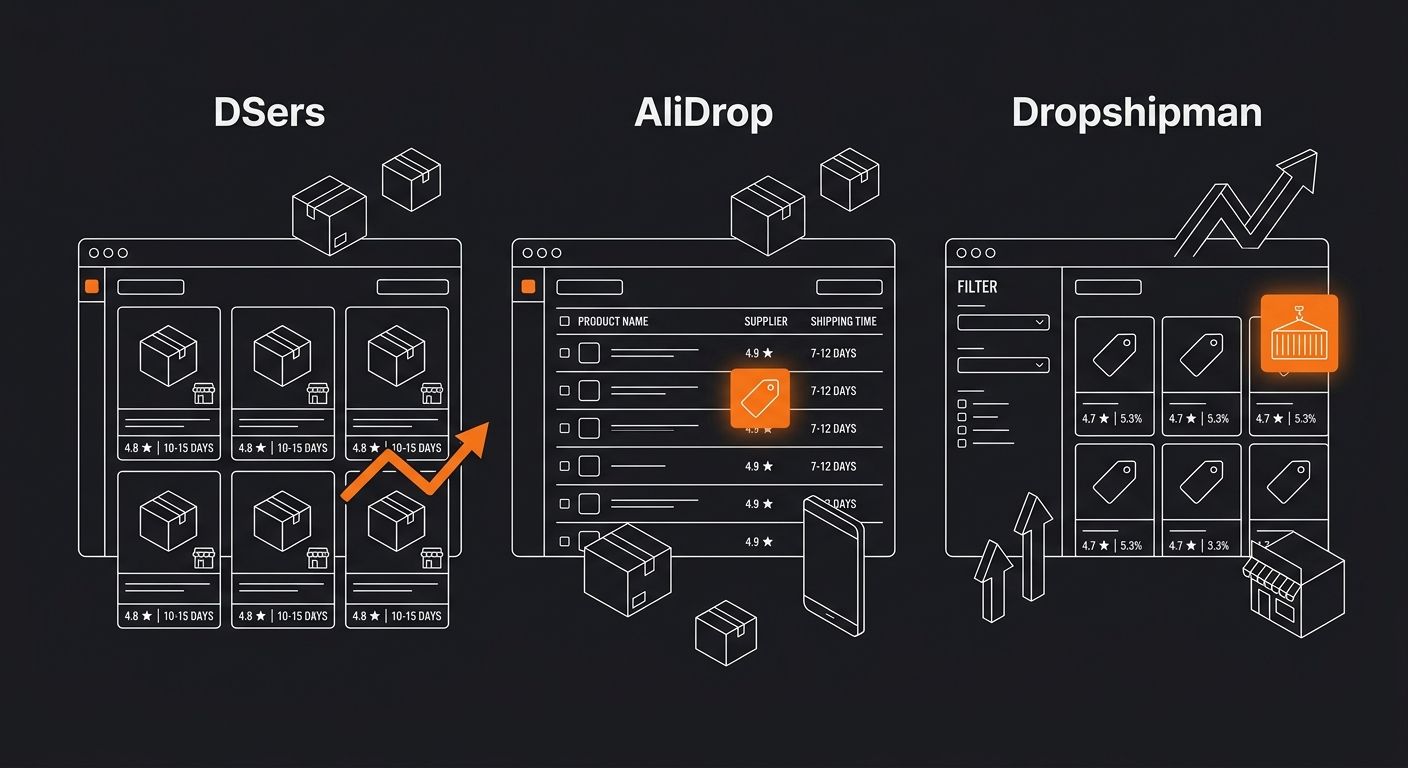
DSers, as AliExpress's official dropshipping partner, lets you set multiple suppliers for one product, check real-time inventory, and pay for orders in bulk. If you're running 50+ orders per day, the bulk payment feature alone saves hours.
AliDrop pulls trending products from AliExpress and provides access to a curated network of US, EU, and international suppliers. The Dropship Center integration surfaces rising products before they saturate. AliDrop is a strong pick if your priority is faster shipping from local warehouses, with optimized delivery times dropping to 5-8 days compared to the standard 15-30 days from Chinese warehouses.
Dropshipman differentiates on quality control. All products go through two rounds of quality inspection before shipping, which directly addresses the biggest customer complaint in AliExpress dropshipping: inconsistent product quality. It also offers free bulk inventory storage and custom packaging.
You'll know this step is done when: the app is installed, connected to your AliExpress account, and you can see a product import interface inside your storefront dashboard.
For a broader look at the best Shopify dropshipping apps beyond these three, we've reviewed over a dozen options across categories.
Step 4: Vet Suppliers and Place Test Orders
Never list a product you haven't ordered yourself. This is the step most beginners skip, and it's the step that generates refund requests, chargebacks, and one-star reviews.
Here's the vetting checklist for each supplier:
Rating threshold: 4.5 stars minimum, 95%+ positive feedback, at least 200 total orders on the specific product listing.
Communication test: Message the supplier asking about shipping times to your target market. Response time under 24 hours is the baseline. If they take 48+ hours to reply before you're a customer, expect worse after.
Test order: Place one order to your own address. Track packaging quality, product accuracy, actual shipping time versus listed estimate, and whether any customs duties apply.
Photo comparison: Compare what arrives to the listing photos. If there's a meaningful gap in color, material, or build, find another supplier.
With 2026's tariff environment, this step is especially important. The US has imposed 30%+ tariffs on many Chinese goods, and the EU eliminated its duty-free threshold. Suppliers shipping from US or EU local warehouses bypass these fees entirely, which is why AliDrop's local supplier network has become a real competitive advantage.
You'll know this step is done when: you've received 3-5 test orders, documented the results, and locked in your primary supplier for each product with a backup supplier mapped in your automation app.
Step 5: Import Products and Set Pricing
With your app connected and suppliers vetted, import your validated products. Each app handles this slightly differently:
DSers: Click "Find Supplier" or paste the AliExpress product URL directly. Map variants (size, color) to your store's options. Set supplier priority if you've added backups.
AliDrop: Browse trending products in-app or use the Chrome extension to import from AliExpress product pages. Filter by warehouse location (US, EU, CN).
Dropshipman: Submit product URLs for sourcing. The team handles supplier negotiation and quality checks before products appear in your import queue.
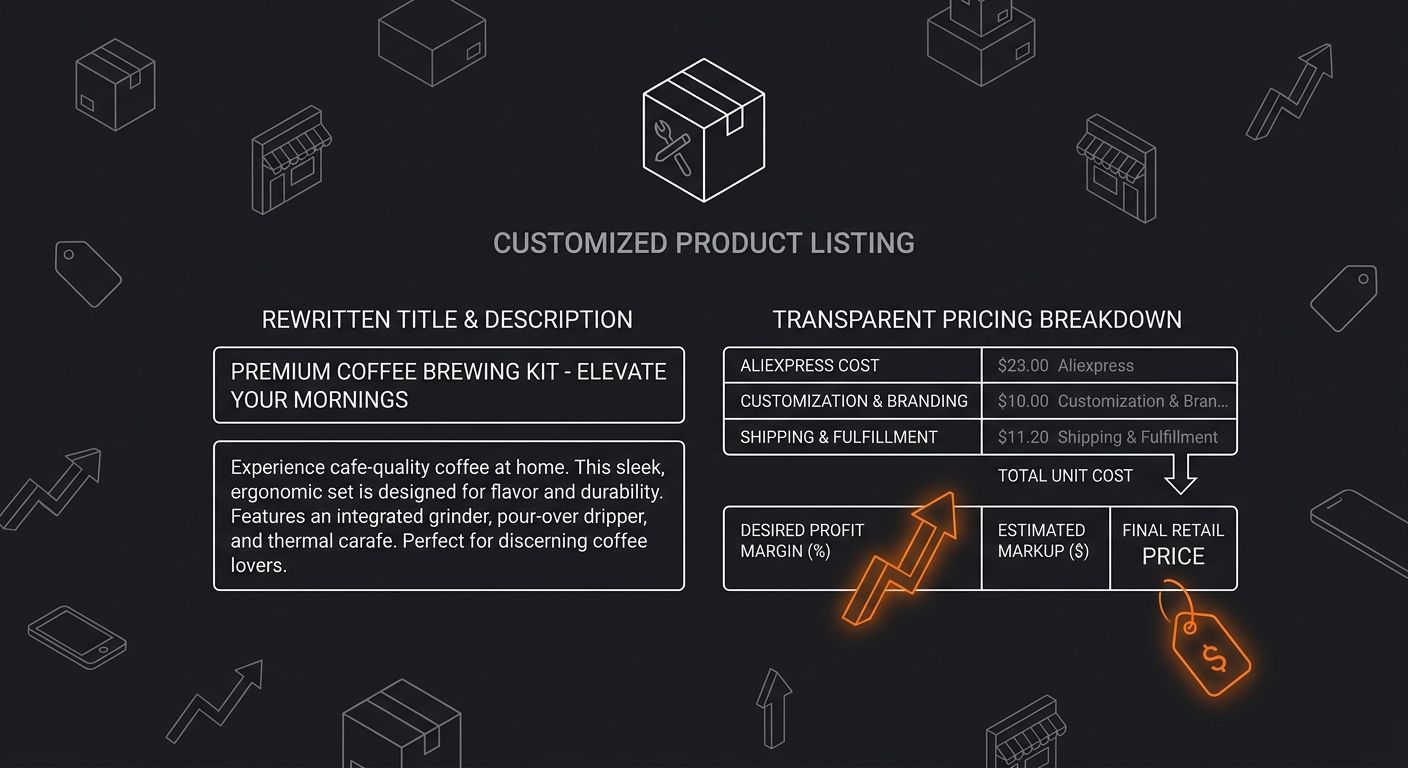
For pricing, use the 2.5-3x multiplier on landed cost as your starting point. A $6.90 landed cost product gets listed at $17.25-$20.70. Adjust based on competitor pricing in your niche, but don't race to the bottom. Stores using AI-driven dynamic pricing tools see 23% higher margins on average because they adjust prices based on demand signals rather than setting a flat markup.
Use our margin calculation walkthrough to build a per-SKU pricing spreadsheet before you go live.
You'll know this step is done when: all products display correctly on your storefront with accurate variant options, pricing, and product descriptions you've rewritten (never use the supplier's original copy verbatim).
Step 6: Configure Shipping Rules
Set up shipping zones and delivery time estimates that reflect reality, not the best-case scenario from AliExpress listings.
Standard AliExpress shipping from Chinese warehouses runs 15-30 days to the US and 20-40 days to Europe. ePacket typically delivers in 7-20 days. Suppliers with US/EU warehouse stock can hit 5-8 days consistently.
Your shipping settings should match the supplier you've actually vetted. If your test order took 18 days, don't list "7-14 day delivery" on your store. The chargeback rate on late deliveries erodes margin fast.
For a deeper look at carrier-specific shipping windows across USPS, FedEx, UPS, and DHL, we've documented delivery time benchmarks by carrier and service level.
You'll know this step is done when: each product has a shipping rate and delivery estimate configured per zone, and your shipping policy page reflects accurate timeframes.
Troubleshooting the Three Things That Break First
Problem 1: Orders fail to sync between your store and AliExpress. This usually means your AliExpress session expired or the automation app lost its API connection. Log out of AliExpress, clear cookies, log back in, and re-authorize the app. DSers users should check the "Order" tab for a yellow warning banner.
Problem 2: A product goes out of stock after you've listed it. DSers handles this with multi-supplier mapping; your backup supplier activates automatically. AliDrop and Dropshipman require manual intervention. Set up inventory monitoring (all three apps offer this) and configure email alerts for low-stock SKUs so you can swap suppliers before customers order a ghost product.
Problem 3: Customers receive items with Chinese-language packaging or invoices. This destroys brand trust immediately. In your automation app settings, enable "no invoice" for AliExpress orders. Dropshipman's custom packaging option prevents this entirely. For DSers and AliDrop, message your supplier directly and confirm they'll ship without branded inserts or invoices.
Where to Go From Here
Your AliExpress dropshipping website is operational once you've completed these six steps and resolved any sync or supplier issues from your test orders. The next phase is traffic and conversion.
Consider AliExpress alternatives organized by product category if you want to diversify your supply chain beyond a single marketplace. Successful 2026 dropshipping operations increasingly run a hybrid fulfillment model: dropshipping for long-tail products, local warehouse stock for your top 5-10 sellers. That combination keeps shipping times competitive on your bestsellers while letting you test new products without inventory risk.
The stores generating the strongest returns right now are building actual brand identity through original product descriptions, video content, and niche-specific expertise rather than competing on price alone. Your automation app handles the logistics. Your job is everything the app can't do: picking winners, building trust, and making the margins work.
365 Dropship Editorial
Editorial team writing about E-commerce, dropshipping, and product discovery — reviews of dropshipping suppliers and platforms, trending niche guides (jewelry, beauty, pets, home, fashion), supplier due diligence, ecom operations, shipping & fulfillment strategy, product research, AOV optimization, and profitable dropshipping case studies.
Frequently Asked Questions
- What are the best apps for AliExpress dropshipping?
- The three dominant apps are DSers (best for bulk ordering), AliDrop (best for US/EU supplier access), and Dropshipman (best for quality control with dual inspection before shipping). Each solves different operational problems, so your choice depends on your biggest priority.
- How much does it cost to start an AliExpress dropshipping website?
- You need $150-300 in working capital for 3-5 test orders, your first month of platform fees, and a basic theme, plus monthly storefront costs ($39/month for Shopify Basic or $10-30/month for self-hosted WooCommerce).
- What gross margin should I target for dropshipping products?
- Aim for a minimum 60% gross margin at realistic retail prices. Use the formula: if a product costs $6.90 landed (product + shipping + tariffs), you'd price it at $19.99 to hit 65% margin, leaving a $13.09 spread before ad spend.
- How long does it take to set up an AliExpress dropshipping store?
- Initial setup takes roughly 4 hours, plus 3-7 days waiting on test order delivery to verify suppliers and product quality.
- Do I need to place test orders before listing products?
- Yes, you must never list a product you haven't ordered yourself. Test orders help verify packaging quality, product accuracy, actual shipping times, and whether customs duties apply—skipping this step generates refund requests and chargebacks.
- How do US tariffs affect dropshipping margins?
- The US has imposed 30%+ tariffs on many Chinese goods, which can reduce a 65% margin product to 35% after duties. Suppliers shipping from US/EU local warehouses bypass these fees entirely, making them a competitive advantage.
- What shipping times should I list on my dropshipping store?
- Standard AliExpress shipping from China takes 15-30 days to the US and 20-40 days to Europe, ePacket takes 7-20 days, and US/EU warehouse stock hits 5-8 days. Match your store's estimates to the actual supplier you've vetted, not best-case scenarios.
- How do I prevent Chinese-language packaging from reaching customers?
- Enable 'no invoice' settings in your automation app, use Dropshipman's custom packaging option, or message suppliers directly to confirm they'll ship without branded inserts or Chinese invoices.
Related Articles
AliExpress Dropshipping: Complete Beginner's Guide
AliExpress connects your store to over 100 million products from 300,000+ suppliers, and you never touch inventory.
How to Do Dropshipping: Complete Beginner's Guide
This guide walks you through how to do dropshipping from zero to first sale in under a week. Seven steps cover niche selection, business registration, store setup, supplier vetting, product pricing, test orders, and ad launch, with specific costs and timelines at each stage.
Shopify and Dropshipping: Complete Setup Guide
Configuring a Shopify dropshipping store from account creation through first live product takes roughly 90 minutes across six steps.
Explore more topics