Warehouse Platform Releases Shopify Markets Configuration Tutorial for Cross-Border Merchants
Independent Shopify merchants exploring international sales can now access a centralized tutorial covering Shopify Markets' seven configuration layers, following a June 29 guide release by warehouse comparison platform Racklify that breaks down multi-currency setup, domain routing, and duty collecti

Warehouse Platform Releases Shopify Markets Configuration Tutorial for Cross-Border Merchants
Independent Shopify merchants exploring international sales can now access a centralized tutorial covering Shopify Markets' seven configuration layers, following a June 29 guide release by warehouse comparison platform Racklify that breaks down multi-currency setup, domain routing, and duty collection workflows for cross-border storefronts.
The 1,200-word tutorial targets operators who want to expand beyond domestic sales without launching separate regional stores, according to Racklify's encyclopedia entry. The guide positions Shopify Markets as a "control center" that adapts one store for multiple local audiences, eliminating the need for duplicate site configurations per country.
The publication arrives as cross-border ecommerce operators navigate tightening customs enforcement and rising freight costs. EU member states begin collecting a €3 per-item duty on packages under €150 starting July 1, eliminating a longstanding exemption that previously shielded small-parcel shipments. Merchants launching international markets now face upfront duty disclosure requirements that Shopify Markets can automate at checkout.
What the Guide Covers
Racklify's documentation walks through seven configuration layers merchants must set when launching a new market: currency display, payment method enablement, domain routing rules, translated content uploads, duty and tax collection settings, shipping profile creation, and localized pricing strategies.
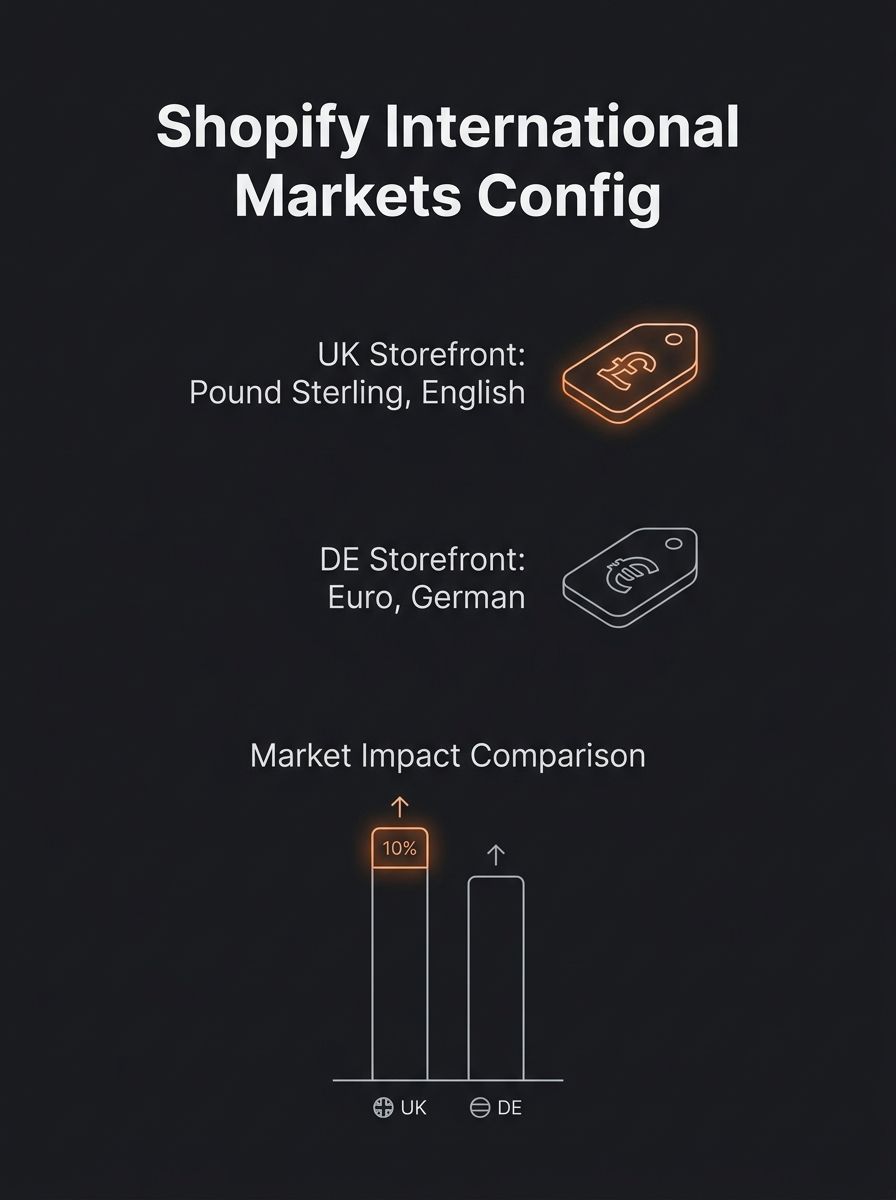
The guide uses a U.S. apparel brand expanding to the UK and Germany as a worked example. Without Shopify Markets, the tutorial notes, merchants historically needed separate stores or manual workarounds to display prices in GBP and EUR, translate product descriptions, and apply different shipping rules per region. The platform's market definition feature allows operators to assign these settings per country while analyzing combined sales data in a single dashboard.
Payment method availability varies by market, the guide cautions. Merchants must verify which gateways Shopify supports for each target country before promising specific checkout options. The tutorial flags this as a common beginner mistake—merchants assume payment flexibility mirrors their home market.
Pricing Strategy and Margin Impact
The guide dedicates a section to pricing adjustments per market, noting that merchants can set custom prices to reflect local competition, logistics costs, and currency fluctuations rather than relying on automatic conversion rates. Racklify recommends tracking margin impact per market, warning that international selling "often brings higher shipping, returns, and compliance costs."
A "start small" recommendation opens the beginner tips section. The guide advises launching one or two markets where demand already exists—typically neighboring countries—before scaling globally. Testing checkout flows receives specific emphasis: merchants should verify how taxes, duties, and shipping display so customers "never feel surprised by final costs."
The documentation acknowledges platform limits. Complex country-specific tax rules or specialized checkout customizations may still require third-party apps or custom code, creating additional monthly costs. Export regulations, privacy laws, and product restrictions vary by jurisdiction, requiring legal consultation beyond Shopify's built-in tools.
Cross-Border Fulfillment Context
Shopify Markets handles digital configuration layers but doesn't solve physical fulfillment challenges. The guide's publisher, Racklify, operates a warehouse comparison platform, positioning the tutorial as part of a broader logistics planning workflow. Merchants using Markets still need to decide whether to ship internationally from a single fulfillment center or establish regional inventory nodes.
Shopify's March 2026 platform updates consolidated these seven configuration layers into a unified admin interface, reducing the number of settings screens merchants navigate when launching markets. The Racklify guide reflects that updated architecture, with screenshots showing the post-consolidation workflow.
The tutorial notes that local domains or URL structures improve conversion by reinforcing regional legitimacy. Shopify Markets supports automatic geolocation-based redirection, routing Canadian visitors to a .ca domain and UK visitors to a .co.uk version without requiring separate DNS management per region.
The Takeaway
Dropshippers face a unique cross-border calculus: international expansion multiplies SKU count, payment processors, and customer service complexity while suppliers remain concentrated in a handful of manufacturing regions. Shopify Markets automates the storefront layer—currency display, translated product pages, duty calculation—but doesn't change supplier lead times, return logistics, or the margin compression that comes from longer shipping distances.
The guide's "start small" advice maps directly to dropshipping economics. Adding a market without existing organic demand means paying for customer acquisition twice—once to validate the product-market fit domestically, again to acquire international buyers who face longer delivery windows and higher cart-abandonment risk. Merchants should confirm inbound search volume or referral traffic from target countries before investing in translation and localized payment methods.
For operators already managing multi-country traffic, the tutorial provides a structured checklist. The seven-layer breakdown translates abstract "international readiness" into concrete admin tasks: enable local payment gateways, upload translated product descriptions, configure tax collection, set shipping profiles. Racklify positions the guide as vendor-neutral documentation, filling a gap for merchants who find Shopify's official help docs too granular or ecosystem blog posts too promotional.

Ryan Torres
Ryan Torres is a former Amazon FBA seller turned dropshipping consultant who has generated over $2.8M in ecommerce revenue across 14 product launches. He specializes in supplier vetting, margin optimization, and scaling DTC operations for sub-$1M brands. Ryan focuses on actionable frameworks that drive measurable results for independent operators.
Related Articles

Racklify Publishes Shopify Markets Setup Guide Covering Multi-Currency Configuration and Tax Display Rules for Cross-Border Sellers
Racklify published a Shopify Markets configuration guide on September 9, 2026, documenting localization features that allow merchants to manage international storefronts, multi-currency pricing, and duty display from a single Shopify admin, according to the warehouse logistics platform's encyclopedi
Logistics Platform Publishes Shopify Markets Setup Guide for Cross-Border Merchants
Racklify, a warehouse comparison and logistics platform, published a beginner-focused breakdown of Shopify Markets on June 26, detailing how independent merchants can configure multi-country storefronts, currency display, and duties handling from a single Shopify admin, according to the encyclopedia

Shopify Markets Consolidates Seven Cross-Border Configuration Layers Into Single Admin Dashboard
Seven separate market configuration layers—currency display, payment methods, domain routing, translated content, duty collection, shipping profiles, and localized pricing—can now be managed from a single Shopify admin interface, according to a June 27 beginner guide published by Racklify, a warehou
Explore more topics