SendFromChina Publishes Seven-Factor Shipping Cost Framework Targeting Dropshippers Managing Delivery Margins
Package weight, dimensions, shipping zones, carrier selection, delivery speed, product type, and insurance requirements form the seven primary cost drivers for ecommerce shipping, according to a comprehensive guide released by SendFromChina on July 20 targeting dropshippers optimizing delivery margi

SendFromChina Publishes Seven-Factor Shipping Cost Framework Targeting Dropshippers Managing Delivery Margins
Package weight, dimensions, shipping zones, carrier selection, delivery speed, product type, and insurance requirements form the seven primary cost drivers for ecommerce shipping, according to a comprehensive guide released by SendFromChina on July 20 targeting dropshippers optimizing delivery margins. The fulfillment provider framed the breakdown as critical for businesses balancing profitability against customer experience in competitive ecommerce markets.
Weight and Dimensional Pricing Drive Base Costs
Actual package weight remains the most obvious shipping cost variable, the guide states, but dimensional weight pricing—a carrier model that charges based on package volume relative to weight—often determines final rates for lightweight, bulky items. The system prevents large, low-density products from consuming cargo space without corresponding revenue for carriers, according to the breakdown. SendFromChina notes that shippers using oversized boxes for small items frequently trigger dimensional weight surcharges that erase margin on otherwise profitable SKUs.
The guide recommends measuring length, width, and height alongside weight before requesting carrier quotes, a step many new dropshippers skip when evaluating supplier packaging.
Shipping Zones and Distance Multiply Per-Package Fees
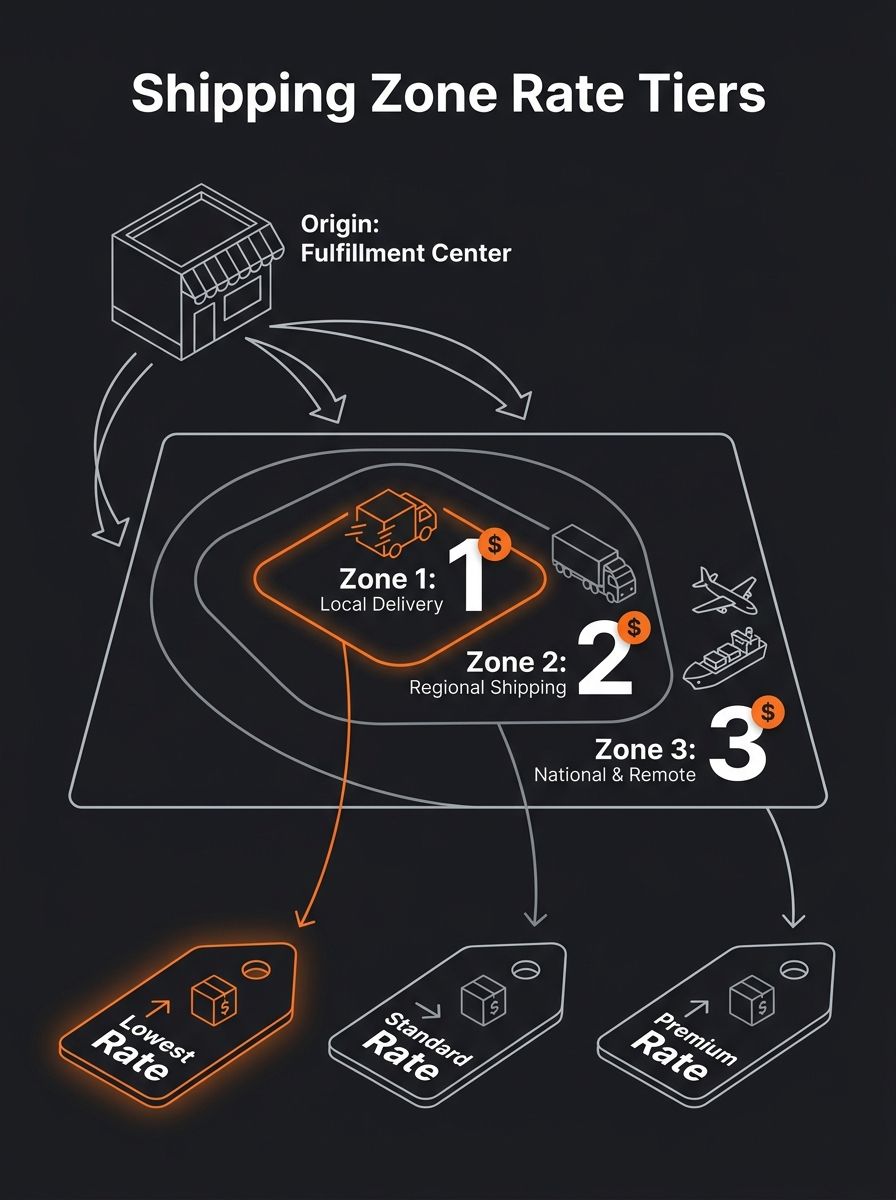
Geographic distance divides into carrier-defined shipping zones, each with escalating rate tiers, the guide explains. Domestic shipments within the same state cost substantially less than cross-country or international delivery, a reality that influences where ecommerce operators establish fulfillment centers or choose supplier warehouses. SendFromChina positions zone optimization as a lever for reducing per-order shipping expense without altering product selection or carrier contracts.
The analysis connects directly to margin math for dropshippers testing suppliers in different regions, as detailed in earlier shipping strategy discussions examining cost-versus-speed tradeoffs.
Delivery Speed Tiers and Service Levels Create Price Spread
Standard ground shipping, two-day expedited service, and overnight express represent three common service tiers with diverging price points, according to the guide. Faster delivery requires carriers to prioritize packages in sorting facilities and allocate premium cargo space, driving costs higher. SendFromChina frames the speed decision as a customer-satisfaction versus margin question, noting that businesses often offer multiple service levels at checkout to give buyers flexibility while controlling baseline shipping budgets.
Dropshippers absorbing shipping costs as a competitive differentiator face steeper margin pressure when defaulting to expedited tiers, the breakdown states.
Carrier Choice and Rate Structure Vary by Network
UPS, FedEx, and USPS maintain independent pricing models even for identical package specifications and destinations, the guide notes. Selecting a carrier involves comparing rate charts, service reliability, and network strengths rather than assuming equivalent pricing across providers. SendFromChina highlights that air shipments cost more than ground or sea freight, particularly for international orders where transit method directly impacts both speed and expense.
The carrier comparison reinforces supplier evaluation criteria covered in recent SendFromChina DDP shipping analysis, which examined customer-experience benefits against import cost absorption.
Product Type and Special Handling Add Surcharges
Fragile goods, perishable items, and hazardous materials trigger special-handling fees that exceed standard shipping rates, according to the guide. Carriers charge premiums for products requiring temperature control, extra cushioning, or regulatory permits. High-value items often necessitate additional insurance or security measures, further increasing per-package costs. SendFromChina positions product-type assessment as a pre-launch audit step, advising sellers to factor handling surcharges into retail pricing before committing to a niche.
Packaging and Handling Costs Compound Per-Order Expense
Inadequate packaging leads to damaged goods and costly returns, while oversized boxes inflate dimensional weight charges, the breakdown states. Many businesses add handling fees to cover labor costs for preparing complex shipments, particularly orders involving multiple SKUs or custom kitting. SendFromChina recommends right-sizing boxes to minimize wasted interior space and choosing packaging materials that protect products without adding unnecessary bulk.
The packaging variable ties into profit margin calculations where seemingly small per-order expenses compound across volume.
Insurance and Ancillary Fees Round Out Total Cost
Shipping insurance protects against loss or damage but adds per-package fees that cut into margins, the guide explains. High-value items typically require coverage, while low-cost products may not justify the expense. Signature confirmation, Saturday delivery, and shipments to remote areas trigger additional surcharges that many dropshippers overlook when estimating fulfillment costs. SendFromChina frames these fees as line items to audit during supplier negotiations, particularly when evaluating all-in delivery quotes.
Reading Between the Lines
SendFromChina's seven-factor framework hands dropshippers a pre-flight checklist for shipping cost audits—weight, dimensions, zones, carriers, speed, product handling, and insurance—each a lever that either protects or destroys margin before the first order ships. The guide arrives as freight rate volatility and carrier surcharge complexity make shipping the variable that determines whether a $25 product generates $8 profit or $2, particularly for operators testing suppliers across multiple regions or experimenting with expedited fulfillment promises.
The timing matters because dimensional weight pricing and zone-based rate structures penalize the exact mistakes new sellers make most often: choosing suppliers based solely on product cost while ignoring warehouse location, accepting supplier-provided boxes without measuring them, and defaulting to premium delivery speeds without margin modeling. The seven factors aren't academic—they're the difference between a sustainable 35% gross margin and a 12% margin that collapses under the first returns spike or carrier rate increase.
For dropshippers finalizing supplier contracts in Q3 2026, the framework translates into concrete diligence: request package dimensions and weights from every potential supplier, map their warehouse locations against target customer zones, and model delivery costs at standard and expedited speeds before locking in retail pricing. The operators who skip this step discover the margin gap six weeks into scaling, usually after customer acquisition costs are already sunk.

Ryan Torres
Ryan Torres is a former Amazon FBA seller turned dropshipping consultant who has generated over $2.8M in ecommerce revenue across 14 product launches. He specializes in supplier vetting, margin optimization, and scaling DTC operations for sub-$1M brands. Ryan focuses on actionable frameworks that drive measurable results for independent operators.
Related Articles

SendFromChina Publishes Six-Step Fulfillment Center Workflow Guide Targeting Ecommerce Operators Evaluating Third-Party Logistics
SendFromChina released a comprehensive fulfillment center guide on July 22, 2026, breaking down warehouse operations into six sequential stages—receiving, storage, order processing, picking and packing, shipping, and returns processing—according to documentation published on the logistics provider's

SendFromChina Publishes DDP Shipping Breakdown for Ecommerce Sellers Weighing Customer Experience Against Import Cost Absorption
SendFromChina released a DDP (Delivered Duty Paid) shipping guide on July 14 breaking down when ecommerce sellers should prepay import duties and taxes versus passing those charges to customers at delivery, according to the fulfillment platform's news center.

SendFromChina Publishes Carrier-Specific Box Size Chart Covering FedEx, DHL, UPS, and USPS Dimensional Limits
SendFromChina published a carrier-specific box size guide on August 25 covering dimensional limits and weight capacities across FedEx, DHL, UPS, and USPS, positioning the reference as a shipping-cost optimization tool for ecommerce operators navigating dimensional weight pricing, according to the fu
Explore more topics