SendFromChina Publishes Carrier-Specific Box Size Chart Covering FedEx, DHL, UPS, and USPS Dimensional Limits
SendFromChina published a carrier-specific box size guide on August 25 covering dimensional limits and weight capacities across FedEx, DHL, UPS, and USPS, positioning the reference as a shipping-cost optimization tool for ecommerce operators navigating dimensional weight pricing, according to the fu

SendFromChina Publishes Carrier-Specific Box Size Chart Covering FedEx, DHL, UPS, and USPS Dimensional Limits
SendFromChina published a carrier-specific box size guide on August 25 covering dimensional limits and weight capacities across FedEx, DHL, UPS, and USPS, positioning the reference as a shipping-cost optimization tool for ecommerce operators navigating dimensional weight pricing, according to the fulfillment provider's documentation.
The guide catalogs 28 standard packaging options, from FedEx envelopes at 9.5 × 12.5 inches for documents under one pound to DHL Box 8 at 54.1 × 44.4 × 40.9 centimeters supporting loads up to 25 kilograms. Each entry specifies length-width-height dimensions, maximum weight thresholds, and recommended use cases—FedEx's small box (10.88 × 1.75 × 12.38 inches, 20-pound limit) for jewelry and compact electronics, DHL Box 4 (33.7 × 32.2 × 18 centimeters, five-kilogram ceiling) for books and apparel.
The operational relevance centers on dimensional weight pricing, the billing method carriers apply when a package's volumetric footprint exceeds its actual weight. Under this formula, a lightweight item in an oversized box incurs shipping charges based on cubic inches rather than scale weight, directly eroding fulfillment margins for stores shipping low-density products like phone cases or lightweight apparel.
FedEx and UPS Standard Box Specifications
FedEx offers seven standard packaging tiers under its Express service line, all available at no charge when using FedEx Express shipping, according to the guide. The Medium Box (13.25 × 11.5 × 2.38 inches, 20-pound capacity) fits books and mid-sized items; the Large Box (17.5 × 12.38 × 3 inches, 30-pound limit) accommodates electronics and multi-item orders; the Extra Large Box (24 × 18 × 6 inches, 50-pound maximum) handles bulk shipments.
UPS mirrors this structure with parallel offerings: the Small Express Box at 13 × 11 inches supports half-pound loads for documents, while the Large Express Box (18 × 13 × 3 inches, 30-pound threshold) covers similar territory to FedEx's Large option. Both carriers provide specialty boxes for laptops (21 × 16 × 5 inches with protective kits), tablets (10.43 × 7.5 × 1 inch), and golf equipment (15 × 15 × 48 inches for bags).
The weight and dimension pairings matter when calculating dimensional weight. FedEx and UPS apply a divisor of 139 for domestic shipments (length × width × height in inches, divided by 139), meaning a 24 × 18 × 6-inch box yields a dimensional weight of 18.6 pounds regardless of contents—triggering higher charges if the actual item weighs less.
DHL and USPS Packaging Options
DHL's numbered box system runs from Box 2 (33.7 × 18.2 × 10 centimeters, one-kilogram limit) through Box 8 (54.1 × 44.4 × 40.9 centimeters, 25 kilograms), with intermediate steps at two, five, 10, 15, and 20 kilograms, according to the documentation. The carrier also stocks flyer bags—Standard Flyer (40 × 30 centimeters, two kilograms) and Large Flyer (47.5 × 37.5 centimeters, three kilograms)—for soft goods and apparel where rigid boxes would waste space.
USPS provides flat-rate boxes that bypass dimensional weight calculations entirely: the Small Flat Rate Box (8.69 × 5.44 × 1.75 inches) ships for a fixed domestic price regardless of weight up to 70 pounds, while the Medium Flat Rate Box (11.25 × 8.75 × 6 inches or 14 × 12 × 3.5 inches) and Large Flat Rate Box (12.25 × 12.25 × 6 inches) follow the same model. Regional Rate Boxes A and B apply zone-based pricing with weight caps at 15 and 20 pounds, offering cost advantages for short-haul shipments.
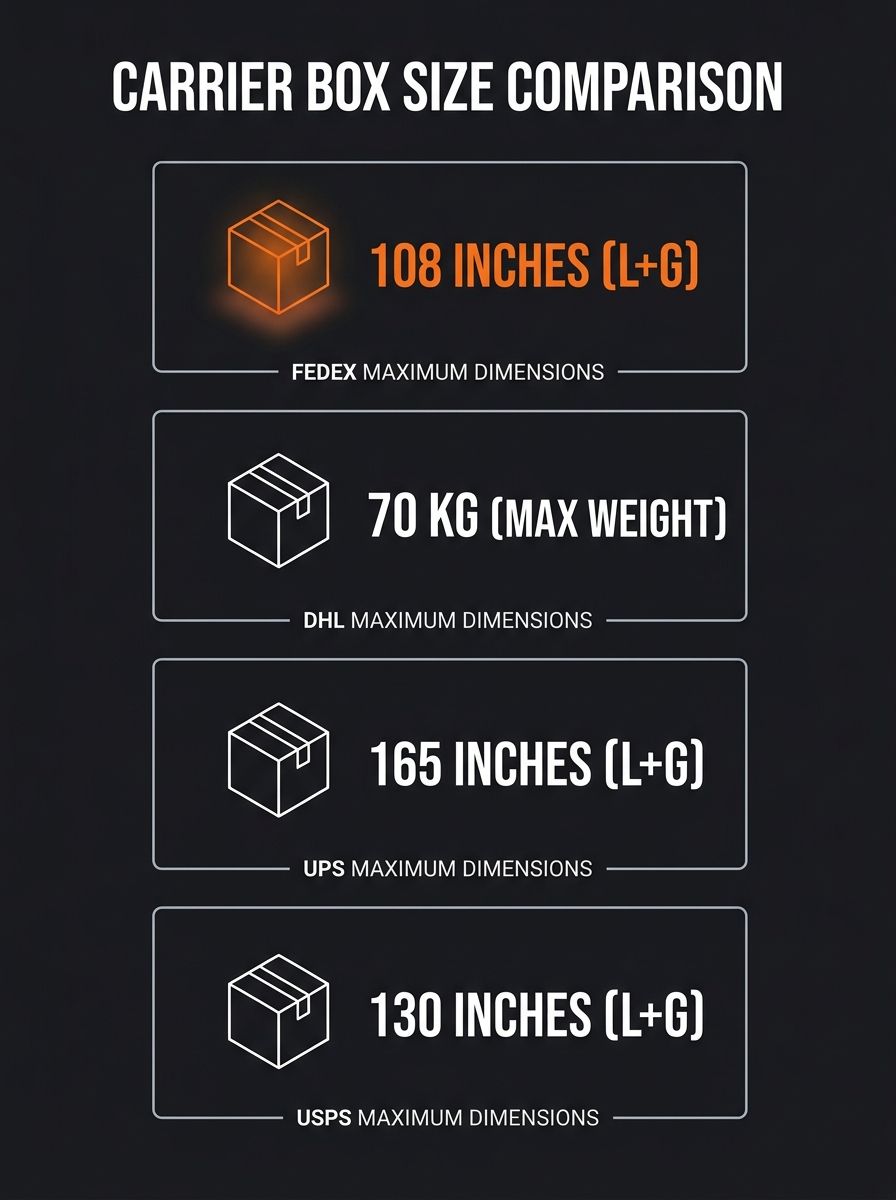
The flat-rate advantage breaks down when shipping lightweight items long distances; a two-pound package in a Medium Flat Rate Box pays the same rate as a 15-pound load, making dimensional weight pricing more economical for items under five pounds traveling coast-to-coast.
Specialty Packaging for Fragile and Oversized Goods
FedEx and UPS both stock guitar boxes (20 × 8 × 50 inches), bike boxes (54 × 8 × 28 inches for FedEx, 43 × 11 × 32 inches for UPS), and telescoping boxes with adjustable lengths from 57 to 108 inches for fishing rods and similar linear items, according to the guide. These specialty options protect high-value, irregularly shaped products but carry dimensional weight penalties—a guitar box's 8,000 cubic inches translates to 57.5 pounds under FedEx's divisor, often exceeding the instrument's actual weight by a factor of three.
The SendFromChina documentation frames box selection as a margin-protection exercise, noting that "selecting the optimal box size not only ensures the safety of your shipment but also optimizes shipping costs, especially considering dimensional weight pricing." The company operates fulfillment warehouses serving ecommerce clients and positions the guide as vendor-agnostic reference material rather than promotion for its own services.
SendFromChina previously published carrier-specific economy shipping comparisons and AliExpress logistics breakdowns, establishing a pattern of reference guides targeting dropshippers sourcing from China and shipping to North American buyers.
What This Means for Dropshipping Entrepreneurs
Box size decisions directly affect per-order shipping costs and net margins, particularly for stores selling lightweight products where dimensional weight charges exceed actual weight. A phone case weighing four ounces in a 12 × 9 × 3-inch box pays for 2.3 pounds under dimensional weight rules—inflating a $4.50 First Class Mail rate to $8.75 Priority Mail, eroding the $6 margin on a $15 order by 71 percent.
The SendFromChina reference provides exact thresholds for choosing between USPS flat-rate boxes (which ignore dimensional weight) and carrier-calculated rates. A three-pound apparel item shipping from California to New York fits in a USPS Medium Flat Rate Box for $17.05, while the same package in a 14 × 12 × 4-inch box at UPS Ground costs $12.40—a $4.65 difference per shipment that compounds across monthly order volume. Stores processing 200 shipments monthly recapture $930 in margin by matching box size to rate structure, or lose the same amount to oversized packaging.
The operational takeaway: audit your current packaging against the documented carrier thresholds, then test smaller boxes on your top 20 SKUs by volume. For lightweight products, USPS flat-rate eliminates dimensional weight exposure; for items over five pounds, right-sizing boxes to minimize cubic inches cuts carrier-calculated rates by 15 to 25 percent when dimensional weight governs billing.

Ryan Torres
Ryan Torres is a former Amazon FBA seller turned dropshipping consultant who has generated over $2.8M in ecommerce revenue across 14 product launches. He specializes in supplier vetting, margin optimization, and scaling DTC operations for sub-$1M brands. Ryan focuses on actionable frameworks that drive measurable results for independent operators.
Related Articles

SendFromChina Publishes Seven-Factor Shipping Cost Framework Targeting Dropshippers Managing Delivery Margins
Package weight, dimensions, shipping zones, carrier selection, delivery speed, product type, and insurance requirements form the seven primary cost drivers for ecommerce shipping, according to a comprehensive guide released by SendFromChina on July 20 targeting dropshippers optimizing delivery margi
SendFromChina Publishes Carrier-Specific Economy Shipping Breakdown Comparing Delivery Windows Across USPS, FedEx, UPS, and DHL
SendFromChina published an economy shipping comparison on August 1, 2026, segmenting delivery windows for USPS Ground Advantage (2–5 business days), FedEx Ground (1–5 days), UPS Ground (1–5 days), and DHL SmartMail Parcel (3–8 days) alongside international service benchmarks, according to the logist

SendFromChina Publishes Consolidated Shipping Guide Covering LCL Cost-Sharing Methods for E-Commerce Sellers
SendFromChina published a consolidated shipping guide on September 6, 2026, documenting cost-sharing logistics methods that allow e-commerce operators to combine multiple smaller shipments into single containers, reducing per-unit freight costs for sellers shipping less-than-container-load volumes f
Explore more topics