Ethical Sourcing Requirements Shift from Optional to Mandatory as Regulators and Consumers Tighten Supply Chain Scrutiny
Ethical sourcing has moved from voluntary corporate initiative to business-critical requirement as consumers, investors, and regulators intensify scrutiny of supply chain labor practices, environmental impact, and product traceability, according to new implementation guidance published May 30 by Gad

Ethical Sourcing Requirements Shift from Optional to Mandatory as Regulators and Consumers Tighten Supply Chain Scrutiny
Ethical sourcing has moved from voluntary corporate initiative to business-critical requirement as consumers, investors, and regulators intensify scrutiny of supply chain labor practices, environmental impact, and product traceability, according to new implementation guidance published May 30 by Gadgets Magazine. Companies face reputational damage, regulatory penalties, and customer trust erosion when sourcing practices fail to meet emerging standards across four key areas: fair labor, environmental responsibility, transparency, and legal accountability.
Four Pillars Define 2026 Ethical Sourcing Standards
The guidance identifies fair labor practices as the first non-negotiable requirement. Businesses tied to unsafe factories or underpaid workers face rapid reputational collapse, the report notes. Workers receiving proper wages and safe conditions deliver higher productivity and quality output, creating direct business benefit beyond compliance. Timely payment emerged as a core component—companies delaying wages or underpaying suppliers undermine supply chain integrity, according to the guidance. The framework specifically highlights digital payroll and disbursement solutions as infrastructure enabling on-time, accurate supplier compensation.
Environmental responsibility forms the second pillar. Supplier environmental footprints transfer directly to purchasing businesses, from farming practices to factory emissions. The guidance advises partnering with suppliers who reduce waste, cut carbon output, or adopt renewable energy to future-proof supply chains. Eco-conscious practices have shifted from differentiator to baseline consumer and regulatory expectation in 2026, the report states.
Transparency and traceability constitute the third requirement. Businesses unable to answer origin questions for raw materials face immediate credibility loss, according to the framework. Customers, regulators, and investors now expect full supply chain visibility. Tools including QR codes, blockchain systems, and digital records enable goods tracking from origin to end product. Companies demonstrating traceability signal integrity to stakeholders, the guidance notes.
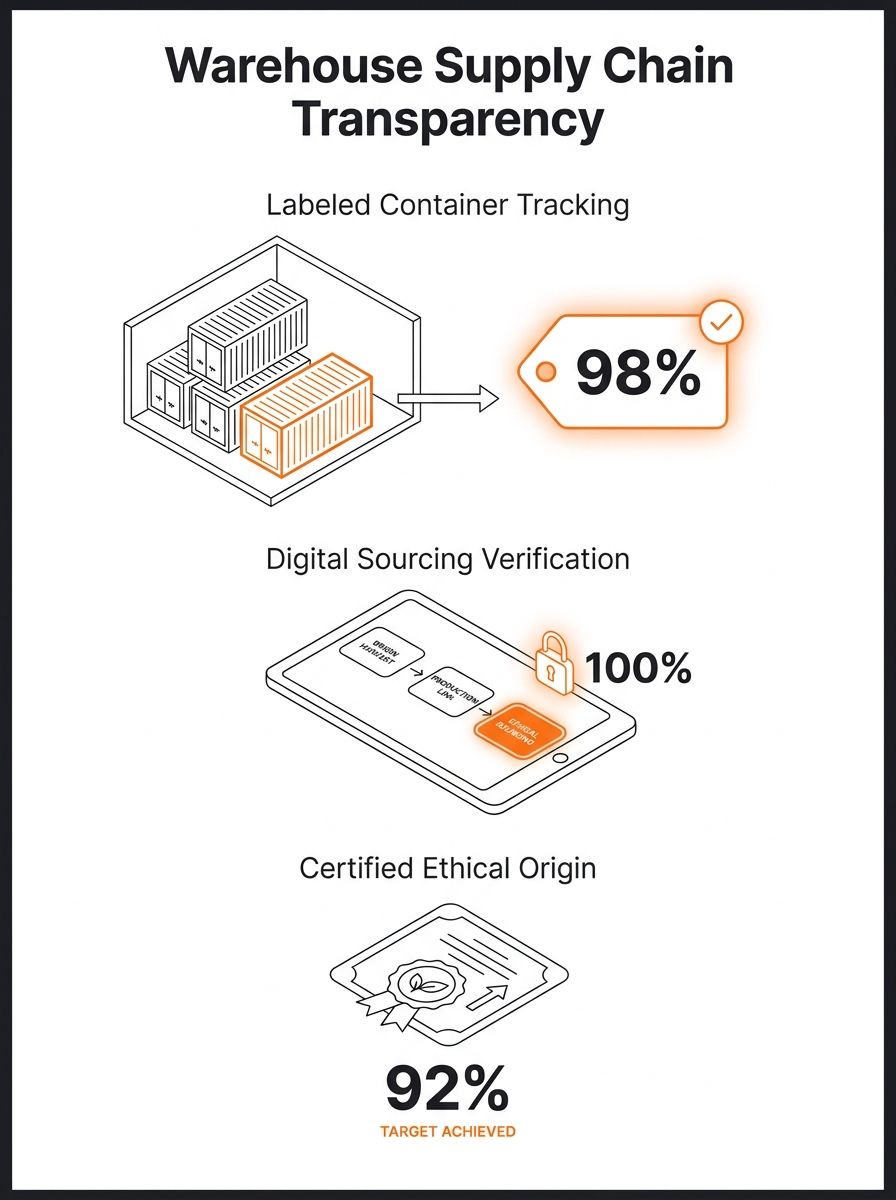
Community and legal accountability rounds out the framework. Sourcing decisions create consequences beyond factory floors—local communities bear impacts from pollution, unfair wages, or resource depletion. The guidance advises businesses to evaluate how procurement choices affect surrounding populations. Compliance with local and international regulations remains non-negotiable, with regular audits and certifications protecting against legal risk.
Implementation Roadmap Prioritizes Policy Documentation and Supplier Vetting
The framework recommends starting with written sourcing policies outlining labor rights, environmental practices, and transparency standards. Documented expectations guide cross-company decision-making and provide suppliers with clear measurement frameworks, according to the guidance. Written standards increase consistency and accountability while reducing ethical oversight gaps during operational rushes.
Supplier vetting extends beyond cost and speed considerations. The guidance advises weighting ethical practice reliability equally with pricing. Certifications, audits, and site visits verify suppliers meet standards, while third-party verification reinforces credibility. Ongoing monitoring proves equally critical—suppliers meeting standards initially may backslide without regular checks, the framework warns.
Long-term partnership models replace short-term contracts under the new approach. Short contracts incentivize corner-cutting, while extended relationships motivate suppliers to invest in sustainable practices. Businesses can accelerate supplier improvement by sharing tools, offering training, or co-investing in solutions, according to the guidance. This approach strengthens both ethical performance and supply chain resilience.
Customer communication closes the implementation loop. Modern consumers demand production transparency beyond product quality, the report notes. Businesses should share ethical sourcing steps through sustainability reports, packaging notes, and marketing campaigns to convert compliance into competitive advantage.
Regulatory and Consumer Pressure Driving Shift
The guidance frames ethical sourcing as response to converging pressures from three stakeholder groups. Regulatory bodies have tightened enforcement around labor standards and environmental compliance, increasing penalty risk for non-compliant businesses. Investor groups now screen for supply chain responsibility as environmental, social, and governance criteria gain prominence in capital allocation. Consumer expectations have risen in parallel—purchasing decisions increasingly reflect values alignment, particularly among younger demographics.
For dropshipping operators evaluating suppliers, the four-pillar framework introduces verification requirements beyond traditional metrics of shipping speed, defect rates, and pricing. Labor practice documentation, environmental impact data, and origin traceability now join the supplier scorecard alongside operational performance indicators.
The shift affects backup supplier network planning by adding ethical criteria to redundancy decisions. A secondary supplier selected purely on price and availability may create liability if labor or environmental practices fail to meet standards. Concentration risk models must now account for regulatory exposure across the supplier base, not just operational dependencies.
What This Means for Dropshipping Entrepreneurs
Independent ecommerce operators face heightened supplier due diligence requirements under the emerging ethical sourcing framework. AliExpress, CJ Dropshipping, Spocket, and Zendrop suppliers must now be vetted for labor practices, environmental standards, and traceability—factors traditionally outside dropshipper consideration. A $12 product with 60% margin collapses in value if the supplier faces regulatory action or customer boycott over working conditions.
Pre-launch supplier audits should incorporate ethical verification alongside existing quality and shipping checks. Request documentation on factory certifications, wage structures, and environmental compliance before committing to product relationships. Suppliers unable or unwilling to provide transparency create regulatory and reputational risk that outweighs cost advantages. The guidance's emphasis on long-term partnerships suggests moving away from opportunistic supplier-switching based solely on per-unit cost fluctuations.
Customer communication becomes a differentiator for DTC brands competing against generic dropship stores. Transparency about supplier vetting, labor standards, and environmental practices builds trust signals that convert browsers into buyers. Shopify merchants can use ethical sourcing as positioning rather than viewing it purely as compliance burden—especially in niches where conscious consumption drives purchasing behavior.

Ryan Torres
Ryan Torres is a former Amazon FBA seller turned dropshipping consultant who has generated over $2.8M in ecommerce revenue across 14 product launches. He specializes in supplier vetting, margin optimization, and scaling DTC operations for sub-$1M brands. Ryan focuses on actionable frameworks that drive measurable results for independent operators.
Related Articles

LooperBuy Publishes Sourcing Model Comparison Positioning Dropshipping as Validation Tool and China Sourcing as Scale Path
LooperBuy published a sourcing model comparison framework on August 12 positioning dropshipping suppliers as fulfillment partners for product testing and international sourcing companies as supply-chain management partners for margin optimization and brand control, according to the blog post.

U.S. Dropshipping Suppliers Are Taking Amazon & Walmart Back: What This Means for Your 2026 Strategy
TopDawg's catalog of 500,000+ products from over 3,000 verified U.S. dropshipping suppliers now integrates directly with Amazon and Walmart seller accounts, according to coverage in LA Weekly and IndyStar published May 6, 2026.

Eighteen Percent of AliExpress Dropshipping Suppliers Exited Platform in First Five Months of 2026 as China's Factory Base Consolidates
An estimated 18% of active AliExpress dropshipping suppliers exited the platform between January and May 2026, folding into larger factory collectives in Guangdong, Foshan, and Yiwu, according to sourcing intelligence firm Syncee's internal supplier index cited in a LooperBuy guide published August
Explore more topics