LooperBuy Publishes Sourcing Model Comparison Positioning Dropshipping as Validation Tool and China Sourcing as Scale Path
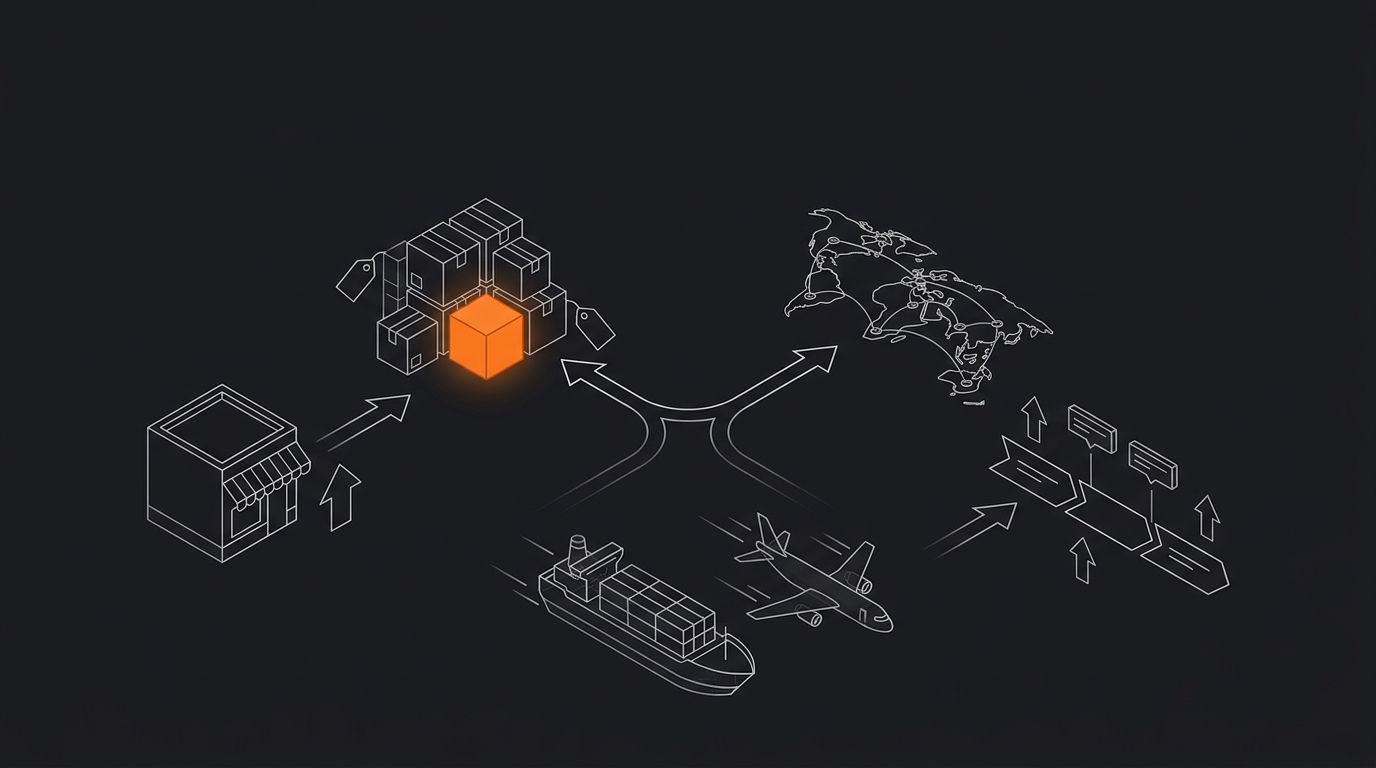
LooperBuy published a sourcing model comparison framework on August 12 positioning dropshipping suppliers as fulfillment partners for product testing and international sourcing companies as supply-chain management partners for margin optimization and brand control, according to the blog post.
LooperBuy Publishes Sourcing Model Comparison Positioning Dropshipping as Validation Tool and China Sourcing as Scale Path
LooperBuy published a sourcing model comparison framework on August 12 positioning dropshipping suppliers as fulfillment partners for product testing and international sourcing companies as supply-chain management partners for margin optimization and brand control, according to the blog post. The framework draws a core distinction: dropshipping is a fulfillment model that ships individual orders without inventory commitment, while international sourcing is a supply-chain model that manages supplier relationships, quality control, customization, and bulk purchasing.
The comparison arrives as U.S. retail ecommerce sales reached $326.7 billion in Q1 2026, up 2.7% from the prior quarter on a seasonally adjusted basis, according to data cited in the post. That growth creates opportunity for new sellers while raising customer expectations for inventory reliability and delivery accuracy.
Fulfillment Model vs Supply-Chain Management
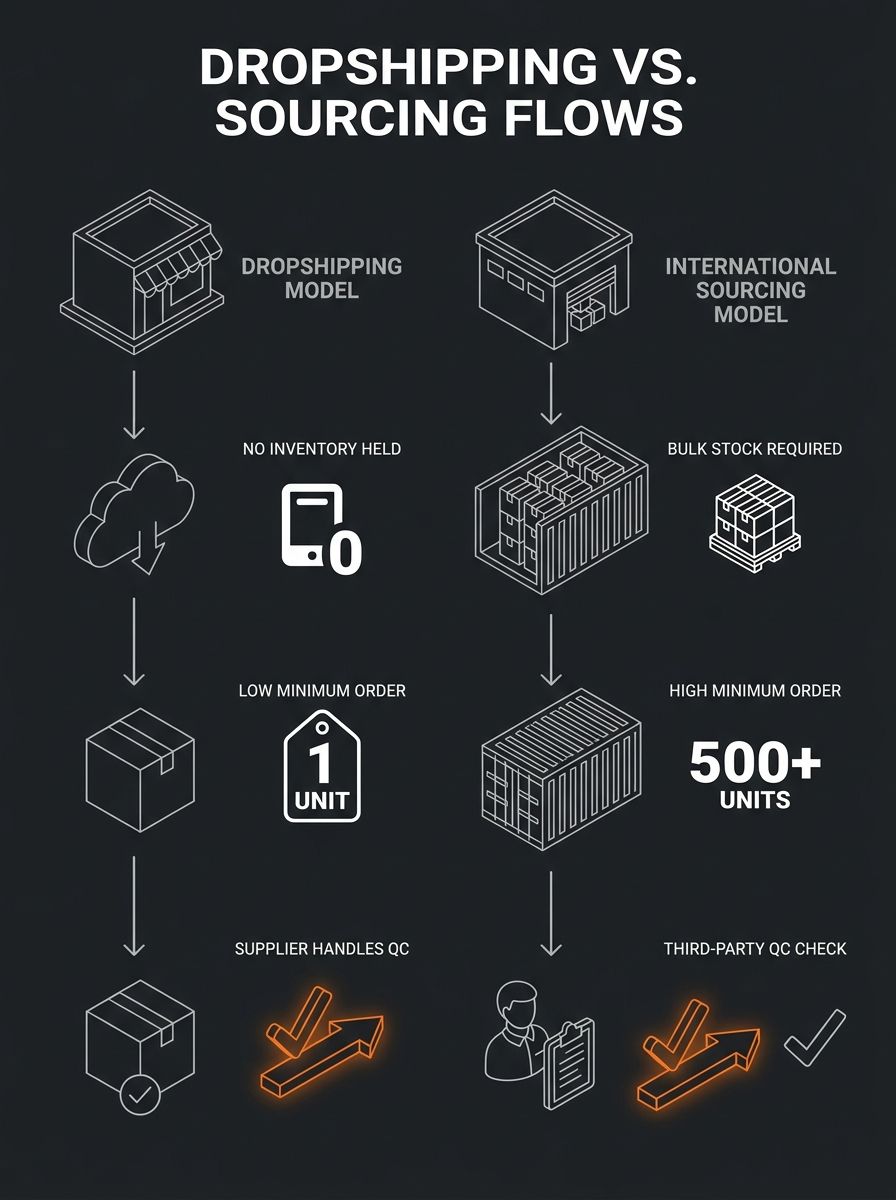
LooperBuy's framework defines dropshipping suppliers as third parties that store products and ship directly to end customers after purchase, eliminating upfront inventory requirements. International sourcing companies, by contrast, help businesses find factories, negotiate pricing, coordinate samples, manage quality checks, and arrange freight—but typically require minimum order quantities and inventory commitment.
The post outlines specific capability differences: sourcing companies can access products beyond public catalogs, negotiate unit pricing at volume, arrange pre-production and pre-shipment inspections, and coordinate custom branding or bundling. Dropshipping suppliers typically offer lower or zero minimum order quantities but charge higher per-unit fees and limit customization at low volumes.
A comparison table in the guide lists eight factors: primary purpose, upfront inventory requirements, minimum order quantities, product selection breadth, custom branding feasibility, quality control options, unit pricing structure, and speed to launch. Dropshipping scores higher on speed and capital efficiency; sourcing scores higher on margin control, customization, and quality oversight.
Quality Control and Compliance Requirements
The framework flags quality control as a structural difference. International sourcing companies can coordinate factory audits, in-process inspections, and pre-shipment checks before products leave China. Dropshipping suppliers, the post notes, typically rely on their own internal quality processes, giving sellers less visibility into defect rates before items ship to customers.
Compliance obligations remain with the seller regardless of model. The post references U.S. Federal Trade Commission guidance requiring sellers to maintain a reasonable basis for advertised shipping times, notify customers of delays, provide updated delivery dates, and offer cancellation options when promised windows cannot be met. Dropshipping operators remain legally responsible for product accuracy, shipping communication, and refund handling even when suppliers fulfill orders.
The guide positions quality control as a key decision factor when sellers move from testing products to scaling proven winners. Sourcing companies can arrange sample orders before committing to bulk inventory, reducing the risk of receiving defective stock after customer demand has been validated.
Volume Thresholds and Margin Math
LooperBuy's framework suggests dropshipping works best for sellers testing multiple products with limited capital, while sourcing becomes cost-effective when order volumes justify bulk purchasing. The post does not specify exact unit thresholds but implies that per-unit costs drop significantly when sellers commit to container-level orders or negotiate directly with factories through a sourcing partner.
The guide notes that dropshipping suppliers charge higher per-unit fees because they handle single-order fulfillment, individual packing, and customer-level shipping. International sourcing companies, by contrast, consolidate products from multiple factories, arrange freight by container or pallet, and ship in bulk to third-party logistics providers or the seller's own warehouse.
Private label customization—branded packaging, logo printing, product inserts, or bundling—is listed as more feasible through sourcing companies because factories typically require minimum order quantities to set up custom production runs. Dropshipping suppliers may offer basic branding at low volumes but often charge premium fees or limit customization options.
Hybrid Models and Transition Path
The post describes a hybrid model where full-service platforms source products from China, warehouse inventory, fulfill individual customer orders, and add custom packaging once sellers reach reliable sales volumes. This structure lets sellers start with dropshipping-style fulfillment and transition to sourced inventory without changing suppliers.
LooperBuy positions the choice as sequential rather than binary: start with a dropshipping supplier to validate demand and customer acquisition costs, then layer in an international sourcing company when margins compress or product differentiation becomes necessary. The framework recommends moving to sourcing when sellers have confirmed product-market fit, built a customer base, and need to improve unit economics to scale profitably.
The guide lists four signals that indicate readiness to shift from dropshipping to sourcing: validated product demand through repeat sales, compressed margins that limit ad spending, customer feedback requesting product modifications or quality improvements, and order volume sufficient to justify bulk purchasing.
The Takeaway
LooperBuy's framework clarifies a decision point that many ecommerce operators face in the first six to twelve months: when to trade capital efficiency for margin control and brand flexibility. The publication treats dropshipping as a time-limited validation tool rather than a long-term scaling model, positioning China sourcing as the necessary next step when sellers have proven product demand and need to defend margins against rising ad costs.
The timing aligns with broader shifts in China's supplier landscape—18% of AliExpress dropshipping suppliers exited the platform in the first five months of 2026—making direct factory relationships through sourcing companies more attractive as catalog availability tightens. For sellers hitting four-figure monthly order volumes, the framework's recommendation to evaluate sourcing partners carries practical weight: per-unit savings of 30-50% are achievable at container minimums, and those margin improvements compound rapidly when customer acquisition costs remain fixed.

Ryan Torres
Ryan Torres is a former Amazon FBA seller turned dropshipping consultant who has generated over $2.8M in ecommerce revenue across 14 product launches. He specializes in supplier vetting, margin optimization, and scaling DTC operations for sub-$1M brands. Ryan focuses on actionable frameworks that drive measurable results for independent operators.
Related Articles
Eighteen Percent of AliExpress Dropshipping Suppliers Exited Platform in First Five Months of 2026 as China's Factory Base Consolidates
An estimated 18% of active AliExpress dropshipping suppliers exited the platform between January and May 2026, folding into larger factory collectives in Guangdong, Foshan, and Yiwu, according to sourcing intelligence firm Syncee's internal supplier index cited in a LooperBuy guide published August
LooperBuy Publishes Five-Step Seeding Framework for B2B Buyers Sourcing From Chinese Suppliers
LooperBuy published a five-step seeding framework on September 24, 2026, positioning small trial orders as a risk-reduction mechanism for international buyers sourcing from Chinese suppliers through 1688.com, according to the B2B sourcing platform's guide.
LooperBuy Publishes Etsy Sourcing Framework Detailing 1688.com Access and Five-Criteria Supplier Vetting for Production Partner Model
Etsy sellers using China-based production partners can now access 1688.com's 10 million product catalog through LooperBuy's B2B platform, according to a sourcing guide published July 30, 2026, that details five supplier vetting criteria and factory-direct pricing 25-40% below Western alternatives.
Explore more topics