Cainiao's Coordinated Logistics Overhaul Reduces AliExpress Cross-Border Transit Variability Through Network Standardization
Cainiao, Alibaba's logistics affiliate, implemented a concentrated cross-border improvement effort targeting AliExpress delivery inconsistency through network orchestration, regional sortation hubs, customs automation, and standardized tracking handoffs, according to a July 2 operational case study

Cainiao's Coordinated Logistics Overhaul Reduces AliExpress Cross-Border Transit Variability Through Network Standardization
Cainiao, Alibaba's logistics affiliate, implemented a concentrated cross-border improvement effort targeting AliExpress delivery inconsistency through network orchestration, regional sortation hubs, customs automation, and standardized tracking handoffs, according to a July 2 operational case study published by warehouse platform Racklify. The coordinated changes—internally termed the "7-Day Miracle"—addressed fragmented carrier handoffs, customs paperwork friction, and last-mile service-level gaps that had lengthened delivery windows and tracking visibility across borders.
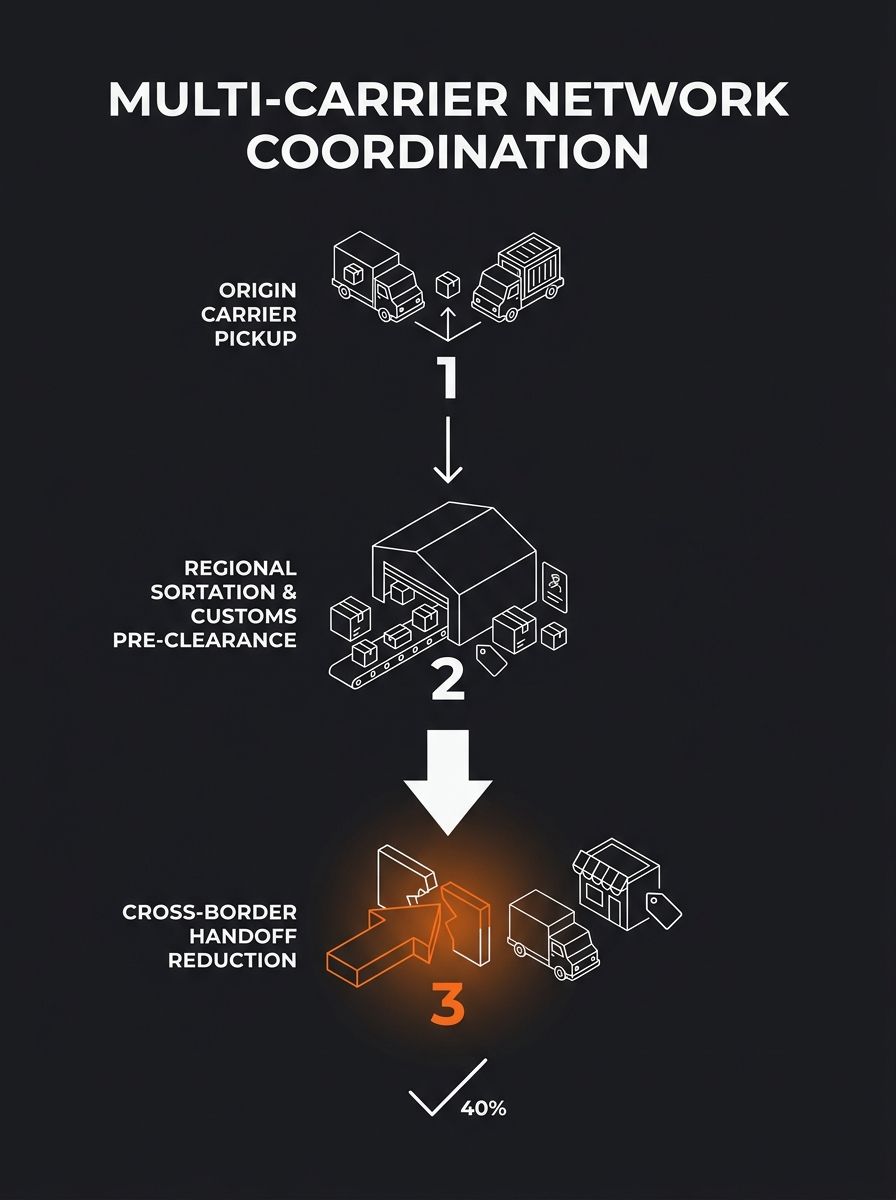
The overhaul prioritized operational alignment over single-point technology fixes. Cainiao coordinated multiple carrier partners to create preferred handoff points, reducing the number of hops parcels traveled internationally. Regional sortation centers and overseas warehouses allowed high-volume items to avoid repeated international legs. Standardized electronic manifests and API-based tracking handoffs replaced fragmented data systems that had caused tracking information to disappear when parcels changed carriers or crossed borders.
Network Orchestration and Regional Capacity
Cainiao shifted from single-carrier dependency to multi-carrier coordination with defined handoff protocols, the Racklify study shows. By staging inventory in regional sort centers, parcels routed to destinations within the same continent bypassed multiple national postal service transfers. The study cites Brazil as an example: buyers previously waited 25–40 days as parcels moved through multiple postal services; the new approach routes high-volume items to a regional hub, uses consolidated customs filing, and hands off to a vetted local carrier.
Local sortation infrastructure reduced international transit segments. Instead of parcels traveling from China directly to final-mile carriers in destination countries, Cainiao introduced intermediate hubs that aggregated volume and cleared customs regionally before final handoff.
Customs Automation and Documentation Standardization
Customs pre-clearance and automated documentation addressed a primary delay source. Cainiao integrated with customs systems to submit electronic forms ahead of parcel arrival, reducing manual inspection queues. For small electronics that frequently triggered customs review, automating correct Harmonized System (HS) codes and invoice data reduced manual review requirements, according to the operational breakdown.
The standardized data layer extended across carrier partners. API-based tracking handoffs maintained parcel visibility as packages moved between carriers and crossed borders, replacing systems where tracking data terminated at each carrier change. The change directly addressed customer complaints about "tracking black holes" during international transit.
Last-Mile Partnership Structure and Performance Monitoring
Cainiao negotiated service-level agreements with local couriers and implemented performance monitoring tied to shared KPIs, the study states. Dedicated delivery channels for AliExpress parcels separated them from general postal volume. Alternative pickup options—including lockers and flexible delivery slots—reduced failed first-attempt delivery rates.
The last-mile coordination addressed service-level inconsistency that had varied widely by region. Rather than defaulting to national postal services with unpredictable performance, Cainiao established vetted local carrier networks with defined delivery windows and tracking accountability.
Predictive routing used historical corridor data to identify bottlenecks and allocate capacity dynamically. The analytics layer allowed rerouting around slow segments before delays compounded.
Operational Outcomes and Failure-Point Reduction
Transit time variability decreased as fewer carrier handoffs and regional sortation cut uncertainty, the case study reports. Visibility increased through standardized tracking that persisted from origin to delivery. Customs clearance time dropped as automation and accurate paperwork reduced parcels held for manual review.
Failed-delivery rates fell through better last-mile coordination and alternative pickup infrastructure. The combined improvements lifted merchant and customer trust, supporting conversion rates for cross-border transactions.
The Racklify analysis emphasizes that the effort succeeded through coordinated operational changes rather than isolated technology deployment. Technology enabled standardized data and predictive routing, but partner alignment, process redesign, and shared performance accountability delivered the transit and visibility gains.
Implementation Lessons for Cross-Border Operators
The case study outlines five operational principles demonstrated by the overhaul. End-to-end visibility requires standardized data formats that survive carrier handoffs. Regional capacity—through local warehousing or sortation hubs—reduces international transit legs and customs exposure. Partner coordination, not just contracting, creates consistency through shared KPIs and joint problem-solving.
Customs and compliance automation prevents avoidable holds where accurate electronic paperwork is possible. Last-mile design—including flexible pickup, lockers, and clear delivery communication—cuts failed deliveries and customer anxiety.
Common mistakes include assuming technology alone solves operational fragmentation without partner alignment, ignoring local regulatory nuances that vary by country, under-investing in real-time performance monitoring that catches problems before they scale, and failing to communicate delivery expectations clearly to customers even when operations improve.
For dropshippers evaluating shipping strategy trade-offs, the Cainiao model demonstrates how network-level coordination can compress cross-border transit without shifting to premium carrier pricing. The regional hub approach offers a middle path between direct China-to-consumer shipping and full domestic inventory placement, a factor relevant to operators weighing domestic fulfillment economics against lower-cost overseas sourcing with extended transit.
Why This Matters Now
Cross-border delivery consistency directly affects conversion rates, customer retention, and return/dispute volume for dropshippers sourcing from AliExpress or other overseas suppliers. The Cainiao operational model—documented in real implementation detail—provides a reference framework for evaluating supplier logistics claims and understanding which improvements actually compress transit variability versus which remain aspirational.
With the EU's July 1 per-item duty fee increasing cross-border compliance pressure, the customs automation and pre-clearance tactics Cainiao deployed become more relevant. Operators using AliExpress suppliers can benchmark current transit performance against the improvements documented in the case study to assess whether their supply chain has captured these network-level gains or remains exposed to the fragmented-carrier problems the overhaul addressed.
The emphasis on last-mile SLAs and performance monitoring also offers a template for dropshippers negotiating with 3PL providers or evaluating fulfillment platforms. Shared KPIs, dedicated delivery channels, and alternative pickup infrastructure are concrete operational levers, not marketing promises—and the Racklify breakdown provides specifics on how they were structured and measured in a high-volume cross-border context.

Ryan Torres
Ryan Torres is a former Amazon FBA seller turned dropshipping consultant who has generated over $2.8M in ecommerce revenue across 14 product launches. He specializes in supplier vetting, margin optimization, and scaling DTC operations for sub-$1M brands. Ryan focuses on actionable frameworks that drive measurable results for independent operators.
Related Articles

Cainiao's "7-Day Miracle" Logistics Overhaul Cut AliExpress Cross-Border Delivery Variability Through Multi-Carrier Coordination
AliExpress cross-border delivery improvements documented in a case study published today show how Cainiao, Alibaba's logistics affiliate, reduced transit variability through network orchestration, regional sortation hubs, customs automation, and standardized carrier handoffs in a concentrated effort

AliExpress Shipping Timeframes Range From 7 Days to 50 Days Across Six Service Tiers, New Logistics Guide Documents
Delivery windows for AliExpress orders span 7 to 50 days depending on service tier selection, according to a logistics breakdown published July 10 by SendFromChina, a fulfillment platform that manages cross-border ecommerce shipments.

SendFromChina Publishes Six-Step Fulfillment Center Workflow Guide Targeting Ecommerce Operators Evaluating Third-Party Logistics
SendFromChina released a comprehensive fulfillment center guide on July 22, 2026, breaking down warehouse operations into six sequential stages—receiving, storage, order processing, picking and packing, shipping, and returns processing—according to documentation published on the logistics provider's
Explore more topics