autopilot app reviews: Top Picks & Features
Autopilot, M1 Finance, and Wealthfront all automate portfolio management, but they split on one axis: how much control you keep over individual trades.

Autopilot App Reviews: Three Automated Investing Platforms Compared
Autopilot, M1 Finance, and Wealthfront all automate portfolio management, but they split on one axis: how much control you keep over individual trades. Autopilot copies expert strategies trade-for-trade, M1 Finance lets you build custom allocations it rebalances automatically, and Wealthfront handles everything with zero stock-picking input required.
How This Comparison Is Structured
I evaluated these three platforms across four criteria that matter to ecommerce operators parking profits: fee structure, portfolio control, integration reliability, and the quality of the actual automation. I'm excluding crypto-only platforms, day-trading tools, and institutional products. If you're running a store doing $15K-$80K/month and want to put idle capital to work without babysitting a brokerage account, these are the three realistic options.
How Autopilot Works (and Where It Breaks)
Autopilot is a copy-trading app that lets you subscribe to pre-built strategies and automatically executes the same trades in your connected brokerage account. It's the right pick when you want exposure to a specific expert's thesis without making buy/sell decisions yourself. The tradeoff is cost and integration friction.
The app holds 4.6 stars from 14,000+ App Store ratings, and users consistently highlight the educational angle. One App Store reviewer wrote: "I am not an experienced investor, so I used it as a tutorial/introduction and I have learned a ton about investing in just a couple months. The app took care of my investing and made me money while I learned by watching."
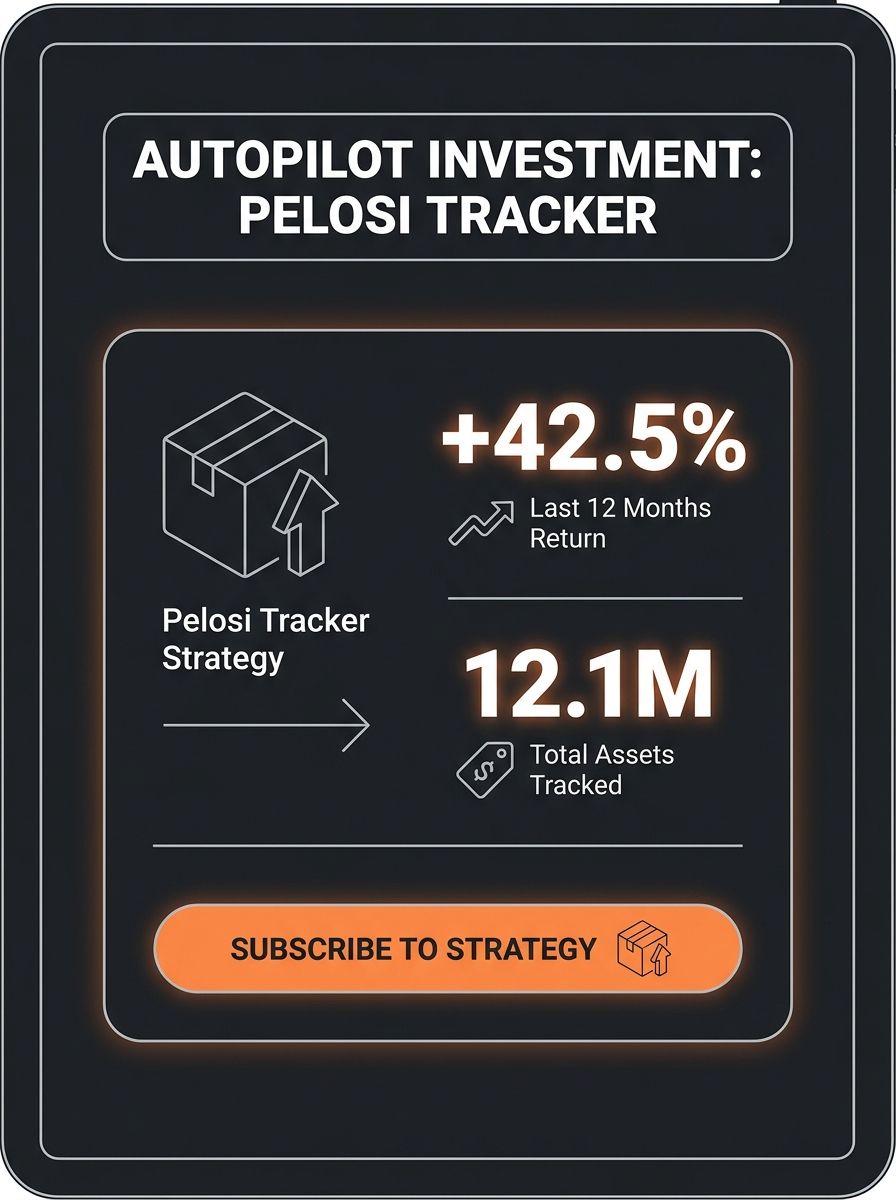
The strategy library is where Autopilot differentiates. You browse curated portfolios and subscribe to ones that match your risk tolerance. The "Pelosi Tracker" strategy, which mirrors congressional trading disclosures, showed a reported +54.51% one-year return in recent reviews. A "Blacklist" feature lets you exclude specific tickers from automated buys, which helps avoid over-concentration in positions you already hold elsewhere.
But the integration layer is a real problem. Reddit user reports document constant Robinhood authentication failures that "eventually forced a move to 'approval-only' trading, defeating the purpose of automation." When the brokerage connection drops, you're left approving trades manually, which eliminates the entire value proposition.
Fees compound the issue. Autopilot charges subscription fees per strategy on top of whatever your brokerage charges, and the limited control over individual positions makes it less flexible than competitors. You're renting someone else's thesis, and if that thesis shifts, your only option is to unsubscribe entirely. Understanding how fees eat into returns matters here, and if you need a refresher, our guide to calculating profit margins covers the math that applies to investment returns too.
M1 Finance and the Hybrid Approach
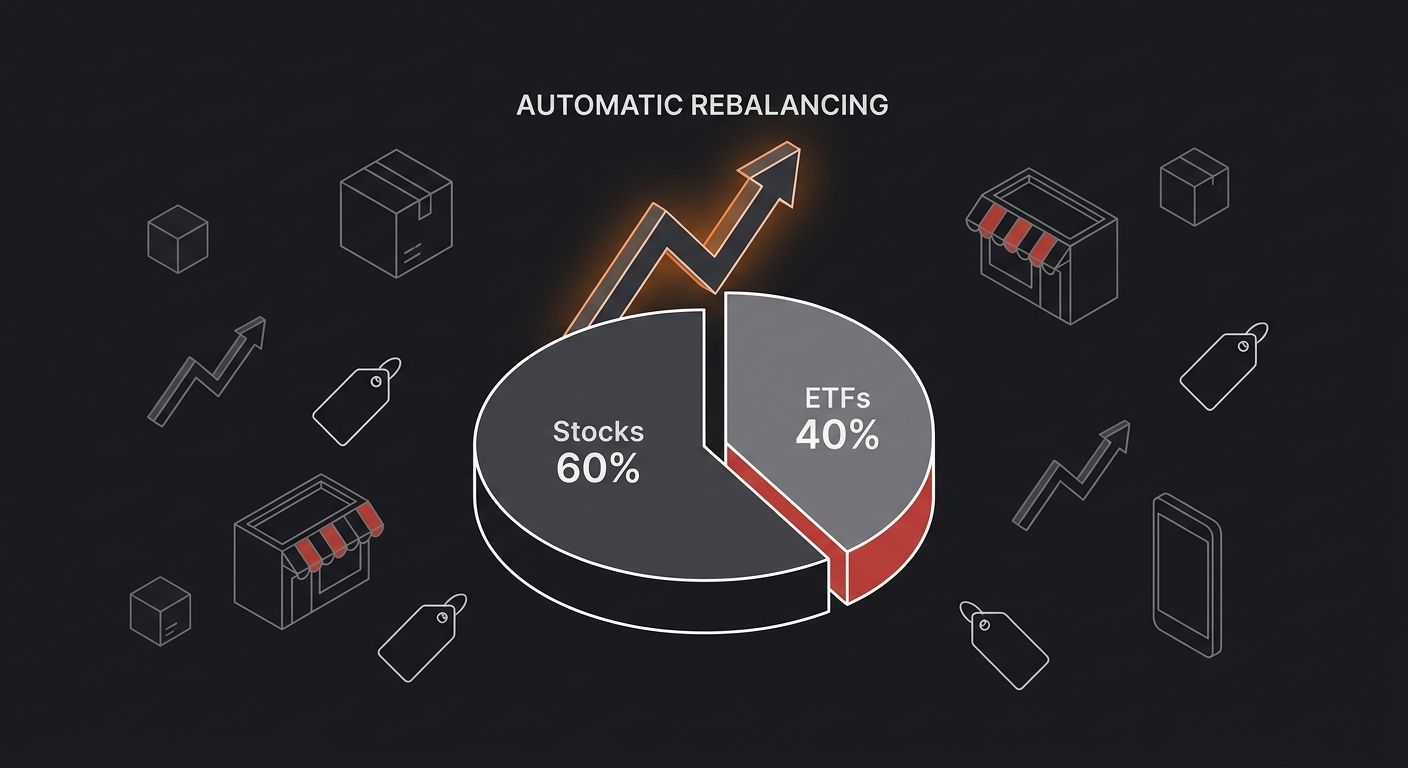
M1 Finance occupies the middle ground between full copy-trading and full robo-advising. Its "Pies" feature lets you create custom portfolios by picking individual stocks and ETFs, set target allocation percentages, and let the platform handle rebalancing. Choose M1 when you have specific conviction about which assets you want to own but don't want to manually execute rebalancing trades.
The Pies system works like this: you build a pie chart of your desired portfolio. Assign 30% to AAPL, 20% to VOO, 15% to AMZN, and so on. M1 automatically buys fractional shares to maintain those ratios whenever you deposit money. When positions drift from targets, the platform rebalances by directing new deposits toward underweight slices.
M1 also offers pre-built expert pies for investors who want a starting template but still want visibility into individual holdings. This hybrid model attracts investors who want more say in their portfolio composition than Autopilot permits but less daily management than a self-directed brokerage account.
The catch is that M1's rebalancing logic works at the portfolio level, not the trade level. One Reddit user who tried to mirror Autopilot strategies manually in M1 found that "M1's 'Pie' rebalancing logic is too blunt for Autopilot's targeted trades, and the manual overhead was significant." M1 rebalances by adjusting purchase allocations on new deposits. It won't sell Position A to buy Position B the way Autopilot does when copying a specific trade signal.
M1 Finance charges $0 commissions on trades and offers a free tier. The M1 Plus membership ($95/year) unlocks a second trading window, lower borrowing rates on M1 Borrow, and a higher APY on cash holdings. For ecommerce operators who want to park $5K-$50K in a diversified allocation without subscription fees per strategy, the economics are considerably cleaner than Autopilot's model.
If you're the type who already runs a structured decision framework for evaluating tools and platforms, M1's transparent allocation model will feel familiar.
Wealthfront for True Hands-Off Investing
Wealthfront is a robo-advisor that builds and manages a diversified portfolio based on your risk score, time horizon, and financial goals. Pick Wealthfront when you want zero involvement in stock selection, trade execution, or rebalancing decisions. The tradeoff: you give up all control over individual positions.
Wealthfront's automation goes deeper than Autopilot's or M1's. The platform handles tax-loss harvesting automatically, selling losing positions to offset gains and immediately buying correlated replacements to maintain exposure. This feature alone can add 1-2% annually in tax savings for accounts above $100K, according to Wealthfront's published methodology.
The platform charges a flat 0.25% annual advisory fee on managed assets with no per-strategy subscriptions, no trade commissions, and no rebalancing fees. On a $50,000 portfolio, that's $125/year. Compare that to Autopilot, where subscribing to 2-3 strategies could run $20-$40/month ($240-$480/year) before accounting for brokerage fees.
The research positions Wealthfront as the better choice for investors who want more customization than Autopilot offers, which sounds counterintuitive for a robo-advisor. The customization here isn't about picking stocks. It's about goal-based planning: retirement timelines, house down payments, education savings, each with its own risk allocation. You customize the financial plan, and Wealthfront customizes the portfolio to match.
The limitation is obvious: you can't ride a specific thesis. There's no "Pelosi Tracker" equivalent. You won't beat the market with Wealthfront. You'll roughly match it, minus 0.25%, with tax optimization and zero effort. For operators already spending 40+ hours a week on their Shopify stores and supplier relationships, that tradeoff often makes sense.
Side-by-Side Breakdown
Attribute | Autopilot | M1 Finance | Wealthfront |
|---|---|---|---|
Core model | Copy-trading (subscribe to strategies) | Custom allocation with auto-rebalancing | Full robo-advisor |
Stock-level control | Blacklist only | Full (pick every position) | None |
Annual cost on $50K | ~$240-$480+ (strategy subs) | $0-$95 (M1 Plus optional) | $125 (0.25% fee) |
Tax-loss harvesting | No | No | Yes (automatic) |
App Store rating | 4.6/5 (14,000+ ratings) | 4.6/5 (290,000+ ratings) | 4.8/5 (340,000+ ratings) |
Brokerage integration | Robinhood, others (reliability issues) | Built-in brokerage | Built-in brokerage |
Rebalancing style | Trade-level (copies exact buys/sells) | Deposit-directed (new money fills gaps) | Continuous (sells and buys as needed) |
Best for | Thesis-driven copy-traders | DIY allocators who want automation | Fully passive investors |
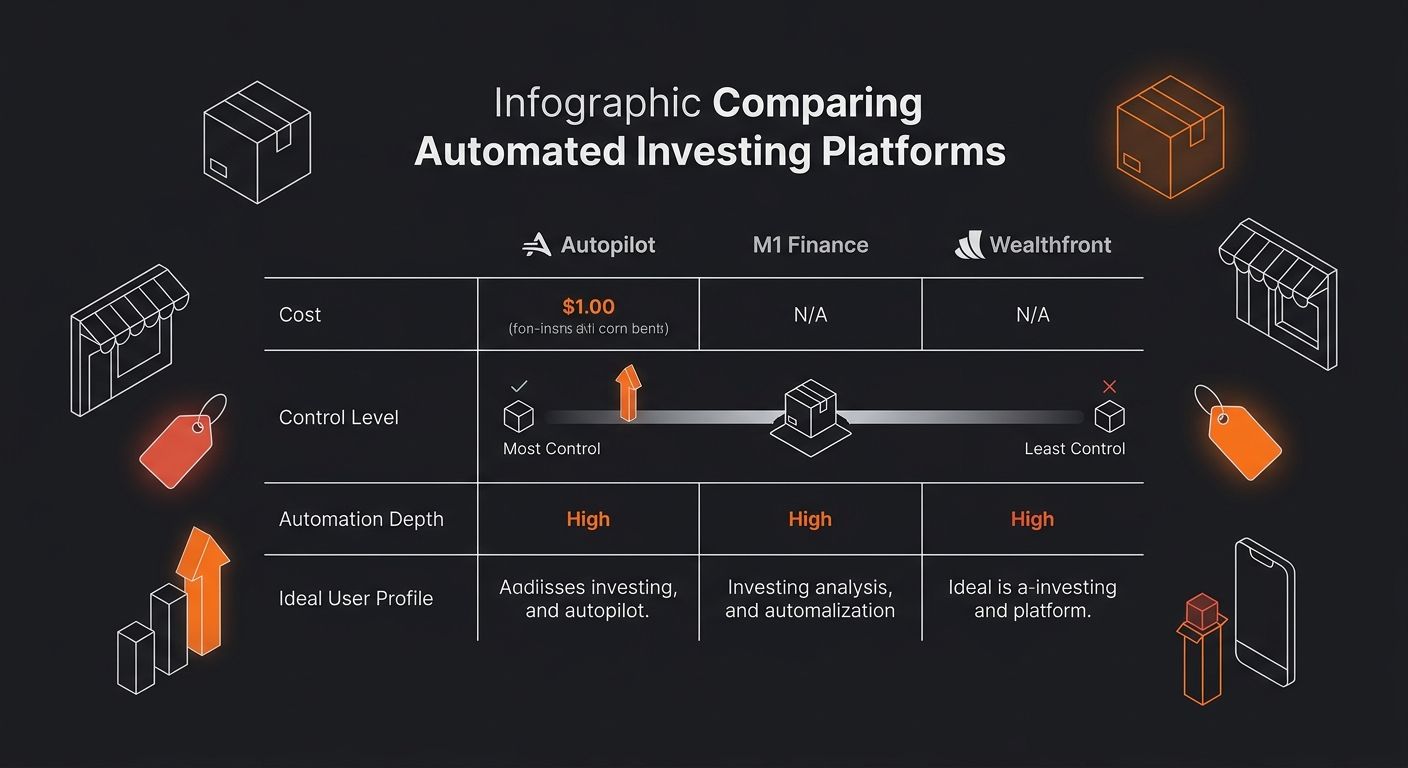
This comparison framework applies to any tool selection process. When you're evaluating dropshipping tools or investment platforms, the same three-axis evaluation works: cost, control, and reliability.
Who Should Pick Which
Pick Autopilot if you have a specific expert or strategy you want to mirror and you're comfortable with the subscription cost and integration risks. Ecommerce operators who actively follow market analysts and want to back a specific thesis without executing trades will get value here. Fund with the platform's recommended $1,000 minimum per strategy and use the Blacklist feature to avoid duplicate exposure to positions you hold elsewhere. But test your brokerage integration for a full week before committing real capital.
Pick M1 Finance if you know what you want to own and want the platform to handle the math. The Pies model works particularly well for operators who've already researched their investment thesis and want a set-it-and-adjust-quarterly setup. The $0 commission structure means your margins on invested capital stay clean, and the built-in brokerage eliminates the integration failures that plague Autopilot.
Pick Wealthfront if you want to deposit money and never think about it again. The 0.25% fee is the lowest effective cost among these three options for portfolios above $50K, and automatic tax-loss harvesting adds value that neither competitor matches. If you're running a store that demands your full attention, Wealthfront removes the most cognitive overhead for the lowest ongoing price.
The honest read on autopilot app reviews: Autopilot's copy-trading concept is compelling, and the 4.6-star rating reflects genuine user satisfaction with the educational and automation aspects. But the integration fragility and per-strategy fee model make M1 Finance and Wealthfront stronger choices for most independent operators who want their investing to actually run on autopilot.

Ryan Torres
Ryan Torres is a former Amazon FBA seller turned dropshipping consultant who has generated over $2.8M in ecommerce revenue across 14 product launches. He specializes in supplier vetting, margin optimization, and scaling DTC operations for sub-$1M brands. Ryan focuses on actionable frameworks that drive measurable results for independent operators.
Frequently Asked Questions
- What is the difference between Autopilot, M1 Finance, and Wealthfront?
- Autopilot is a copy-trading app that mirrors expert strategies trade-for-trade, M1 Finance lets you build custom stock/ETF allocations with automatic rebalancing, and Wealthfront is a full robo-advisor that handles portfolio management with zero stock-picking input. Each offers different levels of control and automation based on how hands-on you want to be.
- Does Autopilot have integration issues?
- Yes, Autopilot has documented reliability problems, particularly with Robinhood integration where periodic authentication failures force manual trade approval. When the brokerage connection drops, you must approve trades manually, which defeats the purpose of automation.
- How much does Wealthfront cost?
- Wealthfront charges a flat 0.25% annual advisory fee on managed assets with no per-strategy subscriptions, no trade commissions, and no rebalancing fees. On a $50,000 portfolio, that equals $125 per year.
- What is M1 Finance's Pies feature?
- M1 Finance's Pies feature lets you create custom portfolios by picking individual stocks and ETFs, setting target allocation percentages, and letting the platform handle rebalancing. When positions drift from targets, M1 automatically rebalances by directing new deposits toward underweight positions.
- Does Wealthfront do tax-loss harvesting?
- Yes, Wealthfront automatically handles tax-loss harvesting by selling losing positions to offset gains and immediately buying correlated replacements to maintain exposure. This feature can add 1-2% annually in tax savings for accounts above $100K.
- What is the annual cost of Autopilot on a $50K portfolio?
- Autopilot costs approximately $240-$480+ per year on a $50K portfolio when subscribing to 2-3 strategies, not including any brokerage fees. The costs come from per-strategy subscription fees rather than a flat advisory rate.
- Which platform should I choose if I don't want to manage my investments?
- Wealthfront is the best choice if you want zero involvement in stock selection, trade execution, or rebalancing decisions. The platform automates everything, requires no active management, and offers the lowest effective cost above $50K with automatic tax-loss harvesting included.
Related Articles

The Automation Tool Selection Trap: Why Feature Parity Doesn't Equal Profit Growth for Your Dropshipping Store
Feature parity — when two automation platforms check the same boxes on a comparison chart — tells you almost nothing about which tool will grow your store's contribution margin.

dropshipping io Review: Features & Pricing
Dropship.io, AutoDS, and SaleHoo attack the same problem from three different angles: finding products worth selling on Shopify. Dropship.io bets on competitor intelligence and sales tracking at $39–$99/month. AutoDS wraps product research inside full-store automation.

AI Store Builders vs. Manual Shopify Setup: The 2026 Speed-to-Profit Tradeoff for Dropshippers
Atlas AI Store Builder generates a fully functional Shopify store in under two minutes, according to a Dropmagic comparison of seven AI tools. Manual Shopify configuration typically requires 15 to 40 hours of theme work, copywriting, image editing, and SEO.
Explore more topics