LooperBuy Publishes Beauty Supplier Vetting Framework Targeting Dropshippers Sourcing Cosmetics From China's $145 Billion Trade Hub
LooperBuy released a beauty dropshipping supplier guide on July 29, 2026, detailing an eight-step vetting framework for Chinese cosmetics manufacturers as the global dropshipping market approaches $507.18 billion in 2026.
LooperBuy Publishes Beauty Supplier Vetting Framework Targeting Dropshippers Sourcing Cosmetics From China's $145 Billion Trade Hub
LooperBuy released a beauty dropshipping supplier guide on July 29, 2026, detailing an eight-step vetting framework for Chinese cosmetics manufacturers as the global dropshipping market approaches $507.18 billion in 2026. The guide targets wholesalers, private-label brand owners, and direct-to-consumer operators navigating cross-border procurement in a segment that holds 28.6% of China's dropshipping market share, according to the platform's published analysis.
The guide arrives as dropshipping operators face quality control failures, logistics delays, and compliance gaps in the beauty category—a $600 billion global market projected to exceed that threshold by 2027. LooperBuy positions its one-stop platform as a solution to fragmented sourcing, hosting 10,000-plus vetted Chinese suppliers across 50-plus categories with integrated freight and customs cost calculators.
Market Projections Frame Beauty Category Opportunity
The global dropshipping market is expected to grow from $507.18 billion in 2026 to $1.35 trillion by 2031, representing a compound annual growth rate of 21.67%, the guide states. Within that expansion, the Beauty, Health, Personal, and Household Care segment accounts for 28.6% of China's dropshipping market—the largest single category share. China's manufacturing ecosystem covers over 90% of global B2B supply categories, including skincare serums, organic oils, makeup tools, jade rollers, hair care products, and private-label cosmetics, according to the platform.
Chinese suppliers deliver B2B pricing 25 to 40 percent lower than European or North American equivalents, driven by mature supply chains, economies of scale, and vertical integration in the Pearl River Delta and Yangtze River Delta manufacturing hubs. That cost advantage translates directly into margin expansion for operators managing profit calculations across high-volume SKUs.
Eight-Step Vetting Process Targets Compliance and Fulfillment Risk
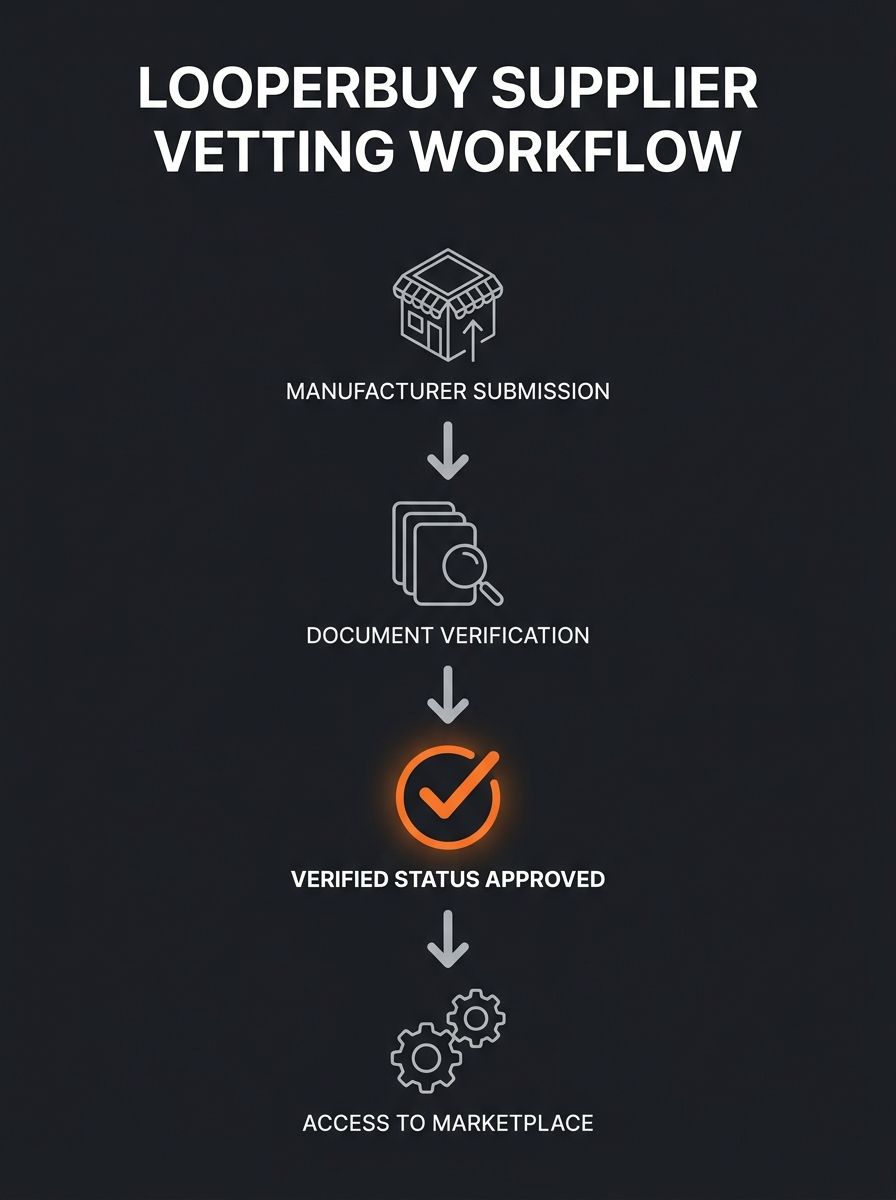
LooperBuy implements an eight-step supplier verification protocol for every Chinese manufacturer on its platform, the guide details. The vetting sequence includes manufacturing capacity assessment, ISO and CE certification verification, B2B order fulfillment track record review, and quality control protocol audits. Every beauty dropshipping supplier undergoes pre-qualification before catalog listing, the platform states.
The vetting framework addresses recurring pain points: unregulated sourcing channels that produce low-quality batches, missed order deadlines, and non-compliant cosmetics. A single failed shipment of contaminated skincare products can destroy brand reputation in a category where customer trust determines repeat purchase rates, the guide notes.
Traditional sourcing routes layer multiple middlemen—agents, freight forwarders, brokers—each adding markups that inflate final landed costs. LooperBuy offers direct supplier access with integrated cost calculators that factor in product costs, ocean and air freight, customs duties, and final-mile delivery. The calculators deliver real-time, all-inclusive estimates with no hidden fees, according to the platform.
Margin Benchmarks Segment by Product Type and Perceived Value
Beauty and personal care products operate in a 50 to 70 percent gross margin range for tools, accessories, and non-regulated items, the guide reports. Mid-range skincare products typically deliver 20 to 50 percent gross margins, while private-label and luxury formulas exceed that range due to perceived value and stronger pricing power.
Those margin bands assume operators source directly from manufacturers at China factory pricing rather than through distributor networks that add 15 to 30 percent markups. Cross-border shipping in the beauty sector faces port congestion, delayed customs clearance, and inefficient load optimization—challenges that increase logistics costs and compress margins when not managed through consolidated freight arrangements, the guide states.
LooperBuy's platform hosts suppliers across general skincare, organic cosmetics, men's grooming, and DIY beauty product categories, providing access to diversified inventory through a single procurement channel. The one-stop structure eliminates fragmented vendor management and consolidates shipping logistics, the platform claims.
Reading Between the Lines
LooperBuy's guide doubles as a platform positioning document, framing the eight-step vetting process and integrated cost calculators as competitive differentiators in a crowded B2B marketplace. The margin benchmarks—50 to 70 percent for accessories, 20 to 50 percent for mid-range skincare—set baseline expectations for operators evaluating whether beauty dropshipping pencils out against alternative niches. Those ranges assume China factory pricing and direct supplier relationships, which means anyone routing orders through agent networks or domestic distributors will see 15 to 30 percentage points shaved off gross margin before the first unit ships.
The 28.6 percent category share figure positions beauty as the largest single segment in China's dropshipping market, but that dominance creates supplier saturation and quality variance. An eight-step vetting protocol sounds rigorous until you compare it against the due diligence operators already perform when sourcing cosmetics—checking for FDA registration equivalents, verifying ingredient disclosure compliance, and auditing batch testing records. The guide doesn't detail how LooperBuy's vetting maps to international cosmetics regulations or whether the platform indemnifies buyers against compliance failures.
For operators scaling beauty SKUs, the cost calculator and direct supplier access solve real logistics friction. The question is whether LooperBuy's supplier network delivers better unit economics than AliExpress, CJ Dropshipping, or Spocket—and whether the platform's vetting actually reduces the quality control workload or just shifts it from supplier discovery to ongoing batch auditing.

Ryan Torres
Ryan Torres is a former Amazon FBA seller turned dropshipping consultant who has generated over $2.8M in ecommerce revenue across 14 product launches. He specializes in supplier vetting, margin optimization, and scaling DTC operations for sub-$1M brands. Ryan focuses on actionable frameworks that drive measurable results for independent operators.
Related Articles
Eighteen Percent of AliExpress Dropshipping Suppliers Exited Platform in First Five Months of 2026 as China's Factory Base Consolidates
An estimated 18% of active AliExpress dropshipping suppliers exited the platform between January and May 2026, folding into larger factory collectives in Guangdong, Foshan, and Yiwu, according to sourcing intelligence firm Syncee's internal supplier index cited in a LooperBuy guide published August

LooperBuy Publishes Etsy Sourcing Framework Detailing 1688.com Access and Five-Criteria Supplier Vetting for Production Partner Model
Etsy sellers using China-based production partners can now access 1688.com's 10 million product catalog through LooperBuy's B2B platform, according to a sourcing guide published July 30, 2026, that details five supplier vetting criteria and factory-direct pricing 25-40% below Western alternatives.
LooperBuy Publishes Sourcing Model Comparison Positioning Dropshipping as Validation Tool and China Sourcing as Scale Path
LooperBuy published a sourcing model comparison framework on August 12 positioning dropshipping suppliers as fulfillment partners for product testing and international sourcing companies as supply-chain management partners for margin optimization and brand control, according to the blog post.
Explore more topics