Why Your Micro-Niche Strategy Is Failing: Competitor Analysis Over Passion Selection
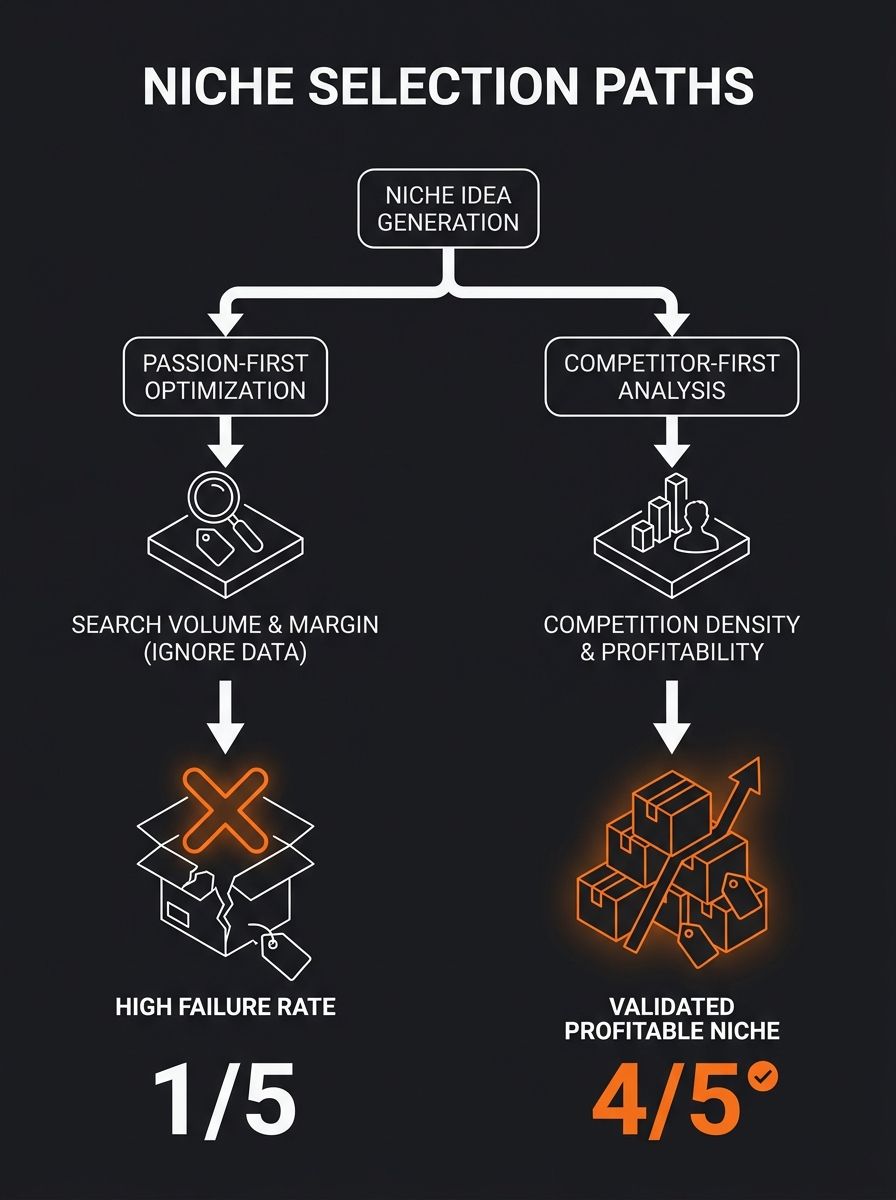
Google Trends data for "crystal cat litter" shows steady 12-month search growth, decent keyword volume, and enough product variety to build a store around. So three operators launch crystal cat litter stores within the same quarter, each convinced their passion for pets gives them an edge.
Why Your Micro-Niche Strategy Is Failing: Competitor Analysis Over Passion Selection
Google Trends data for "crystal cat litter" shows steady 12-month search growth, decent keyword volume, and enough product variety to build a store around. So three operators launch crystal cat litter stores within the same quarter, each convinced their passion for pets gives them an edge. Within 60 days, two of them are underwater on ad spend because they never checked how many established stores already rank for those exact product terms, what those stores charge, or how thin the actual margins run after shipping a heavy, fragile product.
This pattern repeats across every passion-based micro-niche in dropshipping. The niche looks viable on a trend graph. The operator loves the category. The competitor landscape says otherwise, and nobody bothered to read it.
Passion Gets You Into the Niche. Competitors Decide If You Stay.
The advice to "choose a niche you're passionate about" isn't wrong, but it's incomplete to the point of being dangerous. Passion sustains your motivation during the grind of supplier negotiations, ad testing, and customer service. It does zero work on the profitability question. And profitability in a micro-niche is almost entirely determined by who else is already there and how well they've locked down the customer.
Shopify's own niche research guidance recommends using Google Trends and Meta Audience Insights to measure competition before committing. But most operators skip straight from "I like this category" to "I'm building a store," treating competitor research as an optional step instead of a gate.
The result is predictable: stores launched into niches where established players already own the top ad placements, rank for every relevant long-tail keyword, and have supplier relationships that give them pricing you can't touch as a newcomer.
What Market Saturation Actually Looks Like in the Data
"Saturated" is one of the most misused words in niche selection strategy. Operators see ten competitors on page one of Google and assume the market is full. Or they see none and assume they've found gold. Both readings are usually wrong.
Real market saturation analysis requires looking at three things simultaneously:
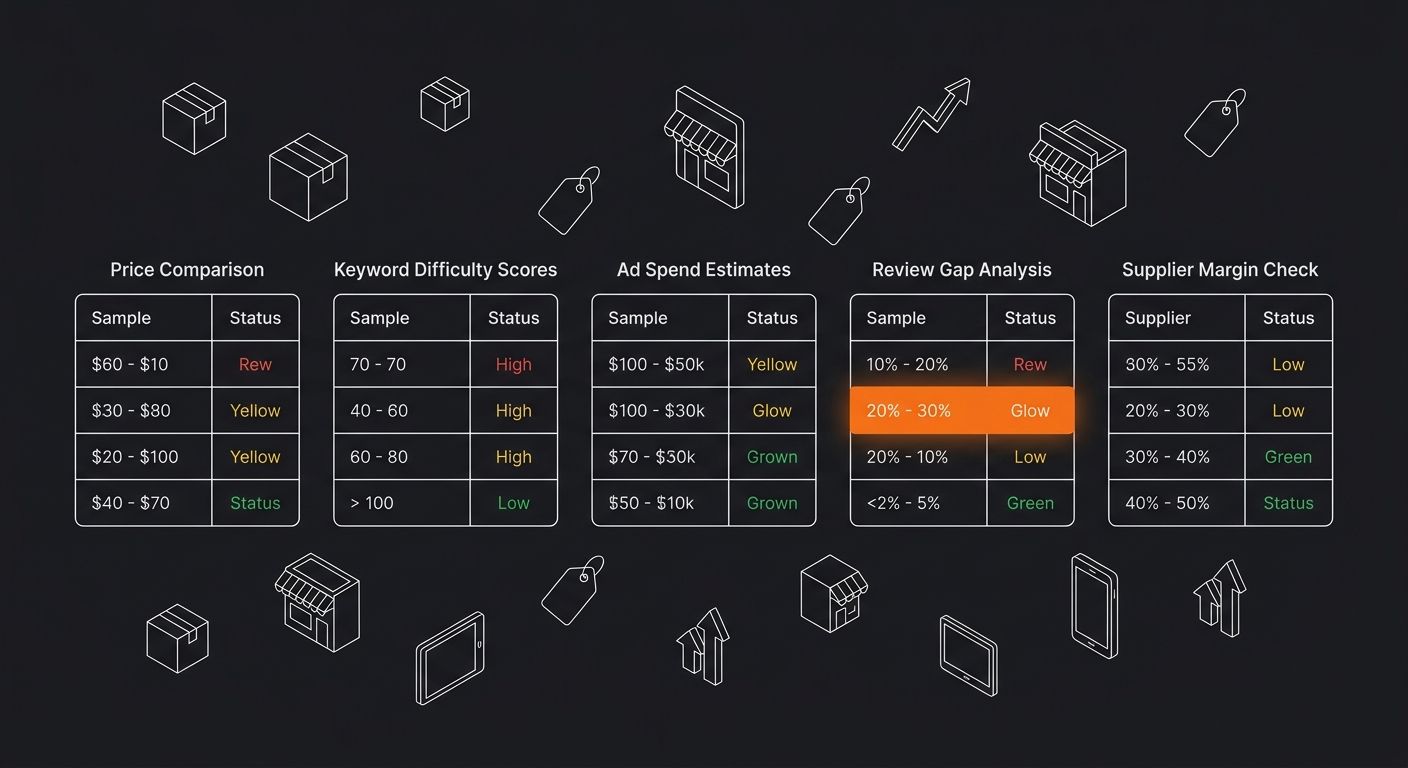
Price compression — Are products in this niche selling at thinner and thinner margins over the past 6-12 months? High sales volume paired with falling prices is a saturation signal, as Amazon keyword research tools consistently show across micro-niche product categories.
Keyword difficulty vs. search volume — A niche with 50,000 monthly searches and a keyword difficulty score above 70 on every relevant term means the organic channel is effectively closed to new entrants. You're buying all your traffic, which changes the math entirely.
Competitor review gaps — What are customers of existing stores actually complaining about? This is where the real opportunity data lives. Combining social listening, forum research, and competitor reviews paints a clear picture of unmet needs that no trend graph will show you.
Some of the most profitable dropshipping businesses operate in markets that look saturated on the surface. The difference between them and the stores that fail is that the profitable operators found the specific gap inside the crowded market before they spent a dollar on ads.
How to Run Competitor Research That Actually Protects Your Margin
Here's the process that works for profitable niche validation before you commit to a supplier, a store theme, or an ad budget. This isn't abstract strategy. This is the sequence that tells you whether your niche idea has room for a new entrant at margins worth your time.
Step 1: Map the Top 10 Stores in Your Proposed Niche
Search your primary product terms on Google, check Facebook Ad Library for active advertisers, and look at the top sellers on Amazon and Etsy in that category. You want to know:
How many stores are running paid ads on your target keywords right now
What their price points are for comparable products
How long they've been operating (Wayback Machine, domain age tools)
What their review profiles look like across platforms
If you're planning to reverse-engineer what successful stores are doing, the process of pulling apart their niche positioning and supplier strategies gives you a real competitive map instead of guesswork.
Step 2: Calculate Your Realistic Entry Margin
Take the average selling price of the top 5 competitors. Source the same or comparable product from your intended supplier. Add your actual landed cost: product cost, shipping, transaction fees, platform fees, and estimated ad cost per acquisition.
If your margin after all costs is below 20%, the niche is too tight for a new entrant. Established stores with better supplier pricing and lower CAC from organic traffic can survive at 15% margins. You can't. Understanding how markup and margin actually interact prevents the most common miscalculation here.
Step 3: Test Supplier Claims Before You Trust Them
Supplier inventory dashboards often overstate availability, especially in niche categories with seasonal demand. Before you build your store around a specific product line, verify that the supply chain can actually support your projected order volume. Building a supplier due diligence scorecard before you launch protects you from discovering fulfillment problems after your first batch of orders.
The Scaling Problem Nobody Talks About
Even operators who do proper competitor research for dropshipping often underestimate the micro-niche scaling ceiling. A micro-niche that supports $3,000-$5,000 per month in revenue at healthy margins might never grow beyond that. The total addressable audience is small by definition.
This is fine if your plan is to run the store as one of several income streams. It's a problem if you're investing $2,000+ in setup costs, custom branding, and content creation expecting the store to reach $20K/month.
Before you commit, estimate the total monthly search volume for every keyword in your niche cluster. Multiply the top keyword's monthly volume by a conservative 2-3% click-through rate, then by your expected conversion rate (1.5-2.5% for cold traffic in most dropshipping niches). That gives you a rough revenue ceiling from organic traffic alone.
If paid traffic is your primary acquisition channel, your ceiling is determined by how much you can spend profitably. And in a micro-niche, audience fatigue sets in fast. The same 50,000 people see your ads repeatedly, and frequency costs climb within weeks.
Where the Gaps Actually Hide
Harvard Business School's research on underserved markets makes a point that applies directly to dropshipping niche selection: analyzing competitor weaknesses collectively reveals the gaps they all share. Individual competitor analysis shows you what one store does well or poorly. Collective analysis shows you what the entire niche is missing.
Practical places to find these gaps:
Amazon 1-3 star reviews for products in your niche. Look for repeated complaints about quality, sizing, packaging, or missing features.
Reddit and Facebook group threads where buyers discuss what they wish existed. "I wish someone would make a [product] that [feature]" is a gap statement worth money.
Competitor return policies and shipping times. If every store in a niche ships from China with 15-25 day delivery, a US warehouse option becomes a real differentiator even at a higher price point. Verifying whether supplier availability claims hold up is part of this process.
The niche selection strategy that works right now isn't "follow your passion" or "follow the data." It's "follow the data to a market you can tolerate working in for 18 months." Passion is a tiebreaker when two niches look equally viable. It's never the primary filter.
What Remains Uncertain
Even rigorous competitor research has limits. You can't predict when a major retailer will enter your micro-niche and collapse pricing overnight. You can't fully account for algorithm changes on Meta or Google that shift your acquisition costs by 30% in a quarter. And supplier reliability in niche product categories is inherently less stable than in high-volume commodity categories, because you're dealing with smaller manufacturers who may deprioritize your orders during peak seasons.
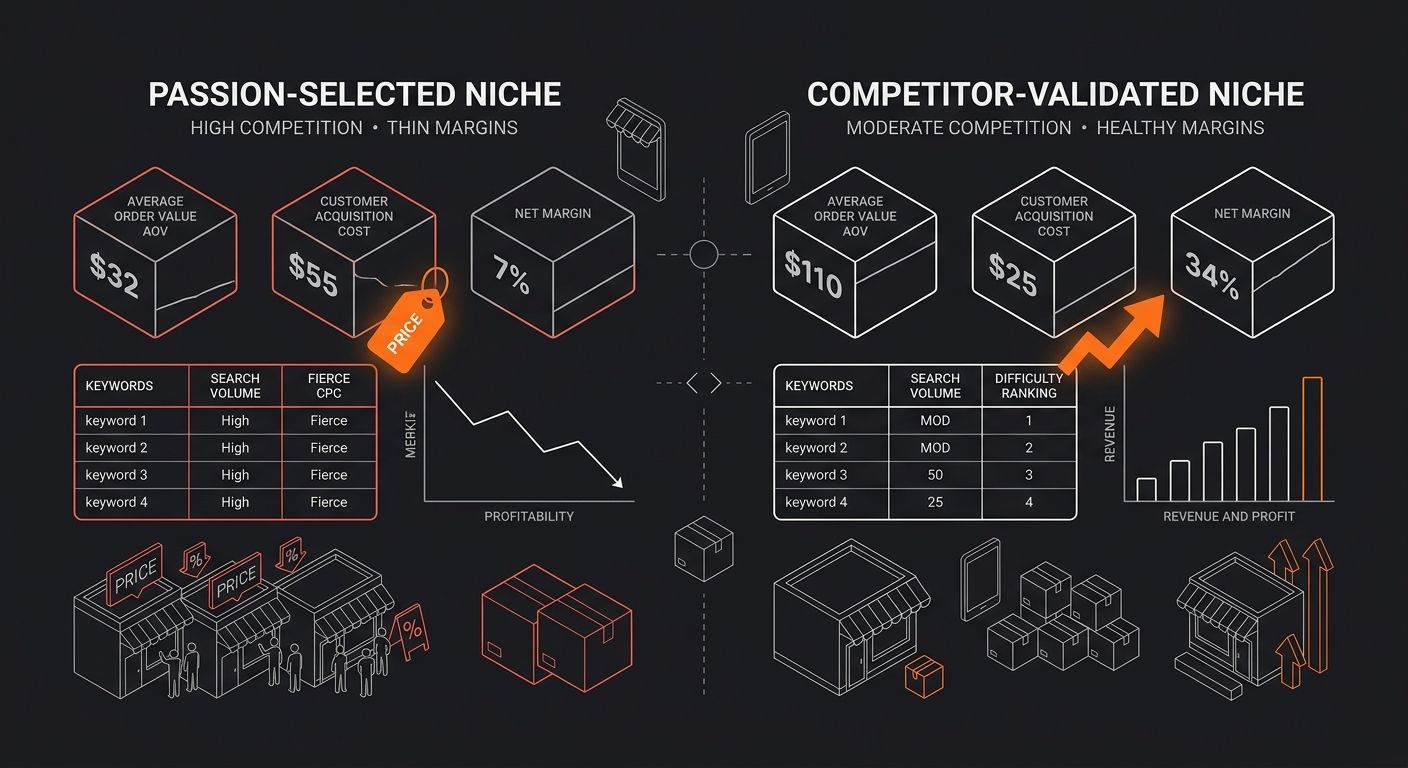
The best protection against these unknowns is entering niches where your validated margin gives you a cushion. If your math works at a 30% net margin today, a 30% increase in CAC or a 15% price cut from a new competitor still leaves you profitable. If you're already running at 18% net, any disruption pushes you into the red.
Competitor analysis won't make your micro-niche bulletproof. What it does is tell you, before you spend your first dollar, whether the niche has enough structural room for a new store to operate profitably while absorbing the shocks that are guaranteed to come.
365 Dropship Editorial
Editorial team writing about E-commerce, dropshipping, and product discovery — reviews of dropshipping suppliers and platforms, trending niche guides (jewelry, beauty, pets, home, fashion), supplier due diligence, ecom operations, shipping & fulfillment strategy, product research, AOV optimization, and profitable dropshipping case studies.
Explore more topics