LooperBuy Publishes Five-Step Seeding Framework for B2B Buyers Sourcing From Chinese Suppliers
LooperBuy published a five-step seeding framework on September 24, 2026, positioning small trial orders as a risk-reduction mechanism for international buyers sourcing from Chinese suppliers through 1688.com, according to the B2B sourcing platform's guide.

LooperBuy Publishes Five-Step Seeding Framework for B2B Buyers Sourcing From Chinese Suppliers
LooperBuy published a five-step seeding framework on September 24, 2026, positioning small trial orders as a risk-reduction mechanism for international buyers sourcing from Chinese suppliers through 1688.com, according to the B2B sourcing platform's guide. The framework targets wholesalers, brand owners, and manufacturers managing cross-border procurement from China's factory base.
Platform Addresses Four Procurement Barriers With Seeding Approach
LooperBuy designed the seeding strategy to eliminate recurring obstacles in China-based procurement. International buyers face registration barriers on domestic platforms like 1688.com that require Chinese identity verification and local bank accounts, the guide states. Payment friction arises when suppliers demand RMB transfers while buyers operate in USD or EUR currencies. Logistics coordination remains fragmented across multiple freight partners, and pricing opacity conceals hidden markups from trading companies posing as direct factories.
The EU SME Centre documented vendor fraud, counterfeit companies, defective goods, and hidden costs as persistent issues in cross-border trade, according to the LooperBuy analysis. A seeding strategy addresses these risks by front-loading verification before financial commitment, the platform states.
LooperBuy was founded in 2024 to connect global small and medium-sized merchants with 1688.com suppliers at factory prices. The platform operates a combined sourcing-and-fulfillment system targeting overseas buyers managing China-based procurement. Through its partnership with LianLian Global, LooperBuy enables foreign-currency payment to suppliers without Chinese bank account setup, removing what the guide describes as "one of the most persistent barriers in cross-border procurement."
Five-Step Framework Prioritizes Supplier Operational Metrics
The seeding framework begins with product specification documentation covering material grade, dimensions, packaging format, certifications, and labeling standards before supplier contact. LooperBuy recommends evaluating suppliers on operational metrics rather than certifications alone, citing on-time delivery rates above 95 percent, response times under three hours, and reorder rates exceeding 20 percent as key indicators.
"Suppliers with reorder rates above 40% typically correlate with long-term partnerships and private-label success," the guide states. The platform advises buyers to place small trial orders through LooperBuy's sourcing service to validate both product quality and export logistics capacity.
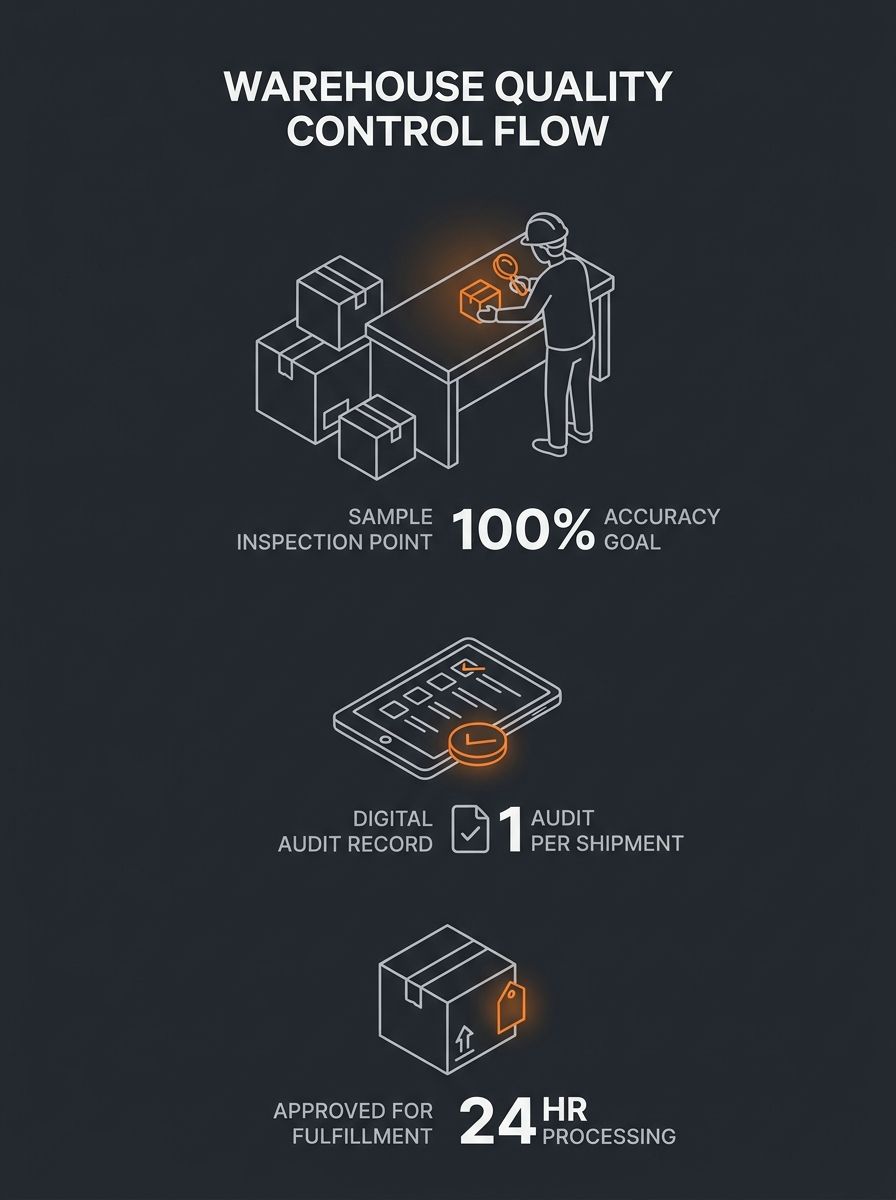
For higher-value categories, the framework includes third-party inspection engagement at the point of origin. Pre-shipment inspection services in China cost between $99 and $268 per inspection, with leading providers achieving 94 percent inspection accuracy and response times under five hours, according to the guide. Once samples pass evaluation, buyers transition to bulk orders through LooperBuy's logistics network at per-unit fulfillment costs starting at $0.21 per kilogram for startups.
Cost-Disruption Environment Elevates Risk Management Priority
The 2026 QIMA Global Sourcing Survey found 79 percent of supply chains expect costs to remain a major disruption, with materials, shipping, and labor pressures nearly doubling since 2024, the LooperBuy guide reports. Factory managers who evade questions about production mistakes, staff turnover rates, or quality control processes should be treated as high-risk partners regardless of quoted prices, the platform advises.
Buyers who bypass seeding and order bulk inventory directly expose themselves to vendor fraud and contract breach risks, the guide warns. Direct procurement from Chinese factories typically reduces costs by 10 to 50 percent compared to traditional trading company routes, depending on product category and order volume, according to the framework. Seeding boosts these savings by preventing bulk-order mistakes—a $150 sample inspection avoids a potential $15,000 loss on defective inventory, the guide calculates.
The framework positions seeding as particularly critical for sellers evaluating 1688.com suppliers without direct platform access, where payment barriers and vendor opacity compound risk. LooperBuy's multi-currency payment infrastructure and verified-supplier network address structural friction points that have historically limited international buyer participation in China's domestic wholesale markets.
The Takeaway
The five-step seeding framework extends LooperBuy's positioning as an infrastructure layer between international e-commerce operators and China's factory base, following the platform's earlier sourcing model comparison that positioned dropshipping as a validation tool and China direct sourcing as a scale path. For independent sellers and small brands managing supplier relationships, the framework translates abstract "vet your vendors" advice into a concrete order-testing sequence with specific cost benchmarks and quality-assurance checkpoints.
The operational metrics—95 percent on-time delivery rates, sub-three-hour response windows, 40 percent reorder rates—provide quantitative thresholds that remove guesswork from supplier evaluation. Combined with $99-$268 pre-shipment inspection costs and $0.21/kg fulfillment starting rates, the framework gives margin-conscious operators concrete numbers to model risk-mitigation spend against potential inventory losses. In an environment where 18 percent of AliExpress dropshipping suppliers exited in the first five months of 2026, upfront verification through seeding becomes defensible overhead rather than optional diligence.

Ryan Torres
Ryan Torres is a former Amazon FBA seller turned dropshipping consultant who has generated over $2.8M in ecommerce revenue across 14 product launches. He specializes in supplier vetting, margin optimization, and scaling DTC operations for sub-$1M brands. Ryan focuses on actionable frameworks that drive measurable results for independent operators.
Related Articles
LooperBuy Publishes Sourcing Model Comparison Positioning Dropshipping as Validation Tool and China Sourcing as Scale Path
LooperBuy published a sourcing model comparison framework on August 12 positioning dropshipping suppliers as fulfillment partners for product testing and international sourcing companies as supply-chain management partners for margin optimization and brand control, according to the blog post.
LooperBuy Publishes Beauty Supplier Vetting Framework Targeting Dropshippers Sourcing Cosmetics From China's $145 Billion Trade Hub
LooperBuy released a beauty dropshipping supplier guide on July 29, 2026, detailing an eight-step vetting framework for Chinese cosmetics manufacturers as the global dropshipping market approaches $507.18 billion in 2026.

LooperBuy Publishes Etsy Sourcing Framework Detailing 1688.com Access and Five-Criteria Supplier Vetting for Production Partner Model
Etsy sellers using China-based production partners can now access 1688.com's 10 million product catalog through LooperBuy's B2B platform, according to a sourcing guide published July 30, 2026, that details five supplier vetting criteria and factory-direct pricing 25-40% below Western alternatives.
Explore more topics