EU Tax on Small Packages From China Cuts AliExpress, Temu, Shein Imports by 30-40% in First Two Months
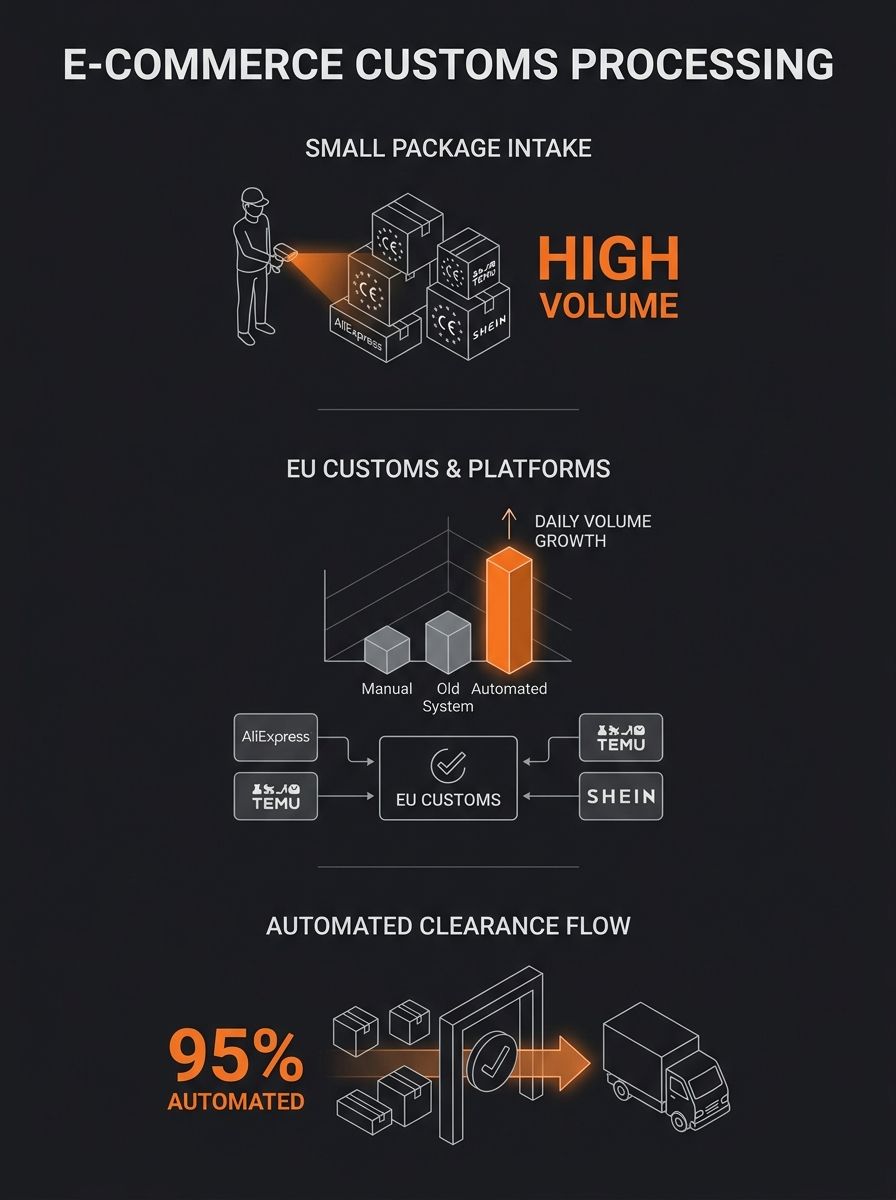
Small-package imports from AliExpress, Temu, and Shein dropped 30 to 40 percent across the European Union in the first two months following a three-euro-per-item tax that took effect July 1, 2026, according to French customs estimates released by the country's Economy Ministry on August 27.

EU Tax on Small Packages From China Cuts AliExpress, Temu, Shein Imports by 30-40% in First Two Months
Small-package imports from AliExpress, Temu, and Shein dropped 30 to 40 percent across the European Union in the first two months following a three-euro-per-item tax that took effect July 1, 2026, according to French customs estimates released by the country's Economy Ministry on August 27. The levy targets each product category shipped in packages from China, ending a prior exemption for goods under 150 euros and directly affecting supplier sourcing costs for dropshippers who rely on Asian platforms for inventory.
French Economy Minister Roland Lescure cited the preliminary customs data during an appearance at the Medef business conference on August 27, framing the decline as evidence that coordinated trade enforcement can slow the flood of low-cost goods from platforms Brussels has criticized for non-compliance with EU product-safety standards, according to Epoch Times. In 2025 the EU received 5.9 billion small packages—180 per second—of which 93 percent originated in China, the European Commission reported. The tax eliminates the de minimis duty exemption that previously applied to shipments valued below 150 euros.
Transaction Data Shows 50% Drop on Temu, 37% on AliExpress
Shopping-rewards app Joko tracked bank-card transactions from 1.5 million French consumers and recorded order-volume declines of 50 percent on Temu and 37 percent on AliExpress between June and July 2026, the company told AFP. Shein recorded a smaller 15 percent decline in the same window, a gap Joko attributed to the retailer's late-2025 opening of a large fulfillment center in Poland that allows the platform to ship a portion of orders domestically within the EU and avoid the China-origin tax. The data set captures only French buyers but aligns directionally with the pan-EU customs figures the Economy Ministry released.
Average basket values rose 30 percent on Temu and 27 percent on AliExpress in the June-to-July comparison, Joko reported, as both platforms began incorporating the per-item duty into customer checkout totals. AliExpress confirmed to AFP that it now displays customs charges at checkout. The added cost compounds landed-cost calculations for dropshippers who source inventory from these suppliers and typically operate on 20 to 35 percent gross margins before ad spend; a three-euro duty on a product with a five-euro supplier cost represents a 60 percent cost-of-goods jump that compresses margin unless retail price rises proportionally.
AliExpress Criticizes Tax as Burden on Low-Income Households
AliExpress told AFP the measure contains "significant flaws" and disproportionately affects budget-conscious European shoppers already dealing with inflation. The company did not specify whether it plans to absorb a portion of the tax or pass the full amount to buyers. Shein declined to comment on the customs data, and Temu had not responded to media inquiries by the time the Economy Ministry statement circulated.
Brussels has pressed the tax as part of a broader push to enforce product-safety compliance and level competitive conditions between EU-based merchants—who pay value-added tax and customs duties on all imports—and Chinese platforms that previously sidestepped those charges on sub-150-euro shipments. The Commission also argues that a meaningful share of small packages entering under the old exemption contained counterfeit or non-conforming goods that evaded regulatory screening.
Why This Matters Now
For dropshippers and DTC operators who treat AliExpress as a primary validation supplier, the 30-to-40-percent import decline and 27-to-30-percent basket-price increase force immediate margin recalculation. A winning product identified in June with a four-euro AliExpress cost and a twelve-euro retail price—yielding a 66.7 percent gross margin—now carries a seven-euro landed cost after the three-euro tax, dropping gross margin to 41.7 percent before factoring payment-processor fees and shipping. Stores running sub-30-percent contribution margins after ad spend may find formerly profitable SKUs unprofitable unless they raise retail prices, potentially eroding conversion rates in price-sensitive niches.
The Shein warehouse strategy offers a template: shifting fulfillment to EU-based inventory sidesteps the China-origin levy entirely, but requires upfront capital and minimum order commitments that put the approach out of reach for most bootstrapped operators. The near-term playbook for solo sellers centers on supplier diversification—testing whether Turkish, Indian, or Southeast Asian sources on platforms beyond AliExpress can deliver comparable quality at landed costs that preserve unit economics—or migrating winning products to private-label manufacturing and EU warehousing once validated demand justifies the inventory risk.
The 50 percent order drop on Temu and 37 percent on AliExpress also signals shifting consumer tolerance for extended shipping windows now that the price advantage has narrowed; if buyers pay closer-to-retail pricing, they may defect to Amazon or domestic retailers offering two-day delivery, pressuring dropshippers to either negotiate faster AliExpress ePacket alternatives or pivot to hybrid models that combine print-on-demand suppliers with selective pre-stocked inventory for top movers.

Ryan Torres
Ryan Torres is a former Amazon FBA seller turned dropshipping consultant who has generated over $2.8M in ecommerce revenue across 14 product launches. He specializes in supplier vetting, margin optimization, and scaling DTC operations for sub-$1M brands. Ryan focuses on actionable frameworks that drive measurable results for independent operators.
Related Articles

EU Eliminates €150 Duty Exemption for Small Packages; €3 Per-Item Fee Takes Effect July 1
European Union member states will begin collecting a flat €3 customs duty on each tariff line item in packages valued under €150 starting July 1, 2026, eliminating a longstanding duty-free threshold that allowed millions of small shipments from China-based suppliers to enter the bloc without border

France Implements €12 Per-Garment Tax on AliExpress, Temu, and Shein Ultra-Fast Fashion Imports
France enacted a €12-per-garment tax on ultra-fast fashion imports from AliExpress, Temu, and Shein on September 1, 2026, according to La Tribune, directly increasing landed costs for dropshippers sourcing clothing from China-based platforms.

Cross-Border Tariffs & Import Duties: The Hidden Margin Killer Dropshippers Overlook
Every package entering the U.S. from China now triggers a full customs entry.
Explore more topics