Honest Product Reviews for Dropshipping Stores: The Testing Protocol That Builds Customer Trust Without Fake Social Proof
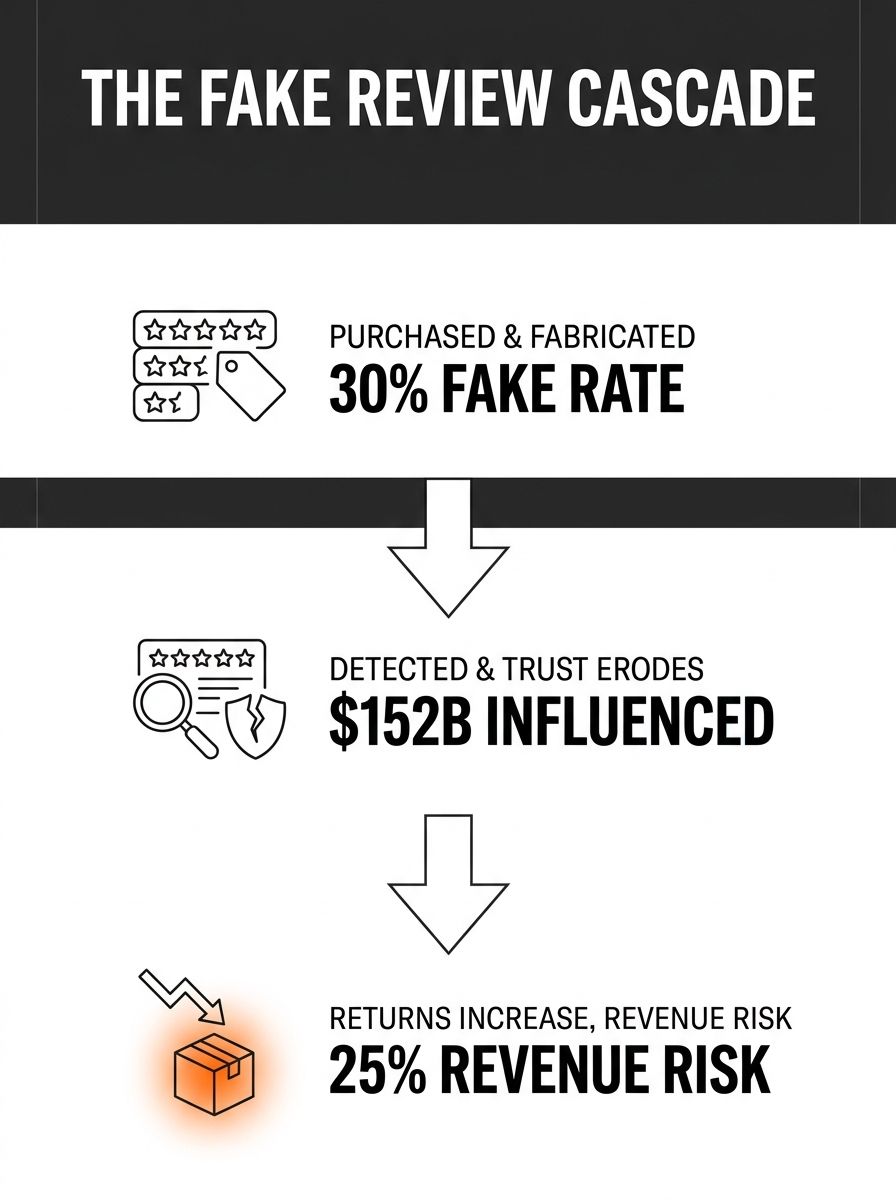
Buying reviews will tank your store's conversion rate faster than having no reviews at all. An estimated 30% of online reviews across ecommerce are fake, and shoppers have learned to spot them. Purchased testimonials signal that your store can't earn real ones, and that inference kills sales.

Honest Product Reviews for Dropshipping Stores: The Testing Protocol That Builds Customer Trust Without Fake Social Proof
Buying reviews will tank your store's conversion rate faster than having no reviews at all. An estimated 30% of online reviews across ecommerce are fake, and shoppers have learned to spot them. Purchased testimonials signal that your store can't earn real ones, and that inference kills sales.
The $152 Billion Problem With Purchased Reviews
$152 billion in global consumer spending is influenced annually by fake reviews, according to World Economic Forum estimates. That figure sounds like an argument for buying reviews. It's actually the clearest argument against: the same awareness that makes consumers susceptible to social proof also makes them hypervigilant about fraud.
Research published in Frontiers in Communication (May 14, 2026) studied how consumers on Mercado Libre perceive review authenticity and found that shoppers increasingly struggle to distinguish real from fake reviews. But when they do detect fakery, the trust penalty is severe and lasting. The study confirmed that perceived fake reviews damage both the specific product listing and the entire platform's reputation.
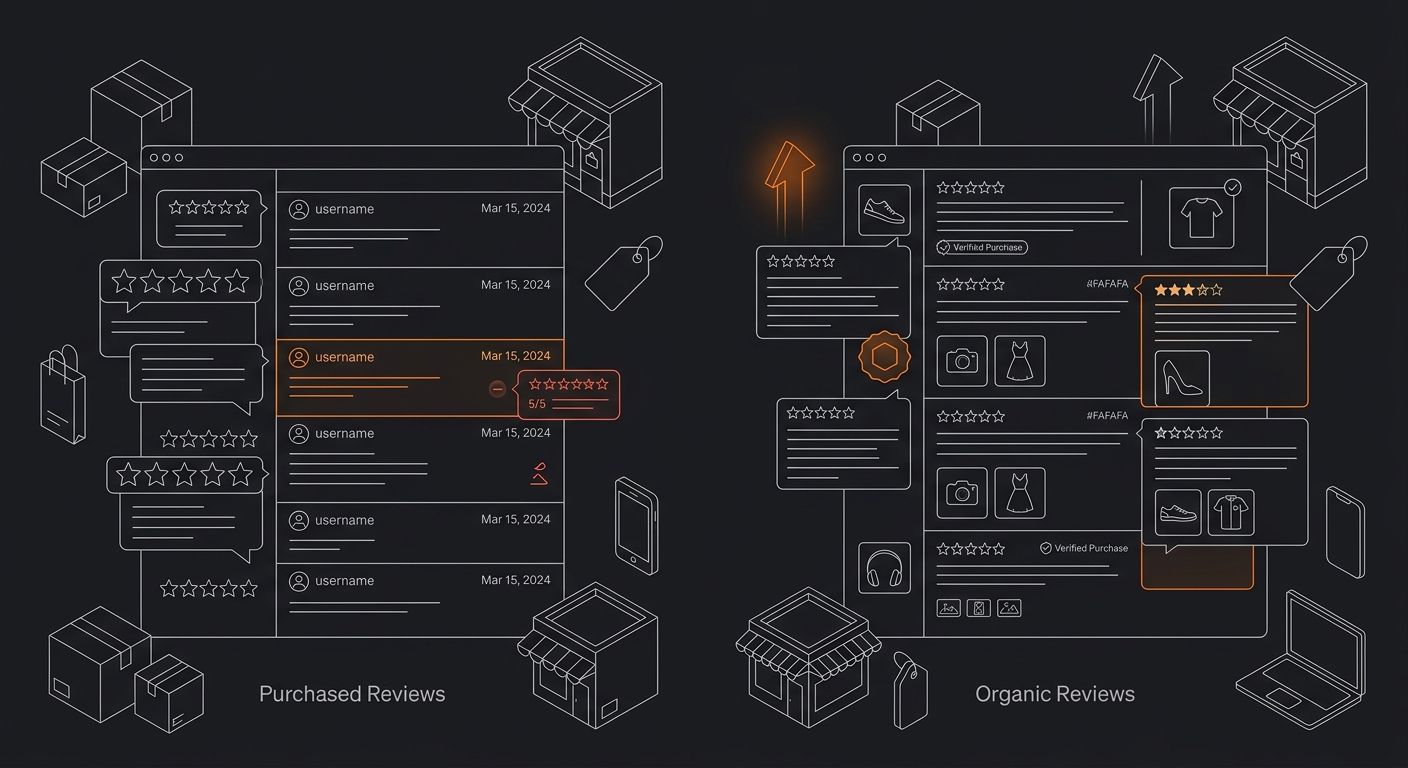
One in three reviews on major platforms has been estimated as false. For dropshipping stores, the math gets worse: your store doesn't have the brand equity buffer that Amazon or Walmart carries. When a shopper on your Shopify store sees 47 five-star reviews posted within the same week, all using similar phrasing, the pattern screams inauthenticity. You've seen this problem firsthand if you've ever audited your own review patterns for operational blind spots.
The cost of getting caught is concrete. Brands relying on fake reviews risk losing up to 25% of revenue from eroded trust and increased return rates. Trustpilot and Google both actively flag and remove suspicious review clusters, meaning you lose the purchased reviews and your store's credibility simultaneously.
And 97% of consumers read reviews before purchasing. 85% trust online reviews as much as personal recommendations, according to BrightLocal's consumer survey data. These numbers mean your review section is functionally your most important product page element. Poisoning it with purchased content is the most expensive mistake you can make below the fold.
The OTD Protocol: Order, Test, Document
The fix is unsexy and manual. You order the product yourself, test it in the conditions your customer will use it, and document everything with photos and measurements before it goes on your store. This is what separates dropshipping stores that survive past six months from those that burn through ad spend on untested inventory.
USADROP, which has processed over 80 million orders, reports that sellers who test every product before listing face dramatically lower refund rates than those relying on supplier photos alone. Sellers who skip hands-on product testing typically flame out within six months from accumulated one-star reviews and customer disputes.
Here's what the protocol looks like in practice:
Step 1: Order the sample. Place a test order through the same fulfillment channel your customers will use. If you're running through CJ Dropshipping or Spocket, order from that supplier, not a different one. Sample cost runs $15-50 per product depending on category. If your supplier vetting checklist flagged quality concerns during due diligence, this step becomes non-negotiable.
Step 2: Test in context. Shopify's product testing guide emphasizes testing in relevant contexts: kitchen products in a kitchen, wearables on a body, tech accessories with the devices they claim to fit. Don't test a phone case by looking at it on a table. Put it on the phone. Drop the phone from waist height onto concrete. Your customer will.
Step 3: Measure and record specifics. Weight, dimensions, material feel, color accuracy vs. listing photos, packaging quality, and shipping condition. Note discrepancies. A product that arrives with scratched packaging or a color two shades off from the listing photo will generate returns regardless of how good the underlying item is.
Step 4: Photograph everything. Natural lighting, multiple angles, in-use shots. These photos become your product listing images, your review-response assets, and your UGC seeds. GoUp Fashion's analysis found that stores showcasing real-life product use images saw conversion rate increases above 20%.
Step 5: Document the shipping timeline. Record the actual days from order to delivery. If your supplier promises 7-10 day shipping and the sample arrives on day 23, you've just discovered the complaint that will dominate your review section. Ethical dropshipping requires stating delivery timelines upfront rather than burying 15-30 day windows in fine print.
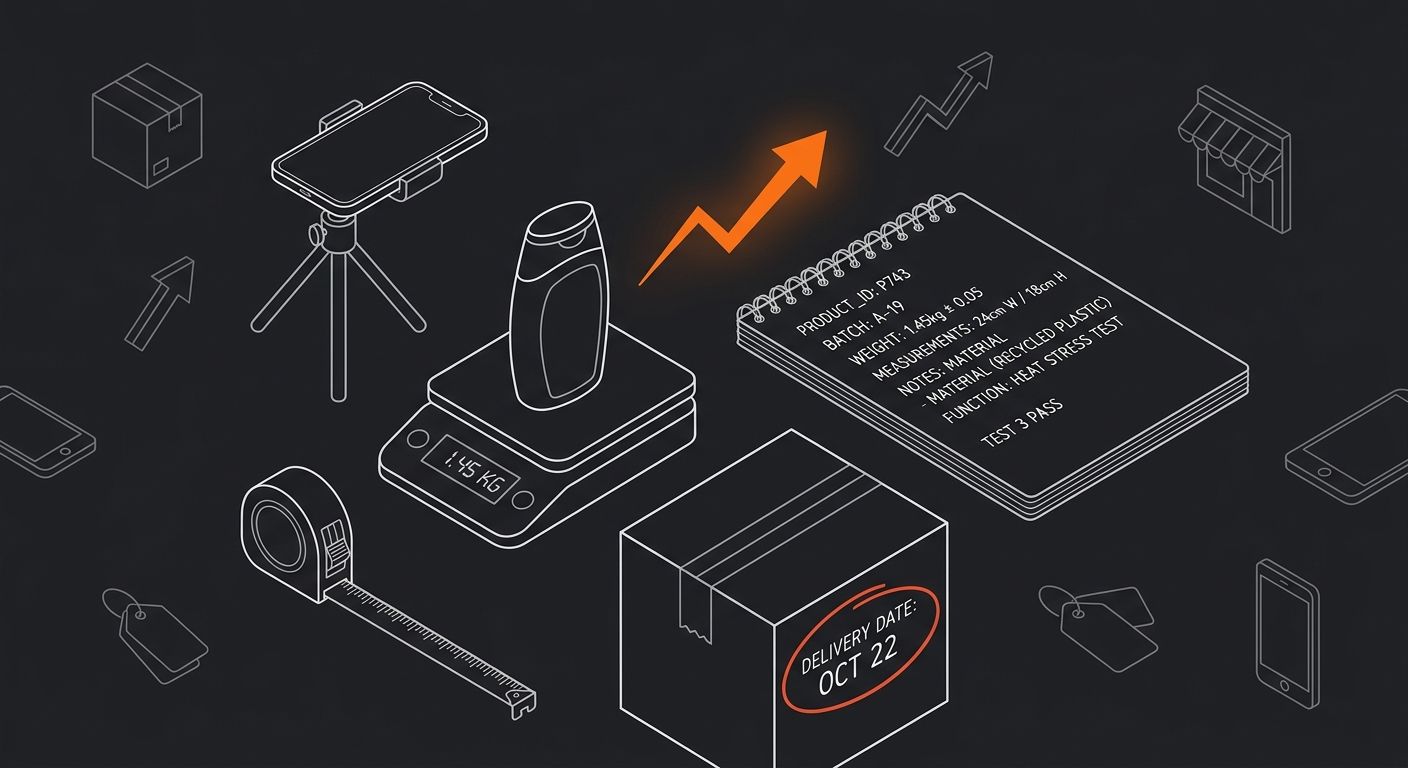
The entire process costs $15-50 per SKU plus 2-3 hours of time. For a store running 20 active SKUs, that's $300-1,000 and roughly a week of focused work. Compare that against a single viral negative review thread or a Trustpilot score cratering below 3.5 stars, and the ROI is obvious.
I call this the OTD Protocol (Order, Test, Document) because the sequence matters. You can't document what you haven't tested, and you can't test what you haven't ordered through your actual supply chain. Every shortcut — using supplier photos, copying manufacturer descriptions, assuming quality based on price — creates a gap between what your store promises and what your customer receives. That gap is where trust dies.
Verified Feedback Loops That Replace Fake Social Proof
Why do stores buy reviews in the first place? Because an empty review section converts at roughly half the rate of one with even modest social proof. The temptation is real. But the real alternative to purchasing reviews is a system that generates honest feedback from actual buyers, and that system has four components.
The most reliable dropshipping trust signals come from verified purchase reviews, where every piece of feedback is tied to an actual transaction in your system. Platforms like Lipscore's Real Reviews connect each review to an order ID, making customer verification visible to shoppers. Judge.me and Loox offer similar transaction-linking features on Shopify.
Post-purchase email sequences. Send a review request 3-5 days after confirmed delivery (not after shipping). The timing matters: too early and the customer hasn't used the product; too late and they've moved on. Include specific prompts that guide useful feedback. "How did this product fit into your daily routine?" generates more credible content than a generic "Leave us a review!"
Photo incentives. Offer a 10-15% discount on the next purchase for reviews that include customer photos. These user-generated images function as both authentic product review assets and marketing material. Stores like SkinnyMe Tea and Vanity Planet built significant portions of their product page content from customer-submitted photos, which strengthens trust signals across your entire catalog.
Transparent negative review handling. Responding to negative reviews publicly, with specifics about what you've changed or how you're resolving the issue, builds more trust than 50 five-star ratings. Debutify's analysis of dropshipping stores found that stores responding to all reviews saw measurably higher add-to-cart rates than stores with higher average ratings but zero owner responses.
Review display strategy. Display star ratings below product titles, enable filtering by "most helpful" and "with photos," and feature UGC directly on product pages. Verified-purchase badges are the next layer of credibility once you have the review volume to support them.
This approach takes longer to build volume. A new store using organic review generation will accumulate reviews over weeks, not hours. But each review carries more weight with both customers and search algorithms, and you face zero risk of platform penalties or account suspension.
The Claim, Revisited
The conventional wisdom says you need social proof to convert, and you need it fast. Both parts are true. The error is in assuming that speed requires fakery. The OTD Protocol gives you authentic content for your listings from day one, before a single customer has placed an order. Your own hands-on product testing is your first review, and if you're already running a proper test order validation process, you're doing half the work.
Purchased reviews are a margin trap disguised as a growth shortcut. The 30% fake review rate across ecommerce has trained consumers to look for the signals: clustered timestamps, generic language, suspiciously perfect ratings. When shoppers find those signals on your store, the damage compounds — lower conversion, higher return rates, eventual platform penalties. Meanwhile, a single verified review with a customer photo and a specific, imperfect comment ("runs slightly small but great material") converts better than a dozen anonymous five-star one-liners.
The stores that survive past the first year all share one boring trait: they've touched every product they sell. There's no substitute for that, and no amount of purchased credibility replaces the operational knowledge you gain from actually using what you're asking customers to buy.
365 Dropship Editorial
Editorial team writing about E-commerce, dropshipping, and product discovery — reviews of dropshipping suppliers and platforms, trending niche guides (jewelry, beauty, pets, home, fashion), supplier due diligence, ecom operations, shipping & fulfillment strategy, product research, AOV optimization, and profitable dropshipping case studies.
Related Articles
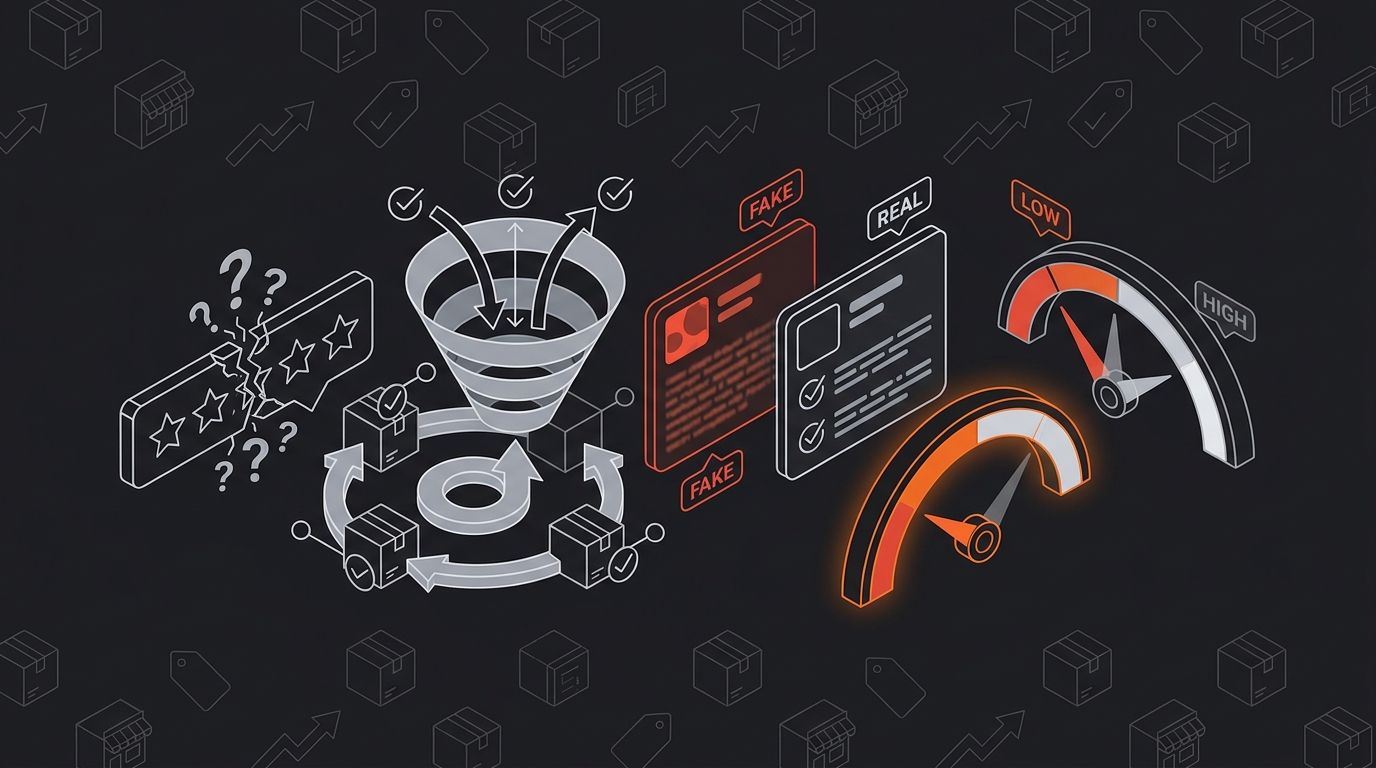
The Review Generation Trap: Why Fake Social Proof Is Tanking Your Conversion Rate (And How Successful Dropshippers Build Authentic Feedback Loops)
Northwestern University's Spiegel Research Center produced a finding that should have killed the fake-review industry on the spot: products rated between 4.2 and 4.5 stars convert at higher rates than products sitting at a perfect 5.0. The implication was plain. Shoppers don't trust perfection.

Building Trust Signals into Dropshipping Product Reviews: The Conversion Framework Beyond Generic Descriptions
Spiegel Research Center research, cited widely across e-commerce conversion literature, puts the number at 270%. That's how much displaying authentic customer reviews can increase the likelihood of purchase compared to a product page with none.
Why Your Product Reviews Are Generating Clicks But Not Sales: The Trust Gap Between Star Ratings and Purchase Intent
Products with a flawless 5.0-star average convert at lower rates than those rated between 4.0 and 4.7 stars, according to Spiegel Research Center data.
Explore more topics