Cold Chain Logistics & Specialty Product Dropshipping: What RapidFulfillment's Peptide Partnership Reveals About 2026 Fulfillment
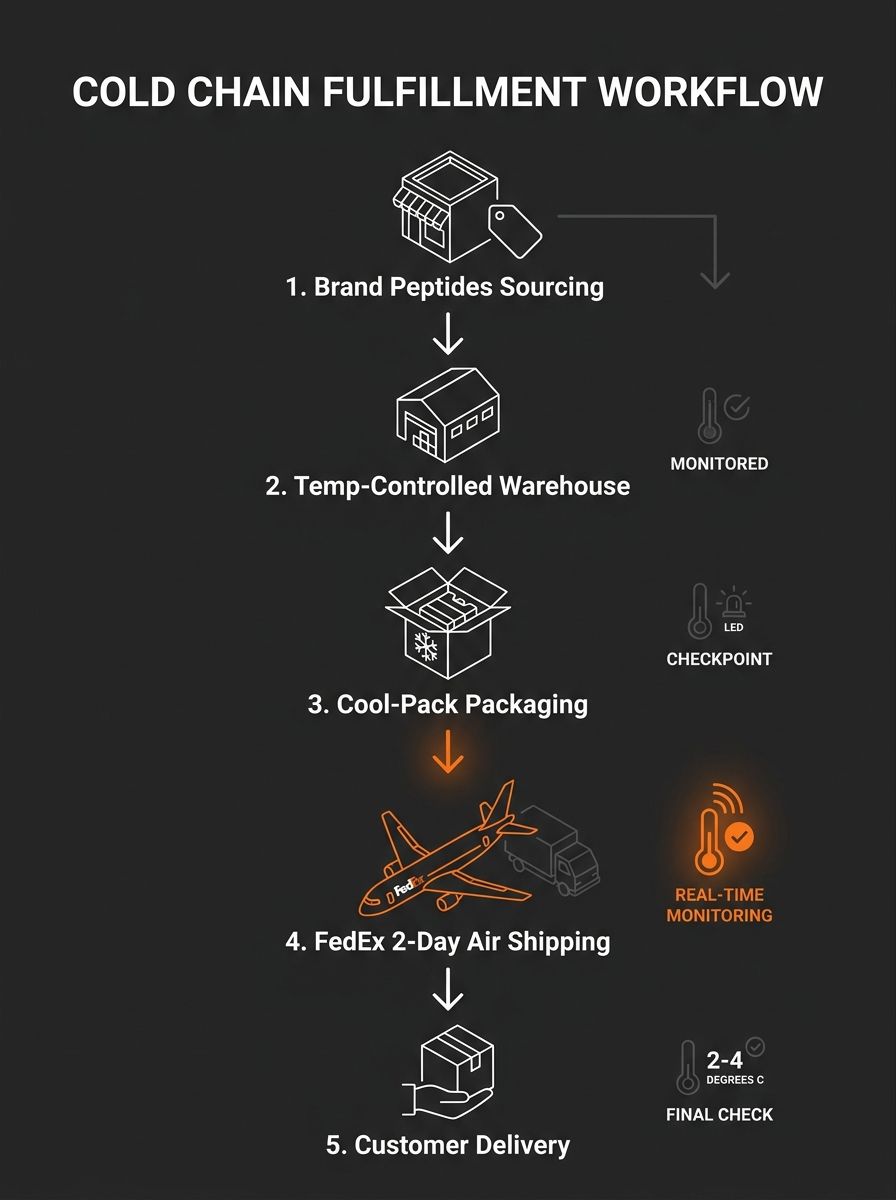
Peptides ship from RapidFulfillment's Pacoima, CA warehouse inside cool-pack packaging via FedEx 2-Day Air, and every vial carries a Certificate of Analysis documenting batch and lot traceability.
Cold Chain Logistics & Specialty Product Dropshipping: What RapidFulfillment's Peptide Partnership Reveals About 2026 Fulfillment
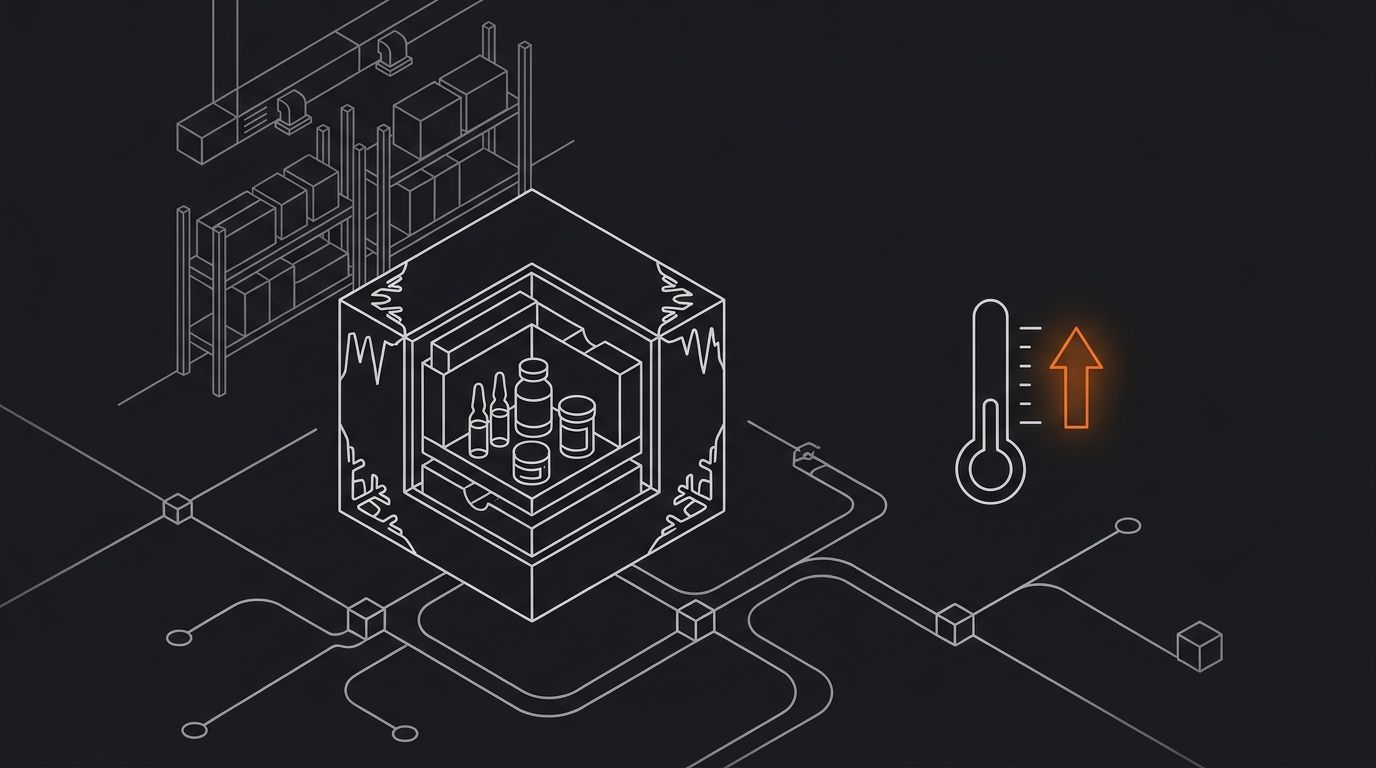
Peptides ship from RapidFulfillment's Pacoima, CA warehouse inside cool-pack packaging via FedEx 2-Day Air, and every vial carries a Certificate of Analysis documenting batch and lot traceability. That level of infrastructure specificity, announced on April 30 as part of the company's White Label Peptide Dropshipping Program partnership, marks a shift worth paying attention to if you sell anything that can't survive three days on a UPS truck in July. Cold chain dropshipping has been a phrase floating around logistics conferences for years, but the RapidFulfillment model lays bare what it actually costs and requires to run specialty product fulfillment at the operator level. The implications go well beyond peptides.
Why Peptides Are the Stress Test for Cold Chain Dropshipping
The peptide market is booming thanks to telehealth expansion, GLP-1 interest, and the broader longevity medicine trend. Hello Peptide expanded its educational platform just this week to meet rising demand. But peptides are classified Research Use Only (RUO), which means the fulfillment partner never takes ownership of the product, never manufactures it, and still has to maintain pharmaceutical-grade environmental controls throughout storage and shipping. That's a narrow legal and operational corridor that most 3PLs aren't set up to navigate.
RapidFulfillment's model works like this: the brand sources peptides independently, ships inventory to the Pacoima facility, and RapidFulfillment handles climate-controlled storage, order processing, branded packaging, and carrier handoff. They've built Shopify and WooCommerce integrations so orders flow automatically, but the differentiator is the cold chain infrastructure underneath. Temperature-controlled warehousing, validated packaging, same-day processing, and a carrier choice (FedEx 2-Day Air) that minimizes transit time for heat-sensitive compounds. The company expanded its pharmaceutical-grade logistics capacity back in March, citing demand from telehealth providers and longevity clinics.
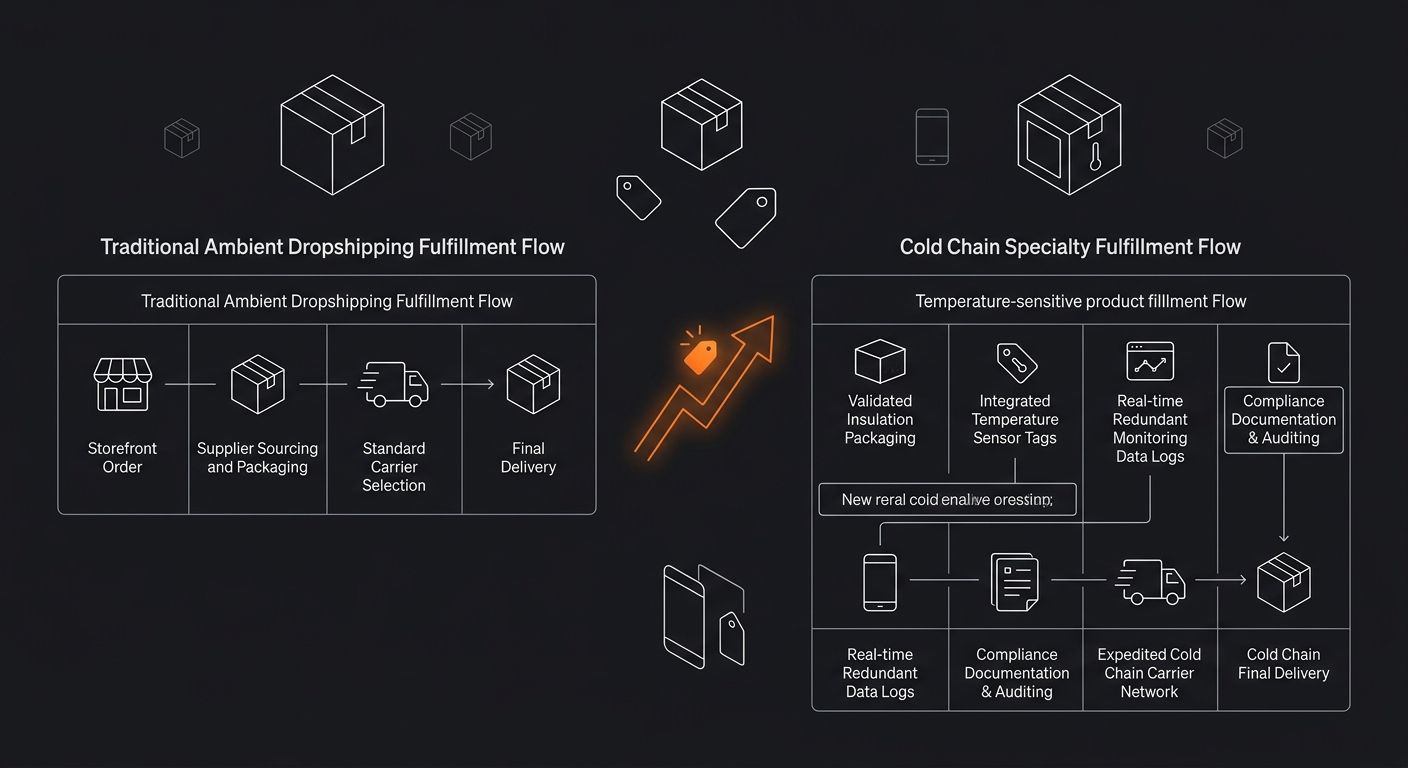
This matters for dropshipping operators because it reveals the real niche supplier requirements for regulated, temperature-sensitive products. You can't plug into CJ Dropshipping or Spocket and expect cold chain compliance. The infrastructure layer is fundamentally different. If you're evaluating whether a particular specialty niche is viable, understanding that the relationship with your supplier becomes the entire business model should change how you run your numbers.
The Compliance Math That Kills Most Operators Before They Start
Pharmaceutical dropshipping compliance is where most people exit the conversation, and for good reason. The regulatory landscape for temperature-sensitive products requires tracking temperature at every node, including storage, transfer, and cross-dock, and keeping those records for two years. Pharmaceutical shipping must adhere to Good Distribution Practice (GDP), WHO guidelines, and regional regulations governing drug distribution, according to industry pharma shipping standards. And here's the part that catches dropshippers off guard: U.S.-based sellers must ensure products comply with FDA, CPSC, and other regulations even without direct manufacturing control. You're on the hook for certifications, labeling accuracy, and safety standards whether you touched the product or not.
The cold chain market crossed $340.3 billion in estimated value, and regulatory pressure continues to intensify in 2026, especially for food and healthcare shipments. Traceability, recordkeeping, and product handling expectations keep ratcheting up. The LogiPharma 2026 conference brought together over 2,300 life sciences supply chain professionals this week, and the consensus is clear: compliance costs are climbing, not stabilizing.
What does this mean in dollars? Temperature-controlled warehousing runs $0.50 to $1.50 per pallet per day more than ambient storage, depending on the temperature range. Cool-pack packaging materials add $3 to $8 per shipment. FedEx 2-Day Air from California to the East Coast runs roughly $15 to $25 for a small parcel, compared to $6 to $10 for ground. And that's before you account for the monitoring tech, the compliance documentation overhead, and the insurance premiums that come with handling products that lose all value if the chain breaks. When you're running the test order process that every serious operator should complete, you need to measure transit temperatures alongside the usual delivery speed and packaging quality checks.

White Label Fulfillment 2026: From Generic to Specialized
White label fulfillment, where a company provides logistics and order fulfillment under another brand's name, has existed for years. What's changed in 2026 is the vertical specialization. RapidFulfillment isn't offering peptide fulfillment as an add-on to general warehouse operations. They've built dedicated infrastructure, hired for specific competencies, and structured legal arrangements (they explicitly don't take product ownership) to serve one product category well. This mirrors a broader industry shift toward hyperlocal cold storage with smaller, decentralized warehouses near urban centers, and toward carrier specialization that matches product sensitivity to transit method.
For operators considering specialty product fulfillment in categories like research compounds, skincare actives, probiotics, or any supplement requiring temperature control, the RapidFulfillment model suggests a few things about what viable white label fulfillment looks like this year. Your fulfillment partner needs category expertise, not general 3PL capabilities. They need validated packaging protocols, not just "we can add ice packs." And the integration layer matters enormously because when you're shipping products that degrade, same-day processing from order receipt to carrier handoff is a hard requirement, not a perk. If you're still early in understanding how fulfillment fits into the broader dropshipping model, the operator's guide covers the foundational economics before you layer on cold chain complexity.
The trend toward automation in temperature-controlled facilities adds another dimension. Automated warehousing at cold temperatures delivers faster throughput, fewer human errors, and better data on storage conditions. RapidFulfillment's same-day processing claim becomes more credible when you understand that keeping human workers efficient at refrigerated or frozen temperatures is genuinely difficult, and automation directly addresses that constraint. As you evaluate which platforms and fulfillment partners actually support serious operations, cold chain capability is becoming a meaningful differentiator that separates platforms built for commodity goods from those built for high-margin specialty categories.
Where the Model Still Has Gaps
The RapidFulfillment peptide partnership is a real proof point that cold chain dropshipping can be productized, but several questions remain unresolved. Scale is the obvious one: operating from a single facility in Pacoima means every East Coast order needs two-day air freight, which compresses margins significantly on lower-AOV products. Hyperlocal cold storage networks could solve this, but building or partnering across multiple temperature-controlled facilities is a capital-intensive problem that most niche 3PLs haven't cracked.
The model also depends on the regulatory classification of peptides as Research Use Only, which creates a legal framework that wouldn't apply to prescription compounds or food products with different FDA oversight requirements. If regulators tighten RUO definitions or enforcement, the entire operational model needs restructuring. Operators who build brands around this fulfillment channel should understand that they're building on a regulatory classification that could shift.
There's also the question of whether cold chain dropshipping can maintain quality at volume. A 3PL processing fifty peptide orders a day from one warehouse is a different operational challenge than processing five hundred. Temperature excursion risk increases with volume because dock doors open more frequently, pick-and-pack throughput pressure rises, and the gap between "same-day processing" and "next-day processing" becomes harder to hold. The two-year recordkeeping requirement for temperature tracking at every node means the data management burden scales linearly with order volume, and most niche 3PLs aren't investing in the monitoring infrastructure that large pharmaceutical distributors already have.
For operators evaluating this space, the honest answer is that cold chain dropshipping works today for high-margin, low-to-moderate volume specialty products where AOV can absorb the $15 to $25 per-order fulfillment premium. Whether it works at scale, for broader product categories, or at price points that compete with ambient-shipped alternatives is a question the industry hasn't answered yet. RapidFulfillment's partnership proves the infrastructure can be built. Whether the economics survive contact with a competitive market is the part nobody can guarantee.
365 Dropship Editorial
Editorial team writing about E-commerce, dropshipping, and product discovery — reviews of dropshipping suppliers and platforms, trending niche guides (jewelry, beauty, pets, home, fashion), supplier due diligence, ecom operations, shipping & fulfillment strategy, product research, AOV optimization, and profitable dropshipping case studies.
Explore more topics