Cainiao's "7-Day Miracle" Logistics Overhaul Cut AliExpress Cross-Border Delivery Variability Through Multi-Carrier Coordination
AliExpress cross-border delivery improvements documented in a case study published today show how Cainiao, Alibaba's logistics affiliate, reduced transit variability through network orchestration, regional sortation hubs, customs automation, and standardized carrier handoffs in a concentrated effort

Cainiao's "7-Day Miracle" Logistics Overhaul Cut AliExpress Cross-Border Delivery Variability Through Multi-Carrier Coordination
AliExpress cross-border delivery improvements documented in a case study published today show how Cainiao, Alibaba's logistics affiliate, reduced transit variability through network orchestration, regional sortation hubs, customs automation, and standardized carrier handoffs in a concentrated effort termed the "7-Day Miracle," according to logistics encyclopedia Racklify. The coordinated improvement sprint addressed fragmented tracking, inconsistent last-mile delivery, and manual customs processing that previously left Brazilian customers waiting 25–40 days for parcels.
The case study, updated March 19, 2026, details tactical fixes Cainiao deployed across the AliExpress fulfillment chain. The effort concentrated on reducing carrier handoffs, automating customs documentation, and implementing service-level agreements with last-mile partners to eliminate the unpredictable delivery windows that had hurt platform trust.
Core Problems Cainiao Targeted
AliExpress shoppers faced four primary friction points before the overhaul. Packages moved across multiple carriers and borders with unpredictable handoffs, lengthening delivery windows. Fragmented systems meant tracking data disappeared when parcels changed carriers or crossed borders. Manual customs documentation caused holds at borders. Local delivery partners varied widely in service level, causing late or failed deliveries.
The Brazil corridor illustrated the problem scale: parcels routed through multiple national postal services typically took 25–40 days to reach customers, the case study notes. Small electronics frequently faced customs inspection delays due to incomplete or incorrect HS code documentation.
Network Orchestration and Regional Hubs
Cainiao coordinated multiple carrier partners and created preferred hand-off points so parcels moved through fewer, more reliable hops rather than relying on single-carrier routes. The logistics operator staged inventory in regional sort centers, allowing many parcels to avoid repeated international legs.
The approach trimmed both transit time and uncertainty by routing high-volume items to continent-local hubs, using consolidated customs filings, and handing off to vetted local carriers within the destination region, according to the case study. This reduced the number of jurisdictional handoffs each parcel experienced.
Customs Pre-Clearance and Data Standardization
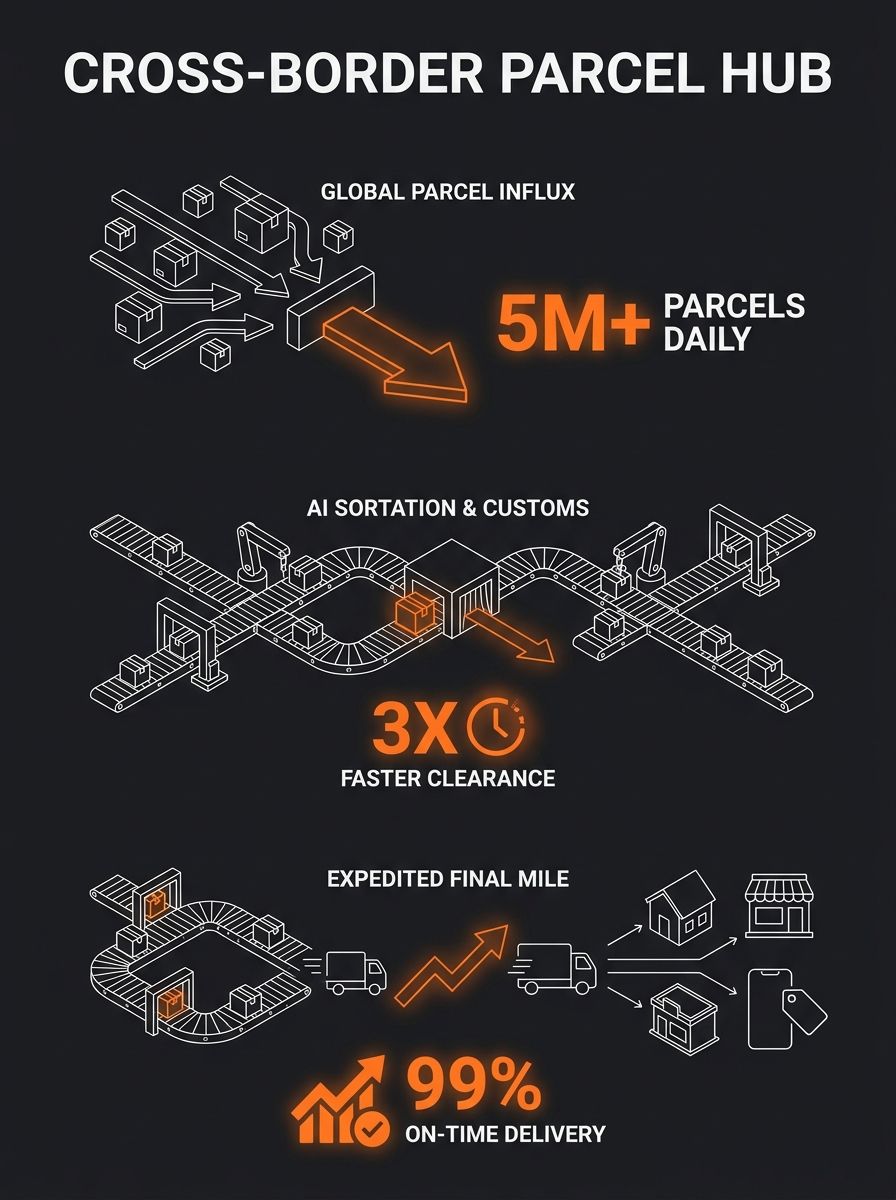
Cainiao automated customs forms and integrated directly with customs systems to reduce manual checks and unexpected holds. The operator pushed standardized electronic manifests and API-based tracking handoffs so tracking information stayed intact across carriers and borders.
Accurate HS codes and invoice data automated upfront eliminated the need for manual customs review on routine shipments. The data standardization allowed tracking visibility to survive carrier transitions, addressing the "black hole" problem where parcels disappeared from customer view during international handoffs.
Last-Mile SLAs and Performance Monitoring
Cainiao negotiated consistent service-level agreements with local couriers and introduced dedicated delivery channels for AliExpress parcels. The logistics operator implemented performance monitoring across last-mile partners and introduced alternative pickup options—including lockers and flexible delivery slots—to reduce failed first-attempt deliveries.
The coordinated last-mile approach standardized service levels that had previously varied by local courier, creating predictable delivery completion rates. Customer-facing improvements included clearer delivery windows and improved tracking messages to reduce delivery anxiety.
Measured Improvements
Transit times became more consistent through fewer carrier handoffs and regional sortation, which reduced delivery-window variability. Standardized tracking meant customers and merchants could see parcel status through to delivery. Automation and accurate paperwork cut customs clearance time. Better last-mile coordination increased successful first-attempt deliveries, the case study shows.
The improvements translated to higher customer satisfaction and conversion rates as delivery predictability replaced the previous 15–40 day uncertainty range for international AliExpress orders.
What This Means for Dropshipping Entrepreneurs
Cainiao's logistics overhaul demonstrates the operational levers that reduce cross-border delivery friction for dropshippers sourcing from AliExpress. The coordinated network approach shows how regional staging, automated customs, and standardized carrier handoffs can collapse transit variability—a primary customer complaint for China-sourced products.
Dropshippers evaluating AliExpress suppliers should prioritize vendors participating in Cainiao's optimized shipping channels, which deliver the tracking visibility and consistent transit times the overhaul enabled. The case study's Brazil example—collapsing 25–40 day waits through hub staging and consolidated customs—illustrates how regional fulfillment infrastructure impacts delivery speed more than carrier choice alone.
The tactical focus on last-mile SLAs and failed-delivery reduction offers a framework for shipping strategy adjustments independent operators can apply when negotiating with 3PL partners or evaluating domestic fulfillment alternatives. End-to-end tracking standardization remains the baseline requirement—if tracking disappears at carrier handoffs, customer support costs erase margin gains from cheaper international sourcing.

Ryan Torres
Ryan Torres is a former Amazon FBA seller turned dropshipping consultant who has generated over $2.8M in ecommerce revenue across 14 product launches. He specializes in supplier vetting, margin optimization, and scaling DTC operations for sub-$1M brands. Ryan focuses on actionable frameworks that drive measurable results for independent operators.
Related Articles

Cainiao's Coordinated Logistics Overhaul Reduces AliExpress Cross-Border Transit Variability Through Network Standardization
Cainiao, Alibaba's logistics affiliate, implemented a concentrated cross-border improvement effort targeting AliExpress delivery inconsistency through network orchestration, regional sortation hubs, customs automation, and standardized tracking handoffs, according to a July 2 operational case study

AliExpress Shipping Timeframes Range From 7 Days to 50 Days Across Six Service Tiers, New Logistics Guide Documents
Delivery windows for AliExpress orders span 7 to 50 days depending on service tier selection, according to a logistics breakdown published July 10 by SendFromChina, a fulfillment platform that manages cross-border ecommerce shipments.
SendFromChina Documents Six AliExpress Shipping Methods With Delivery Windows Spanning 7 to 50 Days in New Logistics Guide
AliExpress shipping timeframes range from 7 days via premium express carriers to 50 days through Cainiao's economy service, according to a logistics guide published July 31, 2026, by SendFromChina that segments six shipping methods by speed, tracking capability, and cost structure for dropshipping o
Explore more topics