Avenue Z Breaks Down TikTok Shop Fulfillment Models by Cost and Algorithm Impact
Avenue Z published a TikTok Shop fulfillment model comparison June 18 analyzing cost and speed tradeoffs across three operational paths—Fulfilled by TikTok (FBT), third-party logistics (3PL), and in-house fulfillment—with explicit guidance tying each model to order volume and the platform's algorith

Avenue Z Breaks Down TikTok Shop Fulfillment Models by Cost and Algorithm Impact
Avenue Z published a TikTok Shop fulfillment model comparison June 18 analyzing cost and speed tradeoffs across three operational paths—Fulfilled by TikTok (FBT), third-party logistics (3PL), and in-house fulfillment—with explicit guidance tying each model to order volume and the platform's algorithm behavior, according to the agency's blog post.
The breakdown matters because TikTok Shop's algorithm rewards fast, consistent fulfillment with improved store visibility, higher conversion rates, and better account health scores, giving shipping speed a direct revenue impact beyond customer satisfaction. Jonathan Snow, co-founder and chief innovation officer at Avenue Z, framed the comparison around scaling velocity, branding control, and upfront inventory commitments rather than abstract operational preferences.
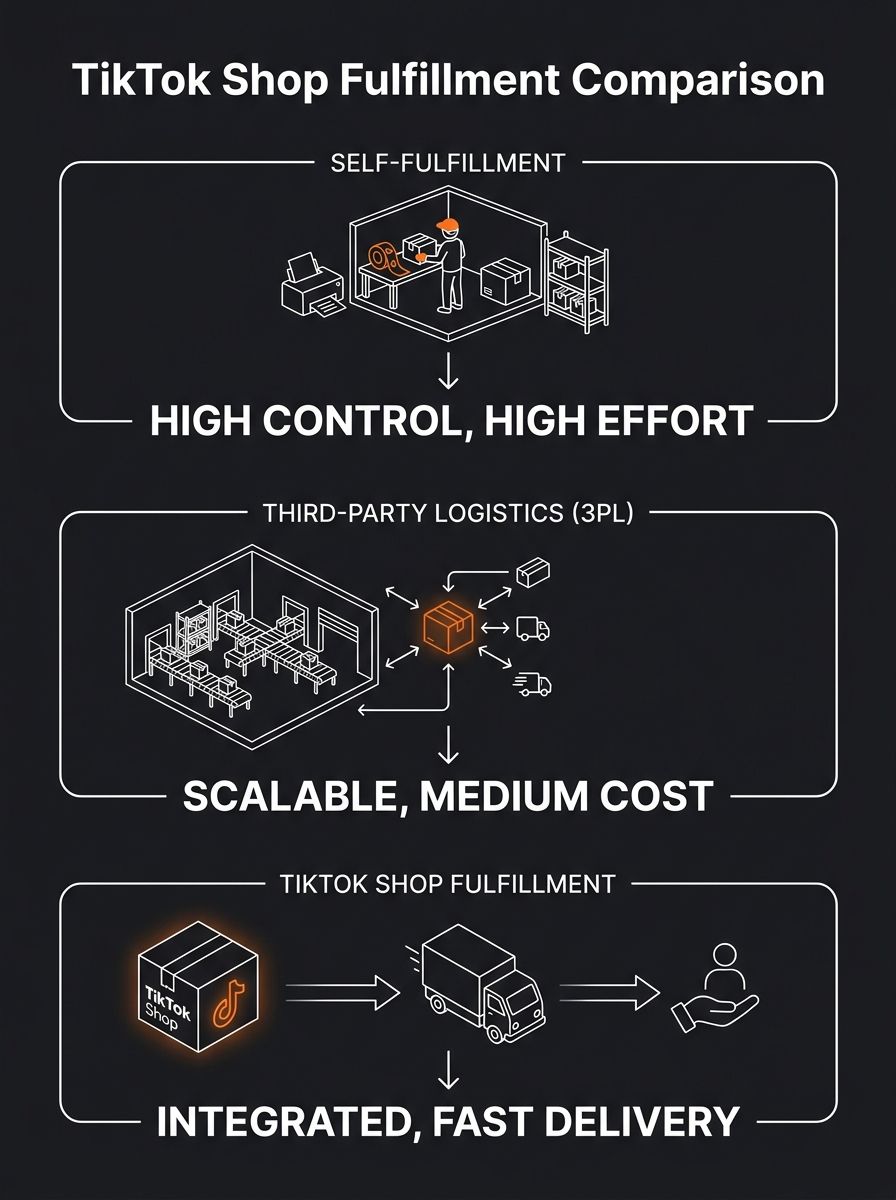
FBT Delivers Speed at Premium Cost
Fulfilled by TikTok handles storage, packing, and shipping after brands send inventory to the platform's warehouses, according to the Avenue Z analysis. The model carries higher fees than alternatives but offers the fastest shipping speeds and reduced operational workload, positioning it for brands handling high order volumes or pursuing aggressive scaling.
The primary constraint is upfront inventory commitment and limited branding control during the packing process. TikTok manages fulfillment workflows through standardized packaging and nationwide distribution infrastructure, which Avenue Z identified as "algorithm-friendly" for store visibility. Brands using FBT surrender real-time stock management and custom unboxing experiences in exchange for shipping velocity and hands-off operations.
The model suits stores already clearing volume thresholds where in-house picking and packing become bottlenecks. Avenue Z positioned FBT as the default choice when growth speed outweighs per-unit margin preservation.
3PL Operators Balance Control Against Integration Complexity
Third-party logistics providers handle storage and shipping through external warehouses, creating a middle ground between TikTok's managed service and self-fulfillment. Avenue Z characterized 3PL as more affordable than FBT while delivering greater branding control and easier scaling than in-house operations, though shipping speeds lag TikTok's network.
The analysis flagged integration complexity and variable provider reliability as operational risks. Not every 3PL partner maintains the same fulfillment standards, and connecting external warehouses to TikTok Shop's order flow requires technical setup that in-house or FBT models avoid.
For TikTok Shop sellers navigating margin calculations between platform commission and fulfillment fees, 3PL operators represent the cost-control option that preserves some branding flexibility. Avenue Z recommended the model for stores with intermediate sales volumes—past the testing phase but not yet hitting the order density that justifies FBT's premium.
In-House Fulfillment Anchors Product Testing and Low-Volume Launch
Brands managing their own storage, picking, packing, and shipping retain full control over fulfillment experience and real-time inventory visibility at the lowest cost, according to the comparison. Avenue Z described in-house handling as the typical starting point for new TikTok Shop sellers, particularly those testing products or operating on limited budgets.
The tradeoff is operational burden and slower shipping speeds, which can hurt algorithm performance as order volume climbs. The analysis noted that spacing constraints, time limitations, and packing errors compound as brands scale beyond early-stage volumes, making in-house fulfillment difficult to sustain during growth.
Avenue Z positioned the model as appropriate for stores validating product-market fit or managing low SKU counts where fulfillment stays manageable. Brands often migrate from in-house to 3PL or FBT as sales volume increases and the cost of self-fulfillment shifts from dollar savings to margin leakage through slower shipping and operational overhead.
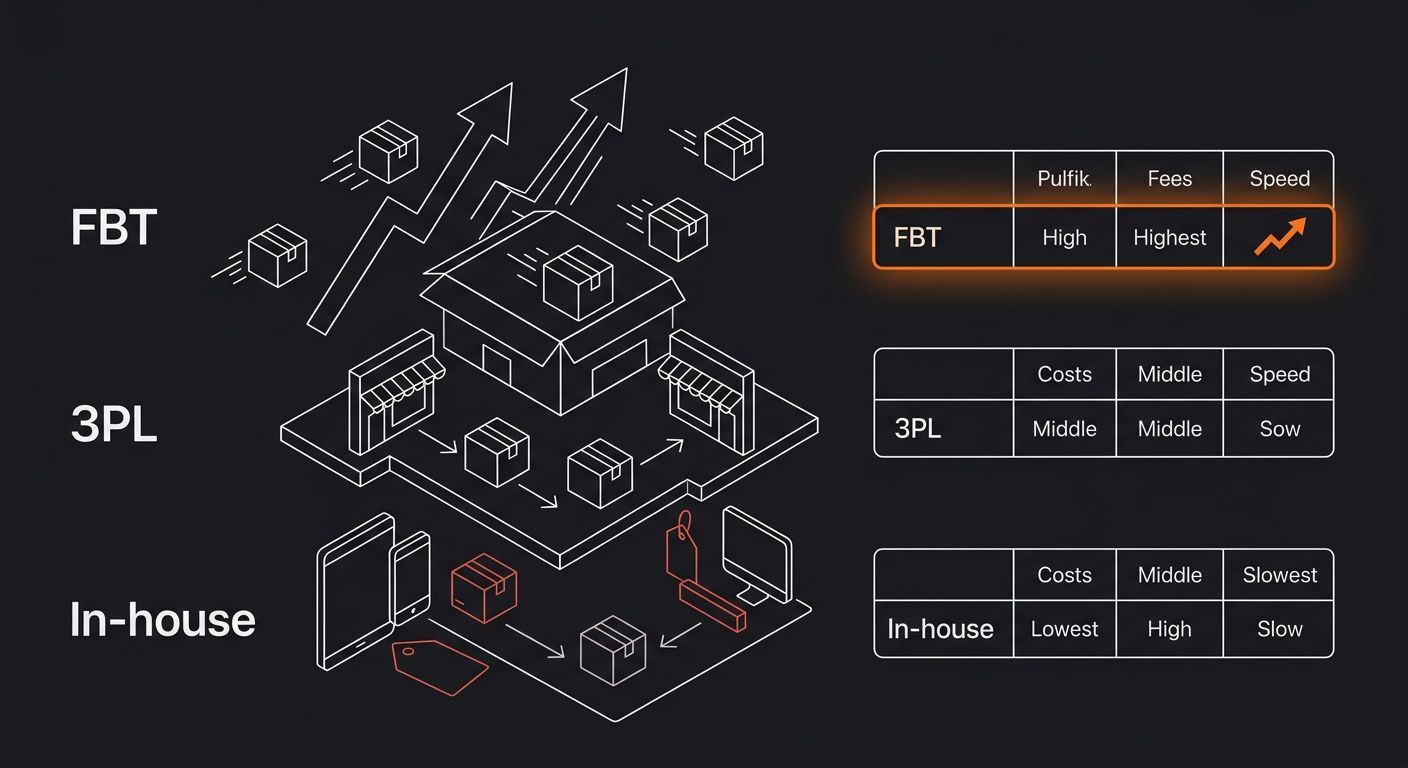
Algorithm Rewards Create Fulfillment Speed Premium
TikTok Shop's algorithm evaluates shipping speed and fulfillment consistency as store health indicators, directly affecting product visibility in user feeds and conversion rate optimization. Avenue Z highlighted this feedback loop as the primary reason fulfillment model selection carries revenue consequences beyond customer satisfaction metrics.
Stores with faster, more reliable fulfillment receive algorithmic advantages that compound over time through improved placement and account standing. This creates a speed premium where the operational cost of FBT or 3PL may be offset by higher organic visibility and conversion lift, particularly for brands pursuing rapid volume growth.
The comparison noted that brands can switch fulfillment models as sales volume, operational capacity, and scaling objectives evolve. Avenue Z described model selection as a dynamic decision tied to current order density rather than a permanent operational commitment.
The agency's TikTok Shop Certified partner status positions the guidance within its client advisory services for platform profit profile optimization across compliance, creator partnerships, and Shopify integration.
The Takeaway
Solopreneurs and side-hustle sellers launching on TikTok Shop face a three-way fulfillment tradeoff where algorithm behavior adds a revenue variable to the traditional cost-versus-control calculus. The Avenue Z breakdown anchors model selection in current order volume: in-house works when monthly sales stay low enough that self-packing doesn't burn hours better spent on content or ads, 3PL makes sense when volume justifies outsourcing but margins can't absorb TikTok's premium, and FBT becomes the move when shipping speed directly determines whether the algorithm surfaces your products or buries them.
The practical threshold lives in per-order economics rather than abstract brand-building preferences. If you're clearing 10-15 orders per day and still packing boxes yourself, the margin you're preserving by avoiding 3PL fees is likely offset by the revenue you're losing to slower ship times and lower algorithmic visibility. TikTok Shop punishes fulfillment lag harder than other platforms because the algorithm treats shipping performance as a ranking signal, not just a customer satisfaction metric.
For dropshippers testing TikTok Shop as a secondary channel alongside their Shopify store, the calculus shifts again: in-house may stay viable longer if you're already managing fulfillment for your main storefront, but the platform's speed bias means the margin savings evaporate quickly once TikTok becomes a meaningful revenue stream. Model migration as you scale isn't optional strategy—it's margin math forcing your hand when the cost of doing it yourself exceeds the fee for letting someone else handle it faster.

Ryan Torres
Ryan Torres is a former Amazon FBA seller turned dropshipping consultant who has generated over $2.8M in ecommerce revenue across 14 product launches. He specializes in supplier vetting, margin optimization, and scaling DTC operations for sub-$1M brands. Ryan focuses on actionable frameworks that drive measurable results for independent operators.
Related Articles
TikTok Shop, Amazon, and Shopify Deliver Different Profit Profiles for DTC Brands, Avenue Z Analysis Finds
Avenue Z's June 10 platform analysis concludes that no single eCommerce channel delivers universal profitability for DTC brands, positioning TikTok Shop for low-acquisition trendy products, Amazon for high-intent search volume, and Shopify for margin control and customer data ownership, according to
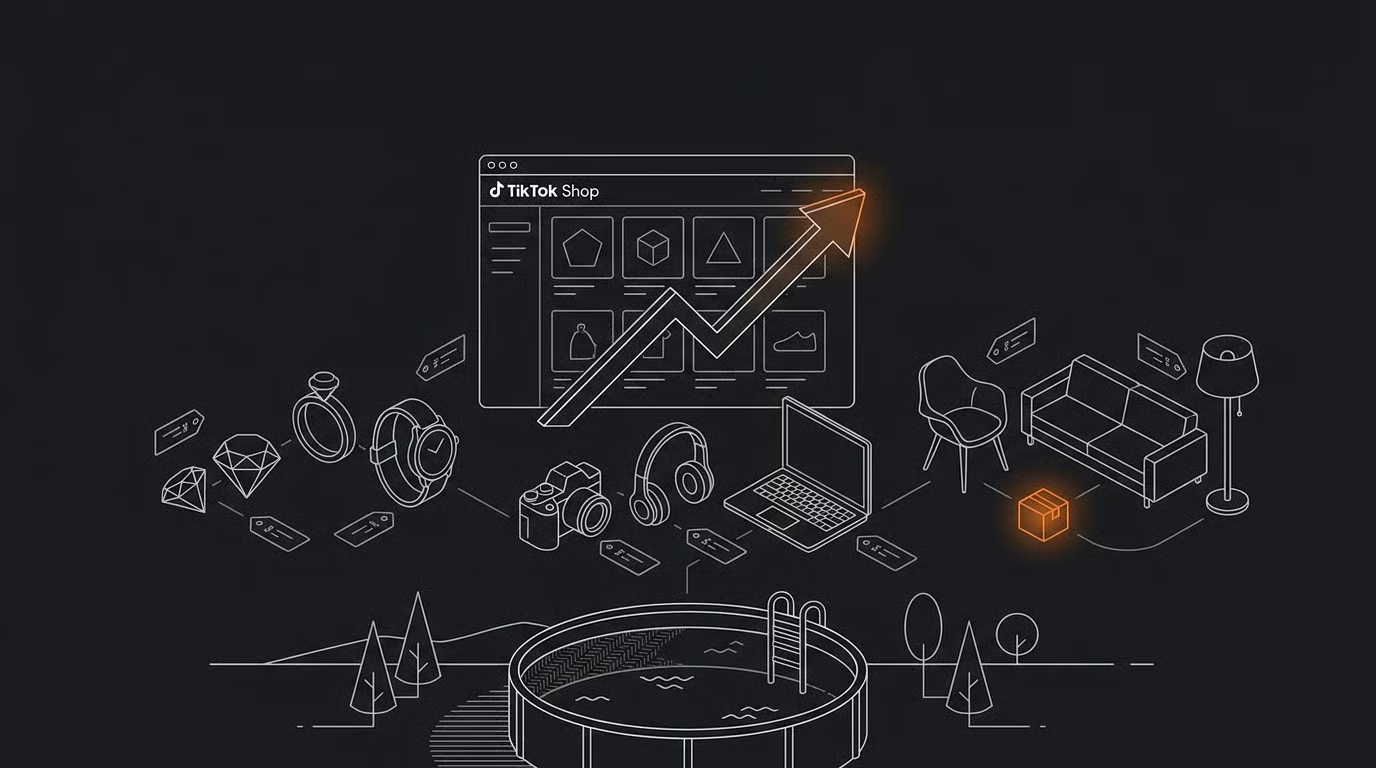
TikTok Shop High-Ticket Sales Surge as Above-Ground Pools Climb 125% Year-Over-Year
Above-ground pools and spas sold through TikTok Shop posted 125% year-over-year growth in the past 12 months, five times the rate of other marketplaces, according to data shared by Spreetail, a multi-brand seller and fulfillment partner on the platform.
TikTok Shop vs. Shopify DTC: Where Independent Dropshippers Actually Keep More Margin in 2026
TikTok Shop's total cost of selling runs 35–55% of revenue when you stack referral fees, affiliate commissions, transaction fees, and returns. Shopify DTC's all-in platform cost sits closer to 5–8% of revenue at equivalent volume, but every visitor arrives on your dime.
Explore more topics