LooperBuy Publishes Four-Element Verification Framework for Fake Tracking Numbers From Dropshipping Vendors
LooperBuy published a four-element verification framework on August 13 addressing fake tracking numbers from dropshipping vendors, positioning carrier-native verification and event-timeline audits as protection against chargebacks, marketplace disputes, and customer trust erosion, according to the f

LooperBuy Publishes Four-Element Verification Framework for Fake Tracking Numbers From Dropshipping Vendors
LooperBuy published a four-element verification framework on August 13 addressing fake tracking numbers from dropshipping vendors, positioning carrier-native verification and event-timeline audits as protection against chargebacks, marketplace disputes, and customer trust erosion, according to the framework documentation.
The framework positions tracking numbers as "fulfillment evidence" requiring validation across four dimensions: carrier identity (whether the named carrier recognizes the number), order match (destination country and shipment timing alignment), physical movement (acceptance or pickup events beyond label creation), and route logic (plausible China-to-destination event sequences). LooperBuy's documentation frames reliable tracking as "operational transparency" linking China sourcing through final-mile delivery.
The release targets sellers managing cross-border fulfillment where misleading valid numbers—real tracking IDs assigned to wrong addresses, different items, or recycled orders—pose higher risk than completely fabricated codes. "A supplier may provide a real tracking ID that returns carrier events, yet the shipment is going to a different address, contains a different item, or was generated for an old order," the framework states.
Carrier-Native Verification Takes Priority Over Aggregator Platforms
The framework instructs sellers to confirm seven data points at the time a vendor issues a tracking number: carrier name, shipping service level, tracking ID, dispatch date and time zone, origin country, expected delivery range, and final-mile carrier where applicable. LooperBuy directs operators to enter numbers into official carrier websites rather than third-party aggregators for initial verification.
DHL's tracking documentation, cited in the framework, states that shipment events "should generally appear within 24–48 hours after a merchant's confirmation." The framework positions this window as the threshold for escalation when no carrier acceptance scan appears.
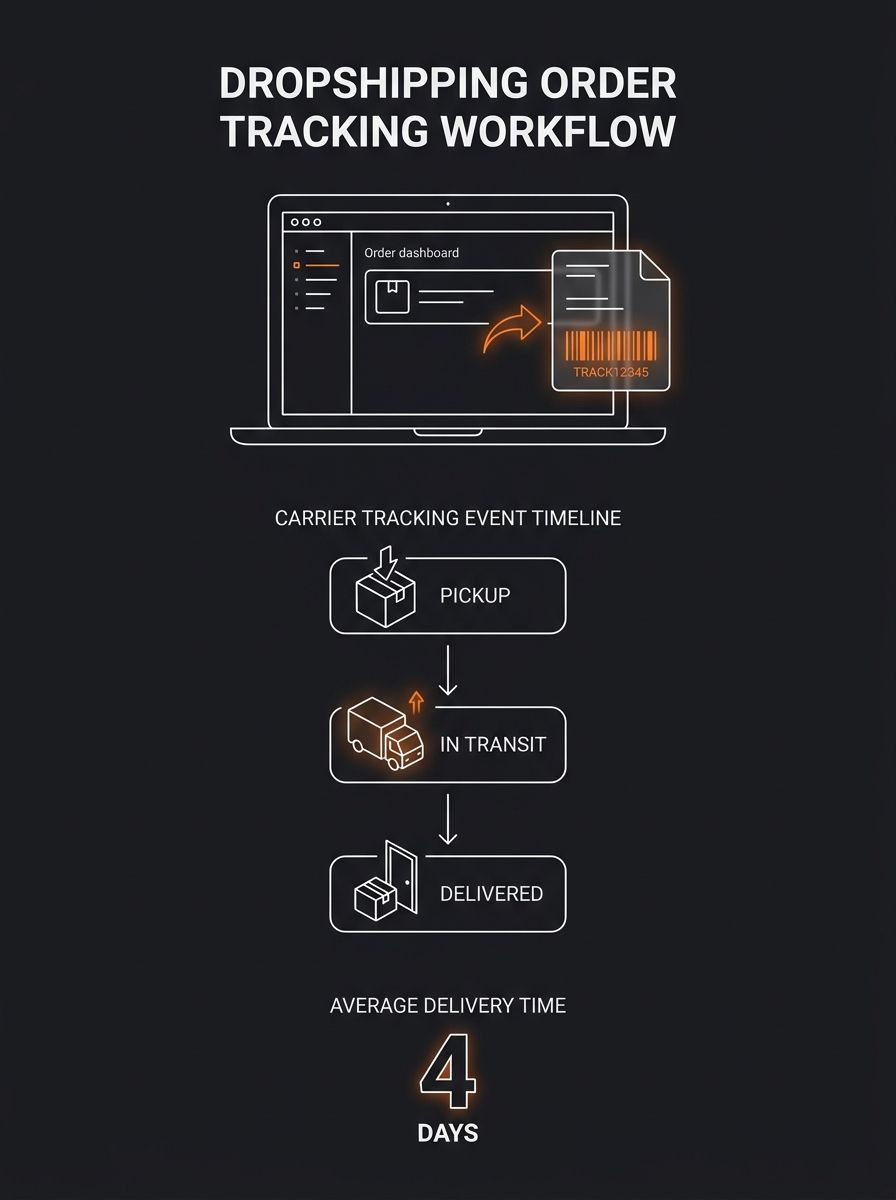
A six-step event progression establishes the baseline for credible shipments: label creation, carrier acceptance or pickup, export or line-haul handoff, destination-country arrival and customs processing where applicable, final-mile handoff, and delivery or attempted-delivery event. The framework flags shipments remaining at "label created" without carrier acceptance and no operational explanation as requiring exception-queue placement rather than customer reassurance.
Aggregator platforms display "delayed, incomplete, or incorrectly matched data" in some cases, according to the documentation, making carrier-native tracking the recommended escalation point when discrepancies surface. The framework distinguishes between USPS "label created" status—which indicates a shipping label exists but the physical parcel has not yet been handed to USPS—and tracking fraud.
Warning Signs Include Destination Mismatches and Implausible Event Sequences
LooperBuy's framework identifies seven forms of fake tracking: numbers non-existent in carrier systems, valid labels created without parcel dispatch, recycled numbers previously used for other customers or destinations, numbers assigned to wrong carriers or countries, tracking records showing delivery before order placement, and low-quality tracking pages imitating legitimate logistics providers.
The most difficult cases involve misleading valid numbers where shipments show carrier events but route to unrelated addresses or contain different items. The framework instructs sellers to verify destination country, postal region, final-mile carrier, and delivery date consistency even when carrier privacy policies prevent full address disclosure.
Vendors unable to confirm shipping route, parcel weight, or first carrier handoff when claiming a tracking number is "working" represent "a material operational concern," according to the framework. LooperBuy recommends requesting redacted proof of dispatch documents including tracking ID, shipping date, service, parcel weight, and destination country without exposing customer names, telephone numbers, or street addresses.
Tracking-number format serves only as "a first filter" for identifying the claimed carrier but does not verify shipment legitimacy, the documentation notes. The framework positions format recognition as insufficient for fulfillment confirmation.
What Happens Next
Dropshipping operators managing supplier relationships across AliExpress and direct China sourcing channels face ongoing tracking-fraud exposure as cross-border order volumes scale. The four-element framework positions verification as a pre-fulfillment workflow step rather than a post-complaint investigation, requiring sellers to audit carrier identity and event timelines before customer communication.
LooperBuy's carrier-native verification stance diverges from aggregator-first approaches common in automated dropshipping workflows, adding manual verification steps to lanes where tracking fraud risk outweighs automation efficiency. Sellers tracking delivery windows across USPS, FedEx, UPS, and DHL now operate verification thresholds alongside service-level expectations.
The framework does not address automated tracking-validation tools or API-level carrier queries, leaving operators dependent on manual carrier-site checks for initial verification. Chargeback and marketplace-dispute exposure from fake tracking remains quantified by individual seller order volume and product margins rather than industry-wide benchmarks.

Ryan Torres
Ryan Torres is a former Amazon FBA seller turned dropshipping consultant who has generated over $2.8M in ecommerce revenue across 14 product launches. He specializes in supplier vetting, margin optimization, and scaling DTC operations for sub-$1M brands. Ryan focuses on actionable frameworks that drive measurable results for independent operators.
Related Articles

LooperBuy Publishes Five-Step Seeding Framework for B2B Buyers Sourcing From Chinese Suppliers
LooperBuy published a five-step seeding framework on September 24, 2026, positioning small trial orders as a risk-reduction mechanism for international buyers sourcing from Chinese suppliers through 1688.com, according to the B2B sourcing platform's guide.

The Supplier Audit Trap: Why Automation Tools Hide Quality Red Flags Until Your First 100 Orders
DSers, Spocket, and Zendrop all surface supplier scores built from the same thin data: listing age, order volume, and aggregate star ratings.

LooperBuy Publishes Beauty Supplier Vetting Framework Targeting Dropshippers Sourcing Cosmetics From China's $145 Billion Trade Hub
LooperBuy released a beauty dropshipping supplier guide on July 29, 2026, detailing an eight-step vetting framework for Chinese cosmetics manufacturers as the global dropshipping market approaches $507.18 billion in 2026.
Explore more topics