Easyship Launches MCP Server for Natural-Language Shipping Across 550 Couriers
Easyship released an MCP Server on April 30 that lets merchants generate shipping labels, compare rates, and calculate import duties across 550 courier services using natural-language prompts in Claude, ChatGPT, Cursor, or any Model Context Protocol–compatible AI platform, according to a company ann

Easyship Launches MCP Server for Natural-Language Shipping Across 550 Couriers
Easyship released an MCP Server on April 30 that lets merchants generate shipping labels, compare rates, and calculate import duties across 550 courier services using natural-language prompts in Claude, ChatGPT, Cursor, or any Model Context Protocol–compatible AI platform, according to a company announcement. The multi-carrier shipping software provider, which serves more than 100,000 eCommerce merchants, built the server to deliver 25 shipping and cross-border tools through a single prompt interface, including real-time tax and duty calculation for 200-plus countries.
The launch positions Easyship as the first cross-border shipping infrastructure provider inside the agentic commerce stack, joining Stripe, Shopify, and PayPal in the race to deliver commerce functions through conversational AI. Shopify shipped four MCP servers earlier in 2026, while Stripe and OpenAI released the Agentic Commerce Protocol in late 2025. Until now, checkout flows lacked a global shipping layer built for multi-carrier workflows and cross-border fulfillment.
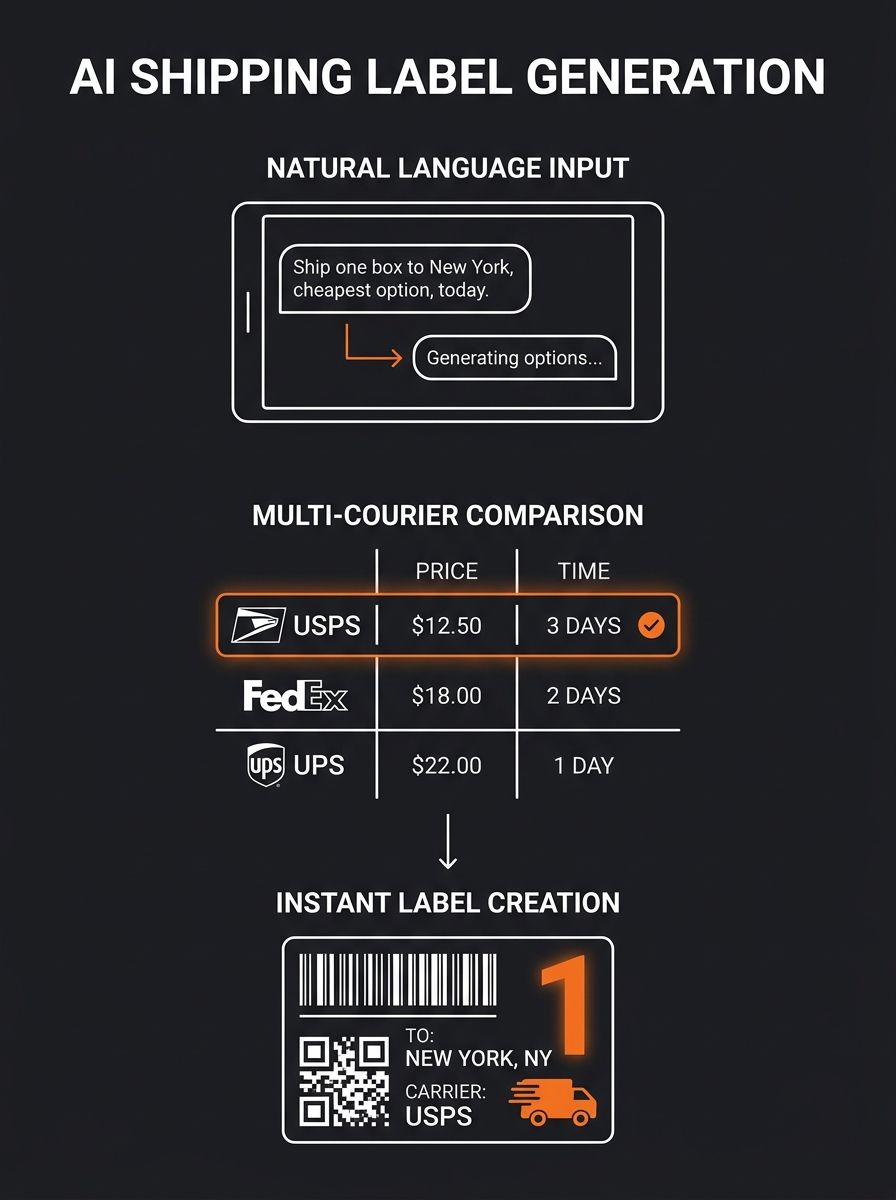
Merchants who already use Easyship can connect their existing account to the MCP Server by installing the plugin and adding an API token. The server then runs inside whichever AI client the operator prefers—Claude Desktop, ChatGPT, Gemini CLI, or workflow automation tools—without requiring a separate dashboard or login. A merchant types a request, the AI model calls the Easyship API, and the system returns a printable label or a rate comparison table.
What Merchants Can Do With the MCP Server
The Easyship MCP Server exposes the company's full API infrastructure through natural language. Operators can compare rates from 550-plus courier services and access pre-negotiated discounts of up to 91 percent off retail prices with one prompt. They can generate shipping labels and commercial invoices for domestic and international shipments, validate addresses, and calculate tariffs and import duties for cross-border orders.
Beta merchants in the United States, Canada, the United Kingdom, and Australia have used the server to schedule pickups, track packages, and monitor delivery status through plain conversation in a single chat window. They can also pull shipping analytics, billing summaries, and carrier-mix reports without opening spreadsheets or exporting CSVs.
Paul Lugagne-Delpon, co-founder and CTO of Easyship, said in the announcement that the shipping technology layer is complex, featuring dynamic rates, unique carrier logic, and customs rules that do not easily compress into a single API endpoint. The company built the MCP Server so any AI agent can tap into global services with a single prompt and receive a real, printable label or live shipping data.
The system runs on Easyship's API infrastructure, which the company reports maintains 99.99 percent uptime. For operators who already rely on AfterShip or similar tracking tools, the MCP Server adds a natural-language layer on top of existing multi-carrier workflows rather than replacing them.
How It Fits the Agentic Commerce Stack
The Model Context Protocol is an open standard developed by Anthropic and adopted by brands including Stripe, PayPal, Slack, Atlassian, and Shopify. It allows AI models to call external APIs in a standardized way, so a merchant can type a request in Claude or ChatGPT and the model handles the underlying API calls to generate a shipping label, process a payment, or update a storefront.
Microsoft Copilot Checkout shipped in January 2026 with Shopify, PayPal, and Stripe as partners, with Etsy sellers among the early merchants. Shopify later released four MCP servers in 2026, giving each Shopify store access to its own Storefront MCP endpoint. Easyship's MCP Server fills the logistics gap in that stack, connecting checkout flows to global carrier networks and customs calculation engines.
Tommaso Tamburnotti, co-founder of Easyship, said in the announcement that most merchants do not want to learn another tool. They want their AI assistant to handle the shipping work and reduce the time spent on fulfillment. An operations lead can ask for the cheapest cross-border option and get a printable label in the same chat. A customer service bot can issue a return and generate a label without escalating to a human.
For dropshipping operators who run lean teams and juggle multiple suppliers, the promise is faster label generation and carrier selection without switching between tabs. A solo operator managing 200 SKUs across two suppliers can type "compare rates for a 2-pound package from Los Angeles to Sydney" and receive a table showing DHL, FedEx, and Australia Post options with landed-cost breakdowns—all inside the same Claude Desktop window where they handle customer support tickets.
Platform Support and Installation
The Easyship MCP Server runs on any platform that supports the Model Context Protocol. Confirmed compatible clients include Claude Desktop, Claude Code, ChatGPT, Cursor, Windsurf, Antigravity, OpenAI Agents SDK, Gemini CLI, and Codex CLI. It also connects to workflow automation tools, though the announcement did not specify which platforms.
Installation requires three steps: install the MCP plugin in the AI client of choice, generate an API token from the merchant's Easyship account, and connect the token to the plugin. Once connected, the merchant can ship through prompts without writing code or opening the Easyship dashboard.
The system works with the merchant's existing Easyship account, so any pre-negotiated carrier rates, saved addresses, or billing preferences carry over. For operators who already use platform integrations like Shopify connectors, the MCP Server adds a conversational interface on top of the existing setup rather than replacing it.
What This Means for Dropshipping Entrepreneurs
If you ship cross-border orders or test multiple carriers to find the best margin per package, the Easyship MCP Server compresses 10 browser tabs into one chat window. Instead of logging into USPS, UPS, DHL, and FedEx portals to compare rates, you type "show me the cheapest option for a 1 kg package from Brooklyn to Berlin with duties prepaid" and the system returns a printable label. That removes friction from the label-generation loop, especially for solo operators who run their business from a single Slack channel or Claude chat.
The real test will be whether the AI model interprets edge cases correctly—oversized packages, lithium-battery restrictions, alcohol shipments, and items that require customs bonds. A merchant who ships yoga mats to Canada and essential oils to the EU needs the AI to flag restricted items before buying a label, not after. Easyship has not published accuracy benchmarks for natural-language customs classification, so early adopters should verify that the generated labels match their understanding of tariff codes and duty thresholds before scaling volume.
For operators who already use Easyship and pay for API access, the MCP Server is a workflow upgrade, not a cost change. For merchants who do not currently use Easyship, the value proposition depends on whether the pre-negotiated carrier discounts (up to 91 percent off retail rates, according to the company) and the natural-language interface justify switching from incumbent multi-carrier tools or individual carrier accounts. Compare the landed cost per package—including Easyship's transaction fee, the carrier rate, and any customs brokerage charges—against your current stack before committing shipment volume.

Ryan Torres
Ryan Torres is a former Amazon FBA seller turned dropshipping consultant who has generated over $2.8M in ecommerce revenue across 14 product launches. He specializes in supplier vetting, margin optimization, and scaling DTC operations for sub-$1M brands. Ryan focuses on actionable frameworks that drive measurable results for independent operators.
Explore more topics